Originally published December 21, 2018. Updated November 3, 2026.
Luxury websites don’t feel premium by accident. They signal quality, taste and trust in a few seconds, and color does most of that work before anyone reads a word.
Below are 15 luxury color palettes with hex codes: five designer palettes, six pulled from high-end brand sites, and four from premium home service websites we built. Copy the codes, test them on your homepage, and see what changes.
- What makes a color palette feel luxury
- Designer luxury palettes (1–5)
- Palettes from high-end brand sites (6–11)
- Luxury palettes for premium contractors (12–15)
- How premium contractors use color to win bigger jobs
- FAQ
What makes a color palette feel luxury?
Luxury isn’t about gold foil or going all black. It’s about restraint and control. The palettes that feel expensive almost always share these traits:
- Fewer colors. Two or three core colors plus neutrals. If a palette needs a legend, it’s doing too much.
- Deep, desaturated anchors. Charcoal, espresso, forest, navy and ink instead of pure black or bright primaries.
- Warm neutrals. Cream, stone, taupe and eggshell instead of stark white everywhere.
- One accent, used on purpose. Gold, coral, copper or a jewel tone, saved for buttons and small details.
- Lots of space. The same colors feel cheaper when they’re crammed together.
A simple way to apply any palette below is the 60-30-10 rule: about 60% neutral background, 30% your main brand color, and 10% accent. For more combinations, see our full list of website color schemes.
Designer luxury palettes (1–5)
Five complete designer palettes you can drop into a site as-is. Palettes 2 and 5 are by Davis Humphries Design.
1. Midcentury Touch

Hex codes: #D4BCC0, #043736, #A25524, #7F8000. Blush pink, deep teal, burnt copper and olive green. Boutique interiors, design-build firms and custom cabinetry. The teal carries the brand, copper goes on buttons.
2. Nude

Hex codes: #3A2E29, #A58376, #CAAD8E, #D1C8BD, #EBE3DA, #F1EDE7. Dark brown, warm taupe, sandy beige and pale cream. Spa-like, calm and expensive. Great for bath remodelers and high-end interiors where photos do the talking.
3. Timeless Classic

Hex codes: #333333, #A4873E, #E5E6F9, #0E3010. Dark charcoal, mustard gold, lavender mist and deep forest green. Old-money confidence. Forest green and gold read “established” without trying.
4. Golden Luxe

Hex codes: #EDE7C7, #8A0002, #5B0203, #200E00. Soft cream, dark crimson, deep wine and espresso. Rich and dramatic. Use the reds sparingly, as accents on a cream page.
5. Luxe

Hex codes: #322E2B, #72393E, #AC9D8D, #D1C8BD, #D9D9D9, #EFE9E2. Charcoal brown, muted burgundy, warm taupe and soft grays. The most flexible palette here. Warm neutrals with one deep accent.
Palettes from high-end brand sites (6–11)
Not all of these brands sell luxury products, but every one of these palettes could carry a premium brand.
6. Le Labo: earth tones and near-black

Hex codes: #0A0C0E, #FDFDFD, #C5C4C2, #59432D. Near-black, crisp white, warm stone and earthy brown. Black-and-white restraint, warmed up with natural browns from the product photos.
7. Zach Klein: navy, leather, coral and eggshell

Hex codes: #0E1527, #A3947D, #EB6147, #F7F7F7. Deep navy, leather tan, coral and eggshell. Navy and leather feel tailored. Coral is the one loud color, so it goes on the call to action.
8. Soho Hotel: soft neutrals and light gold

Hex codes: #231F1E, #7B7979, #FDFDFD, #AE9F73. Charcoal, warm gray, white and light gold. Hotel-lobby calm. The muted gold works on thin lines, icons and buttons.
9. Yellowstone: landscape tones

Hex codes: #191714, #3C4344, #475A73, #8A96A7. Charred brown, slate, steel blue and mist. Moody and outdoorsy. Built for big, full-bleed photography.
10. Furniture store: softened green, yellow and cream

Hex codes: #EEECE2, #E0DACC, #52615E, #F3C416. Cream, sand, muted deep green and golden yellow. Showroom-friendly. The green is grounded, the yellow does the pointing.
11. RadCo: yellow, black and white

Hex codes: #DDAD14, #0B080A, #EFEEED, #654325. Golden yellow, near-black, off-white and walnut. High contrast that still feels designed. Proof that luxury can be bold.
- Logos and brand identity built for the trades
- Designed to pop on trucks, signs and Google
- Websites that match the brand
“They captured our vision and who we are as a company.”
Angelica Brager, Young ConstructionNeed the website too? See our Custom Websites
Luxury palettes for premium contractors (12–15)
These come from home service websites Hook designed. The hex codes are sampled from the finished designs, so treat them as close starting points and fine-tune to your logo.
12. Hardwood Plus: forest, cream and fresh green
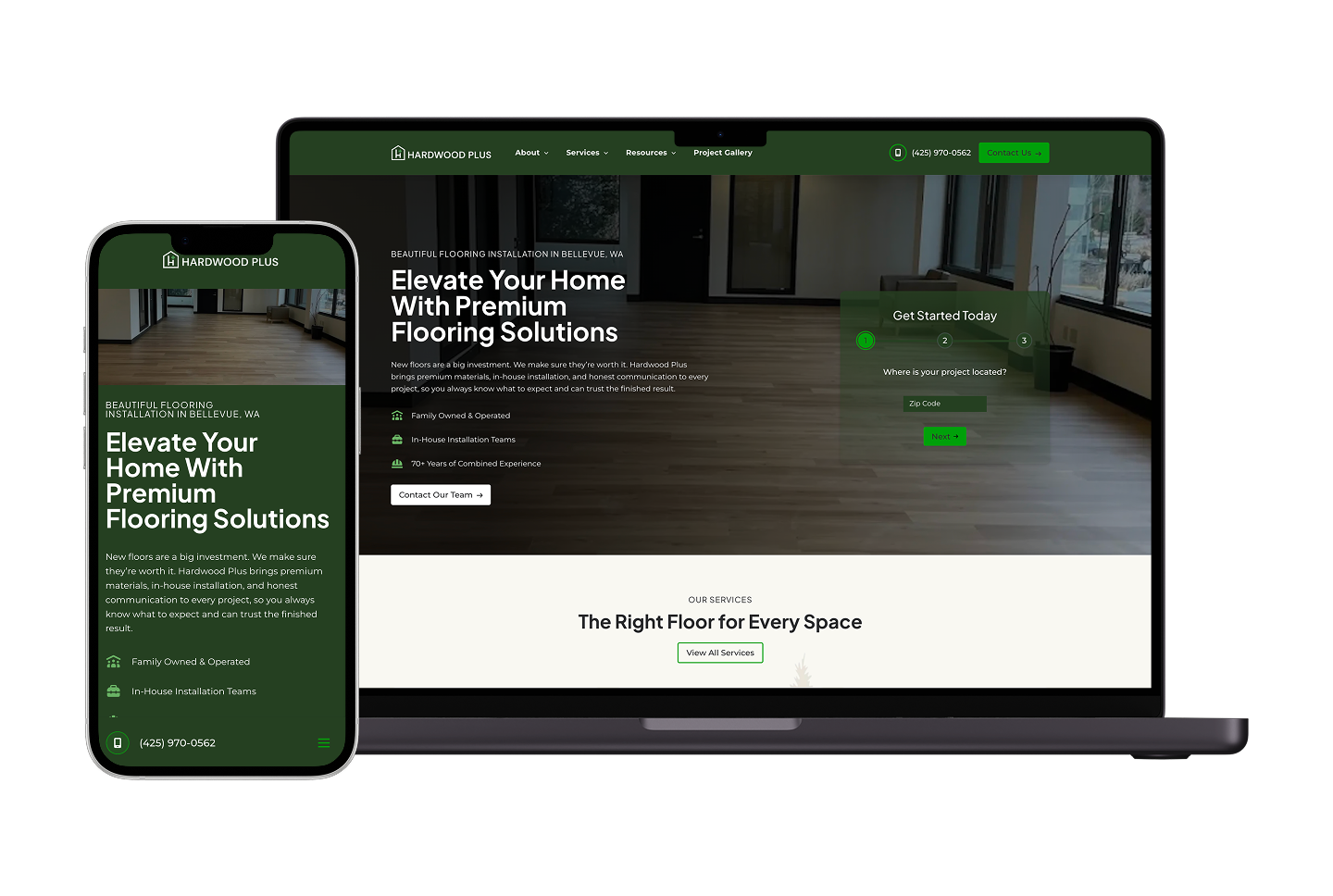
Hex codes: #264021, #191815, #FAFAF5, #06970E. Deep forest, near-black, cream and a bright green accent. Dark, rich hero sections sell premium flooring. The bright green is saved for buttons.
13. Hometown Insulation: forest green and brass
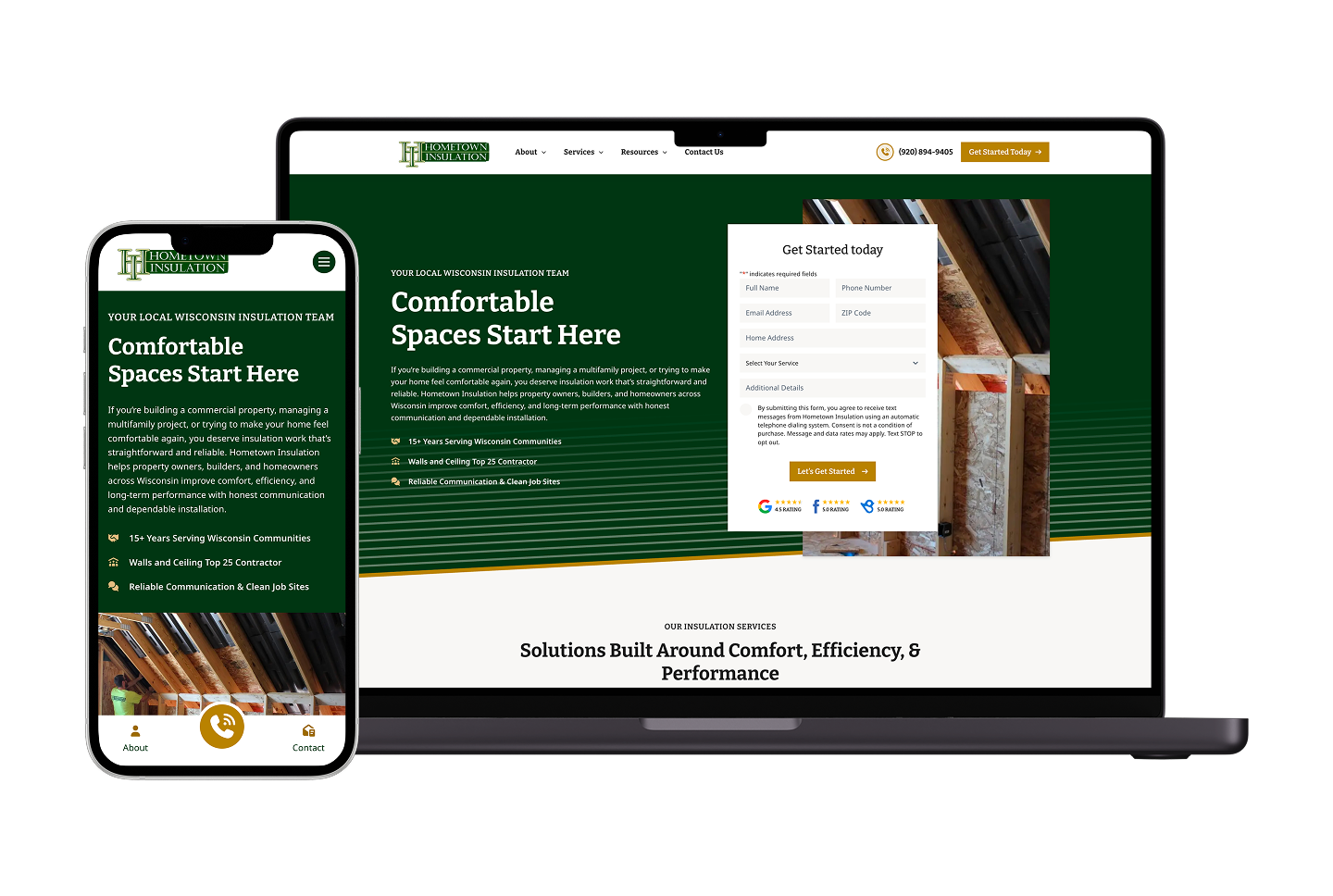
Hex codes: #033714, #F7F6F4, #B48840, #12110E. Forest green, warm off-white, brass gold and charcoal. Green and brass feel trustworthy and a step above the typical blue-and-orange contractor site.
14. 4EVER Remodeling: indigo, slate and sage

Hex codes: #2C2945, #494761, #FAFAFB, #6BA68D. Deep indigo, slate violet, clean white and sage. Indigo is a fresh alternative to navy for remodelers who want to look different from every other company in town.
15. Virginia Pool Company: navy, sky and coral
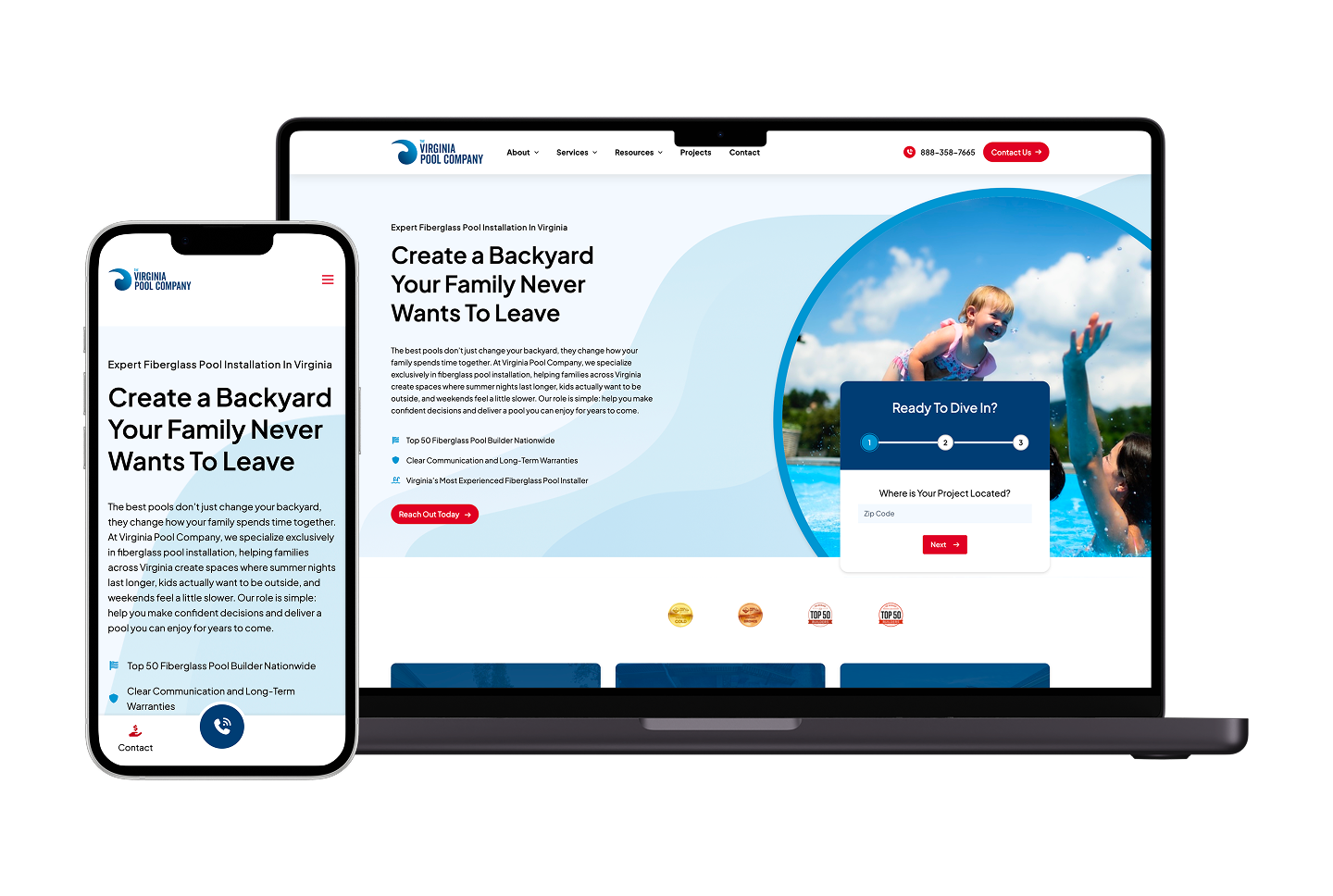
Hex codes: #094873, #3DA9DD, #EFF6FD, #D7695D. Navy, sky blue, pale blue and soft coral. Bright and clean for a backyard-luxury buyer. Coral pops against all that blue.
See more real examples in our lookbook of home service websites.
How premium contractors use color to win bigger jobs
A homeowner choosing a $40,000 remodel or a $90,000 pool is judging your website the same way they judge a showroom. Color sets the price expectation before your sales rep ever shows up. Here’s what works:
- Go dark in the hero, light in the body. A deep forest, navy or charcoal hero with your best project photo feels premium. Keep long sections light so they’re easy to read.
- Give the accent one job. If gold or coral means “click here,” don’t also use it for headings and icons.
- Match the truck, the yard sign and the site. Luxury is consistency. The same palette everywhere looks like a bigger, more established company.
- Let photography carry the color. Warm neutrals make wood, stone and tile look richer. Bright brand colors compete with your work.
- Keep it readable. WCAG guidelines call for at least a 4.5:1 contrast ratio for body text. Muted luxury colors can fail that fast, so test your text colors.
- Pair it with the right type. A refined serif or a clean geometric sans finishes the look. See our list of modern fonts.
Why some colors feel expensive
Color associations come from culture, materials and the brands we already know, which is why deep greens, navies and warm metallics read as established and premium. USC’s applied psychology program has a good overview of color psychology in marketing, and this video covers the basics:
Luxury colors are about positioning, not taste
The right palette sets expectations before a word is read. It tells people what you charge and how you work. If your site looks fine but doesn’t feel as strong as your business, the colors are usually a symptom of a bigger brand and website problem. That’s what we fix with custom website design for home service companies.
Frequently asked questions
What colors make a website look luxurious?
Deep, desaturated anchors like charcoal, espresso, forest green and navy, paired with warm neutrals like cream, stone and taupe, plus one restrained accent such as muted gold or copper. Fewer colors and more white space matter more than any single shade.
What is a good luxury gold hex code?
Muted golds feel more premium than bright yellow-golds. From the palettes above, #A4873E (Timeless Classic) and #AE9F73 (Soho Hotel) are both easy to use on buttons, lines and icons.
Do luxury color palettes work for service businesses?
Yes, especially for high-ticket services like remodeling, custom homes, pools and roofing replacements. A refined palette helps justify premium pricing before the sales conversation starts.
How many colors should a luxury website use?
Usually two or three core colors supported by neutrals. A common split is 60% neutral, 30% main color and 10% accent.
Is black and gold still a luxury color scheme?
It can be, but it is also overused. Charcoal or espresso with a muted gold usually looks more current than pure black with bright gold, and it is easier on the eyes for long pages.