
This post is two things: a roundup of what contractors in my feed actually did to get on their local news, and a full guide to earning that coverage yourself, with the data, a pitching playbook, a sample pitch and an FAQ at the bottom.
Free airtime on the local news beats almost any ad you can buy. A three-minute story puts your name, your trucks and your face in front of every homeowner watching at 6pm. And it carries something ads never will: a reporter vouching for you.
So I asked the contractors in my Facebook feed a simple question: Who’s getting on their local news regularly, and what are your tips?
The answers were better than I expected. Some paid to play. Some gave stuff away. One guy made up an award. Here’s what’s working, in their words, plus what I’d do with it.
- SEO, AEO, Google Ads and LSA for roofers
- Published pricing, nothing hidden
- You own your website and ad accounts
“Not only is our site great, the ongoing guidance we get from Hook is exactly what we needed.”
Steph Laurer, Badgerland Exteriors (roofing)Need the website too? See our Custom Websites
Why local news is worth chasing
Every station has the same problem. They need stories, every single day, and they need them cheap. A roofer who shows up with a good story, a local angle and a clean shot of a crew on a roof makes a producer’s life easier.
That’s the whole game. You’re not begging for coverage. You’re solving their problem.
1. Give something away that makes a great picture
The most common answer was charity. Not a check handed over in a lobby. A visible transformation the camera can see.
Find a couple of stations that work for you and contact them often to see if they have filler spots. The best ones we did were finding people in need, elderly or vets or disabled, and donating them new products or services.
I’d find old homes on busy streets with crappy yards and roofs and see if you can donate them a roof for a 4×4 permanent yard sign. Crappy yards catch eyes!
Chuck Staszkiewicz, Co-Founder, The Opus & Golds Group

Read that twice. He’s stacking two wins: the news story and a permanent yard sign on a busy street. The free roof keeps working long after the segment airs.
Another commenter pointed to a pair of contractors who’ve built a whole brand around giving away money and free roofs. It works because it’s a story with a hero, a villain (the old roof) and a happy ending. Producers love that shape.
2. Sponsor a segment instead of buying commercials
We do a good bit of advertising on our local news. We’re changing our strategy for next year, doing less of the commercial type spots and more of the feel good stuff.
They created a new segment for us called Integrity in Action. It’s a segment sponsored by us that lets us highlight a local nonprofit once a month, and the news does a free cover story about it with me interviewing the nonprofit.
That’s only one piece of the puzzle, but my favorite part.
Brandon Lee, Integrity Roofing
This is the smartest move in the thread. Brandon took ad dollars he was already spending and turned them into a recurring branded segment. His name is in the title. He’s on camera every month. And he’s the good guy in every story because he’s spotlighting someone else.
If you already buy TV, ask your rep what a sponsored community segment would cost. Worst case, they say no.
3. Know the difference between earned and paid
Usually local channels will sell 3 minute information spots where you get to do a spot on storm season or other topics. It looks like a news spot but it’s pay to play. Usually pairs with a website takeover.

Good warning. Those morning show segments where a roofer explains hail damage? A lot of them are bought. That’s not bad. They can still work. Just know what you’re buying and track the calls like any other ad.
The real prize is earned coverage, where the station picks you because you’re the best local expert.
4. Become the station’s go-to expert
I did, through Sinclair Media and Nexstar Media groups. We advertised, but they also then selected us for organic news stories and top stories when weather was relevant.
I also made friends with the news crew and anchors. Here’s one: How to keep your home cool in the Arkansas heat.
Brandon Stowe, Pathway Partners Group
Notice the pattern. He advertised, then built real relationships with the people in the newsroom. When a heat wave or a storm hit, they already knew who to call.
Weather is your opening. Hail, ice dams, a windstorm, a brutal heat wave. Every one of those is a story the station has to run. Be the roofer they can reach in ten minutes.
5. Rank on Google, because reporters search too
Have kick ass SEO. When they want to run a story they go to the Goog. Usually once a year they call me to do a story.

This one’s close to my heart. A producer with a deadline types “roofer near me” just like a homeowner does. If you’re the top result with a great review count, you’re the expert. Strong local SEO pays you twice: once in leads, once in press.
6. Make up an award (seriously)
We made up an award and a giveaway. It was awesome and picked up by local PR pretty well. The First Yes Award.

You don’t need to wait for someone to hand you news. Create it. An award, a scholarship, a community giveaway with a name. Give it a title a reporter can put in a headline and send the press release.
7. Tell your real story
I’m working on getting on our local news right now. Most local stations will give you a segment about you and your business as long as your story is good. I’m eager to share my testimony. I know it will help business, but more importantly, I hope to help others going through it. We all know someone who has gone through or is going through cancer.

Your personal story counts. Beating cancer, getting sober, serving in the military, starting with one truck. Stations cover people, not companies. Lead with the person and the company comes along for the ride.
The funny answers
Contractors don’t let a question go by without a few jokes. Two of my favorites:
“Man in Owl Suit found running across the highway. Story at 11.” It’ll work, I promise. You might even get on national news.

Start taking deposits and not doing the work. They’ll find you!

Please don’t do Jacob’s plan. The owl suit is still on the table.
Takeaways: how to get your roofing company on the news
- Pitch stories, not your company. A veteran’s new roof, a nonprofit spotlight, a homeowner saved before a storm. Your business is the backdrop.
- Turn ad spend into a segment. If you already buy TV, ask for a sponsored community segment with your name on it.
- Know paid from earned. Paid info spots are fine. Track them like ads. Earned stories are the real prize.
- Be ready when weather hits. Send your local stations a short note before storm season with your cell number and what you can explain on camera.
- Make friends in the newsroom. Producers, anchors, camera crews. Be easy to work with and fast to respond.
- Rank in Google. Reporters search like homeowners. Strong local SEO makes you the obvious expert.
- Create news. An award, a giveaway, a scholarship. Give reporters a headline.
Got a local news win of your own? Send it my way. I’d love to add it to the next version of this post.
The full guide: how to earn local news coverage as a contractor
The takes above show what’s working. This half of the post turns them into a system you can run every year: the data on how people watch local news, what reporters actually want and a step-by-step playbook.
Local news by the numbers
- 65% of U.S. adults get news from their local TV station at least sometimes, and 34% say TV is their preferred way to get local news. (Pew Research Center, Local News Fact Sheet, survey Dec 2025)
- Only 21% follow local news “very closely,” down from 37% in 2016. Translation: you get one shot. Your story has to be useful or visual enough to stop a scroll or a channel flip. (Same Pew fact sheet.)
- 62% of journalists prefer a one-to-one email pitch, 69% want pitches under 200 words and 86% say at least some of their work started with a PR pitch. (Muck Rack State of Journalism 2026, via University of Minnesota)
- 70% of journalists say clear relevance to their beat matters most, yet 43% say relevant pitches are rare. (Same Muck Rack summary.)
- 50% of journalists say one follow-up is ideal, and 51% say to follow up 3 to 7 days after the first pitch. (Muck Rack)
Reporters are buried in irrelevant pitches. A short, local, well-timed email from a roofer with photos and a ready source on camera stands out fast.
What makes a roofing story newsworthy
PR pros have taught the same news values for decades. The Public Relations Society of America’s PRNewPros blog lists timeliness, proximity, usefulness, prominence, impact, novelty, conflict, human interest and trends. Here’s how each one maps to a roofing company:
| News value | Roofing story angle |
|---|---|
| Timeliness | Hail, wind or ice dams this week. Pitch within hours, not days. |
| Proximity | A local family, a local school, a local street. Stay inside your market. |
| Usefulness | “How to spot hail damage from the ground” or “5 signs of a storm chaser.” |
| Impact | A free roof for a veteran or a nonprofit that serves hundreds of families. |
| Human interest | Your own story: starting from one truck, recovery, military service. |
| Novelty | A made-up award, a drone inspection demo, a roof replaced in one day. |
| Conflict | Consumer protection. Out-of-town storm chasers vs licensed local roofers. |
Be the storm-season safety expert
After every big storm, regulators warn homeowners about scams, and stations run those stories. That’s your opening to be the trusted local voice.
In Minnesota, Commerce Department consumer services manager Dan Bryden told KSTP: “Every time we have a storm in Minnesota, we have companies that come in from other parts of the country,” and “If they don’t have a license in Minnesota, you may never find them.” (KSTP, June 2022) Attorneys general in Iowa and Illinois issue the same kind of warnings.
Pitch the follow-up story: a licensed local roofer walking a viewer through how to check a contractor’s license, what an honest inspection looks like and why you never pay in full up front. You become the expert, not the advertiser.
The 6-step local news playbook
- Build a short media list. Every local TV station, the daily paper and the community papers. Find the assignment desk email and the reporters who cover weather, consumer issues and community stories.
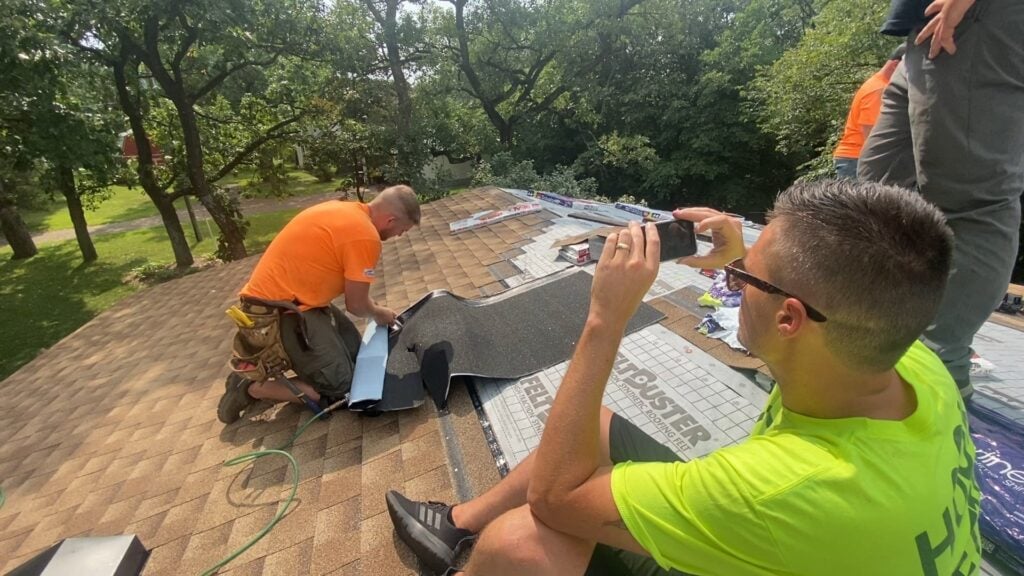
- Build a media kit before you need it. Clean b-roll of crews working safely, before-and-after photos, a one-paragraph bio, your license number and a cell number that gets answered.
- Pick your angle. Use the news values table. One story, one angle, one local hook.
- Write a short pitch. Email, under 200 words, subject line that reads like a headline. Offer a specific person, place and time for filming.
- Follow up once. Three to seven days later, or the same day if it’s breaking weather.
- Make the most of every hit. Post the clip, add “As seen on” to your site, send it to past customers and save it for your sales presentation.
Sample pitch email
Subject: Hail hit Maple Grove last night. Here’s how homeowners can check their roofs safely.
Hi [Name], I own [Company], a licensed roofer based in [City]. After last night’s hail, we’re getting calls from neighbors who don’t know what to look for, and we’re already seeing out-of-town crews knocking doors. I can show your viewers three signs of hail damage they can spot from the ground, and how to check a contractor’s license in 30 seconds. We’re inspecting a home on [Street] at 10am tomorrow and the homeowner is happy to be on camera. Photos attached. My cell is [number]. [Your name]
Earned coverage vs press releases vs paid segments
- Earned coverage is a reporter choosing to feature you. It carries the most trust.
- Paid segments, like the 3-minute “info spots” Christopher mentioned, look like news but are advertising. They can work. Track them like any ad.
- Press releases blasted to wire services rarely move the needle on their own. Google’s John Mueller has said, “we try to ignore links from things like press releases.” (Search Engine Roundtable) An editorial story on a station’s site that links to you because you were the expert is a different thing entirely.
How we think about it at Hook Agency and Owl Roofing
At Hook, we don’t treat press as a lead source. We treat it as an amplifier. A news hit rarely fills the calendar on its own. What it can do is make everything else work better. Branded searches go up, the sales rep gets a warmer welcome and the “As seen on” line on the website lowers the homeowner’s guard.
At Owl Roofing, our whole brand is built on being the local company people recognize. News coverage is the same play as our yard signs and truck wraps: show up in the community so often that by the time someone needs a roof, they already know who to call.
FAQ
Is it worth paying for a local TV segment?
It can be, as long as you know it’s advertising. Ask for a sponsored community segment like Brandon’s “Integrity in Action” instead of a one-off spot, use a tracking number and judge it on booked jobs over a full season.
How do I find the right reporter?
Watch and read the station for two weeks. Note who covers weather, consumer protection and community stories. Pitch that person, not the general inbox, whenever you can.
When is the best time to pitch?
For weather stories, the same day. For everything else, a weekday morning. Muck Rack’s 2026 survey found most journalists prefer pitches before noon.
Do I need a PR agency?
Not to start. A good story, a short email and a fast response beat an agency blast. Bring in help once you’re pitching every month.
What should I say on camera?
Teach, don’t sell. Give three useful tips, mention your company once and point people to their state’s contractor license lookup. That’s what gets you invited back.
Keep building your local brand
- Local SEO for home service businesses: how reporters (and homeowners) find you on Google.
- Google Maps SEO for roofers: get into the map pack where local searches start.
- 20 roofing marketing ideas from real roofers: more community and referral plays.
- Radio vs billboards for roofers: when paid brand media makes sense.
- Roofing truck wraps: the rolling billboard that makes your b-roll look great.