Originally published January 9, 2025. Updated November 3, 2026.
The best roofing truck wraps are simple: a big, readable company name, one phone number or website, a clear “Roofing” so people know what you do, and colors that match the rest of your brand. Below are roofing truck wrap examples that get it right (and a few that don’t), plus a design checklist.
Your truck isn’t just a way to get from one job to another.
It’s a rolling billboard, capturing attention and turning heads wherever you go.
Whether it be a half wrap, one-third wrap, or a truck wrap + trailer like Great State Roofing, truck wraps are HUGE for brand awareness and even lead generation.
- Logos and brand identity built for the trades
- Designed to pop on trucks, signs and Google
- Websites that match the brand
“They captured our vision and who we are as a company.”
Angelica Brager, Young ConstructionNeed the website too? See our Custom Websites

1. Roofing Truck Wraps are Powerful – here’s why:
- Every mile you drive and every hour you park at a job site puts your brand in front of the exact neighborhoods you serve, without a monthly ad bill.
- A wrap is a one-time cost that works 24/7. For roofers, that means more visibility right where your next customers live.
- A well-designed truck wrap elevates your professionalism and makes your company memorable long after you’ve left the job site.

2. The Real ROI of Roofing Truck Wraps
Here’s the math that matters. A wrap is a one-time cost (get quotes from two or three local wrap shops, since prices vary by truck size, coverage and design). Then it advertises every day for years. Divide the cost by the months you will drive that truck, and a wrap is usually one of the cheapest ways to stay visible in your service area.
With truck wraps, you’re advertising every time you hit the road, sit in traffic, or park at a job site. Want to know if it works for you? Ask every new caller how they heard about you, and give the truck its own phone number or a short URL so you can track it.
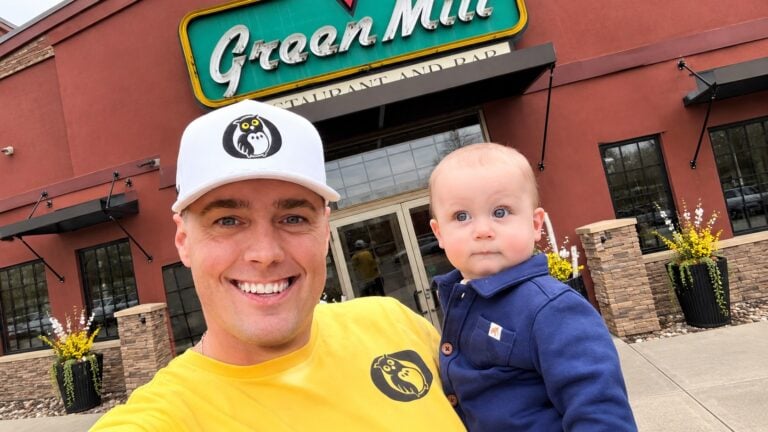
Here’s one we know well: the Owl Roofing truck, with branding by Hook. Big owl, big name, one website. You know who it is from across a parking lot.

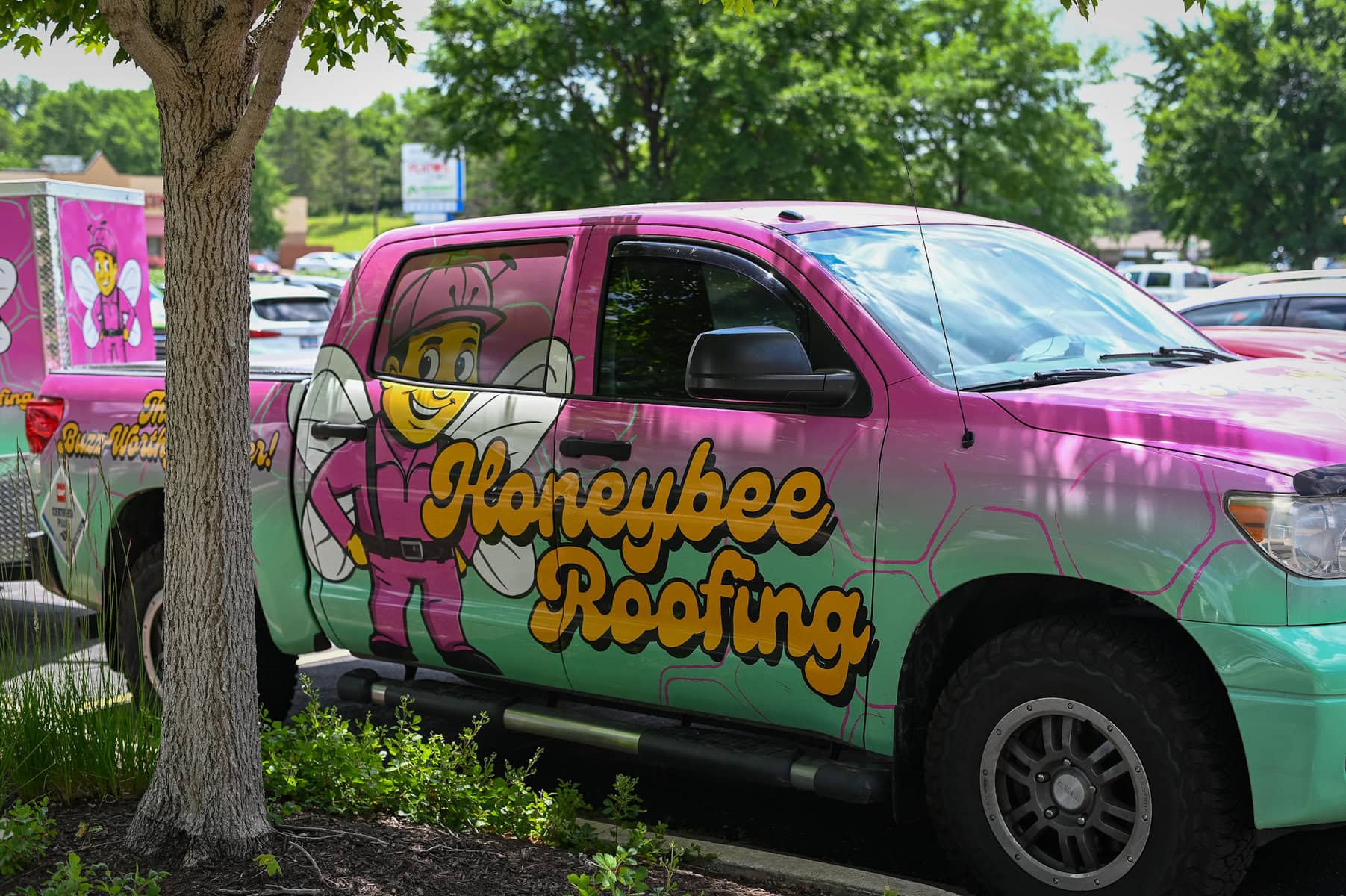
Another one that stops traffic: Honeybee Roofing in Rockford. A pink-and-teal truck with a grinning bee mascot is impossible to miss, and that buzz turns into local recognition fast.
3. Types of Wraps: Which One Fits Your Brand?
Not all wraps are created equal. Depending on your budget and branding goals, there are different levels of coverage:
Full Wrap
- Covers the entire truck, including the sides, rear, and sometimes windows.
- Maximum visual impact and brand consistency.
- Best for roofers looking to make a bold statement.
Partial Wrap
- Covers specific sections like doors, tailgate, or hood.
- Lower cost than a full wrap but still grabs attention.
- A great middle ground for small to mid-sized roofing companies.
Spot Graphics
- Small decals or logos applied to one or two areas.
- The most budget-friendly option.
- Ideal for simple branding or adding to existing paint jobs.
Full wrap vs. partial wrap vs. spot graphics
Relative impact and cost. Get local quotes for real numbers.
Swipe sideways to see every column →
| Type | Covers | Visual impact | Relative cost | Best for |
|---|---|---|---|---|
| Full wrap | Whole truck, sometimes windows | Highest | Highest | Bold brands, fleets |
| Partial wrap | Doors, tailgate or hood | Strong | Mid | Small to mid-size roofers |
| Spot graphics | Logo and phone decals | Basic | Lowest | New companies, extra trucks |
Here’s an amazing one by Bison Roofing.

4. Design That Converts: Essentials for Roofing Truck Wraps
A good wrap design doesn’t just look cool – it converts viewers into customers. Simplicity is key. Drivers have just a few seconds to process what they see, so avoid clutter.
Essential Elements for High-Converting Wraps:
- Big, bold text with your company name and phone number.
- Clear logo placement to build brand recognition.
- Website URL – easy to read and remember.
- Call-to-action on the tailgate (where drivers behind you will see it).
- Use contrasting colors to make the text pop.
Where everything goes on a roofing truck
Four zones, read in order. If any zone is crowded, cut words.
Here are a few examples from our friends at KickCharge Creative, who design some of the best roofing truck wraps I’ve seen:


5. Material Matters – Choosing the Right Vinyl
The material you choose affects not just the look but the durability of your wrap. Vinyl is the industry standard, but there are several finishes to consider:
- Matte – Modern, sleek, and understated. Reduces glare and adds a professional look.
- Glossy – Bright and vibrant. Reflects light and stands out from a distance.
- Satin – A mix between matte and glossy. Offers a soft sheen that isn’t too flashy.
- Metallic – Reflective and eye-catching. Adds a unique flair to your truck wrap.
Each finish has its strengths depending on your brand style. Roofing trucks often benefit from satin or glossy finishes to stand out on the road without being overly reflective.

6. How to Find the Best Wrap Installer (and Avoid Common Pitfalls)
Not all wrap companies are created equal. The quality of installation can make or break the effectiveness and longevity of your truck wrap. Here’s how to ensure you’re working with the best:
- Check Their Portfolio – A reputable wrap installer should have a gallery of past projects. Look for crisp, clean lines and designs that match what you’re envisioning.
- Read Reviews – Online reviews provide insights into customer satisfaction. Pay attention to feedback about durability and service.
- Ask About Warranties – A quality wrap should come with a warranty. This protects your investment if the wrap starts to peel or bubble prematurely.
- Request a Quote – Get a detailed quote that breaks down costs for materials, design, and installation. Avoid companies that are vague or hesitant to provide specifics.

7. Maximizing the Lifespan of Your Roofing Truck Wrap
A well-maintained wrap can last for years (ask your installer what the vinyl manufacturer’s warranty covers), but poor care can lead to peeling and fading fast. Follow these maintenance tips to extend the life of your wrap:
Do:
- Hand wash your truck weekly using a soft sponge and non-abrasive detergent.
- Park in the shade to prevent sun damage and fading.
- Clean stains immediately to avoid permanent discoloration.
Don’t:
- Automatic car washes with brushes, as they can lift edges and cause peeling.
- Waxing the wrap, which can degrade the vinyl over time.
- Pressure washers at close range. High pressure can force water under the wrap.

8. How Not to Wrap Your Roofing Truck (Lessons from the Road)
Look, we’ve all seen them: truck wraps that make you do a double take, but not in the “wow, I need to call that roofer” kind of way. Whether it’s a truck literally covered in shingles or a design that looks like it belongs in a modern art museum (and not the good kind), there are a few things we can all learn.
Three Things to Avoid:
- Too Literal: A truck with real shingles glued on may seem clever, but it’s more likely to shed debris than impress clients. Stick to printed vinyl for the “roof-look” without risking highway hazards.
- Illegible Designs: If your company name looks like it was spray-painted by a toddler during a sugar rush, it’s not helping you get calls. Bold, readable fonts are your best friend.
- Gimmicks Over Clarity: Being memorable is great, but if people can’t tell you’re a roofer, you’ve missed the mark. Make sure your wrap clearly states what you do and how to contact you.
A good roofing truck wrap should turn heads for the right reasons: professionalism, creativity, and clarity. Let your design work for you, not against you.

Roofing truck wrap design checklist
Before you send a design to the wrap shop, check it against this list:
- Company name readable from 50+ feet. Bold, simple font. No thin script.
- Say “Roofing.” If people can’t tell what you do in two seconds, the wrap isn’t working.
- One phone number or one website. Not both plus a QR code plus social handles.
- Tailgate call to action. The driver behind you at a red light has the most time to read.
- Brand colors that match your website and yard signs. Consistency is what makes a small company look big.
- License number if your state requires it on vehicles or advertising.
- Check it at small size. Shrink the mockup to thumbnail size. If you can still read the name, it will read on the road.
9. Why You Need to Wrap Your Truck Now
Every day you drive around in an unwrapped truck is a missed opportunity for brand exposure.
Truck wraps build brand awareness and advertise your services to the neighborhoods you work in, without the recurring costs of traditional ads.
By investing in a high-quality roofing truck wrap, you’re making a smart, long-term investment in your business.
It’s time to let your truck do the talking. Want a brand that looks this good from the logo to the wrap to the website? Browse our lookbook, see our roofing marketing, or book an intro call.
Frequently Asked Questions
How much does a roofing truck wrap cost?
It depends on the truck size, how much of the truck is covered, and the design. Full wraps cost more than partial wraps or spot graphics. Get quotes from two or three local wrap shops that break out design, materials and installation.
What should be on a roofing truck wrap?
Your company name in big readable letters, the word Roofing, one phone number or website, your logo, and a call to action on the tailgate. Keep the colors consistent with your website and signs.
How long does a truck wrap last?
A well-maintained wrap can last for years. Hand wash it, avoid brush car washes and close-range pressure washing, and ask your installer what the vinyl warranty covers.