
Two years ago, your market finally made sense.
Prices were up. Customers understood value. You could sell a quality roof without apologizing for it.
Then private equity showed up.
Suddenly bids started coming in that made no sense. Jobs getting sold at prices you know don’t work long term. Sales reps rushing homeowners to sign day one. Per square numbers sliding backward like the last five years never happened.
If you are trying to compete with roofing private equity, this is the moment that messes with your head.
Do I drop my price just to stay in the game
Do I stick to my numbers and lose volume
Do I wait this out and hope they leave
Here’s the hard truth most people avoid. Private equity is not trying to win this year. They are trying to survive long enough to reset the market later.
What Private Equity Roofing Companies Actually Do Better
This is the part most independent owners skip too fast.
Private equity-backed roofers are not guessing. They are executing a playbook that capital makes possible. And yes, some of it works. They can drop prices and bleed cash for years.
That is the biggest advantage. Not efficiency. Not better installs. Time. When money is patient, pricing becomes a weapon. Jobs that would hurt an owner-operator can still make sense inside a larger portfolio playing a multi-year game.
That is why markets feel like they move backward overnight.
Roofing M and A data backs this up. Deal activity surged 116.7% over the last 6 years, with 19 deals closed in Q1 2024 alone. That pace has continued on a near weekly basis heading into 2026. This is not dabbling. It is sustained expansion.
If a homeowner does not sign on day one, it is rarely a concern. There is always another lead. That mindset removes friction in sales but creates long term problems independent owners end up competing against later.

This is also where roofing company culture mistakes start stacking up.
- High turnover
- Low accountability
- Inconsistent installs
- No real ownership of outcomes
Where Private Equity Roofing Models Break Down And The Price Trap They Create
This is where the private equity playbook starts to crack.
The same tactics that let PE-backed roofers move fast also create damage that shows up later. Usually after prices have collapsed and trust has thinned out.
The Race to the Bottom Has a Cost
When capital enters a market, pricing becomes a weapon.
Private equity-backed companies can drop prices aggressively because they are not optimizing for margin today. They are optimizing for market share tomorrow. That race to the bottom destroys long-term value for everyone involved.
Independent roofers feel the pressure first. Then homeowners feel it later.
Fast sales cycles create weak follow-up and weak loyalty. When deals are rushed, relationships never form. That kills relationship marketing for roofers, which is still one of the strongest long-term advantages local companies have.
Cheap Installs Create Expensive Problems
Lower prices almost always show up somewhere else.
- Corners get cut
- Products get downgraded
- Installs get rushed
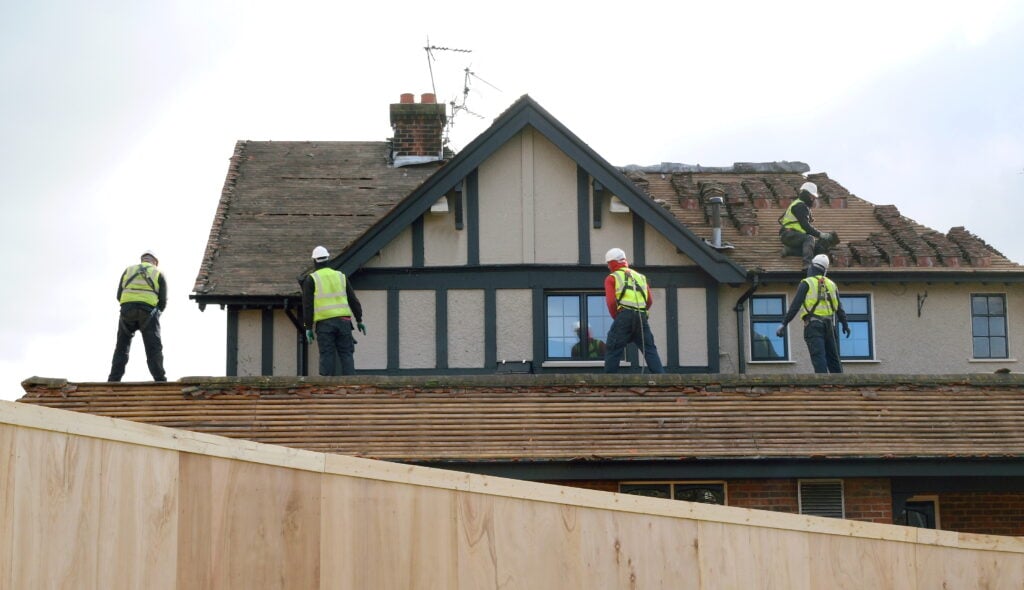
The result is young roof failures. Roofs that should last decades start showing issues in just a few years. Those problems do not disappear. They get inherited by the market.
Local owners end up fixing the mess while PE-backed brands move on to the next quarter.
Ownership Churn Kills Accountability
Private equity ownership changes hands. Leadership rotates. Priorities shift.
When ownership churns, accountability disappears.
Independent owners live with their work. Their name is on every truck. Their reputation walks into the grocery store with them. That is the home field advantage PE can never fully replicate.
The Price Trap That Destroys Local Roofing Brands
Here is the part most owners regret later.
Being the cheapest early feels like momentum. Jobs come in. Volume climbs. Cash flow looks healthy. But once the market knows you as the cheap contractor, climbing back up is brutal.
Private equity entry trains markets downward.
Per square pricing drops fast. Homeowners reset expectations. Competing on value suddenly feels like fighting gravity. It is easy to come down in price. It is brutal to climb back up. This is why long-term positioning matters more than short-term volume.
Why Independent Owners Still Have Leverage
Owner-led roofing companies are optimized for durability, not exit.
They can invest in people instead of churn. Some even choose to give employees phantom equity or long-term incentives that reward staying and caring about the outcome. That kind of alignment creates pride, accountability, and consistency PE models struggle to maintain.
Private equity is optimized to exit.
You are optimized to live with your work.
Why Value Wins When PE Plays Volume
Private equity and independent roofers are not playing the same game. They just happen to be on the same field. One is built to move fast and exit. The other is built to stay.
When you lay the models side by side, the difference becomes obvious.
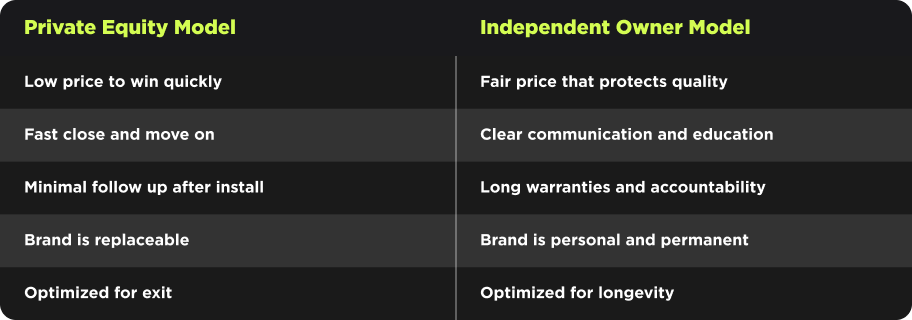
Volume looks powerful on the surface. More jobs. More crews. More logos everywhere. But volume without ownership creates cracks that show up later.
Value works differently.
Clear communication builds trust. Long warranties signal confidence. Being present after the install turns one job into ten referrals. That is how some roofers become millionaires without ever trying to be the cheapest name in town.
Here is the insight PE cannot escape.
Homeowners still care who will answer the phone five years from now.
How Independent Roofers Actually Compete Without Becoming Them
Competing with private equity does not mean copying their moves. It means leaning harder into the things they cannot scale, rush, or fake.
The roofers who hold their ground and grow do a few things very intentionally.
- They lead with financing to protect pricing.
Not to discount. To reframe the conversation. Financing shifts focus away from sticker shock and toward outcomes. It allows upgrades, better systems, and stronger warranties without racing to the bottom.
- They sell systems and warranties, not shingles.
When the pitch is only price per square, PE wins. When the pitch is longevity, workmanship, and accountability, independents take control of the narrative.
- They use roof repairs as long-term entry points.
Small jobs are not distractions. They are relationship starters. Fix the leak today, earn the replacement tomorrow. That strategy quietly outperforms chasing only full replacements and builds a client base PE models often ignore.
- They overinvest in communication and follow-up.
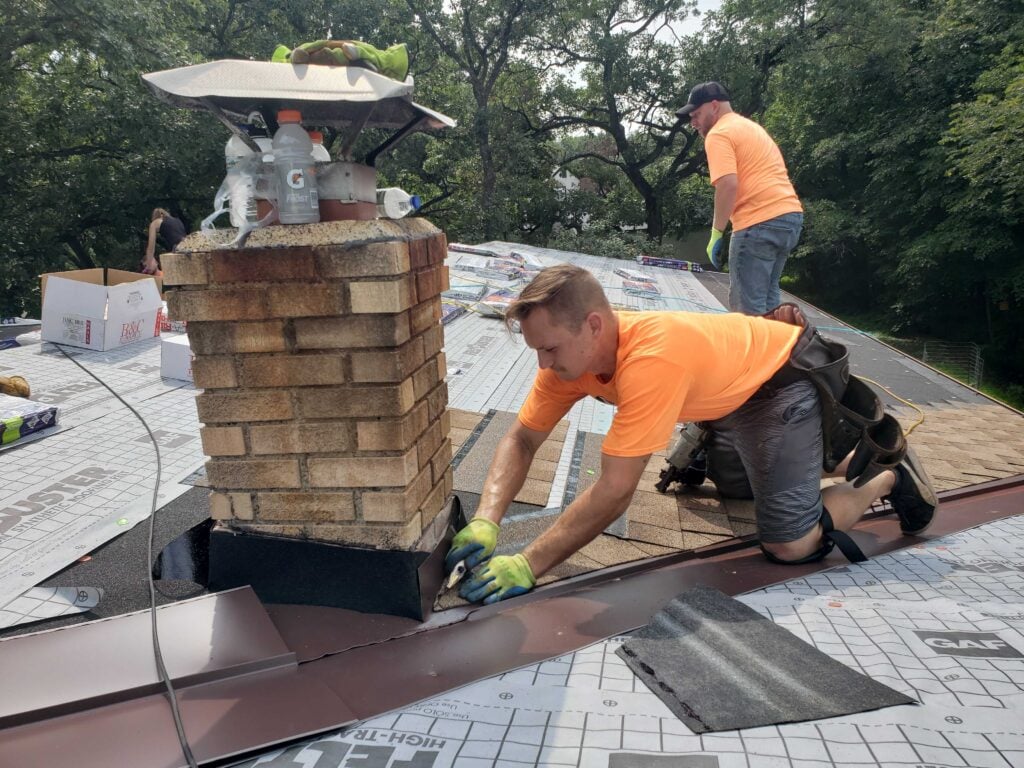
Fast sales cycles leave gaps. Independent roofers win by filling them. Clear timelines. Proactive updates. Real follow-through. This is where trust compounds and referrals start flowing.
You Do Not Beat Private Equity By Chasing Them
Private equity is playing a different game. They are built to move fast, absorb losses, and exit when the timing is right.
Independent roofing companies win by staying put.
When you protect pricing, invest in relationships, and build a brand you are proud to stand behind, you create something PE cannot replicate. A reputation that compounds. A team that cares. A business that still answers the phone years later.
Competing with private equity is not about outspending them. It is about outlasting them.
If you want a clear plan to grow in your market without racing to the bottom or relying on private equity money, let’s talk. Book a call to map a competitive growth strategy that does not rely on private equity money.