
The SEO report looks great. Rankings up. Impressions up. Traffic up. The agency sends a celebratory email. Then you check the leads. Nothing really changed.
This is the most common story in roofing SEO right now. And the problem is almost never the keywords or the backlinks. It is the website those rankings are sending people to.
Roofing SEO website elements are what separate a site that generates consistent leads from one that just generates a decent-looking report. Traffic means nothing if the page people land on does not give them a reason to stay, trust you, and pick up the phone.
Here are the seven elements that actually move the needle.
The 7 Website Elements That Make Roofing SEO Actually Work
Google’s bar for what deserves to rank has never been higher. AI Overviews are absorbing clicks. Homeowners are making decisions faster and with less patience for slow, generic websites. These seven elements are what separate a roofing website that compounds in value every month from one that just exists online.
1. Service Pages With Real Depth
Most roofing websites have one services page. A paragraph each on repair, replacement, gutters, and storm damage. Maybe 400 words total.
That is not depth. That is a menu.
Google wants proof that you actually know what you are talking about. That means dedicated pages for every core service. Roof repair. Full replacement. Storm damage. Insurance claims. Flat roofing. Each one built to stand alone and rank alone.
What a strong service page looks like in 2026:
- 800 to 1,500 words of genuinely useful content, not padded filler
- A clear process breakdown, not just a definition of the service
- Real FAQs pulled from questions homeowners actually ask your sales team
- Local context that reflects your specific market, climate, and common issues
- A conversion path built directly into the page
Think about what a homeowner searching “roof replacement cost in [city]” actually needs to know. Answer that completely. That is the page that ranks and converts.
For examples of what this looks like done right, these roofing website examples show exactly the standard worth building toward.
2. Location Pages That Prove You Were Actually There
80% of US consumers search online for local businesses every week. 32% do it daily. Every single one of those searches has a location attached to it.
And if your website cannot prove you operate in that market, you are invisible to all of them.
A strong location page is not a service page with a city name swapped in. It is proof of presence. The kind that makes a homeowner feel like you are their neighborhood roofer, not a company that technically covers their zip code.
That proof looks like:
- Job photos from actual projects completed in that city
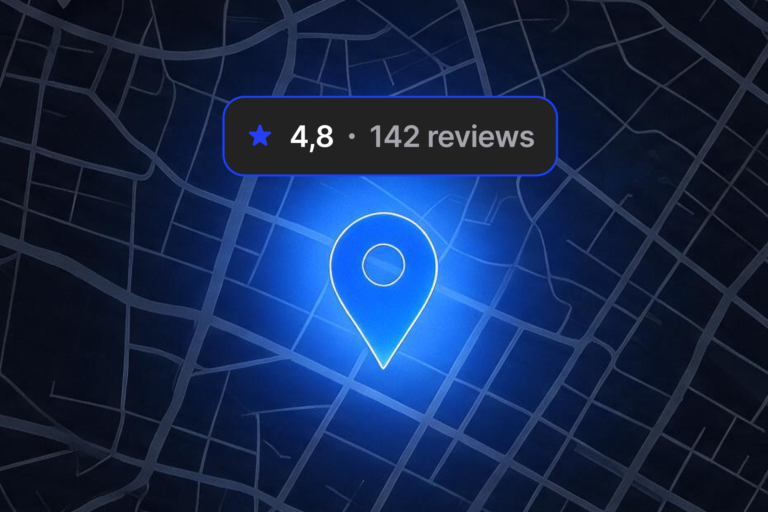
- Reviews from customers specifically mentioning that area
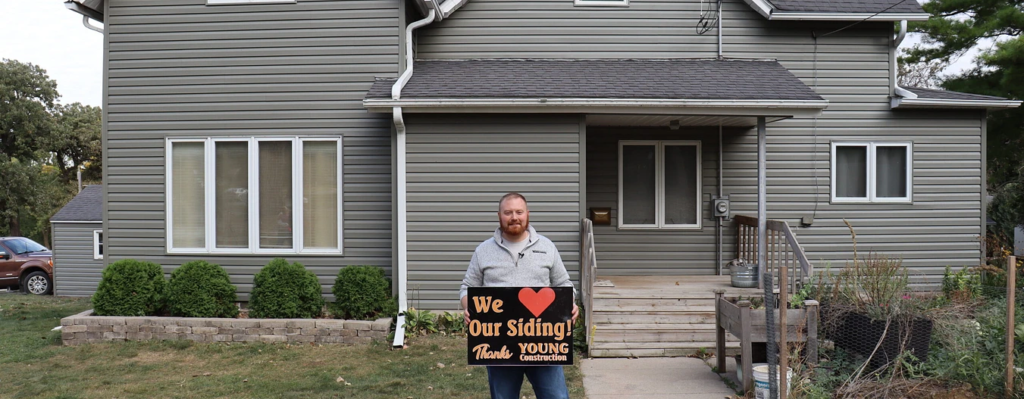
- Local details like permit requirements, common storm patterns, and neighborhood-specific context
- GBP information that matches the page exactly
The homeowner in that city needs to feel like you know their neighborhood. That is the page that earns trust before a single phone call happens.
3. Internal Linking That Connects Everything
Internal linking is the most underrated element in roofing SEO. Most contractors ignore it or treat it as a navigation afterthought.
It is much more than that. In 2026 with AI Overviews pulling from interconnected content clusters, a well-linked site gets referenced more often and ranked more consistently than a pile of disconnected pages.
The structure that works:
Blog posts link to relevant service pages. Service pages link to supporting city pages. City pages link back to core services. Everything connects with intention.
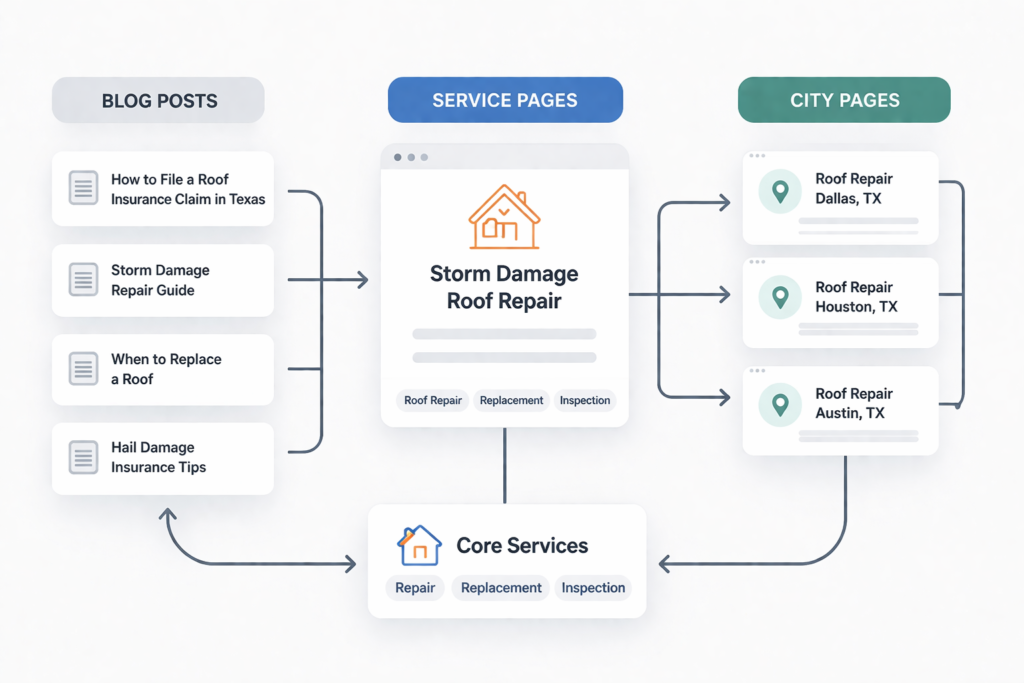
A post about “how to file a roof insurance claim in Texas” links to your storm damage service page. That page links to your Dallas and Houston city pages. Those pages link back to the service. That web of relevance is what advanced roofing SEO actually looks like in practice. Not isolated pages floating independently. A system where every page makes every other page stronger.

4. Conversion Elements That Catch Every Lead
A homeowner lands on your site at 10pm with water coming through their ceiling. They are not browsing. They are ready to call someone right now.
The question is whether your website makes that easy or makes them work for it.
Research across 18,639 landing pages found that pages with a single CTA convert at 13.5%. Pages with more than five CTAs drop to 10.5%. More options create more hesitation. In an era where homeowners are making faster decisions with less patience, that drop-off is significant.
The conversion elements every roofing website needs right now:
Sticky header with click-to-call. Visible on every page, every scroll position, every device. The phone number should never require hunting.
Short forms. Name, phone, service needed. Every additional field costs you submissions.
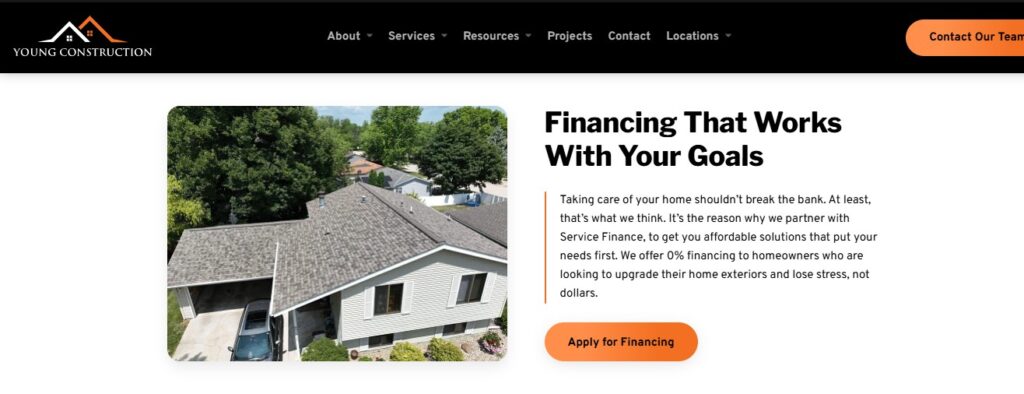
Financing options front and center. A $15,000 roof replacement is a real financial decision. Show financing options before the objection forms.
Trust badges. Certifications, manufacturer credentials, BBB ratings visible without scrolling. Silent objection handlers that do their job before you even speak to the lead.
Every friction point between interest and contact is a lead you are losing to a competitor whose site removes that friction. The best home service websites are engineered around this principle from the ground up.
5. A Technical Foundation Google Can Actually Crawl
Nobody gets excited about XML sitemaps. But ignore the technical foundation and everything else on this list underperforms.
23% of websites have pages that do not link to their XML sitemap in robots.txt. Over 17% have sitemaps containing redirecting URLs. Around 15% are missing a sitemap altogether. If Google cannot efficiently crawl your site, your content does not matter how good it is.
The technical non-negotiables in 2026:
Page speed on mobile. Most local roofing searches happen on a phone. A site loading in four seconds loses leads to one loading in two. No exceptions and no excuses.
Clean site structure. Every important page reachable within three clicks from the homepage. Deep buried pages get crawled less and rank less reliably.
Schema markup. LocalBusiness and Service schema give Google structured data to work with. In an AI-heavy search environment that structured data increasingly determines whether your content gets cited or skipped entirely.
This is also where the gap between standard vs custom websites becomes a technical problem, not just an aesthetic one. Template-based sites carry bloated code, rigid structures, and load time issues that make SEO fixes difficult without rebuilding entirely. The real problems with cheap roofing website builders run much deeper than how they look.

6. Visual Proof That Builds Trust Before They Call
In 2026 a homeowner evaluating roofing contractors has already scrolled through three competitor websites before they reach yours. They are making a trust decision fast. The company with the most compelling visual proof wins before a word is spoken.
What that looks like on a roofing website today:
- Before and after galleries organized by service type and location. Not a generic photo dump. A curated portfolio that shows range, quality, and real results from real jobs
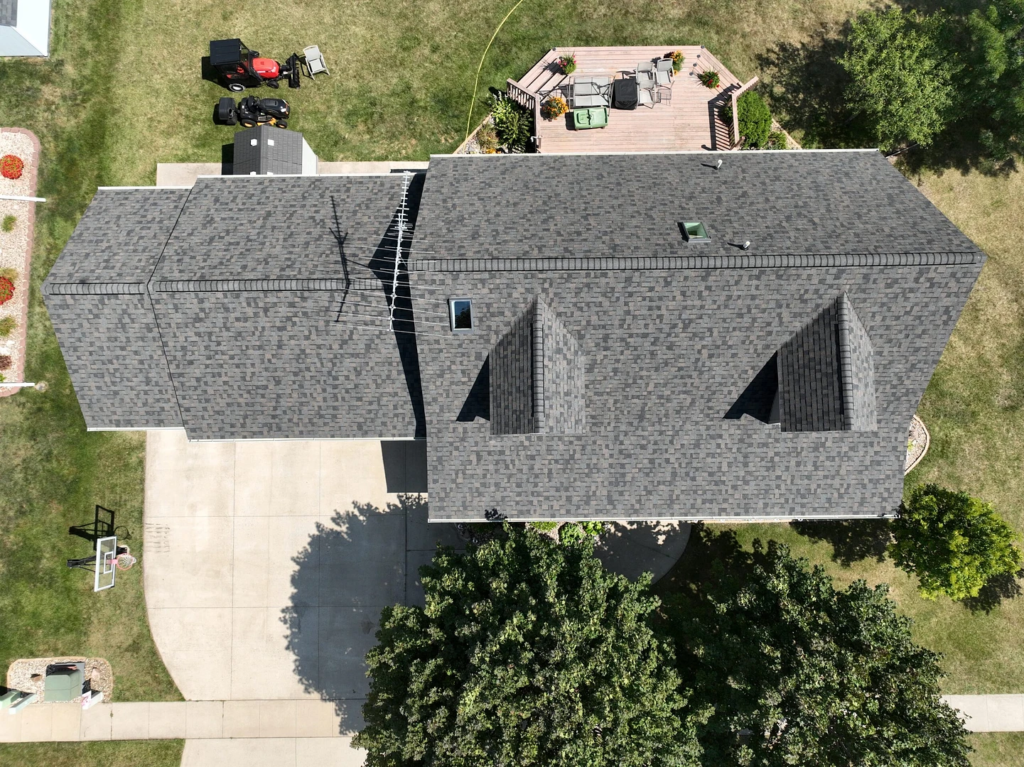
- Drone shots. A bird’s eye view of a completed roof communicates scale and craftsmanship in a single frame better than three paragraphs of copy ever could
- Real team photos. Homeowners are letting someone onto their roof. They want to see who that person is. Stock photography of smiling contractors in hard hats does not build that trust
- Project specifics. Square footage, materials used, timeline. These details signal expertise and answer questions homeowners are already asking
7. Ongoing Content That Compounds Over Time
A roofing website is not a one-time project. It is a compounding asset that gets more valuable every month you add to it.
Every blog post targeting a specific long-tail question is a new entry point into your site. A new ranking opportunity. A new internal link passing authority to your core service pages. And in 2026 with AI Overviews pulling from authoritative content clusters, that depth of coverage increasingly determines who gets cited and who gets skipped.
The content that consistently drives roofing leads right now:
- Storm damage and insurance claim guides timed around weather events in your market
- Seasonal content aligned with inspection season, freeze-thaw cycles, and peak replacement windows
- Cost breakdown posts that answer the exact questions homeowners search before calling anyone
- Comparison content like “metal roofing vs architectural shingles” that captures high-intent researchers early
One strong post targeting a specific question can generate consistent leads for years. A dozen of them properly interlinked with your service and city pages builds topical authority that makes the entire site more competitive.
Working with the right roofing marketing partner means that content strategy is built intentionally from day one, not patched together as an afterthought.
A Great-Looking Roof Means Nothing If Nobody Can Find It
Rankings without conversions is a bill you pay every month for nothing. Conversions without rankings means nobody shows up to convert. Both matter. And both come down to whether your website is built to do the actual job.
The roofing companies pulling ahead right now are not the ones with the biggest ad budgets. They are the ones with websites that rank, convert, and compound in value every single month.
Book a call with Hook Agency and let’s build a roofing website that does all three.