
When I launched Owl Roofing, I built the website before we had done a single job.
No portfolio yet. No before-and-afters. Just the brand, a clear service area, real photos of the actual team, and copy that sounded like a person wrote it. What I kept coming back to was a feeling: I wanted someone in the northeast Twin Cities to land on it and think, these are real people, they work near me, I would be okay letting them in.
That feeling is what contractor website authenticity actually means. Not the color scheme. Not the layout.
The distinction:
- A brochure shows the best curated version of something
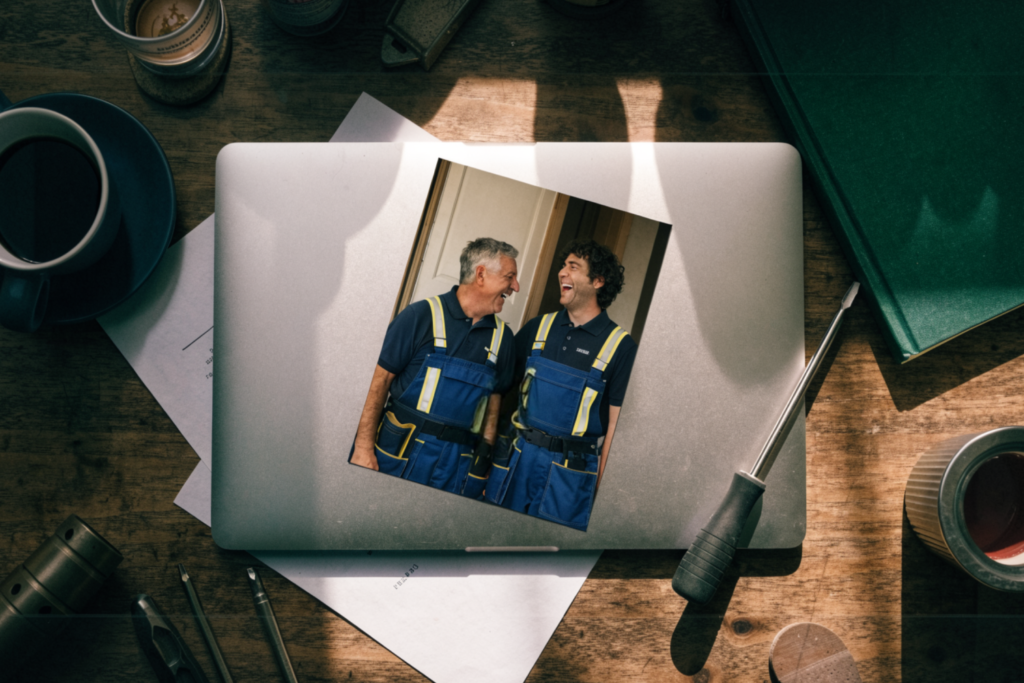
- A family photo shows the actual thing, specific, honest, recognizably real
- Homeowners deciding whether to let a stranger into their home do not want a brochure
A contractor website that converts does not look more impressive. It looks more real. Homeowners are not searching for the most polished site. They are searching for one they can trust enough to call.
What a Brochure Website Actually Is and Why Most Contractors Have One
A brochure website is one built to describe a business rather than convince a homeowner to contact it. Most contractors have one and don’t know it, because the site looks fine from the inside.
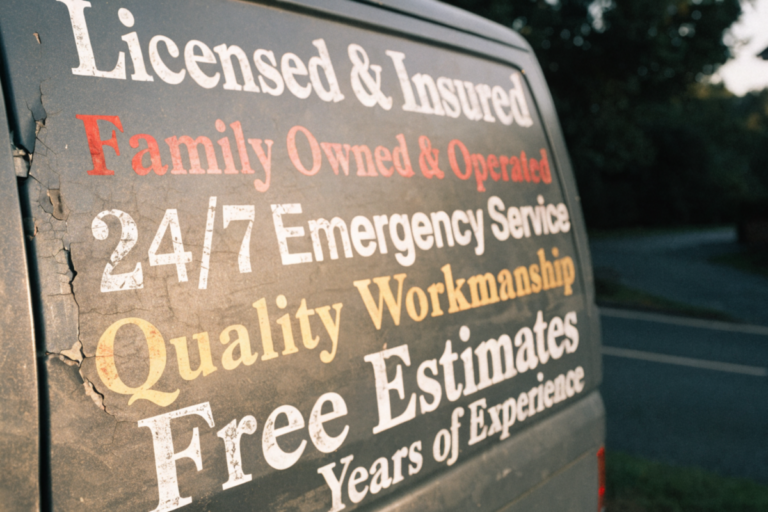
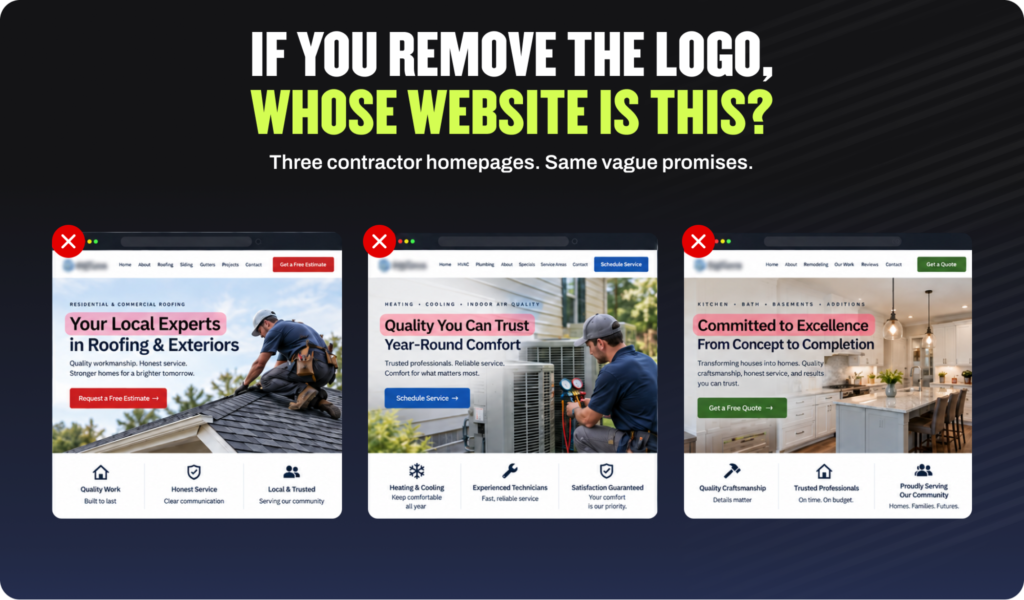
From the inside, the contractor sees their own brand. From the outside, a homeowner sees something that looks exactly like the six other sites they visited this afternoon. Same stock photo of a guy in a clean hard hat. Same headline about quality and trust. Same service list with nothing specific behind any of it.
What It Looks Like in Practice
The tell is not one thing. It is a pattern:
- A hero image featuring people who have never touched a piece of equipment from this company
- A headline that says “Your Local Experts” or “Quality You Can Trust” or “Serving the [City] Area”
- An About page that leads with the founding year and a paragraph about commitment to excellence
- A contact form with no signal of what happens after you submit it
- Service pages with no photos from actual jobs, no pricing signals, no specific process description
None of these are design failures. They are authenticity failures. The site is technically functional and visually acceptable. It just gives a homeowner nothing real to hold onto, and so they leave.
What It Costs in 2026 Specifically
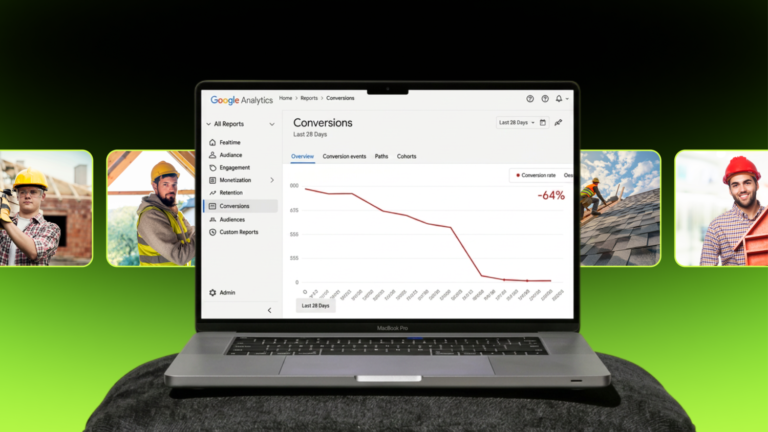
The stakes on authenticity just went up. Here is the phrase I keep coming back to from a recent website breakdown we did: your website is leaking leads right now because it is leaking trust.
The leads it loses are invisible. Nobody emails to explain why they didn’t call. They just close the tab.
What makes this urgent in 2026: it is not just people who found you on Google who are checking the site. It is people doing the digital double check. They heard about you from a friend or neighbor. They are going to your website to see if you are legit. If the site looks generic or dated, that double check fails and the referral goes cold. You never knew you had the lead.
The AI dimension compounds it. Generic language across every digital surface gives ChatGPT nothing to surface when a homeowner asks for a recommendation. The trust problem and the AI visibility problem are the same problem.
The trust problem and the AI visibility problem are the same problem. How answer engine optimization works for home services covers the specific signals that determine whether a business shows up when homeowners ask AI platforms for recommendations. Authenticity is the foundation of all of them.
What a Family Photo Website Feels Like
The family photo analogy is not about being casual or unpolished. Family photos are often imperfect. The point is that they show the actual people, the actual place, something real.
A contractor website built on the family photo principle is one where a homeowner can tell within ten seconds that a real person with a real business built it, and that those people actually work in the neighborhood the homeowner lives in.
Real People, Not Stock Models
The first thing a homeowner processes on a website is visual. Before they read a headline, they look at the image. And the judgment they make in that first look is not aesthetic. It is a trust judgment.
The Stanford Web Credibility Project, across more than 4,500 participants, found that people judge website credibility by how it looks first, before reading a single word. A real photo of the owner in front of a real van tells a homeowner three things instantly: this business exists, these are the people who show up, and this company is not hiding.
Nielsen Norman Group’s research on photos as web content found that generic stock images, the smiling-faces variety, are largely ignored as decorative noise. Real photos of real people get engagement and influence decisions. The distinction is not quality. It is authenticity.
The Specific Place, Not Just the Metro Area
The most trusted local contractor websites feel unavoidably local. They mention specific neighborhoods. They show job photos from recognizable areas. They say “we serve Kirkland, Redmond, and Bellevue” instead of “serving the Greater Seattle area.”
Specificity signals roots. Roots signal accountability. A business that names the specific communities it works in is harder to disappear from than one hiding behind vague service area language. And as a bonus, it works for local rankings too. The trust benefit and the SEO benefit are the same change.
A Voice That Sounds Like a Human Wrote It
Brochure websites often read like they were written by a committee. Every sentence is defensively professional and utterly forgettable.
The family photo version has a voice. “I started this company in 2009 because I was tired of homeowners getting quoted one price and billed another. That still makes me angry. So we give written estimates before we touch anything.” That is a sentence a real person wrote about a real experience. It is not polished. That is what makes it work.
The goal is not literary. The goal is specific and honest. One real sentence from the owner does more trust work than three paragraphs of corporate copy that could belong to any company in any market.
Why This Is a Conversion Variable, Not Just a Design Opinion
The Numbers Behind Real Photos
We see this in our own client work constantly. We have had two clients come to us for identical website builds. Same budget, same team, same process. The client who hands us real photos of their actual crew on real jobs ends up with a site that converts. The client who has nothing to give us ends up with a good-looking site that does not. The build is the same. The outcome is different. The only variable is whether real creative existed to work with.
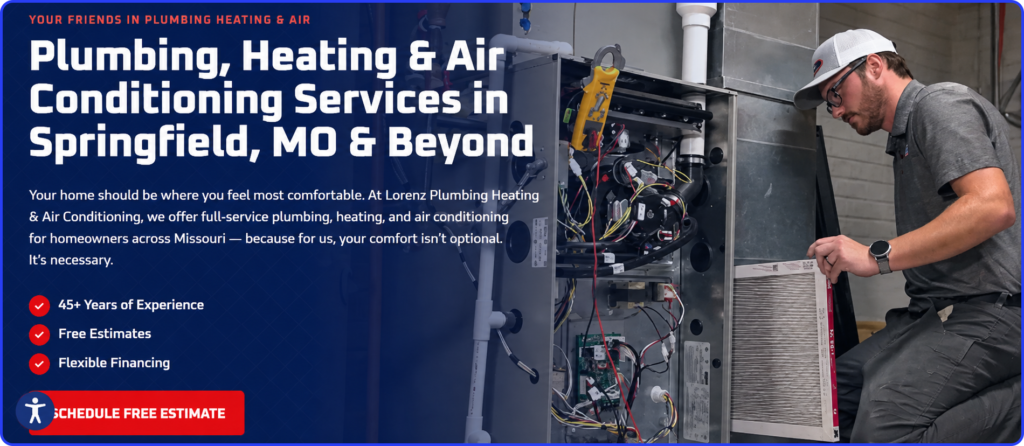
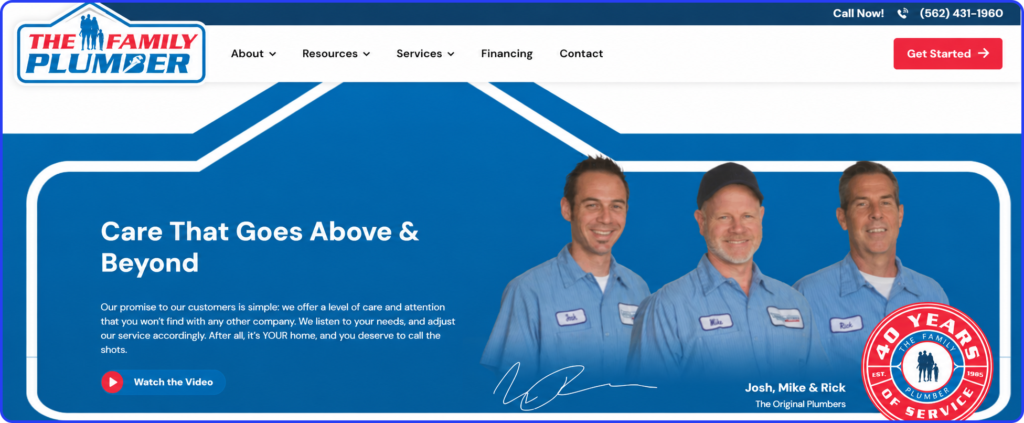
I broke this down in a recent website walkthrough we did for a plumbing client, the Family Plumber. Their old site had no real headline, a cluttered layout, and you had to click five times to get anywhere meaningful. The new one opened with trust factors immediately: 4.9 stars, 100+ Google reviews, visible differentiators, and real photos of the team. Same company. Completely different signal to the homeowner.

Homeowners Decide on Gut First
People form an opinion about a site in under 50 milliseconds. They haven’t read a word. The judgment is visual and emotional, and mostly unconscious.
A template site might pass the visual check but fails the gut check. The homeowner moves on without being able to say why. No feedback reaches the contractor. The calls just don’t come.
This is why home service websites that actually convert are built around authentic proof, not design trends. The design serves the proof. When the proof is not there, no design fixes it.
Five Things to Change on Your Website This Week
None of these require a redesign. They require swapping something generic for something real. In order of impact:
1. Replace the Hero Image With a Real Job Site Photo
Take the best completed job photo from the last six months. The one where the result is obvious. Use it on the homepage above the fold. It does not need to be professionally photographed. It needs to be real.
One of our clients, Eric Smok of Smok Mechanical in Frederick, has told us he genuinely likes looking at his own website. Not that he tolerates it. That he actually likes it. That is what happens when a site is built around real photos of the actual team. The site becomes a reflection of something true.
2. Put the Owner’s Face and Name Somewhere Visible
Not buried on the About page. Somewhere on the homepage a homeowner encounters in the first scroll. One line of text, one real photo. “Hi, I’m Mike Larson, owner of Larson HVAC. I’ve been keeping homes in King County comfortable since 2009.” That is enough to humanize an entire site.
In the Family Plumber website breakdown, the redesign worked because it put clean focus on the people, the 40 years of service, and the things that actually made that company special. That is the formula. Not the logo. Not the service list. The people and the specific things only they could claim.
The About page for contractors covers how to build this section properly. The owner’s face and name create the human anchor that makes everything else on the site feel more credible.
3. Add One Real Before and After With a Description
Not just two images. One or two sentences: what the job was, where it was, what the problem was. “Replaced an 18-year-old furnace in a Redmond split-level. The homeowner had uneven heating for three winters.” That is a story. Stories convert because they are the closest thing to a referral a website can produce.
4. Rewrite the Homepage Headline
Delete whatever is there if it contains the words “quality,” “trusted,” “excellence,” or “local experts.” Replace it with a specific claim. “Same-day HVAC repair in King County, seven days a week, by a team that’s been here since 2007.” That is a headline with something in it that a homeowner can check and a competitor cannot easily copy.
5. Name the Specific Neighborhoods You Actually Serve
Not a list of every city in the state. One sentence naming where the business actually works most. “We do most of our work in Kirkland, Redmond, and Bellevue, and we know these neighborhoods well.” That is local in a way that “serving the greater Seattle area” never is. A homeowner in Kirkland reads it and feels something that the vague version cannot produce.
The local SEO for contractors guide covers how this specificity works as both a trust signal and a ranking signal simultaneously.
What This Looks Like When It Works
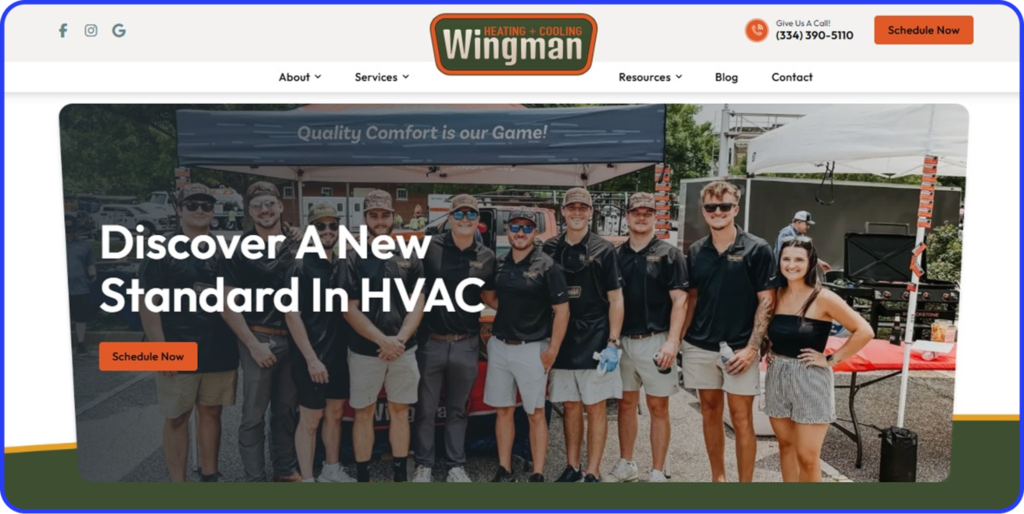
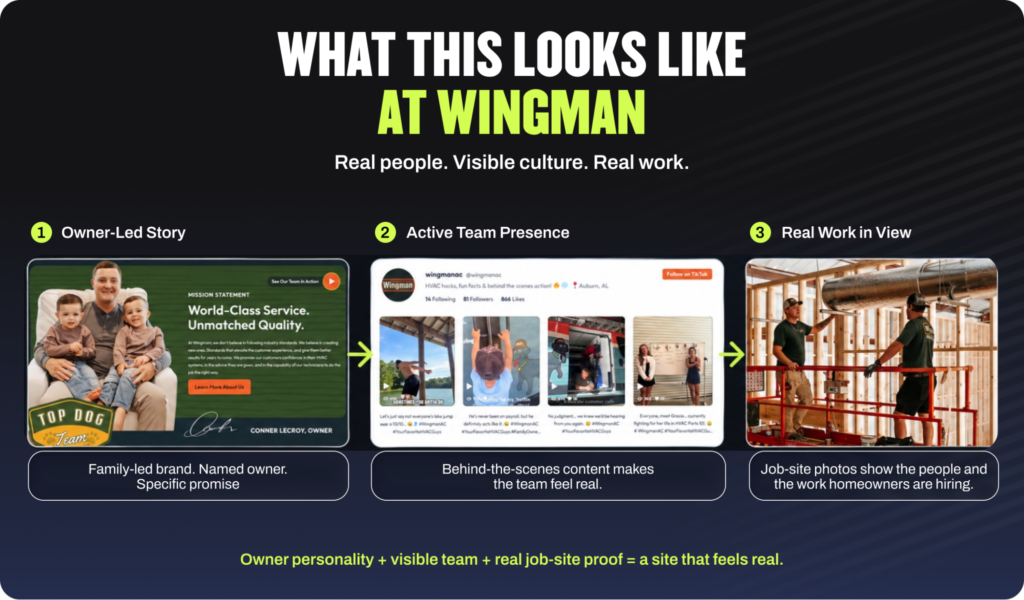
Wingman Heating & Cooling is a strong example of how we’ve applied this approach for a client.
When we worked on their website, the goal was not to load it up with the usual vague trust language. We wanted homeowners to feel like there were real people behind the brand, not just a polished brochure with generic promises.
That’s why the site leans into real personality and visibility. It introduces the business through the owner, shows the team in action, and uses actual job-site imagery instead of hiding behind stock-style messaging. Homeowners do not just read that Wingman cares about service. They can see the people, the culture, and the work itself.
We also made the trust feel more tangible by showing the company in ways that feel lived-in and believable: an owner-led story, active team presence, behind-the-scenes social content, and real work photography. Those details do more to build confidence than another paragraph about “quality” or “customer service” ever could.
Frequently Asked Questions
What is contractor website authenticity and why does it matter?
Contractor website authenticity means the site shows who the business actually is, with real photos of real team members, specific service area information, and copy that sounds like a person wrote it rather than a committee approved it. It matters because homeowners making a decision about who to let into their home are running a gut-level trust check, and a generic site fails that check before they have read a word.
Do real photos actually make a contractor website convert better?
Yes, consistently and measurably. Authentic images outperform stock imagery by around 20% on user engagement metrics, not because real photos are more beautiful, but because homeowners process them differently. A real photo of a real crew on a real job site signals credibility in a way that a staged stock image cannot match, regardless of production quality.
Does a contractor website need to look polished to build trust?
No. It needs to look real. A slightly imperfect photo of an actual job site consistently outperforms a perfectly lit stock image. Homeowners are not looking for the most polished website. They are looking for the most credible one, and real evidence of real work is more credible than professional staging.
What is the fastest change a contractor can make to their website to build more trust?
Replace the homepage hero image with a real photo of the actual crew or owner on an actual job site. This affects the first thing a homeowner sees and the first trust judgment they make, which happens in under 50 milliseconds before any copy is read.
The Phone Doesn’t Ring Because the Site Doesn’t Feel Real
I built Owl Roofing’s website to feel like the business actually is, specific to a place, run by real people, making real commitments. Not because I had a conversion framework in mind. Because I wanted someone to land on it and feel safe calling.
Most contractor websites are brochures. The ones that work are family photos. If the site feels like it could belong to any company in any city, it almost certainly is not converting the way it should.
For home service businesses who want a website built around something real, that is the work we do at Hook Agency. And for the broader marketing strategy that the website is part of, the home services marketing strategy guide covers where website authenticity fits inside the full picture.