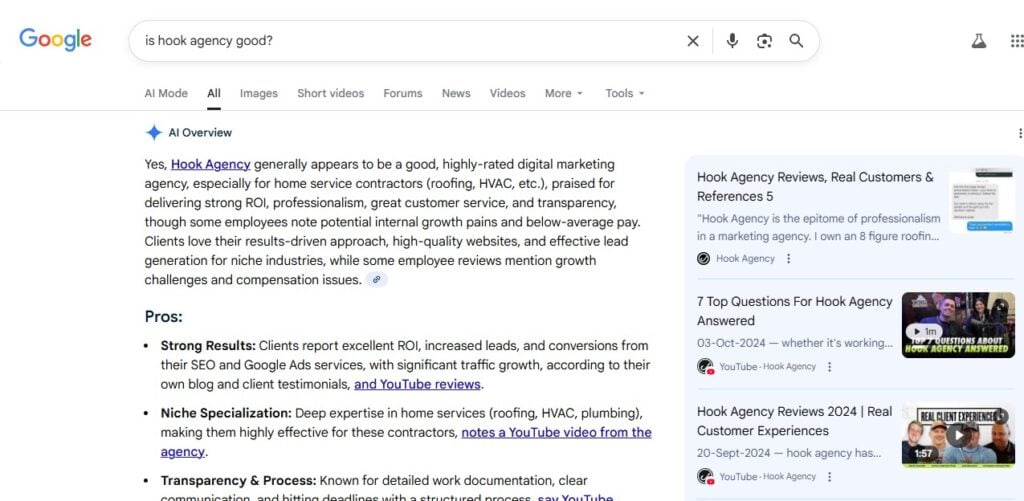

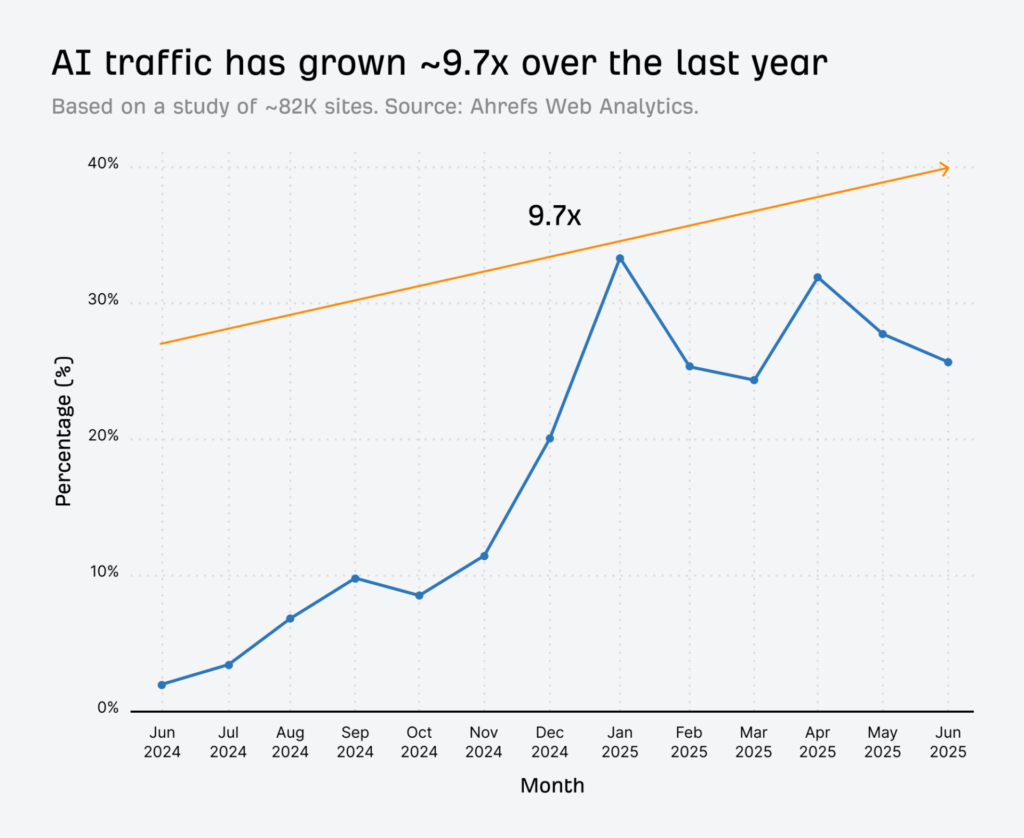
Search didn’t disappear. The click did. Homeowners are still searching. They’re just getting answers faster and asking fewer follow-up questions. By late 2025, Google’s AI Overviews were showing up in 15 to 25% of searches, and 69% of searches ended without a click.
That’s not a collapse. It’s a filter. Instead of ranking ten options and letting users decide, AI is choosing which businesses get cited as the answer, especially for real decisions, like who to call when something breaks.
This shift is exactly why answer engine optimization for home services matters now. Not as a replacement for SEO. As the evolution of it. The businesses that struggle here are the ones that panic. They chase tools, rewrite everything, and abandon strategies that were working. The ones that win understand how AI decides who to trust and make small, intentional changes early.
What Is AEO (Answer Engine Optimization)?
AEO stands for Answer Engine Optimization. That sounds technical. The idea is simple. Search engines are no longer just listing websites. They’re answering questions. When a homeowner asks Google, “Why is my AC blowing warm air?” or “Who should I call for a roof leak?” the goal is no longer to show ten links. It’s to give one clear answer.
AEO is about making sure your business is part of that answer. Traditional SEO focuses on rankings. You optimize pages to show up on page one and hope the click follows. AEO shifts the goal. It focuses on being cited, referenced, and trusted by AI systems that generate answers directly in search results.
That difference matters. Instead of asking, “How do I rank higher?” AEO asks:
- Is our explanation clear enough for AI to understand?
- Does our content answer real questions directly?
- Is our business seen as a credible source?
Where do AI answers come from? Not from thin air. They’re pulled from:
- Well-structured website content
- Clear service explanations
- FAQs that answer specific questions
- Trusted brands with consistent information across the web
For home service businesses, this plays out in very practical ways. If a homeowner asks whether a noisy furnace is dangerous, AI looks for clear, authoritative explanations. If your site explains the issue plainly, shows real expertise, and matches what’s said elsewhere online, you have a chance to be referenced.
How AI Search Engines Decide Who to Recommend
AI answers don’t happen randomly. They’re assembled. When Google generates an answer, it isn’t scanning the internet for whoever published the most content last week. It’s looking for who understands the topic clearly, consistently, and credibly. That’s the shift most businesses miss.
It Starts With Entities, Not Keywords
AI search engines think in entities, not strings of text. An entity is a real-world thing. Your business. Your services. Your location. Your brand reputation. AI looks for signals that confirm:
- Who you are
- What you do
- Where you operate
- What you’re known for
Topical authority comes from depth, not volume. A contractor with clear, focused content around HVAC repair, maintenance, and installation will beat a site that vaguely covers twenty services with shallow pages.
This is especially true inside AI overviews in local SEO, where Google needs confidence before it surfaces a business as a recommendation.
Trust Signals Matter More Than Ever
AI doesn’t just read your website. It cross-checks it. Reviews, brand mentions, and third-party references all reinforce trust. When homeowners consistently describe your business the same way across Google, directories, and social platforms, AI sees alignment.
That alignment matters. Trust signals include:
- Review quality and sentiment, not just star count
- Consistent business information across listings
- Mentions on reputable local or industry sites
- Brand recognition within your market
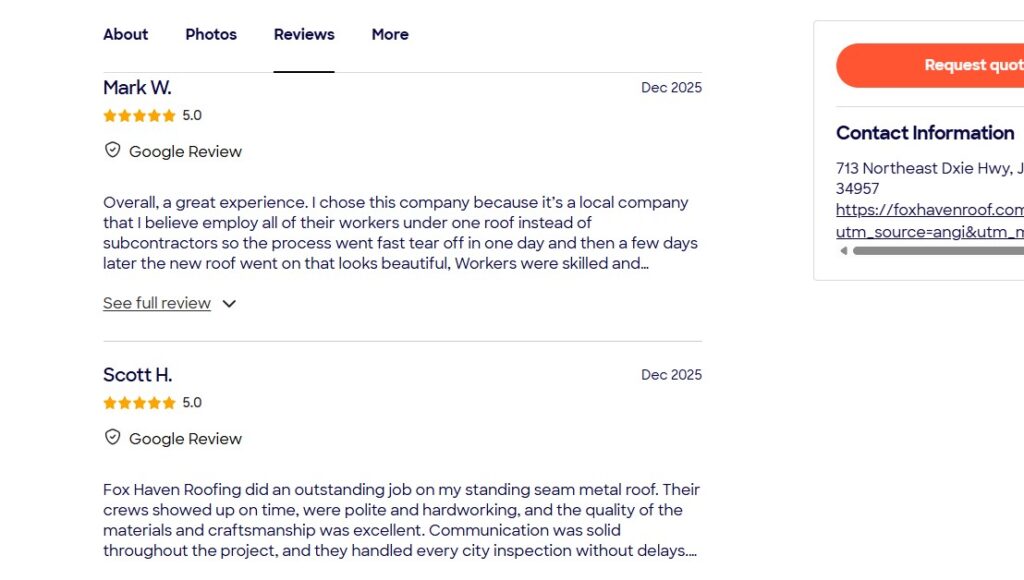
If your website says one thing and the rest of the web says another, AI hesitates.
Clarity and Structure Beat Clever Writing
AI struggles with vague language. Humans might tolerate it. Machines don’t. Clear service explanations, direct answers, and logical structure help AI understand what your business actually offers. Pages that are organized, skimmable, and focused perform better than long, unfocused content blocks.
This is why FAQs, short explanations, and clearly labeled sections matter. They give AI clean answers to pull from. If a homeowner asks a specific question, AI looks for a specific answer. Not a marketing paragraph.
Consistency Across the Web Is a Ranking Multiplier
Consistency is one of the strongest trust signals AI uses. That means:
- The same services described the same way
- The same location information everywhere
- The same brand voice and expertise across platforms
Inconsistent messaging creates doubt. Consistent messaging builds confidence. AI favors confidence. This is also why scattered, disconnected content often underperforms. Authority is built when everything reinforces the same story.
What No Longer Works
Two tactics consistently fail in AI-driven search. Keyword stuffing doesn’t help. Repeating phrases signals manipulation, not expertise.
Mass AI content generation fails even faster. Publishing large amounts of low-effort content creates noise, not trust. AI systems are designed to detect patterns, and they downgrade sources that prioritize speed over substance.
Where AEO Actually Shows Up for Home Service Businesses
AEO isn’t something that lives in a dashboard or a tool. It shows up where homeowners already are, often before they ever see a traditional list of search results. That’s what makes it feel invisible until it isn’t.
AI Overviews Are Rewriting the First Impression
AI Overviews are no longer a test. They’re a fixture. As of early 2025, AI Overviews trigger in about 13% of global searches and 16% of U.S. desktop keywords. For professional services, including home services, that share climbs closer to 20%.
For contractors, this changes the first impression entirely. Instead of seeing ten blue links, homeowners see a summarized answer. Explanations. Recommendations. Sometimes even next steps. The businesses that appear in or are referenced by these overviews are framed as knowledgeable before a click ever happens.
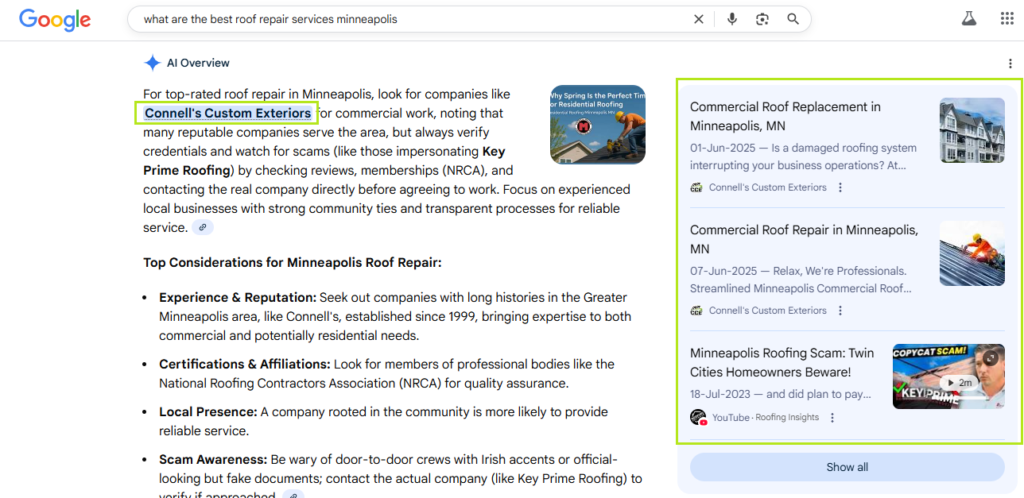
This is where AI search and SEO fundamentals intersect. The businesses that show up are not chasing trends. They’re the ones explaining services clearly, answering real questions, and reinforcing trust signals across the web.
Voice Search Is Built for Urgency
Voice search isn’t about browsing. It’s about immediacy. In 2025, 153.5 million U.S. adults use voice assistants, and 27% use them on mobile for searches that sound more like commands than queries. Think: “fix leaking pipe now” or “AC not cooling who do I call.” This matters for emergency-driven services.
Voice assistants don’t read ten options. They aim to provide one or two confident recommendations. That makes voice search for home service businesses less about keywords and more about being understood as a reliable local solution.
If your content doesn’t clearly explain what you do, where you operate, and when someone should call, you’re unlikely to surface in these moments.
AI-Powered Local Recommendations Are Quietly Influencing Choices
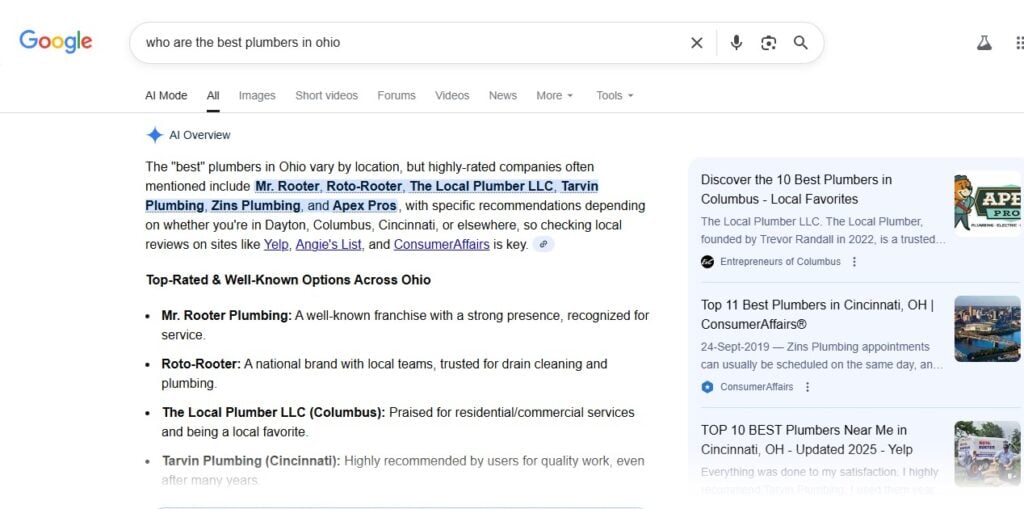
This part catches most contractors off guard because it doesn’t always look like “search.” I recently asked Google a simple question: what plumber should I hire in Minneapolis? Instead of a list of links, Google gave a direct answer. It named a few top contenders and framed them as trusted options based on what it already knew.
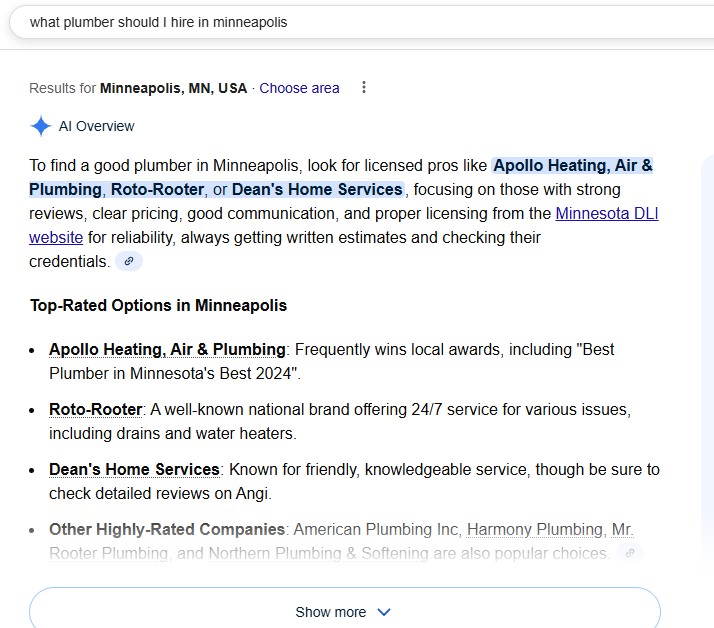
That moment matters. Google didn’t ask me to research. It didn’t send me to page one. It made the recommendation for me.
That’s how AI-powered local recommendations are starting to work. They pull from businesses Google already understands as legitimate, consistent, and credible. Reviews matter. Mentions matter. Clear service descriptions matter. Local relevance matters.
If Google can confidently explain who you are and why you’re a good option, you have a chance to show up in these answers. If it can’t, you’re invisible, even if your SEO looks fine on the surface.
Homeowners Are Asking Better Questions
The biggest shift isn’t the technology. It’s the behavior. Instead of typing “plumber near me,” homeowners now ask fuller questions:
- “Is a leaking water heater dangerous?”
- “How much does AC replacement usually cost?”
- “Should I repair or replace my furnace?”
These are research questions, not buying commands. AEO helps you show up earlier in that decision cycle, before a homeowner has even decided who to call. This is also where video quietly matters more than most businesses realize.
AI doesn’t just pull answers from blog posts. Clear, helpful YouTube videos explaining common problems, costs, or decisions can also surface in AI overviews. When a contractor explains an issue plainly on video, AI treats that as another trust signal, especially for how-to and diagnostic questions.
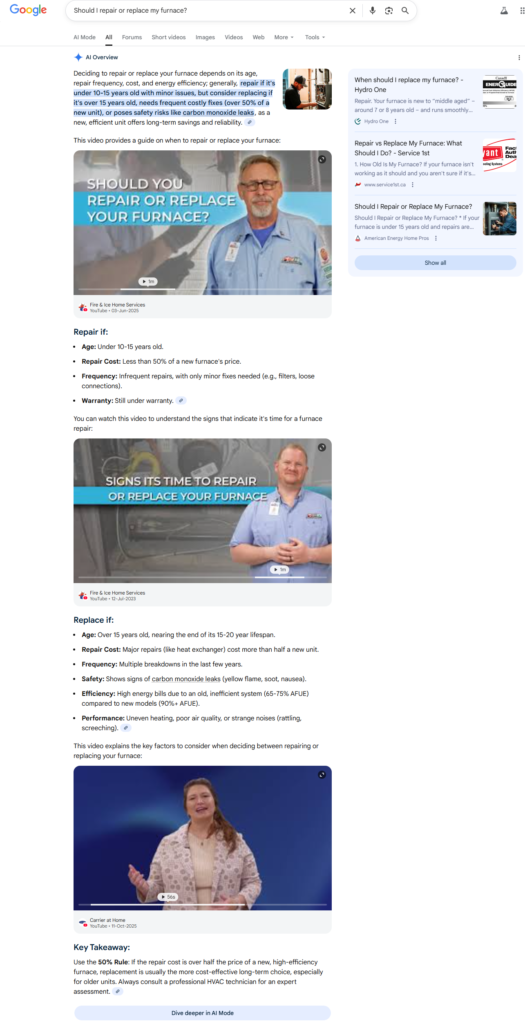
Then urgency kicks in. When something actually breaks, the question changes. It becomes shorter. Faster. More direct. The businesses that already explained the problem clearly, whether through written content or video, are often the ones AI trusts when urgency hits.
What AI Looks For on Your Website
AI doesn’t “read” your website the way a homeowner does. It evaluates it. Every page sends signals about clarity, credibility, and usefulness. And right now, those signals matter more than ever because search behavior is fragmenting fast.
In just six months, Google’s share of general information searches dropped from 73% to 66.9%. At the same time, ChatGPT’s usage for general search jumped from 4.1% to 12.5%. That shift doesn’t mean Google is irrelevant. It means your website now feeds more than one answer engine.
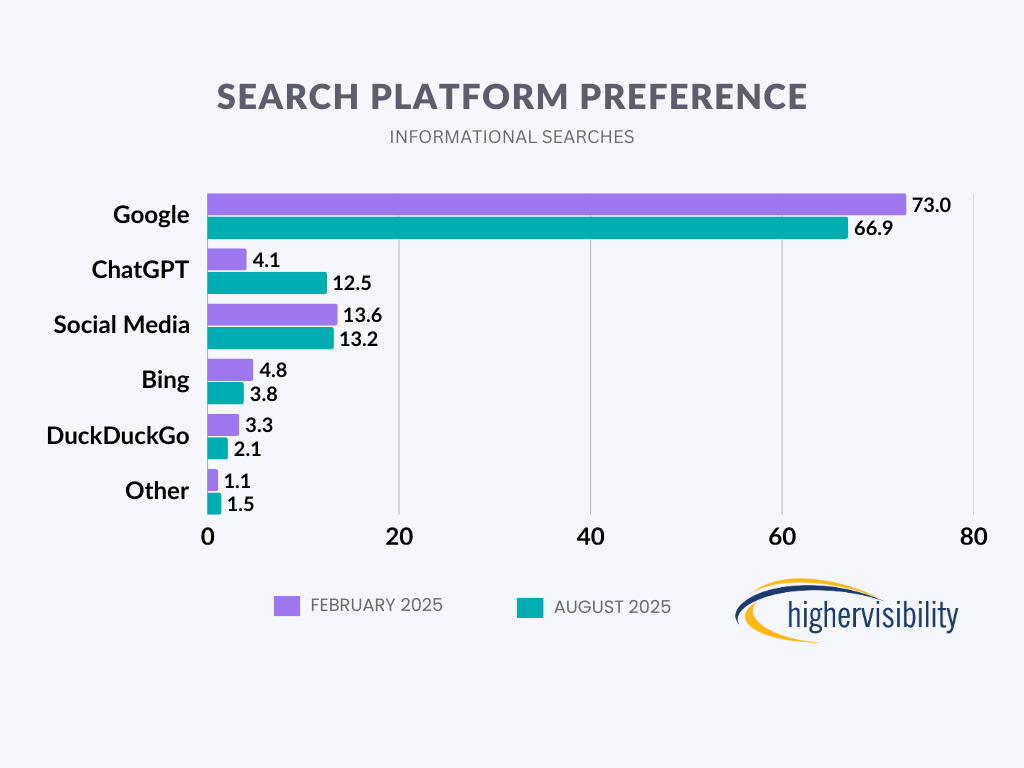
Which brings us to the most important point most contractors miss. SEO still matters with AI, but it’s being judged differently.
Clear Service Explanations Are Non-Negotiable
AI struggles with vague marketing language. Humans might skim past it. Machines can’t. Pages that simply say “We offer reliable plumbing services” don’t help AI understand what you actually do. Clear service explanations do. Each core service should explain:
- What the service solves
- When a homeowner needs it
- What happens during the visit
- How urgency is handled
When those answers are spelled out clearly, AI can confidently pull from them. That clarity is the foundation of both AI visibility and local SEO for home service businesses.
FAQs and Direct Answers Win Attention
AI looks for clean answers to real questions. FAQs work because they match how people actually search today. They also help you achieve human touch with AI by answering concerns in plain language, not corporate copy.
A strong FAQ doesn’t ramble. It answers. Directly. Simply. Honestly. That makes it easier for AI to quote your site and easier for homeowners to trust it.
Structure Makes Content Usable
Structure is not decoration. It’s instruction. Clear headings, short sections, bullet points, and logical flow help AI understand what matters most on a page. When content is buried in long paragraphs or poorly organized, it gets skipped.
Well-structured pages are easier for AI to interpret and easier for humans to act on. That overlap is where visibility and conversion meet.
Schema Helps AI Confirm What You’re Saying
Schema isn’t about gaming the system. It’s about confirmation. When you use basic schema for services, locations, FAQs, and reviews, you’re giving AI a second source of truth. You’re saying, “This is who we are, and this is what this page is about.” That consistency matters more now that multiple platforms are pulling answers from your site.
Page Organization Still Does the Heavy Lifting
AI can surface your content, but your website still has to close the loop. Clear navigation, focused service pages, and intentional internal linking guide both AI and users. This is where home service websites that convert quietly outperform everyone else. They don’t just attract attention. They move people forward.
The takeaway is simple. AI rewards the same things great websites always have: clarity, structure, and trust. The difference now is that more systems are paying attention.

AI Doesn’t Trust Your Website Alone. It Cross-Checks Everything.
You can explain your services perfectly and still get ignored by AI. Why? Because AI doesn’t take your word for it. It looks for confirmation everywhere else. Off-site signals are how AI decides whether your website is telling the truth or just marketing itself well.
- Reviews sit at the center of that decision.
Not just star ratings, but sentiment. What people actually say. Patterns matter more than praise. Consistent feedback about responsiveness, professionalism, and quality reinforces credibility. Sparse or outdated reviews create hesitation, even if your site looks strong.
- Then come brand mentions.
AI pays attention when your business is referenced outside your own ecosystem. Local news features, industry blogs, community sites, supplier shoutouts, and even unlinked mentions all help reinforce that your brand exists beyond your website.
- Consistency is the quiet multiplier.
Your business name, address, phone number, services, and descriptions should match everywhere. When information conflicts, AI slows down. When it aligns, confidence increases. Citations aren’t about gaming directories. They’re about removing doubt.
- Authority links still matter, but not in bulk.
A handful of relevant, credible links from local or industry-related sources outweigh dozens of generic ones. Authority signals tell AI that others trust you enough to point people your way.
- Social proof adds a human layer.
Engagement on social platforms, real photos, comments, and shares show that real people interact with your brand. AI uses that engagement as a proxy for relevance and legitimacy. Put together, these signals tell a story:
- Real customers talk about you
- Other sites acknowledge you
- Your information is consistent everywhere
- People interact with your brand
That story carries weight.

AEO vs SEO: Why It’s Either Both or Neither
If you’ve been told you need to “choose” between SEO and AEO, that advice is already outdated. AI didn’t replace search. It’s built on top of it.
Understanding how SEO and AEO work together is the difference between steady visibility and sudden drop-offs.
SEO Is Still the Foundation
SEO is the infrastructure. Always has been. Your service pages, location pages, internal links, reviews, and site structure are what teach search engines who you are and what you do. Without that foundation, AI has nothing reliable to pull from.
If your SEO is weak, AEO has nothing to amplify. If your SEO is strong, AEO gives it more surface area.
This is why businesses that already invested in quality SEO are seeing less disruption from AI search than the ones chasing shortcuts.

AEO Is the Layer That Turns Visibility Into Answers
AEO sits on top of SEO. Instead of asking, “Where does this page rank?” AI asks, “Can I confidently use this as the answer?” That shift rewards:
- Clear explanations over keyword density
- Direct answers over long introductions
- Expertise over publishing frequency
This is how pages that already rank well start appearing inside AI Overviews, voice responses, and even featured snippets for home service businesses. AEO does not replace rankings. It decides which rankings get referenced.
Local SEO Quietly Feeds AI Visibility
AI is especially cautious with local recommendations. Before it suggests a contractor, it looks for strong local signals. Consistent NAP data. Reviews with real sentiment. Location-specific service clarity. Local backlinks and mentions.
That means Local SEO is not a separate effort. It is one of the strongest inputs AI uses to decide whether a business is safe to recommend. If your local SEO is messy, AI hesitates. If it’s tight, AI leans in.
Strong Websites Matter More Than Ever
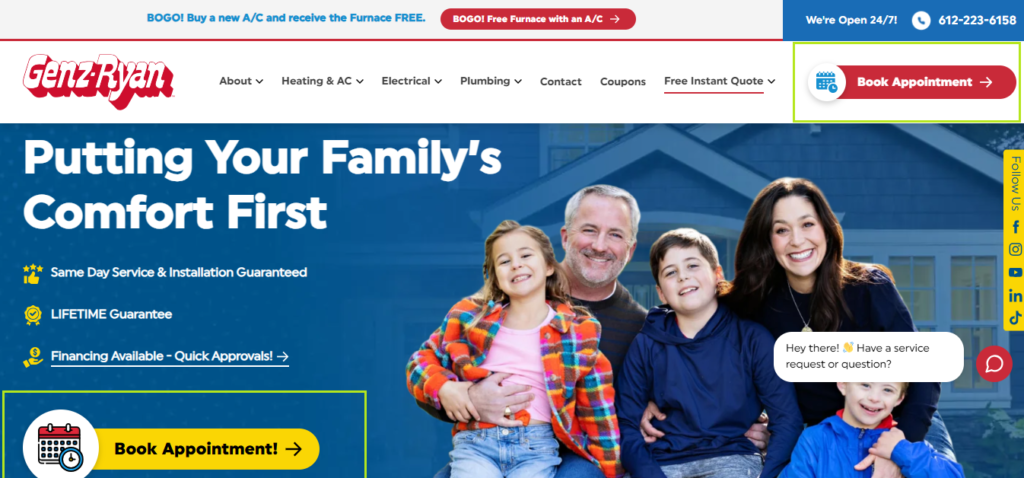
AI can surface your business. Your website still has to finish the job. Clear navigation, focused service pages, structured FAQs, and intentional internal linking help AI understand your site and help homeowners trust it. Weak websites don’t just hurt conversion anymore. They hurt visibility. This is why sites built to convert humans tend to perform better with AI. Clarity works for both.
Common AI SEO Myths (And What Actually Matters)
AI has created a lot of noise around search. Most of it is unhelpful. For home service businesses, that noise often leads to rushed decisions instead of steady progress. Clearing up a few persistent myths makes the path forward much clearer.
“AI Will Kill Organic Traffic Overnight”
This fear shows up fast and spreads even faster. Organic traffic doesn’t disappear overnight. It shifts as behavior changes. Businesses with clear services, strong authority, and real trust aren’t vanishing. They’re being surfaced in different ways. AI pulls from sources it already sees as reliable. If your fundamentals are solid, AI doesn’t erase your visibility. It redistributes it.
“You Need to Rewrite Everything”
Most websites don’t need a full rebuild. They need refinement. Clearer explanations. Better structure. More direct answers to real customer questions. Wholesale rewrites often introduce inconsistency and risk. Small, thoughtful updates usually deliver better results than tearing everything down.
“More AI Content Equals More Visibility”
This one causes the most damage. Publishing large volumes of AI-generated content doesn’t build authority. It dilutes it. AI systems are built to recognize patterns, and mass-produced content signals shortcuts. The goal isn’t speed. It’s clarity. The sites that win achieve a human touch with AI by explaining services the way real experts do, not by flooding the internet with filler.
“Tools Alone Solve AI Search”
No tool replaces trust. Platforms can help analyze, structure, or monitor content. They cannot create credibility. Reviews, consistent information, brand mentions, and real expertise are what move the needle. Tools support good strategy. They don’t create it.
How Home Service Businesses Should Prepare in 2026
Preparing for AI-driven search in 2026 isn’t about chasing the next update. It’s about tightening the parts of your business that AI is already paying attention to.
The contractors who struggle are usually doing too much in the wrong places. The ones who win are doing fewer things, better.
Lock in the Foundations First
Before worrying about AI visibility, make sure your fundamentals are solid. In 2026, that means your core service pages clearly explain:
- What the service solves
- When it’s an emergency versus a wait
- What the homeowner should expect during a visit
- Why your business is qualified to handle it
If those answers aren’t obvious, AI hesitates. So do customers.
Improve What You’ve Already Published
Most home service sites don’t need more content. They need clearer content. Instead of churning out new pages, focus on:
- Updating top-performing service and blog pages
- Adding direct answers to real customer questions
- Improving structure so pages are easy to scan and quote
- Removing outdated or redundant sections
In 2026, freshness isn’t about publishing constantly. It’s about keeping your best content accurate and useful.
Treat Trust Signals Like a Growth Asset
AI relies heavily on trust signals to decide who gets recommended. That means:
- Reviews that are recent and specific
- Business information that matches everywhere
- Mentions on credible local or industry sites
- Real photos and proof of work
These aren’t vanity metrics. They’re inputs AI uses to assess risk before making a recommendation.
Build Entity Authority Intentionally
Entity authority is about being known for something specific. In 2026, AI favors businesses that:
- Focus on a clear service set
- Serve a defined geographic area
- Communicate consistently across platforms
Trying to be everything to everyone weakens this signal. Clear positioning strengthens it.
Should You Care About AEO Yet or Can It Wait?
This is the question most home service owners are asking quietly. Not because AEO sounds exciting. Because ignoring it feels risky. Here’s the honest answer. AEO is not mandatory for everyone right this second. But it’s also not something you can afford to ignore for long.
Google’s AI Overviews now trigger on 10% more queries overall. When they appear, top organic click-through rates drop by 34.5%. Informational searches that once dominated results have fallen from 91% to 57%. That doesn’t mean visibility is gone. It means visibility is changing.
AEO is worth prioritizing now if your business already has solid SEO foundations, a clear service mix, and a strong local reputation. In that case, AEO isn’t a rebuild. It’s a refinement. You’re helping AI confidently reference what you already do well. If your fundamentals are weak, AEO shouldn’t be your first move.
- Service pages aren’t clear
- Reviews are inconsistent
- Local SEO is messy
Fixing those delivers more impact than chasing AI visibility. AEO rewards strength. It exposes gaps. Budget and readiness matter too. AEO works best when layered into existing SEO, content, and website efforts. If resources are tight, invest in clarity and trust first. Those gains carry forward into AI visibility later.
The real risk isn’t waiting a few months. It’s waiting until AI recommendations feel normal and your competitors are already the trusted answers. Authority compounds, and catching up later is harder.
AI Visibility Makes Every Other Channel Work Harder
AI visibility doesn’t replace your marketing stack. It strengthens it.
When homeowners see your business cited by AI, trust forms before the click. That trust carries into paid ads, where conversion improves because the name already feels familiar. Ads don’t have to convince as hard. They just have to show up. AI citations shorten sales cycles.
When a homeowner has already seen your business referenced as a reliable option, fewer questions need to be answered. The call starts warmer. The close comes faster. That visibility reinforces brand authority everywhere else.
It shows up in search. It shows up in ads. It shows up in social media for home service businesses, where familiarity increases engagement and credibility. The real advantage is alignment.
When ads, SEO, social, and sales all reflect the same expertise, growth feels smoother and more predictable. That alignment comes from leadership for home service business owners who treat marketing as a system, not a set of disconnected tactics. AI visibility doesn’t create success on its own. It amplifies what’s already working.
Get Ready Before Search Decides Without You
AI isn’t changing search someday. It’s changing it quietly, right now. Homeowners are getting answers faster. Decisions are happening earlier. And the businesses that show up as trusted sources are shaping those choices before a click ever happens.
That doesn’t mean you need to start over. It means you need to understand how visibility, trust, and authority work together in this next phase of search. If you want help preparing without chasing hype or tearing down what already works, Hook Agency can help you navigate AEO the right way.
Learn about Hook’s AEO services and see how your business can stay visible, trusted, and competitive as search continues to evolve.