
We have worked with enough home service businesses to recognize the pattern immediately. The Instagram page that has not been touched in four months. The Facebook account posting stock photos of someone else’s roof. The contractor who spent three hours on a caption and got two likes, both from people on the crew.
None of that is a social media problem. It is a system problem. And it is fixable, but not with more posting. With better posting. There is a real difference between having a social presence and having a home services social media strategy, and right now most contractors are spending time on the first while wondering why the second is not producing calls.
Here is what the data actually says about where your homeowners are and what is working:
- 71% of U.S. adults use Facebook, and 58% of the 30-49 age group visit it every single day, according to Pew Research’s 2025 data. The homeowner making the HVAC replacement decision is on Facebook this morning.
- Only 32% of home service businesses use Facebook specifically to generate leads, per Jobber’s Home Service Trends Report. The other two-thirds are leaving that audience completely untouched.
- Only 37% of marketers can clearly connect social activity to business outcomes, per HubSpot’s 2026 Social Media Marketing Report. The other 63% are posting and hoping.
This guide is the system. Platform priorities by trade, a content mix that builds trust before it asks for the call, and a measurement framework tied to revenue, not reach. Here is how to build a home services social media strategy that actually produces something.
Why Most Contractor Social Media Produces Nothing
There are two ways contractor social fails. It is invisible because it is inconsistent. Or it is forgettable because it is generic. Most accounts manage both at the same time.
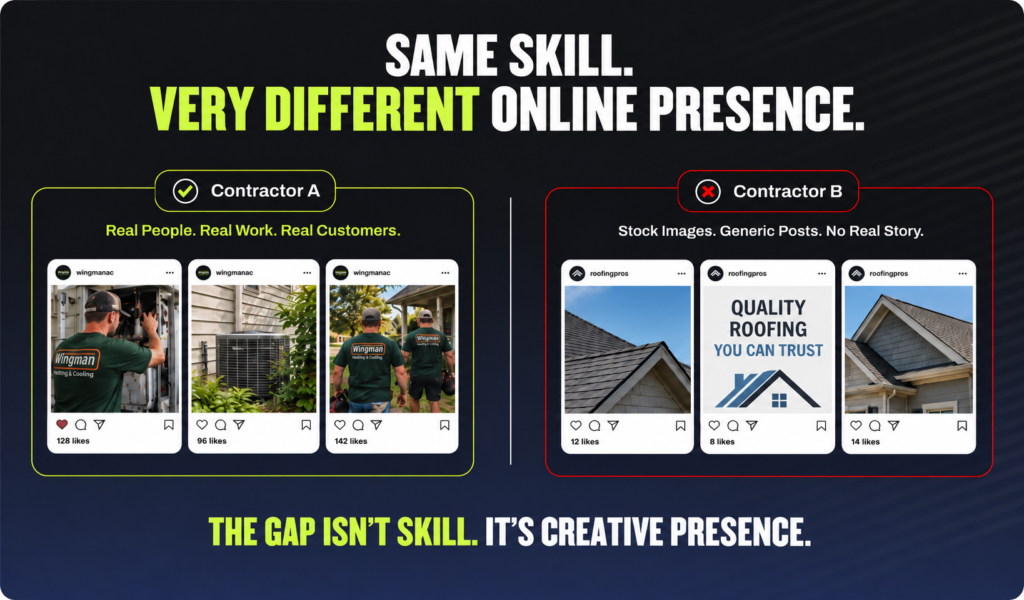
Here is the image that makes it real: picture two contractors in the same market with the same quality of work. One has real photos of his crew, real before-and-after photos of the jobs, and real customers talking about him. The other has stock photos of a roof that is not even one they have done. Same skill, same promises. One looks like the obvious choice and the other one does not.
That gap is not skill. It is creative presence.
And it is about to matter a lot more. More people are entering the trades, more competition is hitting local markets, and when everyone has a truck, a crew, and a decent Google review count, your social media presence for home service businesses becomes one of the only things that actually distinguishes you. Homeowners in 2026 can clock a templated post from fifty feet, and the contractor posting generic tips is not building trust.
Choose Platforms Based on Your Trade, Not Trendiness
Trying to be everywhere produces ghost-town accounts that hurt credibility more than they help. The right contractor social media strategy picks two or three platforms based on where your specific homeowner actually spends time, and commits to them.
Facebook: Still the Highest-ROI Platform for Home Services
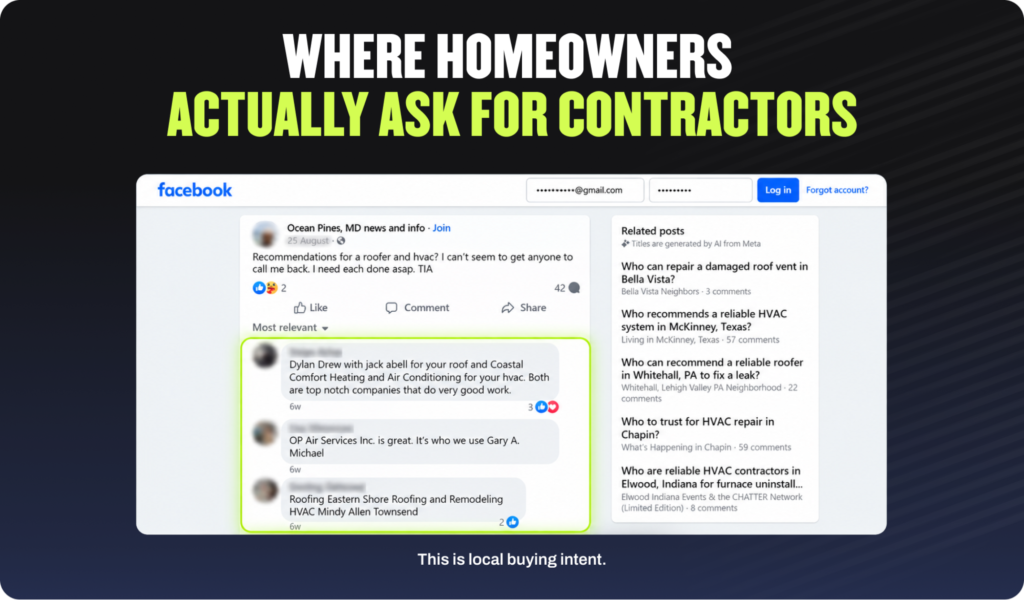
The homeowner demographic, ages 30 to 64, is on Facebook daily. Local groups and neighborhood pages are where someone posts “anyone know a good roofer?” and gets twelve responses. For most trades, Facebook is not one option among many. It is the primary platform.
Instagram: Worth It for Visual Trades, Optional for Others
According to Emplifi’s 2026 Social Media Benchmark Report, Instagram Reels and Carousels generate 44% higher median engagement than standard image posts. For roofing, landscaping, and remodeling, before-and-after Reels are the highest-trust format on the platform.
For trades where the finished work is harder to photograph, Instagram demands more creative effort than the ROI justifies. Those trades: Facebook and Nextdoor first, Instagram later.
Nextdoor: Genuinely Underused, High-Trust
Nextdoor is where homeowners ask for service recommendations from actual neighbors. A contractor with a maintained presence and consistent reviews mentioned in recommendation threads has a trust layer that paid ads cannot buy. Most contractors ignore it. Our full breakdown on Nextdoor advertising for contractors covers the setup from scratch.
TikTok: Big Reach, Few Calls for Most Trades
Per Metricool’s 2026 Social Ads Study, the same campaign generates roughly eight times the clicks on TikTok compared to Meta. Clicks are not calls. Facebook first for most home service trades.
The 70/20/10 Content Mix: Applied to Home Services
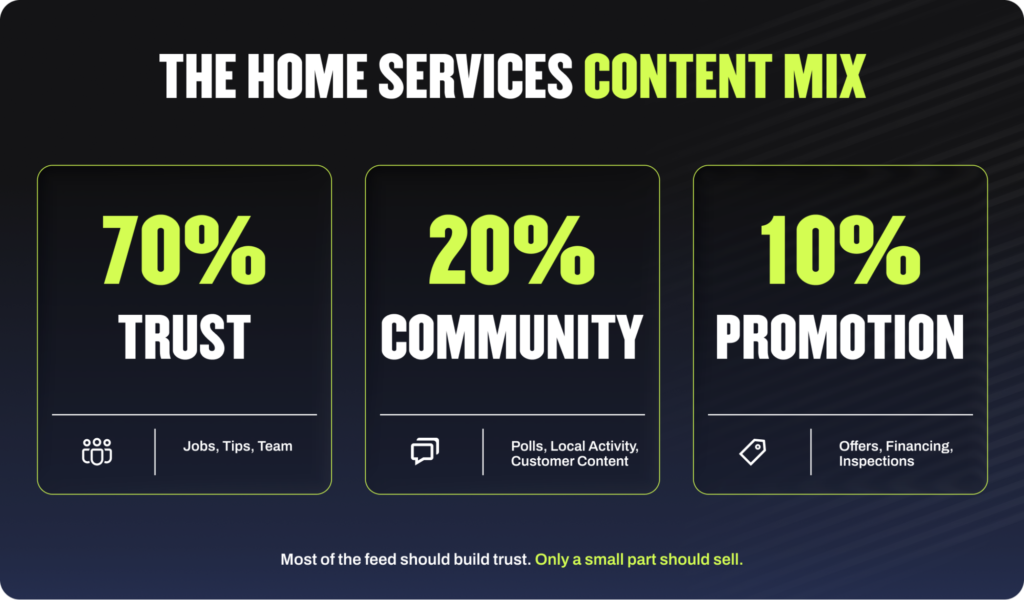
Random posting produces random results. The 70/20/10 rule gives any home service social media content plan a structure that holds up week to week without burning out the person running it.
70% builds trust and educates. Before-and-after posts with real descriptions, job site video, seasonal tips, team introductions, answers to questions homeowners ask before hiring. This is content that makes a homeowner recognize the name before they ever need to use it.
20% builds community and engagement. Polls, questions, reshares of customer content, community involvement. A question post costs nothing to write and generates the comment thread that extends organic reach to people who do not follow yet.
10% promotes directly. Seasonal offers, financing promotions, free inspection campaigns. Homeowners scroll past promotional content until they trust the business. The 70% earns the right for the 10% to land.
The Real Problem: You Look Like Every Other Contractor Online
Most home service businesses look cheap online, and it’s costing them credibility and money right now, not someday.
There are five places where your online presence is either winning jobs or losing them. Social media is one of them. And the fix isn’t higher production value. It’s real content: your real team, real job sites, and real customers.
The Five Content Formats That Actually Get Engagement
Format matters as much as topic. These five outperform everything else for home service accounts, and every single one is built around material already sitting on your job sites each week. Check out our deeper look at social media engagement strategies for home services for more on what moves the needle.
Before and After Posts
The caption matters as much as the images. “Roof replacement in [neighborhood]. 24-year-old roof, two layers underneath, full tear-off, Owens Corning Duration shingles, two-day install.” That description proves expertise, establishes local presence, and gives a homeowner enough detail to feel like they are in good hands.
Short-Form Job Site Video
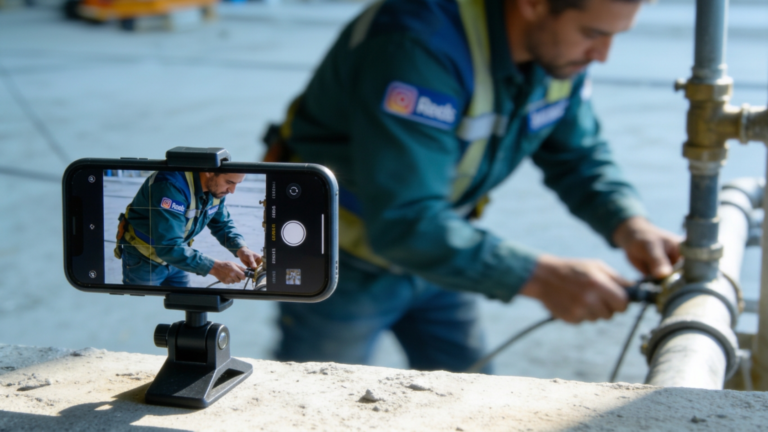
77% of marketers now prioritize authenticity over high production value, according to HubSpot’s 2026 report. A 30 to 60 second smartphone video of a technician explaining what they found on an inspection, a time-lapse of a roofing crew, or a walkthrough of a finished landscaping project consistently outperforms polished stock-heavy content.
Owner and Team Introductions
A 30-second video of the owner explaining why they started the business, or a weekly feature on a different technician, builds the familiarity that converts a homeowner from a stranger to a caller. Grand Exteriors committed to a single shoot day and got enough footage for static ads, short clips, and longer cuts, all from one day on camera.
And how to create a relatable brand with social media is exactly the playbook behind this kind of content. Homeowners buy from people, not logos.
Seasonal and Timely Posts
Cold snap: post about frozen pipe prevention. Hail event: post about how to check for roof damage from the ground. Heat wave: post an AC tune-up reminder. These posts generate real replies because they are relevant at exactly the moment homeowners are already thinking about the topic. They cost nothing and consistently beat posts with no timing logic behind them.
Customer Reviews Repurposed as Content
A strong Google review turned into a branded image post takes five minutes. It shows social proof to followers who have not reviewed yet, and it signals to the reviewer that their feedback was actually seen. Every contractor with a consistent review program is sitting on a weekly content stream they are not using.
Trade-by-Trade: What Works for Your Specific Business
A generic playbook produces generic results. Here is how to apply the framework by trade.
HVAC
HVAC social is built around the two big seasonal transitions. AC tune-up reminders hit in March and April. Heating system checks in September and October. Content timed to those windows, paired with technician introductions and completed installation photos, keeps the brand visible during the months when homeowners are most likely to schedule.
Facebook is the primary platform. Three to five posts per week, mix of project documentation and seasonal reminders. See our HVAC social media breakdown for a full content calendar.
Roofing
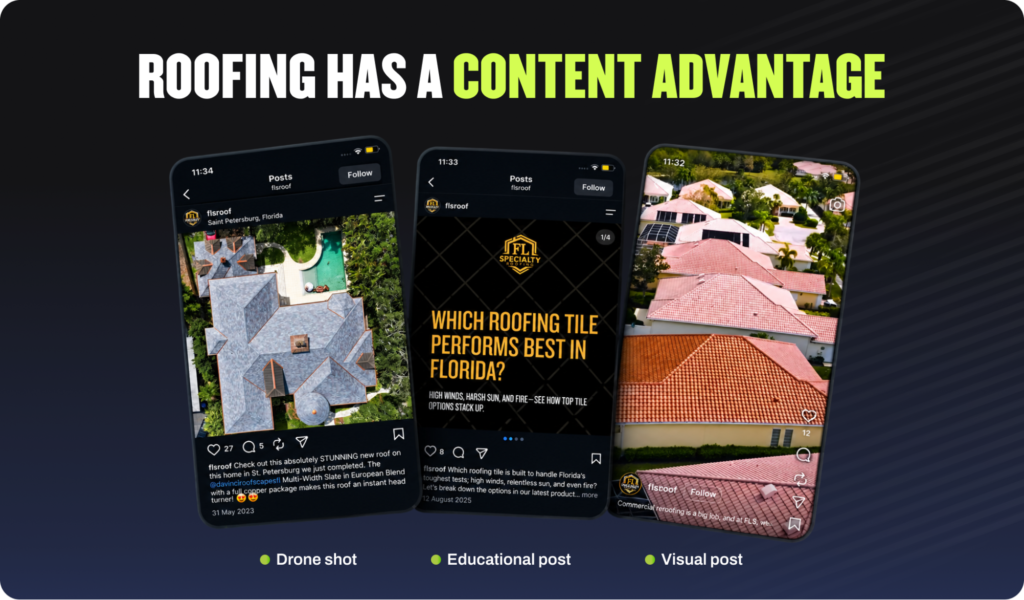
Roofing has a structural content advantage most roofers fail to exploit. Job site footage, drone shots, before-and-after transformations, storm-response posts geo-targeted to affected zip codes. Instagram rewards the visual quality of roofing work specifically.
When hail hits, a post telling homeowners how to check their roof from the ground, posted the same day, reaches people who are already searching for that answer. For a specific content idea list, our roofing social media post ideas breakdown is built for exactly this trade.
Plumbing
Plumbing’s challenge is that the work is rarely photogenic. The content that performs is educational video: “five signs your water heater is about to fail,” “why your water pressure dropped and what it means.”
These build a searchable video library on YouTube and generate real engagement on Facebook from homeowners who have had the exact same issue. Our guide on social media for plumbers goes deeper on the specific formats.
Electrical
Same challenge as plumbing, different angles. Technician introductions, short explainers on what a panel upgrade involves, safety-focused content like “signs your home may need an electrical inspection” that resonates with homeowners of older homes.
Facebook and Nextdoor are the priority platforms. The goal is name recognition before the homeowner has a reason to call, not competing on visual impact with trades that are easier to photograph.
Posting Frequency and a Simple Weekly System
Consistency beats frequency every time. Posting three times a week, every week, outperforms twelve posts in a burst followed by three weeks of silence. Baseline by platform:
- Facebook: three to five times per week
- Instagram: three to four times per week, including at least one Reel
- Nextdoor: one to two business posts per week
- YouTube: one video every two to four weeks to build a library over time
A weekly system that does not require a marketing team:
- Monday: before-and-after post from last week’s jobs with a specific description
- Wednesday: short job site video or a team member introduction
- Friday: seasonal tip or a Google review turned into a graphic
- One Reel cross-posted to Facebook and Instagram per week
Four pieces of content per week. The raw material is already on job sites every day. The system is capturing it instead of letting it disappear.
What to Measure: Calls, Not Clout
The metrics that matter connect social media leads home service activity to actual pipeline. Not vanity numbers.
Track these:
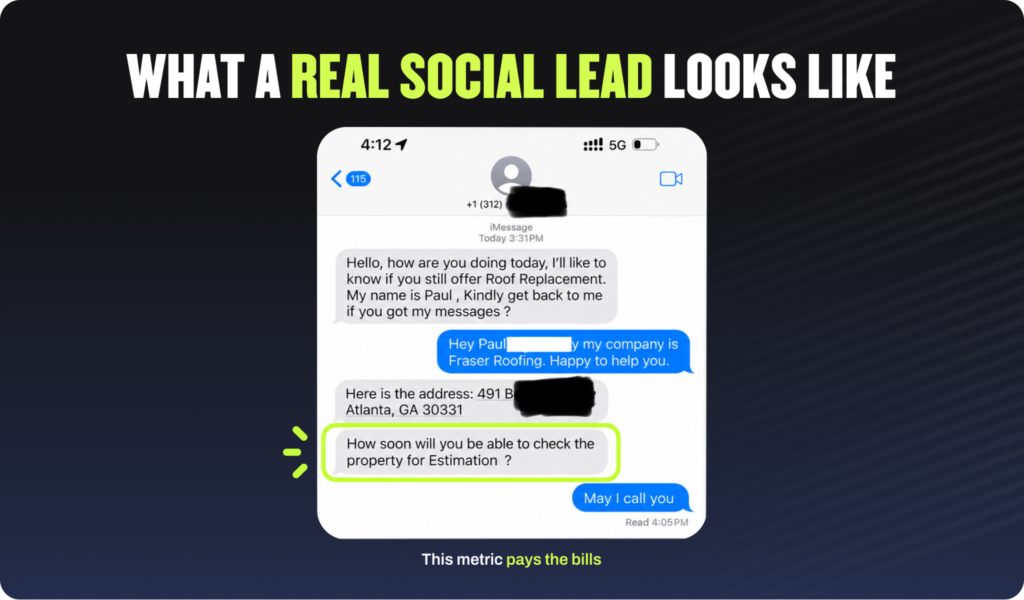
- Direct messages asking about services or requesting estimates
- Phone calls attributed to social media in call tracking
- Profile clicks and website clicks from individual posts
- Review mentions that start with “saw your post” or “found you on Facebook”
Ignore these:
- Total follower count as a success metric
- Post likes without any call context
- Impressions without engagement, reach without conversion
A business with 400 followers and three inbound DMs per month is outperforming a competitor with 4,000 followers and no calls from social. For how social fits inside a full system, our home services marketing strategy guide covers how social, SEO, and paid advertising work together.
What We See Across the Contractor Accounts We Run
We manage social programs for contractors across HVAC, roofing, plumbing, and landscaping. The accounts that produce calls are not the ones with the largest followings or the highest production budgets.
They are the ones with a consistent system and content that actually looks like the company behind it.
Smok HVAC (Frederick, Maryland)
One of our clients. Their page is built around their actual technicians, their actual job photos, real customers on camera. Eric, the owner, has told us more than once that he genuinely likes looking at his own website.
Not tolerates it. Likes it.
That is not a small thing. When the owner is proud of how the business looks online, it shows in the content, and homeowners can tell.
Owl Roofing
Their feed has real personality baked in: crew photos, customer moments, content that is clearly specific to them rather than pulled from a generic contractor template library. Tim, Hook’s founder, has been a big part of building that into what they do.
You scroll through and you already know who you would be working with before you ever talk to them. That is the bar.
Grand Exteriors
They did not hesitate when we pushed them to get their crew on camera. Committed to a full shoot, got coached through it, handed us enough footage for:
- Static ads in multiple sizes
- Short social clips
- Longer cuts for YouTube and the website
All from a single day. We are still pulling from that library. One investment, months of content.
The through-line across all three is not budget or follower count. It is realness. Real people, real jobs, real local presence. That is what builds the recognition before the call, and that recognition is what a working home services social media strategy is actually trying to create.
Frequently Asked Questions
What social media platform is best for home service businesses?
Facebook. 71% of U.S. adults use it and 58% of the core homeowner demographic (30-49) visits daily, according to Pew Research 2025. For visual trades like roofing and landscaping, add Instagram. For emergency-intent trades like plumbing and HVAC, Facebook and Nextdoor are the priority.
How often should a home service contractor post on social media?
Three to five times per week on Facebook, three to four times on Instagram including at least one Reel, one to two times on Nextdoor. Consistency beats frequency. Three posts per week every week outperforms twelve in one week and silence the next.
What type of content performs best for home service businesses?
Before-and-after posts with specific descriptions, short job site videos, owner and team introductions, timely seasonal posts, and Google reviews repurposed as graphics. The content that consistently outperforms is specific, local, and real. Generic tips and promotional posts get scrolled past.
Can social media actually generate leads for a home service company?
Yes, with a clear system. 32% of home service businesses already use Facebook specifically for lead generation per Jobber’s Home Service Trends Report. The average return on Meta sales ads is $4.57 per dollar spent, according to Metricool’s 2026 Social Ads Study. Social leads require more nurturing than search leads but carry lower acquisition cost when the content system is running.
What is the 70/20/10 rule for home services social media?
70% trust-building and educational content. 20% community and engagement content. 10% direct promotion. The ratio exists because homeowners scroll past promotional content until they trust the business. The 70% earns the right for the 10% to work.
How does a home service business measure social media ROI?
Track DMs asking about services, calls attributed to social in call tracking, website clicks from posts, and reviews that mention finding the business on social. Ignore follower counts and likes as standalone metrics. Business outcome signals only.
Your Next Move Is Simpler Than You Think
Most contractors reading this already know what is missing. Real job photos that are not being captured. A crew that has never been introduced on social. Before-and-after posts that exist on a phone somewhere and never made it to a feed. A Google review from six months ago that never got turned into content.
The material is there. What is missing is the system to turn it into a consistent home services social media strategy that works while you are running jobs.
If you want help building that system, that is exactly what we do at Hook Agency. We work specifically with contractors and build programs that produce calls, not just content.
Ready to build a social strategy that actually produces leads? Talk to our team and let us show you what we would build for your specific trade and market.