
Most home service brands look… fine.
Clean logo.
Stock crew photos.
“Family-owned since 2008.”
Five-star reviews.
And yet homeowners still scroll.
Here’s the uncomfortable truth: Being professional isn’t the same as being relatable. In today’s market, the companies that win aren’t just the most qualified. They’re the most familiar. The ones that feel human. The ones people feel like they already know before the estimate even starts.
That’s where relatable brand marketing comes in. Not oversharing your kids for engagement. Not forcing vulnerability. Not turning your business into a reality show.
Relatability is a strategic growth lever. It lowers resistance. It builds trust faster. It shortens sales cycles. And in home services, where someone is literally inviting you into their house, trust is everything.

So what does a truly relatable brand actually look like? And how do you build one without hurting credibility?

What a “Relatable Brand” Actually Means (And What It’s Not)
Relatable does not mean sloppy. It does not mean oversharing your kids for engagement. And it definitely does not mean trying way too hard to be funny online.
For years, brands were taught to be polished and distant. Think early 2000s celebrity culture. Red carpet appearances. Carefully controlled interviews. You were not supposed to really know them. Now that model feels outdated. People do not want mysterious brands. They want human ones. They want to see the basement whiteboard story. The early struggles. The real conversations. The founder explaining how it actually started.
You cannot fake 45 minutes of real conversation. That is why long form content works. That is why YouTube builds trust faster than polished ads. Familiarity compounds. And in home services, familiarity lowers risk.
Relatability is comfort. It is the feeling a homeowner gets when they think, “I feel like I already know this company,” before they ever call. Strategically, it means tying something unknown, your business, to something known.
- A story people can picture
- A family connection
- An animal or symbol that creates memory
- Community involvement that feels genuine
When a brand connects itself to something familiar, it becomes easier to remember and easier to trust.
And this is not just a branding theory. Forrester’s 2025 Total Experience research found that companies aligning brand experience with customer experience achieve up to 3.5 times higher revenue growth. When how you show up online matches how you operate in real life, revenue follows.
Why Relatability Drives Trust and Sales in Home Services
This is where relatability stops being a branding idea and starts driving revenue.
People Do Not Go to Social Media to Be Sold
Homeowners are not opening Instagram hoping to find a roofing estimate. They are there to be entertained, to unwind, to feel something.
That is why humor lowers resistance. Emotion increases recall. And stories stick.
Stanford research found that people remember stories 22 times more than facts alone. There is a reason parables last for generations. There is a reason Pixar follows a structured story arc. Stories activate imagination. Facts just inform.
For contractors, this completely changes how you approach social media for home service businesses. If every post is promotional, you blend in. If your content shares real moments, real lessons, and real personality, you become memorable.
And memorable gets called.
Familiarity Reduces Risk
Home services is a high trust purchase. When someone hires you, you are stepping into their house. You are meeting their spouse. Their kids. Their dog.
If your brand feels corporate and distant, the perceived risk is higher. If your content shows your origin story, your team, your personality, the risk drops.
We have seen brands shift from stock photo polished to human led content and experience:
- Higher engagement
- Better inbound lead quality
- Shorter sales cycles

Relatability Compounds Over Time
Sponsoring local teams. Supporting schools. Fixing a job the right way even when it costs you. Repeating your founding story in different formats.
You may not see immediate ROI. But brand equity builds future close rates.
Even when brands try to leverage influencers for roofing marketing, the campaigns that work are not the loudest ones. They are the ones that align with real community presence and authentic values.
Relatability is long game marketing. It builds familiarity. Familiarity builds trust. And trust closes deals.
Practical Ways to Make Your Brand More Human Online
This is where most companies nod their heads… and then go back to posting generic job photos. If you want a more relatable brand, you need to operationalize it. Not as a vibe. As a system.
1. Tell Your Origin Story More Than Once
Not once on your About page. Tell it in phases.
Tell the basement whiteboard story.
Tell the early failure.
Tell the first job that went sideways and how you fixed it.
Tell the lesson you learned the hard way.
Stories are memorable. Facts are not. When someone hears your origin multiple times in different formats, it builds narrative depth. That repetition increases recall and increases the value of a social media following because now your audience is not just consuming content. They are tracking your journey.
And when they finally need a roof, HVAC repair, or plumbing fix, they already feel invested.
2. Tie Your Brand to Something People Already Understand
This is strategy, not creativity for creativity’s sake.
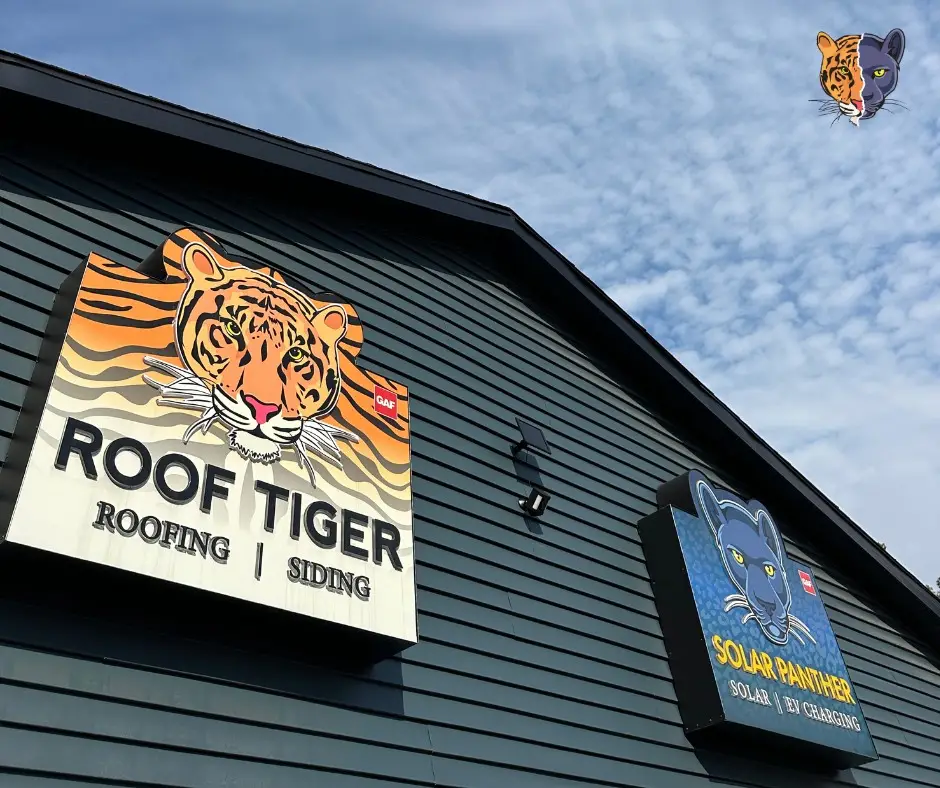
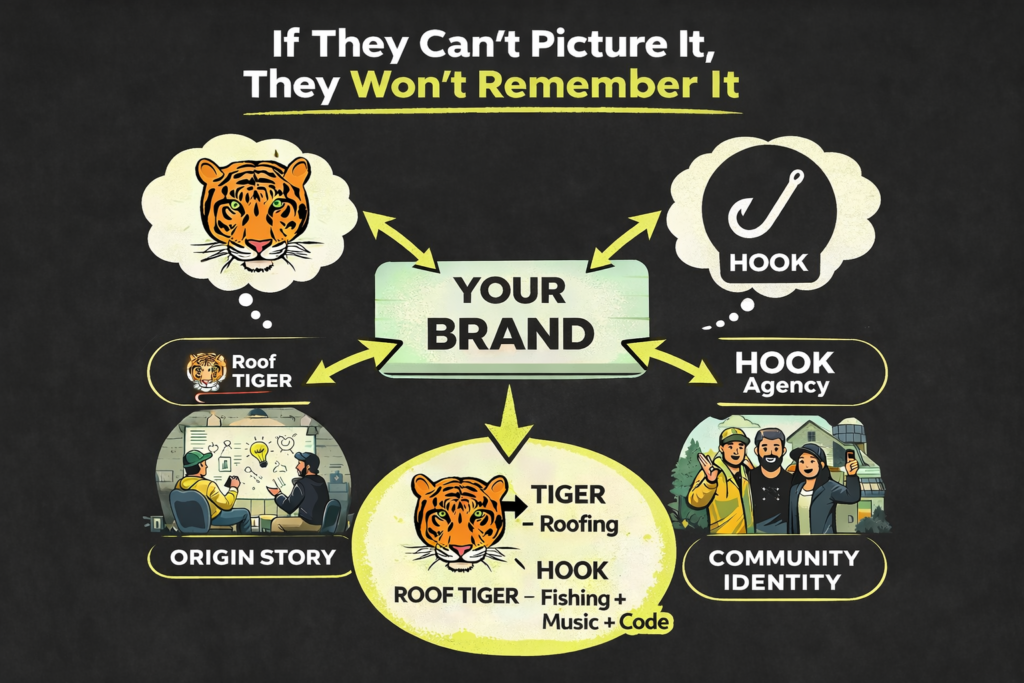
Roof Tiger works because tiger is already embedded in people’s minds. It creates emotional recall. Hook works because it connects to fishing, music hooks, even code hooks. Known object meets unknown brand.
Ask yourself: what known symbol, animal, belief, or identity can your company attach to?
Johnson Roofing does not create mental hooks. Roof Tiger does.
When you connect your brand to something familiar, you lower the cognitive effort required to remember you. That is how personalization scales. Deloitte’s 2025 Marketing Trends report found personalized brands are three times more likely to exceed revenue goals, with 80 percent of consumers preferring tailored experiences.
Relatability is personalization at a brand level.
3. Show Process, Not Just Results
“Another roof installed” is not a story.
Show the sales conversation.
Show the crew joking before the job.
Show the owner explaining a mistake and how it was corrected.
Show behind the scenes chaos.
Long form YouTube works because people cannot fake it for 30 or 45 minutes. Familiarity builds trust.
And trust matters more than ever. PwC’s 2025 Customer Experience Survey found 52% of consumers stop buying after one bad experience. That means if someone hires you without feeling confident and something small goes wrong, they are gone.
When they already feel like they know you, they are more forgiving. More patient. More loyal.
Process builds that buffer.
4. Use Humor With Intention
Humor breaks resistance. It makes you memorable. It makes you shareable.
But it needs direction.
A few well placed funny sales follow-up memes can humanize your team and reduce tension after estimates. That is different from turning your brand into a constant joke.
Balance credibility with personality. The goal is not to be a clown. It is to be approachable.
Approachable closes deals.
5. Show Values Through Decisions
Anyone can say “We care about community.”
Show it.
- Sponsor the local team.
- Post about school involvement.
- Share the story of a job you fixed at your own cost.
- Celebrate your crew publicly.
Relatability is shown through action. Not slogans.
And remember, customer experience is not separate from brand. If your content says you care but your service feels cold, the disconnect kills trust. Companies that align brand and customer experience outperform long term because the story matches the reality.
If They Don’t Feel You, They Don’t Hire You
Homeowners don’t just choose the most qualified contractor. They choose the one that feels safest.
Relatable brand marketing is about lowering resistance before the estimate. It’s about making your company feel familiar, human, and aligned with how you actually operate. When brand and experience match, trust builds faster. And trust closes.
If your brand feels a little too corporate or a little too invisible, that’s not a design problem. It’s a relatability problem.
Book a call with Hook Agency. We’ll help you spot where your brand feels distant and show you how to make it more human without losing credibility. Because in home services, familiarity wins.