
If you are spending two or three thousand dollars a month on marketing and wondering why the biggest companies in your city keep winning, here is the uncomfortable possibility.
They are not smarter than you.
They are not running secret tactics.
They are simply outspending the minimum required to be visible.
That is the part most contractors never get told.
A marketing budget for home services is not just about what you can afford. It is about what your city demands. Some markets let small budgets compete. Others do not. In those cities, underfunded campaigns do not fail because they are bad. They fail because they never had enough reach to matter.
This is where confusion sets in. You see ads running. You get a few leads. Results feel random. What is actually happening is your budget is hovering below the line where consistency starts.
This guide breaks down how to tell if your budget is below that line, how competitive spend changes by city size, and how to know when the problem is not your strategy but the math behind it.
What “Competitive” Marketing Spend Actually Means in Local Markets
Competitive does not mean having the biggest budget in town. It means having enough budget to actually show up. That distinction matters more than most contractors realize.
In every city, there is a minimum viable spend. It is the amount required to be visible often enough that homeowners recognize you as an option. Below that line, your ads do not fail because they are bad. They fail because they appear too rarely to matter.
This is where confusion starts.
A small budget can test ideas. It cannot compete. Testing spend tells you what might work. Competing spend gives those ideas enough exposure to produce consistent leads. Many contractors get stuck testing forever and mistake inconsistent results for poor performance.
The other common mistake is spreading limited dollars everywhere.
- A little Google Ads
- A little Facebook
- A little SEO
- A little social
Each channel gets starved. None of them reach the visibility threshold required to influence decisions. True omnipresent marketing is not about being on every platform. It is about showing up often enough in the right places that your brand becomes familiar.
Why “It Depends” Is Usually a Cop Out
“It depends” sounds responsible. It usually avoids the real math.
Generic budget percentages mislead contractors because they ignore market pressure. Ten percent of revenue might work in a small town and fail instantly in a dense metro. What matters is not the percentage. It is whether your spend is enough to stay visible.
A few realities most advice skips.
- City size changes everything. In larger markets, CPCs often run two to four times higher.
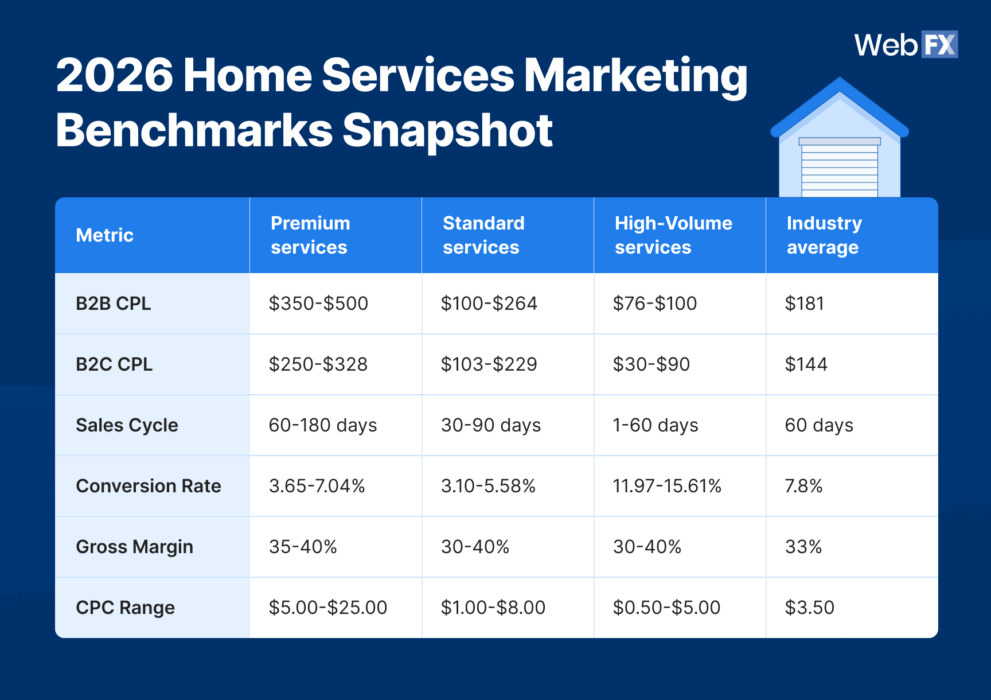
- With average gross margins around 33%, there is little room for wasted spend.
- Underfunded campaigns do not improve slowly. They stall fast.
This is also why national marketing advice breaks down at the local level. It assumes volume will smooth out inefficiency. Local contractors do not have that buffer.

Marketing Budget Benchmarks by City Size and Competition Level
This is the part most contractors silently hope someone will explain clearly, because if your budget can’t afford real visibility, nothing else matters. The ranges here are drawn from real industry data on typical marketing spend, ad costs, and market competition in 2026 so you know what competitive actually looks like.
Small Cities and Rural Markets
In small service areas, think towns with minimal competition or rural counties, the cost to be noticed is lower, and you can get traction with a budget that is realistic for most independent contractors.
Typical traits:
- Fewer competitors bidding on search terms
- Lower cost per click and lower cost per lead compared to big markets
- Enough budget here actually gets seen without needing huge spend
What budgets look like here
- Smaller PPC budgets around $1,000–$2,500 per month generally cut it
- Combined spend (PPC + Local SEO + profile/brand presence) closer to $2,000–$5,000 often helps you stay visible
- These budgets allow your ads to show frequently in local searches, not just sporadically
In areas like this, you can compete effectively without the intense bidding wars of dense metro markets. The game here is consistency, not scale. Spend without frequency is invisible spend.
Mid-Size Cities
Mid size cities like regional hubs or growing suburbs are where many contractors start to see real friction.
Why this tier feels tough:
- Multiple established players with defined marketing budgets
- Rising CPCs as more companies bid for the same keywords
- Advertising is no longer cheap, but it still scales with focus
In these markets, spread budgets fail and focused budgets win.
What competitive spend looks like
- Digital marketing consistently in the $5,000–$10,000 per month range is common for contractors aiming for visibility and leads that actually convert
- Budgets below this often test ideas instead of competing in auctions
- Filling gaps with Local SEO and profile optimization increases visibility alongside paid efforts
In mid size markets, you need enough budget to stay visible across peak windows, not just weekends or off-hours. Less spend means ads show inconsistently, campaigns never exit learning phases, and traction stalls.
Large and Highly Competitive Cities
These are the real test markets, dense metros or big suburbs where multiple roofers, plumbers, and HVAC companies are aggressively bidding.
This is where benchmarks shift dramatically:
- CPCs can climb 2–4x compared to smaller markets as competition tightens
- Premium services (like roofing and remodeling) tend to have higher cost-per-lead benchmarks relative to basic services
- Underfunded campaigns stall fast because algorithms favor advertisers who maintain visibility
Competitive ranges here
- Budgets for serious visibility often start around $10,000–$25,000+ per month
- This allows search ads to show in prime positions frequently
- It also supports other visibility channels (local SEO, brand listings, reviews)
In a fast market, “just enough to run ads” is not enough. You need enough to compete every single day, not just pop up occasionally.
Is Your Budget the Problem Or Is It Actually Fine?
Most contractors feel stuck somewhere in the middle. Marketing is running. Money is going out. Results feel inconsistent. The hard part is knowing whether the budget is holding growth back or if the issue lives somewhere else.
Here is how to tell the difference without guessing.
When Your Budget Is Holding Growth Back
Some signs show up again and again when spend is simply too tight to compete.
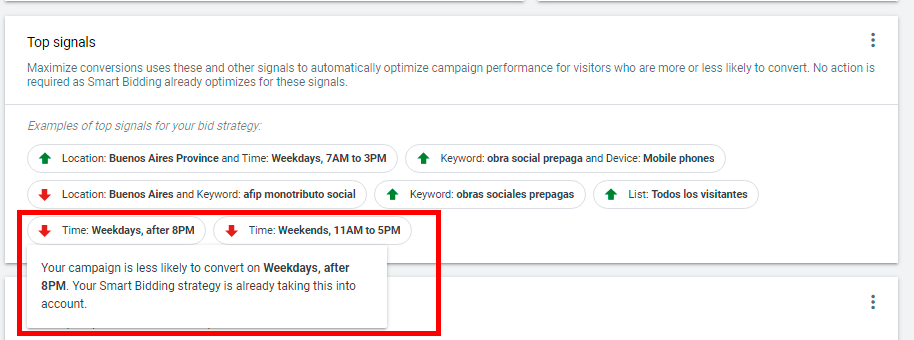
- Ads stop showing before peak hours.
That usually means budgets are capped early in the day. When homeowners search at night or on weekends, you disappear. That is not an optimization issue. It is a funding issue.
- Campaigns never exit the learning phase.
If platforms never gather enough data to stabilize, performance stays volatile. That happens when spend is too low to generate consistent signals.
- Traffic shows up but calls do not.
Clicks without phone calls often mean you are buying visibility in small, scattered bursts. Enough to get visits. Not enough to build trust or urgency.
- Competitors seem to be everywhere.
If the same companies show up in search, maps, and ads repeatedly while you appear occasionally, the market is telling you something. They are outspending the minimum required to stay visible.
In these situations, it becomes impossible to properly track marketing ROI. Results look random because exposure is inconsistent.

When Your Budget Might Actually Be Fine
Not every slow period means you need to spend more. Some signs point in the opposite direction.
- Leads come in consistently.
You might want more volume, but consistency means your budget is clearing the visibility threshold in your market.
- Cost per lead stays stable.
Fluctuations happen, but if costs do not spike wildly, spend is likely adequate for the channels you are using.
- Close rates remain strong.
If leads turn into jobs at a healthy rate, quality is there. That usually means budget and targeting are aligned.
- There is a clear channel fit.
You know what is working. Search drives calls. Or social supports demand. Or both. This is especially true when social media for home service businesses is used to support visibility rather than replace high-intent channels.
The Market Does Not Care What Feels Reasonable
Your city has already decided what it costs to compete.
It does not care what feels comfortable.
It does not care what worked five years ago.
If your budget clears the visibility threshold, marketing feels predictable. Leads show up. Data makes sense. Adjustments actually work. If it does not, everything feels random. Some weeks look fine. Others are dead. Nothing ever quite scales.
That is not a strategy problem. It is a math problem.
The worst place to be is the middle. Spending just enough to feel committed, but not enough to ever dominate attention. That is where most contractors get stuck. If you want a straight answer on whether your current spend is competitive in your city or quietly holding you back, stop guessing.
Book a call to pressure test your current marketing budget against your local competitors and get a clear yes or no.