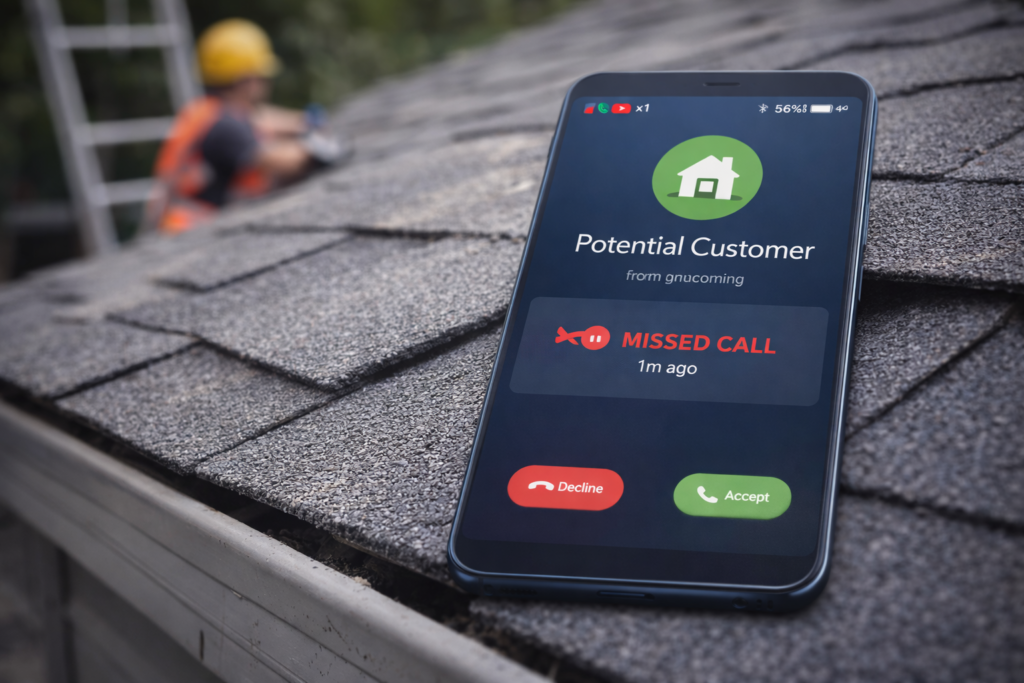

Five missed calls a week does not sound catastrophic.
Until you do the math.
Average roofing job value of $8,000. A conservative 30% close rate. Five missed calls a week. That is $12,000 in potential revenue gone every single week. Over a storm season that number becomes $60,000, $80,000, $100,000 quietly bleeding out while your phone rings to voicemail.
Missed call value is one of the most underestimated numbers in contractor marketing. Most business owners know they miss calls occasionally. Very few have ever sat down and calculated what those missed calls are actually costing them in real revenue.
That changes right now.
The Real Dollar Value of a Missed Call
Most contractors think of a missed call as a minor inconvenience. Someone who will probably call back. They will not. That missed call is not a delayed lead. It is a dead one.
Here is the math most contractors never do:
| Service | Average Job Value | Close Rate | Cost Per Missed Call |
| Roofing replacement | $9,000 | 35% | $3,150 |
| HVAC installation | $7,500 | 30% | $2,250 |
| Plumbing re-pipe | $4,500 | 40% | $1,800 |
| Pest control treatment | $400 | 60% | $240 |
And that is before lifetime value. A pest control customer on a quarterly plan is worth $600 a year. A happy roofing customer refers two neighbors. The true missed call value compounds well beyond that first job.
Calling a lead back within 5 minutes makes you 100 times more likely to reach them than calling after 30 minutes. Miss the call during a job, finish up, call back an hour later. That lead is already booked with someone else. The missed call is not just a lost job. It is a lost relationship.
When Missed Calls Hurt the Most
Not all missed calls are equal. Missing a call on a slow Tuesday afternoon stings. Missing one at 6pm on a Sunday after a hailstorm just tore through your market is a completely different level of costly.
This is when contractor phones ring the most and get answered the least.
Storm season and extreme weather. A homeowner with water coming through their ceiling is not comparison shopping. They are calling the first contractor they can reach and booking whoever picks up. Higher urgency. Faster decisions. Larger job values. And your crew is probably already slammed with calls going straight to voicemail.
85% of people whose calls go unanswered will not call back. During peak moments that statistic is devastating. Understanding what makes a home service lead high quality starts with recognizing that the highest intent calls come during these exact windows.
Evenings and weekends. Most homeowners discover problems when they are actually home. After work. Saturday morning. Sunday afternoon. Peak discovery moments that most contractor offices are closed or understaffed for.
Right after a marketing push. A Google Ad goes live. An LSA impression spike hits. That surge in call volume arrives all at once and any gap in your answering system means paid leads going straight to voicemail.

The Window to Win a Lead Is Smaller Than You Think
Every missed call starts a countdown. And most contractors do not realize how fast that clock runs out.
Why the First Contractor to Answer Usually Wins
A homeowner searching for an HVAC contractor on a hot August afternoon is not building a shortlist. They are calling down a list until someone picks up. First contractor to answer gets the job. Second contractor gets a callback that never comes.
This is not anecdotal. Leads contacted within the first minute convert at nearly 400% higher rates than those reached after an hour. The homeowner’s urgency is highest the moment they dial. Every minute that passes that urgency transfers to whoever does pick up.
Speed is not a customer service value for contractors. It is a revenue lever. The difference between answering in 30 seconds and calling back in 45 minutes is often the difference between a booked job and a lost one.

What Happens to Leads That Go to Voicemail
Nothing good.
Most homeowners do not leave voicemails. The ones who do rarely answer the callback. By the time your office opens Monday morning that lead has already hired someone, gotten a quote, or simply given up and decided to wait.
The math on voicemail is brutal. A missed call during a storm surge, a weekend emergency, or a peak season push is not just one lost job. It is one lost job that your marketing budget paid to generate.
Call Answering Services and Overflow Routing
The fix does not require hiring a full-time receptionist.
A virtual receptionist built for contractors handles overflow calls, after-hours inquiries, and peak volume surges without adding headcount. A real person answers, qualifies the lead, books the appointment, and passes it to your team. The homeowner never knows the difference.
The setup that works for most contractor businesses:
- Primary line answered by your office during business hours
- Overflow routing to an answering service when lines are busy
- After-hours coverage for evenings, weekends, and storm events
- Immediate text or email notification to the owner for every new lead captured
This is not a luxury. For any contractor running paid ads, it is a basic requirement for protecting the marketing investment.

Follow-Up Systems That Recover Lost Leads
Some calls will still get missed. The system that recovers them is what separates contractors who lose that revenue permanently from ones who get a second shot.
The moment a missed call is detected an automated text should fire within two minutes. Not an hour. Two minutes. Something simple. “Hey this is [Company], sorry we missed you. We would love to help. Is now a good time to chat or would you prefer to book online?”
A proper contractor follow-up system in 2026 layers that initial text with a callback attempt, a follow-up email, and a reminder sequence over the next 48 hours. Most contractors make one attempt and move on. The ones recovering the most lost leads make three to five touches across multiple channels before closing the loop.
The lead already found you. They already wanted to call. A fast, persistent follow-up system gives that intent a second chance to convert.
You Cannot Fix What You Cannot See
Most contractors know they miss calls. Very few know which campaigns generated those calls, what time they came in, or how many happened last week versus the week before.
That blind spot is expensive.
Call tracking assigns unique phone numbers to every marketing channel. Your Google Ads campaign gets one number. Your LSA gets another. Your website gets another. Every call gets logged, recorded, and attributed to the exact source that generated it.
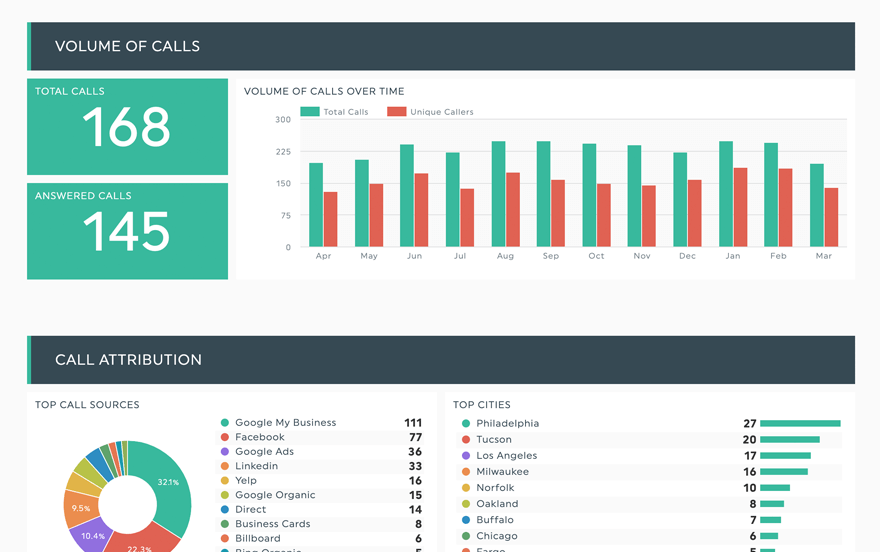
What that data actually tells you:
- Which campaigns are driving high-intent calls versus low-quality inquiries
- What time of day your missed calls are concentrated
- How many paid leads went to voicemail last month
- Which keywords are generating calls that actually book jobs
That last one matters most. A keyword generating 50 calls a month sounds great until call tracking reveals 40 of them are going unanswered during peak hours. Without that visibility you keep spending on a campaign that looks productive on paper while the leads quietly disappear.
Every Unanswered Call Has a Price Tag. Do You Know Yours?
The missed call value sitting inside your business right now is not a small number. It is compounding every week across storm seasons, weekend emergencies, and peak hours when your phone rings and nobody picks up.
The contractors pulling ahead are not necessarily spending more on marketing. They are just making sure the leads they already paid for actually get answered.
Book a call with Hook Agency and let’s find out exactly how much revenue your current lead handling system is leaving on the table.