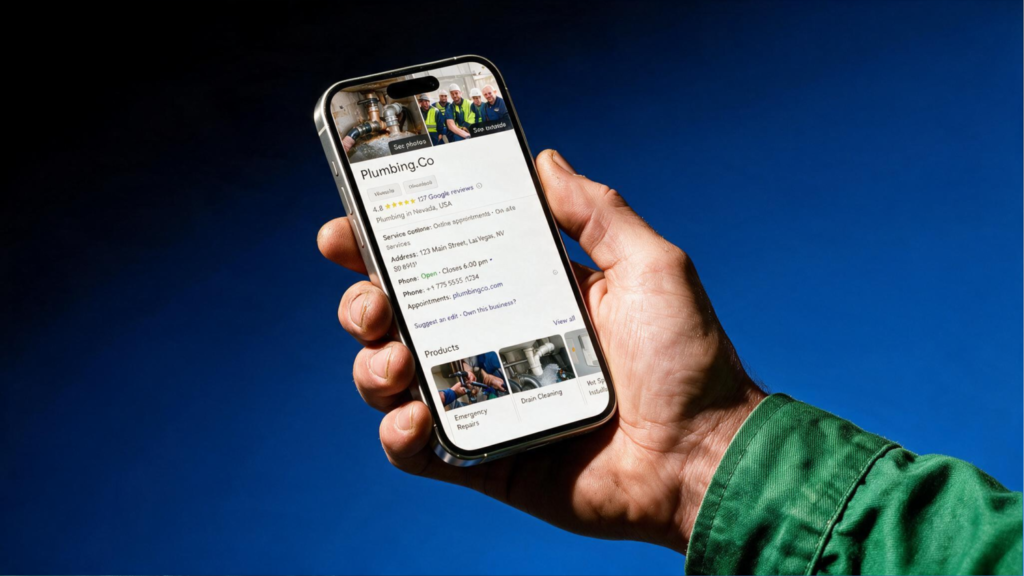

We’ve audited hundreds of Google Business Profiles for home service businesses.
The same pattern shows up almost every time. The profile exists. The address is right. Maybe there are a few reviews. But the fields Google actually uses to decide whether to recommend that business are either empty or filled in generically on setup day and never touched again.
The competitor ranking above them is doing something simple. They are treating their GBP like a channel, not a form.
What actually drives organic visits:
- Complete, accurate business information, not fields filled just to reach “done”
- Genuine recent reviews that describe the customer experience
- Real photos and videos that show the work
- Useful Google Posts that keep offers and updates visible
That is most of it. The biggest change this year is Ask Maps, Google’s Gemini-powered conversational experience inside Maps. A thin profile is not automatically excluded from AI answers, but it gives Google less reliable information to use when matching a specific question.
Why Organic GBP Traffic Matters More in 2026
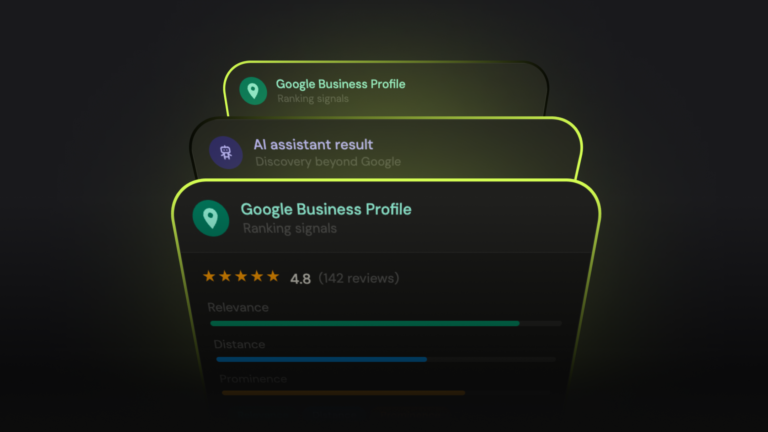
Organic Google Business Profile traffic matters more because homeowners can now discover local businesses through both traditional Maps results and conversational recommendations. A complete profile does not guarantee inclusion, but missing or conflicting information can make the business a weaker match.
Here is what changed.
On March 12, 2026, Google launched Ask Maps, a Gemini-powered conversational feature inside Google Maps. Instead of only searching “HVAC company near me” and scanning a list, a homeowner can ask a detailed question such as “Which HVAC contractors nearby are open now?” and receive conversational recommendations with a customized map.
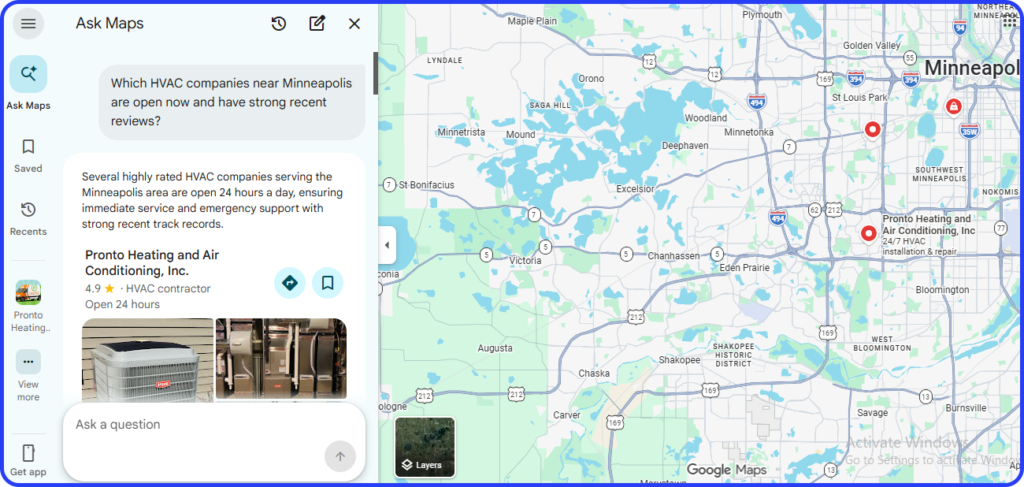
According to Google’s announcement of Ask Maps, Ask Maps can analyze information from more than 300 million places, including reviews from a community of over 500 million contributors. Google also builds Business Profiles from merchant information, official websites, licensed data, and user contributions. That makes the following details worth keeping accurate:
- Primary and additional categories that accurately describe the business
- Services, hours, service areas, contact details, and available category-specific attributes
- Genuine reviews, photos, and other customer contributions
- The business website and other reliable public information Google can corroborate
An incomplete profile is not automatically removed from Ask Maps. The practical problem is simpler: Google has fewer clear, corroborated details to connect the business with a narrow request. That can make a better-documented competitor the easier recommendation.
I want to be direct about why this matters for home service businesses specifically. Emergency and same-day searches often become high-value calls. When an AC fails on a Friday night, the homeowner may ask Maps who is open nearby, who handles emergency repairs, or which company has strong recent feedback. Accurate hours, a detailed services list, and reviews that naturally describe the work give Google and the homeowner more useful context.
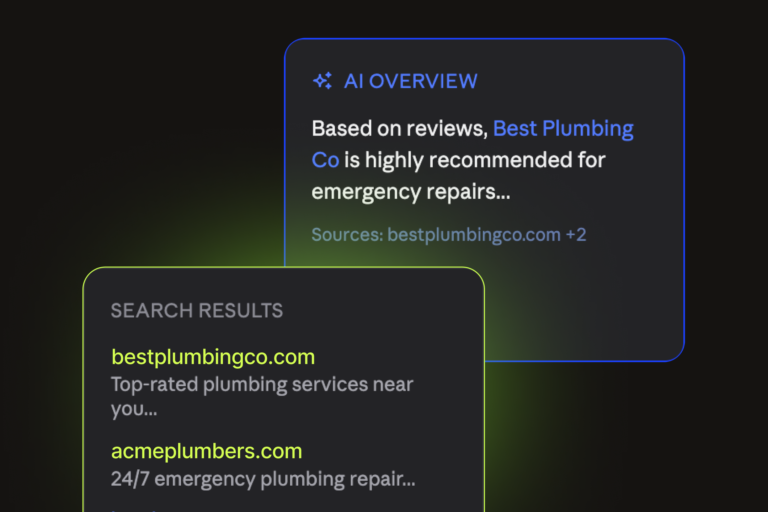
This is also connected to the broader AI visibility conversation we cover in how AI Overviews in local SEO work. Ask Maps and AI Overviews are different products, and Google does not publish one shared formula for them. The practical overlap is that both benefit from clear business information that is supported by the website, reviews, and other trustworthy sources across the web.
Get the Foundation Right First
When we audit a GBP for a new client, the same gaps come up almost every time. Not because the owner did anything wrong when they set it up. Because the setup flow gets you to “done” without necessarily getting you to “complete.” Done means the profile is live. Complete means the core details are accurate, specific, and useful to customers. Google’s Profile Strength indicator can flag missing items such as the description, hours, contact information, photos, and posts, but it is a checklist, not a ranking score.
The full list of what Google expects is documented in Google’s Business Profile guidelines. Here’s the version that matters specifically for home service businesses.
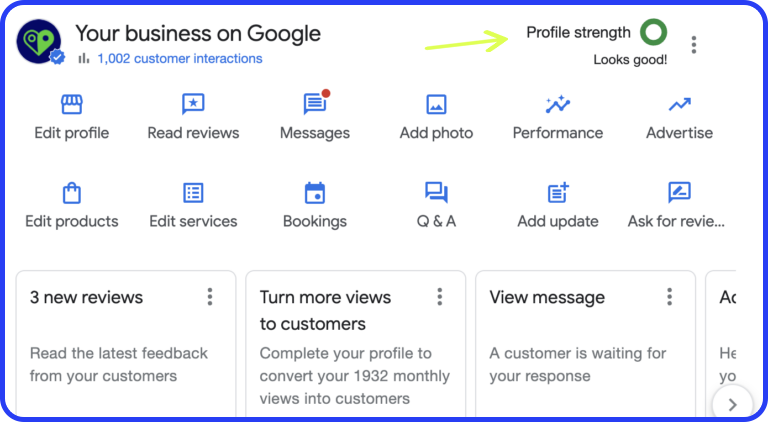
1. Complete Every Field Google Offers
The fields most home service businesses leave empty or generic:
- Business description: name what you do, where you serve, and one or two things that make you worth calling. Actual language customers search, not a tagline.
- Services list: add every service individually. Water heater installation and water heater repair are different entries and both should be listed.
- Attributes: complete the attributes Google actually offers for the profile’s category, such as service options, accessibility, ownership, or payment details. Attribute availability varies by business type, so do not add details that are not true.
- Hours: current, accurate, and updated for seasonal changes and holidays.
2. Choose the Right Primary and Secondary Categories
Category selection is one of the highest-impact decisions in a Google Business Profile and one of the easiest to get wrong.
The mistake: picking a broad umbrella category like “Contractor” when a more specific one like “Plumber” or “HVAC contractor” exists. Google says categories affect local ranking, and the primary category should be the most specific description of what the business is.
The approach: choose one specific primary category for the core business, then add only the few additional categories that genuinely describe it. Do not use a category for every individual service. Put services such as furnace repair or water heater installation in the Services section instead.
3. Keep NAP Consistent Everywhere
Name, address, phone number, website, and service area should be accurate and consistent in substance across the GBP, the website, and major directories. The goal is not punctuation-level uniformity. “Street” versus “St.” is less important than conflicting phone numbers, old addresses, duplicate profiles, or a service area the business does not actually cover. NAP audits are useful because they uncover those real contradictions.
Turn Reviews Into a Traffic Engine
The contractors I see outranking much larger competitors in the local pack almost always have one thing in common: a recent, steady stream of specific reviews. Not necessarily more reviews total. Just newer ones that mention actual services.
This matters because Google reviews and SEO are connected most clearly through prominence: Google says more reviews and positive ratings can help local ranking. Ask Maps also draws on reviews when answering questions about places. That does not mean a service phrase in one review guarantees a match, but detailed, genuine feedback gives both Google and homeowners more context than a generic “great job.”
4. Build a Review Request Habit Into Every Completed Job
There is no universal formula in which a certain number of recent reviews automatically beats a larger older profile. The better goal is a steady stream of genuine feedback. Recent reviews reassure homeowners that the company is active, while total review count and positive ratings contribute to prominence.
The mechanic is simple: ask after the job, follow up by text within 24 hours with Google’s direct review link or QR code, and make the process easy. Do not offer incentives or tell customers what rating to leave. How many local reviews it takes to beat the competition covers the volume thresholds that matter in different markets.
5. Reply to Every Review, Not Just the Bad Ones
Responding to reviews is worth doing because the replies are public and show customers that the business listens. Google recommends helpful, positive replies, but it does not describe review responses as a direct freshness or engagement ranking factor. Reply when you can add context, answer a question, thank the customer specifically, or explain how an issue was handled.
The response to a negative review is especially important. A defensive reply makes things worse. A specific, professional response that acknowledges the issue and explains what was done about it actually builds trust with anyone who reads it afterward.
6. Use Review Language That Matches How Customers Search
Specific review details matter, but not because you should manufacture keywords for Ask Maps.
When a customer reviews a service business, Google may ask which job was performed. Those task options can come from the profile’s service list, the website, or other authoritative sources. A review that naturally says the team replaced a water heater the same day is more useful to future customers than “great job,” but Google does not promise that one phrase will trigger a specific AI recommendation.
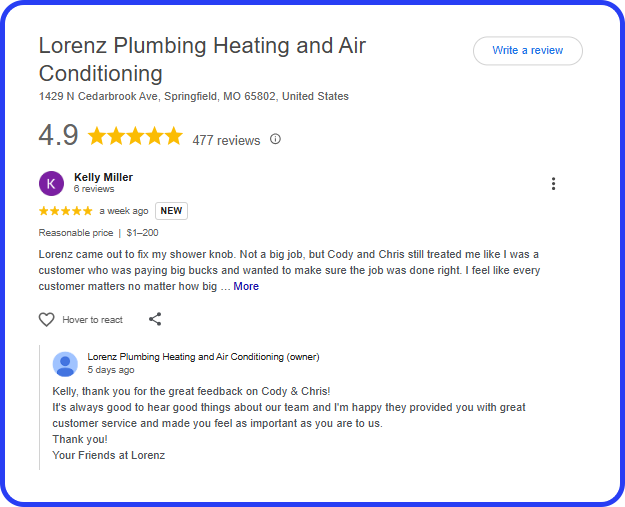
The fix: ask for honest feedback about the work completed and the overall experience. You can remind the customer which job was done, but do not script the review, pressure them to use keywords, or offer an incentive.
Use Photos and Posts to Keep the Profile Useful
Here is something I have noticed across hundreds of GBP accounts. Two contractors in the same city can have similar categories and review counts, but one profile earns more attention because it is easier for a homeowner to trust. It shows current work, accurate hours, and recent updates. The other looks abandoned.
The difference is not necessarily a secret ranking switch. It is that one contractor keeps the profile useful while the other treats setup day as the finish line.
Google explicitly recommends complete information, updated hours, reviews, photos, and videos. Posts are another customer-facing surface. Together, they can improve how the listing looks and how confidently a homeowner acts, even where Google does not identify them as direct ranking factors.
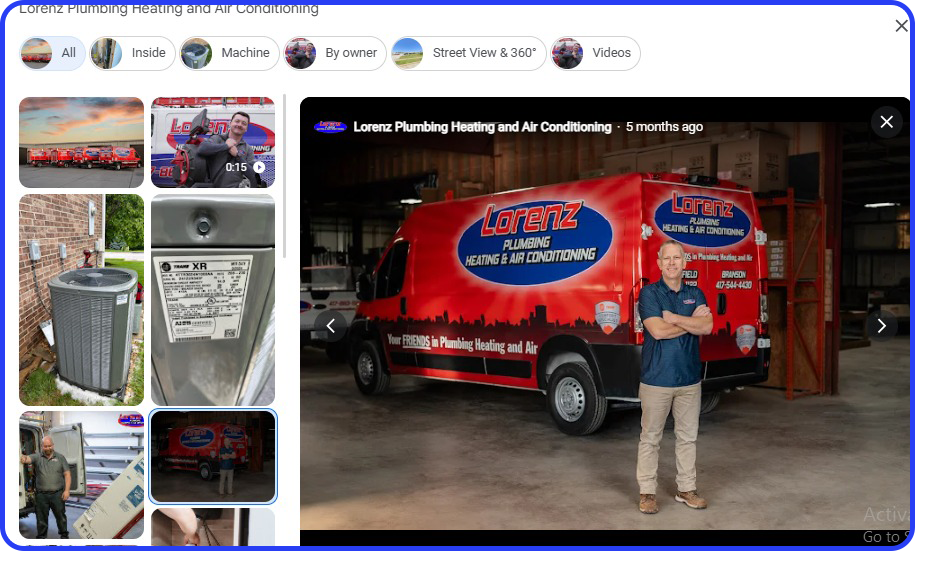
7. Add Real Job Photos Regularly
Uploading a photo with embedded GPS data does not create a documented local-ranking advantage. Google does not list photo geotags as a proximity signal, and platforms may remove or ignore metadata. The reason to add job-site photos is more practical: they show what the company does, make the profile more useful, and help customers recognize real work.
The mix that works well: exterior shots of completed work, in-progress photos that do not expose private customer information, trucks and equipment, and occasional team photos. Keep images in focus, well lit, and lightly edited. Google recommends JPG or PNG files between 10 KB and 5 MB, with at least 250 by 250 pixels and 720 by 720 preferred.
8. Post Weekly, Not Just When You Remember
Google Posts can share updates, offers, events, photos, and videos directly on Search and Maps. They can help a customer notice current availability or a seasonal service, but Google does not say that posting weekly is a direct local-ranking factor. A weekly cadence is still useful if the posts are relevant. Posts older than six months are archived unless an offer or event has its own date range.
9. Show Real Project Work, Not Stock Images
Real work usually carries more credibility than generic stock imagery. A homeowner deciding whether to call wants evidence that the company performs the service, uses professional equipment, and leaves a clean result. Use stock images sparingly and never present them as completed jobs. The impact of real vs stock photos on conversions covers the trust mechanics behind this in more detail.
Target Long-Tail and Service-Specific Keywords
The GBP keyword mistake I see most often: a plumber whose profile says little beyond “plumber.” No useful service list. No clear service area. No detail that helps a homeowner understand whether the company handles the job they have.
Homeowners often search with service, urgency, and location together: “emergency plumber in Lakewood,” “water heater replacement same day,” or “slab leak repair near me.” Those searches can produce strong leads because the customer is already describing the problem, but the answer is not to repeat those phrases in every field.
The GBP-specific approach to targeting these terms, alongside the broader strategy in local SEO for home service businesses:
- Use the Services section to list accurate service names and descriptions, such as water heater repair, drain cleaning, AC repair, or roof leak repair. Use the business description to explain the company in natural language, not to repeat a list of keywords.
- Set accurate service areas by city, postal code, or another supported area. Google allows up to 20 service areas and recommends keeping the overall territory within roughly two hours of the business base. Support important locations with useful service-area pages on the website rather than stuffing every neighborhood into the GBP description.
- Use Google Posts for genuinely timely updates, offers, events, and recent projects. Do not force service-and-city phrases into every post, and do not rely on photo metadata or nonexistent photo-caption fields as an SEO tactic.
Specific searches can convert well because the homeowner is closer to a decision. The goal is not to repeat long-tail phrases everywhere. It is to make the profile, service list, website, and service-area pages accurately answer the questions those searches reveal.
A Simple Weekly GBP Maintenance Schedule
The GBP results I’m most proud of for clients are not the ones where we did something clever. They are the ones where we just showed up consistently every week for six months and did simple things while the competitor’s profile went quiet.
Consistency beats a one-time cleanup. A profile that is checked regularly is less likely to carry stale hours, unanswered reviews, old services, or outdated photos. That operational advantage is real even though Google does not publish a rule saying one post and two photos per week will outrank a competitor.
This is the same principle that applies to any channel. Block 30 minutes a week and use this schedule:
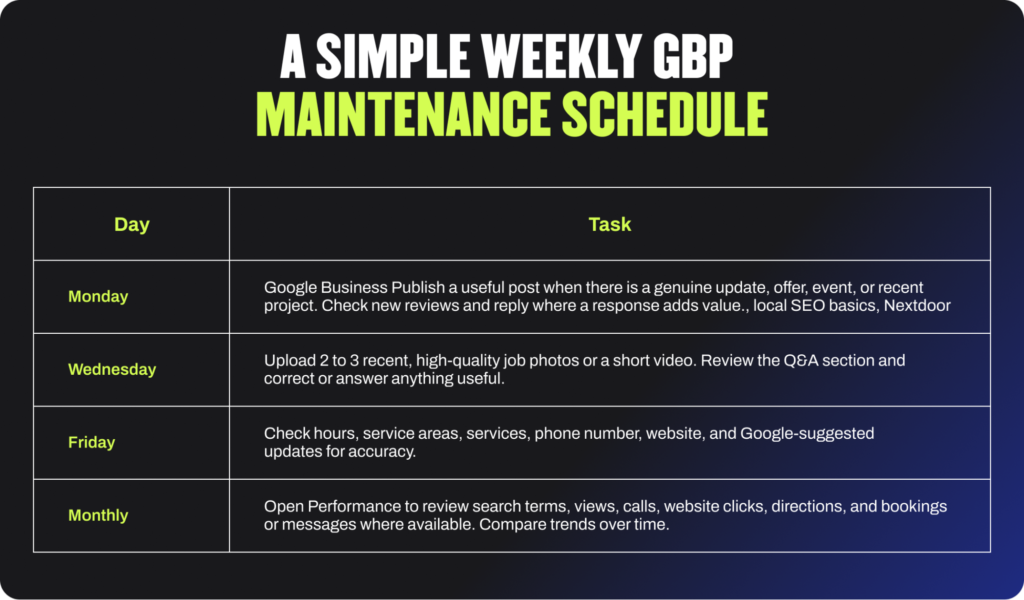
This cadence keeps the profile accurate and gives customers something current to evaluate. The individual tasks are small. The value comes from preventing the listing from becoming stale, not from hitting a secret activity quota.
What Organic GBP Traffic Is Actually Worth
I talk about this with clients constantly because most of them underestimate it.
Paid search clicks for competitive home service terms can be expensive, and the cost varies sharply by trade, market, season, match type, and campaign quality. A top local result can earn homeowner attention without a charge for each profile view or organic click.
That does not make GBP traffic free. Reviews, photos, content, optimization, and ongoing management still require time and investment. The difference is that organic visibility can keep producing value without charging the business every time someone discovers the profile.
The strongest results usually come when the Google Business Profile is part of a broader organic system that includes a well-optimized website, service-area pages, accurate listings, strong reviews, and consistent local content. GBP activity should not be treated as a standalone shortcut, but as one of the most important assets supporting long-term local visibility.
Common Mistakes That Quietly Kill GBP Visibility
Most businesses do not lose GBP visibility because a competitor found one clever trick. More often, the profile becomes incomplete, inaccurate, or less persuasive to customers:
- Claiming and never returning. That leaves hours, services, photos, reviews, and Google-suggested updates unmanaged.
- Letting hours go stale. Inaccurate hours generate negative reviews from customers who showed up at the wrong time.
- Ignoring negative reviews. No response looks worse than the complaint itself.
- Using a broad primary category. Google says categories affect local ranking, so the primary category should describe the core business as specifically as the available options allow.
- Inconsistent NAP. Conflicting phone numbers, addresses, websites, or business names can confuse customers and the data Google compiles from multiple sources. Minor abbreviation differences are not the real problem.
- Treating photos as a one-time task. An old gallery gives customers less evidence of current work, even though Google does not publish photo freshness as a direct ranking factor.

Frequently Asked Questions
How long does it take to see more organic Google Business Profile visits?
Google does not publish a guaranteed timeline. Business-information edits can take up to three days to affect search results, and new businesses can take up to a month to appear. Meaningful growth depends on relevance, distance, prominence, competition, and how quickly the profile earns genuine customer activity.
Do Google Posts actually affect ranking?
Google does not say Posts are a direct ranking factor. They can appear in the Updates or Overview areas on Search and Maps, help customers see offers and current information, and give the profile more useful content. Publish them for customers, not to satisfy a supposed weekly ranking quota.
How many reviews does a home service business need?
There is no fixed number. Google says more reviews and positive ratings can help local ranking, but the competitive threshold varies by market and category. Focus on a steady flow of genuine reviews and never use incentives, review gating, or scripted wording.
What’s the fastest way to improve Google Business Profile visibility?
Verify the profile, make the core information complete and accurate, select the most specific valid primary category, add the real services offered, keep hours current, and remove conflicting details. Google’s Profile Strength tool can help identify missing fields, but the ranking itself still depends on relevance, distance, and prominence.
Is Google Business Profile optimization enough on its own?
It is the foundation, but it works best paired with a supporting website, useful service and location pages, and accurate business information across important sources. Google compiles profile data from merchant edits, official websites, licensed data, and user contributions, so the wider footprint matters.
What is Ask Maps and how does it affect my GBP?
Ask Maps is Google’s Gemini-powered conversational experience inside Google Maps, launched March 12, 2026. It lets users ask detailed questions and receive recommendations with a customized map. Google says it analyzes information from over 300 million places, including community reviews. It does not publish a checklist that guarantees inclusion, and answers can vary with the query, location, personalization, available data, and product rollout.
A Complete, Accurate Profile Gives Google More to Work With
A Google Business Profile is no longer optional polish for a home service business. It is one of the core sources Google and homeowners use to understand the company, and it can feed the broader information environment behind Maps and conversational recommendations.
The businesses winning organic visits are treating their profile like a weekly habit, not a one-time form. Keep the core information accurate. Add real services and photos. Build genuine reviews. Publish posts when there is something useful to say. Then use Performance data to see whether searches are turning into calls, website clicks, directions, bookings, or messages. That is the system.
If you want help auditing and optimizing your profile alongside the broader local SEO work that compounds on top of it, schedule a call with our team and we will walk you through exactly where the gaps are and what to do about them.