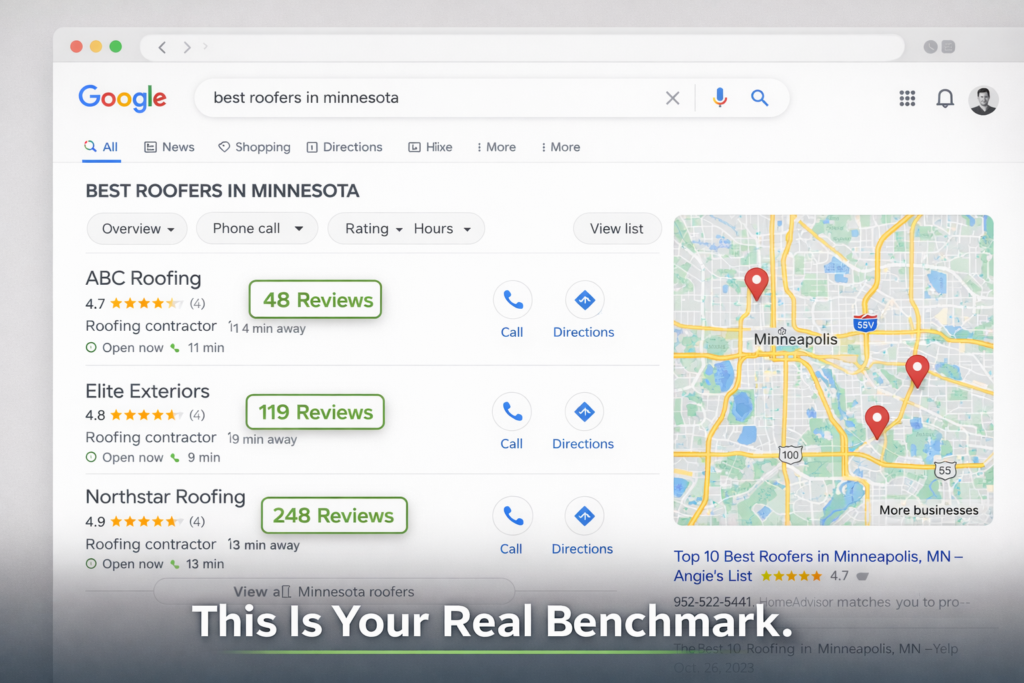

If you own a roofing, HVAC, or plumbing company, you’ve probably stared at Google Maps and done the math. They’ve got 186 reviews. We’ve got 53. Are we that far behind?
It feels like there has to be a number. A clear target. Hit 100 reviews and you win. Hit 200 and you dominate.
That would be nice. It is also not how this works. Google does not reward you for crossing some universal review milestone. It ranks you against the businesses around you. The only number that matters is the one your top three competitors are sitting at right now.
In some markets, 40 reviews can put you in the Map Pack. In others, 250 is just average. The difference comes down to competition, consistency, and how strong the rest of your local SEO foundation is.
So instead of guessing or chasing a random benchmark, let’s look at what actually determines how many Google reviews you need to rank locally and how to figure out the real target in your city.
Why Review Count Is Relative, Not Absolute
You’re not competing against Google. You’re competing against the top three contractors in your city.
That’s the mindset shift. When you ask how many Google reviews do I need to rank locally, you’re usually looking for a clean, universal number. One target. One finish line.
That’s not how local search works.
Google ranks comparatively, not universally.
It looks at the businesses in your area and stacks them against each other. If the top three plumbing companies in your city have 40 to 60 reviews, 75 might put you in a strong position. If you’re in a major metro and the leaders have 250 plus, that same 75 barely moves the needle.
Same number. Different market. Different outcome.
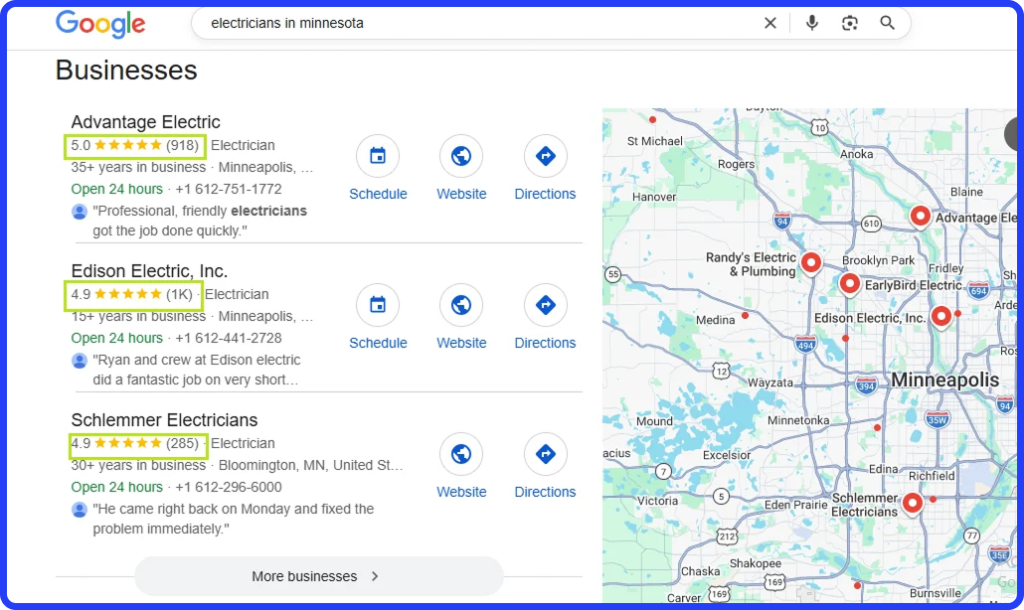
The real benchmark is simple: Look at the average review count of the current Map Pack top three. That’s your reference point.
And reviews absolutely matter. Search Atlas’s 2025 study of 3,269 businesses found review count is the number two ranking factor in local search, carrying 19.2% weight overall and 26 percent for top 10 Map Pack spots. Only proximity ranked higher at 55.2%.
Strong signal. But still relative.
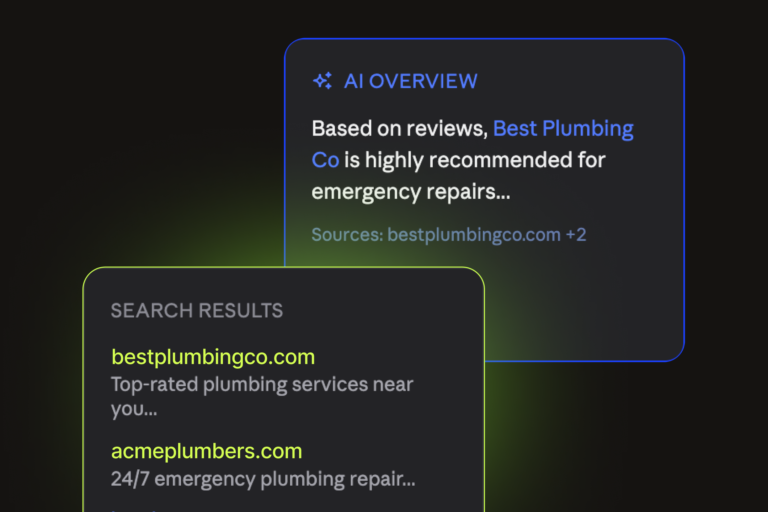
Google does not score your review count in isolation. It measures it against your competitors. And with AI overviews in local SEO pulling more insight directly from reviews, having competitive volume gives Google more trust signals to work with.
What’s a Competitive Review Count? Small vs. Big Markets
Now let’s get practical. If review count is relative, what does “competitive” actually look like? It depends heavily on your market. Not just population size, but how aggressive the contractors in your area are.
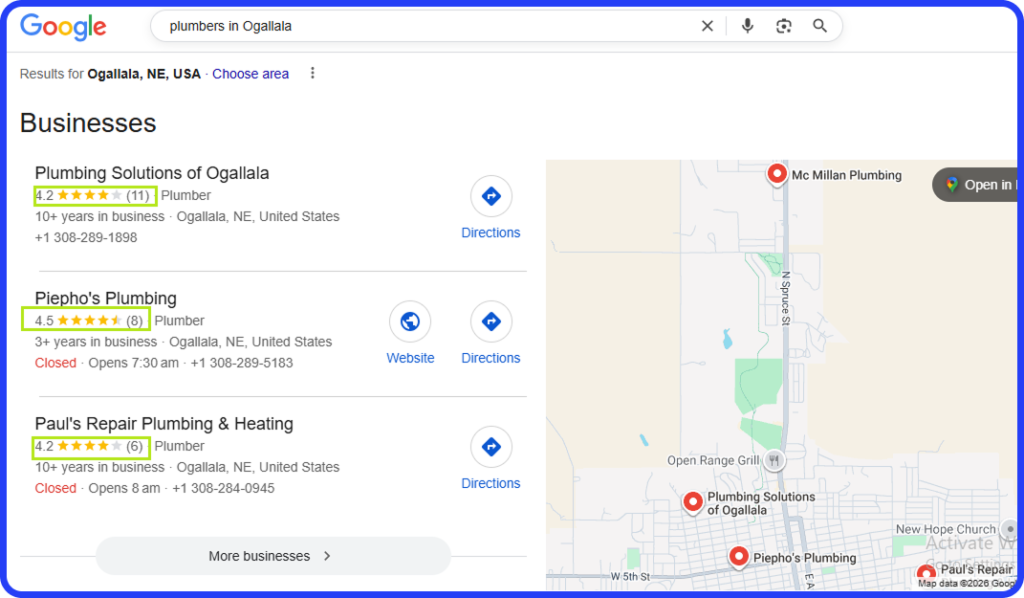
Small and Rural Markets
In smaller towns, you will often see Map Pack leaders sitting somewhere between 25 and 75 reviews. And sometimes it is even lower. We have seen markets where 15 to 30 reviews is enough to break into the top three.
Why?
- Fewer active competitors.
- Less structured review systems.
- Slower review velocity across the board.
In these areas, the bar is lower but that does not mean it is easy. If the top roofing company in town has 48 reviews and steady growth, you cannot sit at 12 and expect to rank. You still need to close the gap. The difference is that the gap is realistic.
The mistake we see is contractors in small markets assuming reviews do not matter because the numbers look small. They do matter. You just do not need hundreds to compete.
Mid-Size Cities
Once you move into mid-size cities, the range typically jumps to 75 to 200 reviews. Here, the stronger players are often in the 100+ range. Not because Google requires 100, but because the competition has been actively collecting for years.
In these markets, you will need consistent growth. One burst of 20 reviews will not carry you for long. If your competitors are adding five to ten per month and you are adding one every other month, you will slowly lose ground even if your total number looks similar today.
This is where disciplined review systems separate serious companies from everyone else.
Major Metro Areas
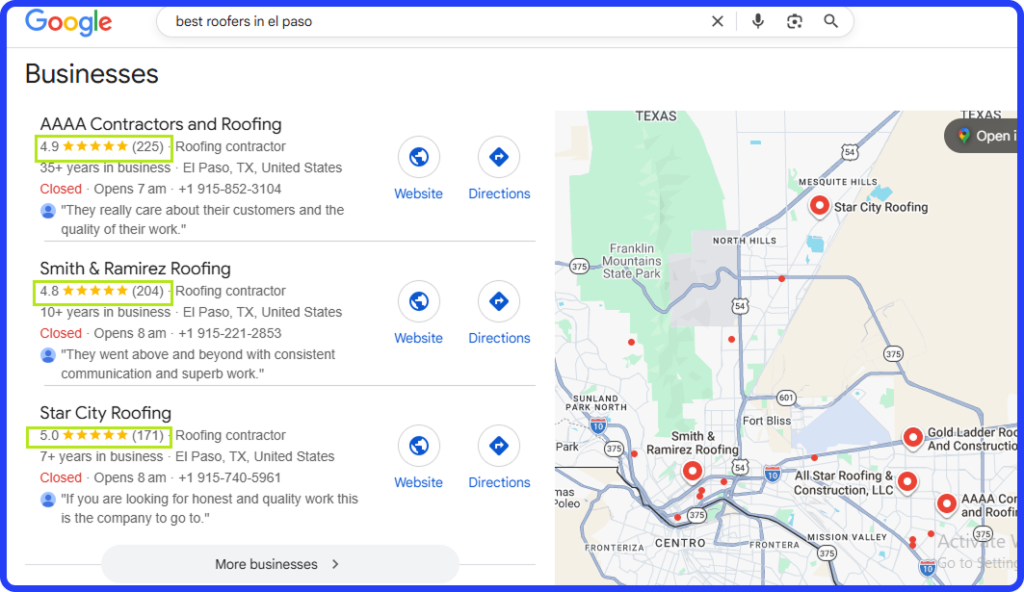
In large metro markets, especially in competitive trades like roofing, 200 to 500+ reviews is common for top three positions.
It is not unusual to see one company sitting at 600 or more. And in these environments, velocity matters as much as total count.
If you have 220 reviews but your competitor has 260 and is adding 15 per month, Google sees momentum. That momentum signals relevance and activity. You cannot treat review collection as an occasional push. It has to be ongoing.
This is especially true in aggressive verticals where multiple companies are investing heavily in local SEO for home service businesses and actively optimizing every ranking factor, not just reviews.
Review Velocity Is The Hidden Ranking Factor
Most contractors fixate on total reviews but that’s like trying to win a race by staring at your mileage instead of your pace.
Google doesn’t just care how many reviews you have. It cares about three key things:
- How fast you’re getting them
- How recent they are
- Whether growth looks natural
That’s because Google’s local algorithm rewards activity, not stagnation. A steady drumbeat of fresh reviews tells Google your business is alive, relevant, and serving customers today. That’s exactly the kind of signal it wants to show higher in local search results.
Imagine two contractors:
One has 300 reviews that all came in years ago.
One has 140 reviews with 12 added this month.
The second business probably looks more relevant to both Google and customers even though its total count is lower.
That’s the power of velocity and recency. Recent reviews tell Google you’re serving customers right now, which is a core part of Google’s ranking factors for home services and a big reason why your visibility can lag even with decent total numbers.
Here’s a simple rule of thumb for healthy velocity: spaced out, realistic, and sustainable:

Consistency beats sporadic bursts every time.
If you flood your profile with 50 reviews in one week and then go silent for six months, Google may interpret that pattern as unnatural activity and could weigh your signals less favorably. On the other hand, even modest but consistent growth tells Google your business is active and engaging customers right now, a key part of long-term local visibility.

When More Reviews Won’t Help You Rank
Here’s the part most agencies gloss over. Yes, Google reviews help SEO. They are powerful. They influence trust, clicks, and Map Pack visibility. But you can hit 200 reviews and still not rank. Because reviews are not the system. They are one signal inside the system.
If your foundation is weak, piling on more reviews will not fix it. Rankings get blocked all the time by issues like:
- A half optimized Google Business Profile
- Weak website authority and minimal backlinks
- No localized service pages targeting real cities
- Inconsistent NAP across directories
- Competitors with stronger proximity to the searcher
If your competitor has 150 reviews, 40 location pages, and 300 backlinks, you are not beating them with review count alone. Google looks at the full picture.
And the margin for error is shrinking. Places Scout found that AI local packs surface only about 32% as many unique businesses as traditional 3 packs. In 88% of 322 markets analyzed, AI-driven results showed fewer businesses than standard local packs. Fewer businesses showing means competition is tighter than ever.
The mistake is chasing a magic number instead of matching what the top three are doing across the board.
The Number Isn’t the Strategy. The Strategy Is the Strategy.
If you’ve made it this far, you already know the truth.
There is no magic review number that guarantees rankings. The right number is the one that makes you competitive in your market and keeps you growing steadily.
Reviews matter. Google reviews help SEO. But they work best when they’re part of a bigger system that includes strong optimization, solid authority, and consistent momentum.
So instead of chasing an arbitrary milestone, look at your top three. Close the gap. Then build past them.
If you want clarity on where you stand and how to increase your local visibility the right way, book a call with Hook Agency. Our Local SEO services are built specifically for home service businesses that want to win their market, not just collect stars.