
47 city pages.
That is what one roofing contractor came to Hook Agency with. A page for every town within 90 miles. Some of them were cities he had never pulled a permit in. Most of them had fewer than 50 words of unique content. All of them were ranking nowhere.
Meanwhile a competitor with eight well-built pages was dominating the map pack in every market that actually mattered.
Figuring out how many locations to target with local SEO is one of the most misunderstood decisions in contractor marketing. More pages feels like more coverage. In reality it often means more dilution, weaker authority, and a Google that has no idea which markets you actually serve.
Here is how to get it right.
The Location Page Trap Most Contractors Fall Into
Most contractors treat local SEO like a land grab. More cities covered, more leads. Build a page for every town within 90 minutes. Publish. Wait for the calls.
It does not work that way. And in 2026 it is actively working against you.
Start Where the Money Already Is
Before adding a single new location page, answer one question. Where are your actual jobs coming from right now?
Not the cities you want to work in. Not the neighborhoods that look good on a map. Where are you currently pulling permits, completing jobs, and collecting reviews?
Start there. Most contractors skip this entirely and spread their SEO effort across markets they have zero real presence in. The result is a site with dozens of weak pages and no market where they actually dominate.
A quick way to audit where to start:
- Map your last 50 completed jobs
- Identify the three to five cities generating the most revenue
- Check whether you have reviews, real job photos, and an active GBP in those markets
Build there first. Expand from strength, not guesswork.

Why Thin City Pages Are Quietly Killing Your Rankings
Here is the copy-paste trap.
Contractor wants to rank in 12 cities. Takes one service page, swaps the city name, changes three sentences, publishes. Twelve times.
It feels like coverage. City pages with thin or duplicate content can actually penalize your site. And the damage is not contained to those individual pages. Thin or repetitive content weakens authority across the entire domain. In 2026, fewer high-quality comprehensive pages outperform large volumes of fragmented content.
This is also why the question of multiple websites vs one website for multiple locations keeps coming up. Some contractors think separate domains give each market a cleaner shot. In most cases it just dilutes authority further. One strong domain with properly built location pages wins.
Each location needs distinct content including localized FAQs, location-specific services, and local proof elements. Real job photos from that city. Reviews from customers in that area. Not a template with a city name swapped in.
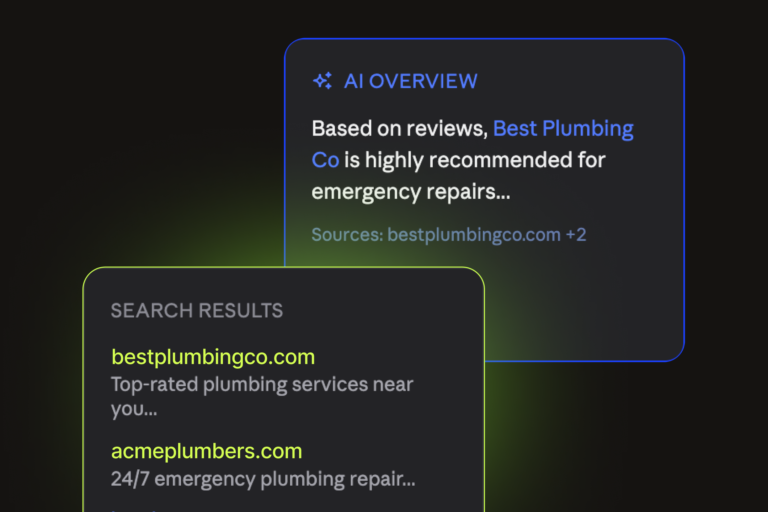
Google knows the difference. And so does every AI Overview pulling from your pages.
Building a Location Strategy That Actually Works
Knowing where not to build pages is half the battle. The other half is building the ones that actually matter.
Here is what that looks like in practice.
What a Strong Location Page Actually Looks Like
A strong location page is not a service page with a city name bolted onto the title.
It is a page that makes a homeowner in that specific market feel like you are their local contractor. Not a company that happens to service their area. The one that knows their neighborhood.
What that requires:
Real local proof. Photos from actual jobs in that city. Specific project callouts. “We replaced 14 roofs in the Lakewood area last spring” hits differently than “we serve the greater Denver metro.”
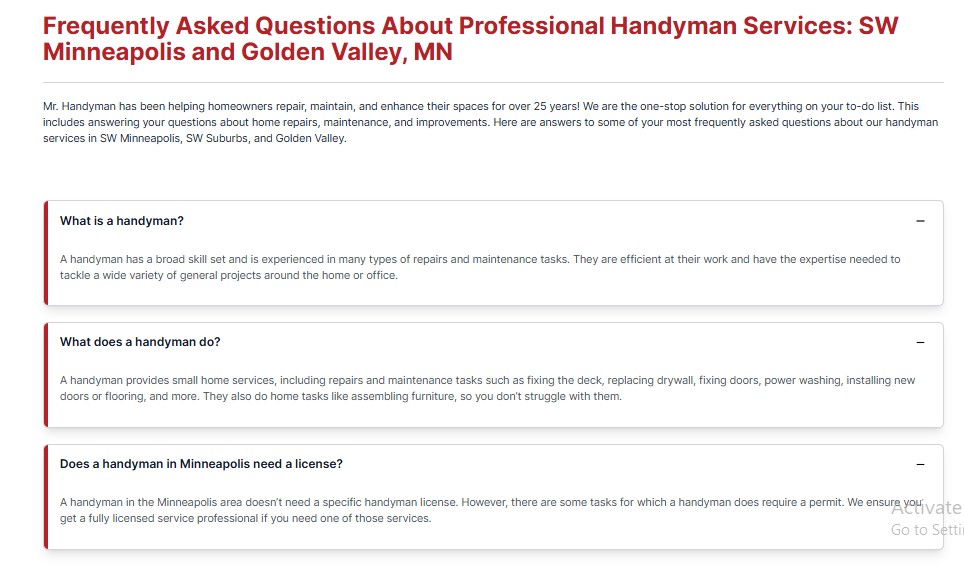
Localized FAQs. What permits are required in that city? What weather conditions affect the work? Answer those specifically, notgenerically.
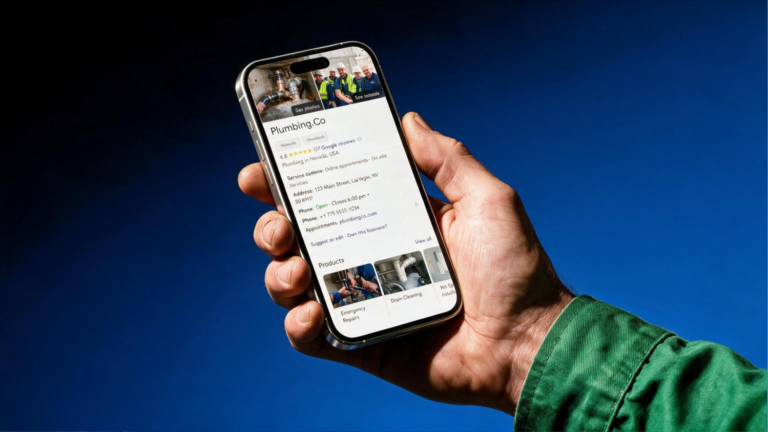
Consistent NAP. Name, address, and phone number matching exactly what is on your Google Business Profile. Every inconsistency is a trust signal working against you.
Internal links to core service pages. Location pages do not exist in isolation. They should connect back to your main service pages and pull authority from the rest of the site.
This is what strong local SEO for home service businesses actually looks like at the page level. Not keyword stuffing. Not recycled content. A page that genuinely earns its place.
The Map Pack Does Not Care How Many Pages You Have
This is the part most contractors miss entirely. You can have 60 location pages and still lose the map pack to a competitor with 10. Because the map pack does not rank pages. It ranks entities. And entity trust is built through GBP signals, review velocity, and proximity. Not page count.
Semrush reports that businesses in the Google Map Pack get 126% more traffic and 93% more calls, clicks, and direction requests than those sitting below it. That is the real estate worth fighting for.
And here is how it is actually won:
| Signal | What Google Looks For |
| GBP activity | Regular photo uploads, posts, updated hours |
| Review velocity | Consistent new reviews, not a one-time burst |
| Review responses | Owner replies within 24 hours |
| Proximity | Physical location relative to the searcher |
| Category accuracy | Primary and secondary categories matching real services |
Using Google reviews to rank locally is not just about volume. A location with 400 reviews from 2022 can get outranked by a competitor with 120 recent ones. Recency matters. Activity matters. A static profile decays regardless of how many pages sit behind it.
How to Know When You Are Actually Ready to Expand
Adding a new location before you are ready to service it properly is a fast way to collect bad reviews in a market you just entered.
A lot of contractors hear that ranking #1 on Google does not matter anymore the way it once did and assume local SEO is less important than it used to be. The opposite is true. Map pack visibility matters more than ever. Which means expanding into new markets without the right foundation in place is a bigger risk, not a smaller one.
Here is a simple framework before committing to a new city page:
Do you have crews that can realistically service that area?
If the drive time eats the margin, the location is not ready.
Do you have any existing jobs or reviews in that market?
Even a handful of completed jobs gives you localized proof to build a page around. Zero jobs means zero credibility signals to work with.
Is your current market saturated or still growing?
Expanding into a new city while your primary market is still underserved splits focus and budget. Dominate home base first.
Can you commit to a real GBP presence there?
A location page without GBP support is half a strategy. If you cannot actively manage the profile, respond to reviews, and upload fresh photos from that market, the page will underperform no matter how well it is built.
Red Flags That Tell You Your Location Strategy Is Broken
If any of these sound familiar, your location pages are working against you.
Dozens of pages with near-zero traffic. Pull your location pages in Google Search Console. If most are generating fewer than 10 clicks a month they are not assets. They are dead weight pulling down your whole domain.
Every page reads like a copy-paste job. Same structure. Same sentences. Same everything except the city name.
Two completely different cities, climates, and markets. Can you tell any difference between them? Neither can Google. That is exactly the problem. AI Overviews deciding whether to reference your content or skip it entirely are making the same judgment call.
Keyword-stuffed URLs. /roofing-services-denver-colorado-roofing-contractor/ is not a strategy. It is a red flag. Clean, simple URLs signal a site that was built for users, not just crawlers.
Zero localized proof. No job photos from that city. No reviews mentioning that area. No specific project callouts. A page targeting Austin with nothing to prove you have ever worked there is not a location page. It is a placeholder.
No internal linking structure. Location pages floating in isolation with no connection to your core service pages are invisible to Google’s crawl. If they are not linked to, they are not trusted.
More Pages Was Never the Answer
The contractors dominating local search in 2026 are not the ones with the biggest location page count. They are the ones who built fewer pages, built them properly, and backed them with real GBP presence and genuine local proof.
Stop adding cities. Start owning the ones that matter.
Book a call with Hook Agency and let’s map out a location strategy built around real growth, not just more pages.