Every roofing contractor wants leads. The more, the better… right? Not exactly. You need to understand the good vs bad roofing leads (and how to tell them apart). This comparison must be a key part of your roofing business plan.
Here’s the harsh truth: not all leads are created equal. One lead could turn into a $12,000 roof replacement, while another wastes hours of your team’s time chasing someone who’s just “shopping around” or lives outside your service area. Knowing the difference between a good lead and a bad one is critical. It allows you to focus your marketing, pre-qualify effectively, and close more jobs with less stress.
This post breaks down what makes a lead high quality, what signals a bad lead early, how your lead source affects quality, and simple ways to filter and nurture leads so your roofing business works smarter… not harder.

Why Lead Quality Matters More Than Lead Quantity
Most contractors think more leads = more revenue. In reality, chasing bad leads can cost more than it’s worth.
- Time is money. Every phone call, site visit, or follow-up costs hours. Low-quality leads drain your team.
- Sales efficiency drops. Chasing unqualified leads lowers your close rate and frustrates top-performing reps.
- Marketing ROI suffers. Paying for leads that don’t convert inflates the cost per booked job.
Focusing on quality shortens the sales cycle, increases close rates, and makes your marketing more profitable. We at Hook Agency have helped multiple clients reinvent their lead generation methods. Check out our case study about Badgerland Exteriors.
How to Spot a High-Quality Roofing Lead: 5 Telltale Signs
1. Urgency
Good leads need a roof fixed soon:
- Leaking roofs
- Storm damage requiring insurance claims
- Visible structural damage
Homeowners who “want a quote for next year” are unlikely to convert quickly.
2. Location Fit
Your team’s time is valuable. Leads outside your service area often cost more in travel and scheduling headaches than they’re worth. High-quality leads live within your coverage zone.
3. Budget Alignment
Not all homeowners have the funds to pay for quality roofing. Look for:
- Realistic expectations for your services
- Willingness to discuss financing or insurance claims
- Openness to paying for a high-quality roof rather than the cheapest option
4. Insurance Status
For storm-related jobs, leads with insurance in place or a willingness to file a claim convert faster. Leads without coverage can slow down or block the sales process.
5. Intent
Strong leads ask questions, discuss timelines, and are ready to schedule work. They aren’t just gathering information to compare quotes.
5 Red Flags that Separate Good vs Bad Roofing Leads
1. Endless Shopping Around
Homeowners requesting multiple quotes “just to compare” often don’t commit. They’re price shopping or indecisive.
2. Outside Your Service Area
A lead located far from your coverage area can eat time and profit margins.
3. No Budget or Financing
If they say, “I’ll call when I have the money” or “I want the cheapest roof possible,” you’ll likely waste time.
4. Wrong Service Needed
If a lead asks for repairs you don’t offer, or a type of roof you don’t install, it’s a mismatch.
5. Low Engagement
Leads who don’t respond to follow-up calls or provide incomplete information require extra effort with little payoff.

Roofing Lead Sourcing: Pros & Cons of Different Methods
PPC (Google & Social Ads)
Pros
- PPC campaigns can target homeowners actively searching for roofing services in your area.
- You can control exactly who sees your ads based on location, keywords, and demographics.
- Leads come in fast (sometimes within hours of launching a campaign).
Cons
- Poorly optimized campaigns often attract tire-kickers or comparison shoppers who aren’t ready to book.
- The cost per click can skyrocket if your targeting or keywords are too broad.
- Campaigns require ongoing monitoring and adjustment; otherwise, your budget is wasted on clicks that don’t convert.
Pro Tip: Use ad copy that filters leads before they call. Include language like “Serving [Your City] only” or “Insurance claims welcome” to attract the right homeowners. You also need to be creative with your ads.
You won’t believe that a cartoon beaver once helped a 50-year-old roofing company get more clients and revive its business!
SEO & Local Search
Pros
- Homeowners searching for “[State] roof replacement” or “[City] storm damage roof repair” are usually high-intent leads with budget and urgency.
- Organic leads are often less expensive long-term than paid leads because you’re not paying per click.
- Strong local SEO (Google Business Profile, citations, local content) builds credibility and trust.
Cons
- Generic or informational content (like “roof repair tips”) can attract research-only leads who aren’t ready to hire.
- SEO takes time; you may need months of consistent optimization before leads start rolling in reliably.
- Ranking in multiple cities requires a scalable, repeatable system, or the effort may not pay off.
Pro Tip: Target service-specific, intent-driven keywords and create city or neighborhood pages to capture qualified local leads.
Referrals & Repeat Customers
Pros
- Referrals are the highest-quality leads. Homeowners already trust your brand, and conversion rates are naturally higher.
- They often require less sales effort and are more likely to pay full price.
- These leads strengthen your reputation and brand equity, making future marketing easier.
Cons
- Volume can be unpredictable. Also, you may get a surge after a storm, but then experience slow periods otherwise.
- Relying solely on referrals makes growth dependent on past customers, which isn’t scalable for larger operations.
Pro Tip: Encourage your satisfied customers to leave reviews, refer neighbors, and share photos of completed projects. Even small incentives (like gift cards or discounts on gutter cleaning) can drive a consistent referral flow.
Canvassing / Door Knocking
Pros
- Immediate engagement lets you qualify leads on the spot, ask questions, and schedule appointments quickly.
- You can educate homeowners about your services and address objections immediately.
- For storm-related damage, door knocking can capture leads before competitors even know about the opportunity.
Cons
- Labor-intensive and time-consuming. A few reps may only cover a small geographic area per day.
- Many homeowners aren’t ready to hire immediately, leading to cold leads that require long-term follow-up.
- Can be intimidating for some teams and may result in low morale if rejected frequently.
Pro Tip: Pair door-to-door efforts with local signage and follow-up campaigns. Leave behind flyers or door hangers with QR codes linking to your website or special offers for homeowners who weren’t ready to engage immediately. Also, work on your sales pitch or presentation. Don’t forget about truck wraps as a core part of your local marketing.

Pre-Qualifying Roofing Leads
1. Lead Form Questions
Add targeted fields to your forms:
- Name
- Phone Number
- Zip Code
- Address (confirm service area)
- Type of roof/issue (desired service)
- Urgency (how soon they want the job done)
- Insurance coverage
- Budget range
- How did you hear about us? (optional)
- Message (optional)
This filters out leads that don’t meet your basic criteria.
2. Call Scripts
Train your team to ask the right questions:
- “When did the damage occur?”
- “Have you filed an insurance claim?”
- “Are you looking to schedule within the next 2–3 weeks?”
A 2-minute call often identifies if the lead is worth pursuing.
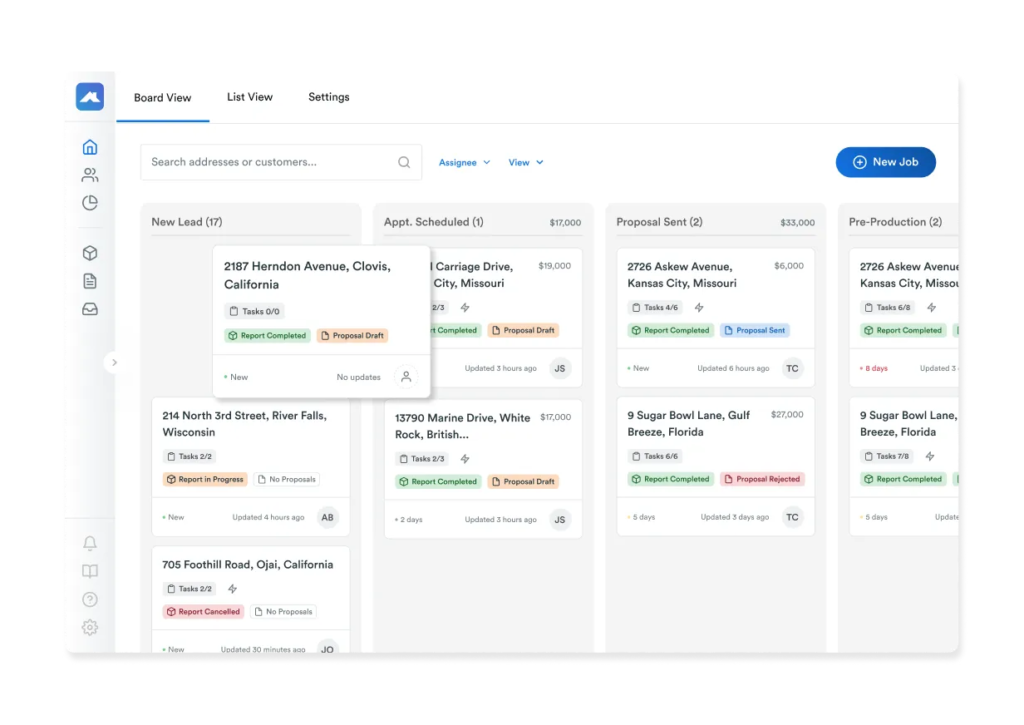
3. CRM Lead Scoring
Use your CRM to tag leads:
- Hot vs. cold
- Insurance vs. out-of-pocket
- Inside vs. outside service area
Automated scoring helps your team prioritize the leads most likely to convert.
How to Attract Better Leads with Good Marketing
It’s not just about filtering; you can shape the type of leads coming in with smarter marketing. Different digital marketing strategies have worked for various companies in the US. You should check out these amazing methods to get more traffic to your website.
PPC & Social
- Target high-intent keywords like “roof replacement near me” rather than “roof repair tips.”
- Include service area, urgency, and insurance in your ad copy.
- Retarget leads who engaged but didn’t convert to increase qualified conversions.
SEO & Content Marketing
- Optimize for local and service-specific searches
- Create FAQ pages that attract homeowners ready to hire
Referrals & Reviews
- Encourage satisfied clients to leave reviews
- Showcase completed jobs to attract leads willing to pay for quality
The goal: attract the right homeowners before they even fill out a form. Don’t forget to use AI in your roofing business; AI can help segment and qualify prospects for you.

Prioritize Quality Over Quantity
Roofing contractors who chase every lead waste time, energy, and money. The contractors who thrive focus on lead quality:
- Know the signals of high-quality leads (urgency, budget, location, intent)
- Spot red flags early (shopping around, wrong area, low intent)
- Understand which sources deliver the best leads
- Pre-qualify leads with forms, scripts, and CRM filters
- Adjust marketing to attract more ideal clients
- Handle bad leads strategically: disqualify, nurture, or retarget
High-quality leads shorten your sales cycle, increase close rates, and improve ROI. Low-quality leads frustrate your team and erode profit margins. By clearly defining the difference, roofing contractors can spend less time chasing and more time closing. If you need help, we at Hook Agency are here to guide you.