If your website loads slow, you might assume customers do not care as long as your phone number is easy to find.
In practice, a slow website load time affects decisions long before a visitor ever looks for your contact info. Speed shapes first impressions. It signals whether your business feels current, reliable, and worth trusting. When pages hesitate, visitors hesitate too. Most do not wait around to see what happens next.
We see this constantly when auditing contractor websites.
The work is solid. The reputation is strong. But the site loads just slow enough to lose momentum, especially on mobile.
That friction quietly cuts into calls, form fills, and local visibility without any obvious warning signs.
This article breaks down why customers notice slow sites even when they never say it, how page speed influences leads and rankings, and when improving speed actually makes a measurable difference for contractors like you.
Yes, Customers Notice Even If They Never Say It
Contractors often judge a website by how it looks. Customers judge it by how fast it reacts.
They do not time it. They feel hesitation. And in 2026, hesitation is enough to lose the click.
Slow Load Equals Fast Exits
On mobile, decisions happen instantly. When a page pauses, users do not wait to see what happens next. They hit back and choose another contractor that loads faster.
That behavior is now the norm.
- Desktop pages average around 2.5 seconds to load
- Mobile pages still sit closer to 8.6 seconds
- By 2026, expectations tighten
- Desktop pages are expected to load in under 2 seconds
- Mobile pages are expected to load between 3 and 5 seconds
When a site misses those expectations, it does not feel slightly slow. It feels broken.
Google watches how visitors react. Quick exits signal friction. Enough friction and visibility drops, especially in competitive local searches.
This is where standard vs custom websites start to separate. Standard themes often come packed with features that slow everything down. Custom builds tend to load cleaner because they are designed around how visitors actually move.
Speed Is a Trust Signal
Speed influences trust before a single word is read.
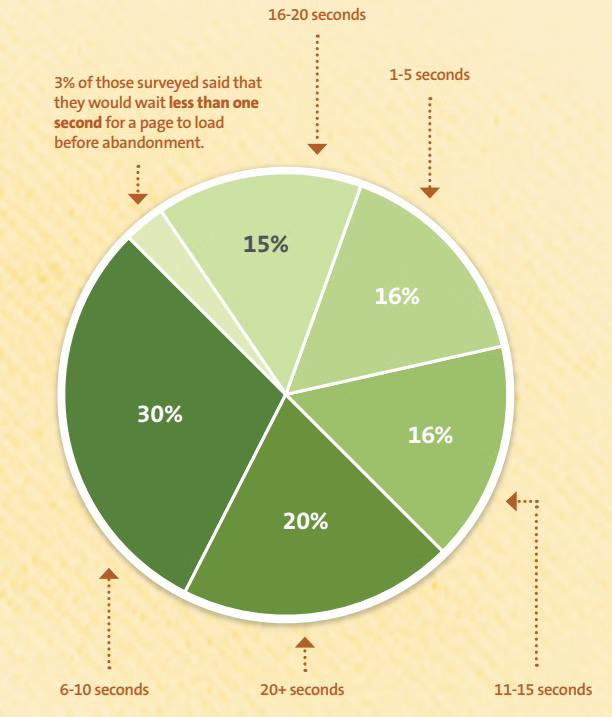
That infographic above tells the story better than any opinion ever could. Most people do not wait. They decide fast. And the longer a page takes to load, the faster trust drops.
A small group expects pages almost instantly. A much larger group starts losing patience somewhere between a few seconds and ten. Push past that window and abandonment spikes hard. Once load time drifts into double digits, you are no longer competing on service or reputation. You are simply too slow to be considered.
This is how slow sites feel in real life.
Slow feels outdated.
Outdated feels risky.
Risky does not get phone calls.
How Slow Website Load Time Hurts SEO And Local Visibility
Slow websites do not fail loudly. They lose ground quietly.
Rankings slip a little. Clicks drop a little. Calls slow down over time. Most contractors do not connect those dots because nothing feels broken. But search engines do not reward intentions. They reward outcomes.
Speed affects those outcomes at every step.
Google Wants Fast Helpful Pages
Google is no longer guessing whether a page is useful. It watches how real people interact with it.
When someone clicks your site from search, a few things matter immediately.
- How fast the page becomes usable
- Whether the page responds when tapped
- Whether the layout stays stable while loading
If the page hesitates, users hesitate. Many never make it past the first screen.
From Google’s perspective, that looks simple. The page did not help. Not because the content was bad, but because the experience created friction before the content could do its job.
In competitive service areas, that friction is enough to push your site out of stronger positions. Faster pages tend to hold rankings longer because users actually engage with them.
This is why home service websites that convert are built around performance first. Speed gives your content a chance to work. Without it, even strong messaging gets ignored.
Why Local Pack Rankings Suffer
Local Pack rankings used to be forgiving.
Before Google tightened the map layout, more contractors showed up at the top. There was room to breathe. If your listing existed and your site worked well enough, you could still get visibility.
That is not the case anymore.
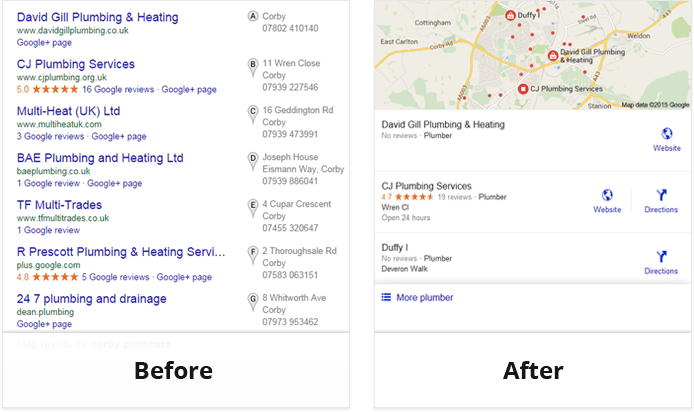
Today, the Local Pack is tighter. Fewer spots. Less margin for error. That image shows it clearly. What once displayed more options now gives prime real estate to only a handful of businesses. Everyone else gets pushed down or pushed out entirely.
Because space is limited, Google has to be more selective.
When someone taps your listing, Google watches what happens next.
- Do they stay on your site
- Do they scroll or tap
- Do they interact or leave immediately
Speed influences all of it.
Why So Many Contractor Websites Load Slow
Most contractor websites are slow because too much was added with no clear purpose.
Over time, pages get heavier. Features pile up. Galleries grow. Plugins stack. The site still works, but it feels sluggish. That sluggishness is often the hidden reason why your website is not converting leads, even when the service and messaging are solid.
The longer a page takes to load, the more likely visitors are to leave. Not gradually. Sharply. Every extra second increases drop offs before the page ever feels usable. That curve explains why small performance issues create outsized damage.

Here are the most common reasons those seconds add up.
Heavy Themes Packed With Features No One Uses
Many contractor sites are built on themes designed to impress, not perform.
They come loaded with sliders, animations, page builders, and layout options that look good in demos but do nothing for real customers. Every unused feature adds weight. Every bit of weight pushes load time further into the danger zone shown in the graph.
Large pages are the biggest offender.
Large pages take 381% longer to visually complete than smaller ones. That delay alone can push visitors past their patience limit.
Cheap Hosting That Buckles Under Traffic
Hosting issues rarely show up as a full outage. They show up as hesitation.
Pages load inconsistently, especially during busy hours. Sometimes fast. Sometimes slow. That unpredictability matters because visitors do not wait to see if it improves. When the page stalls, they leave, just like the graph shows.
To Google, that looks like a poor experience. To customers, it feels unreliable.
Massive Uncompressed Images From Galleries And Sliders
Photos help sell your work, but only if people actually see them.
Uncompressed images can weigh several megabytes each. Stack a few into galleries or sliders and load time jumps fast. As load time increases, abandonment follows the same upward curve shown in the graph.
The site eventually loads. The visitor is already gone.

Too Many Plugins Doing Too Little
Plugins quietly stretch load time second by second.
Each one adds scripts and background requests. One plugin rarely causes a problem. Ten of them push the page deep into the range where bounce rates spike.
By the time the page feels complete, the visitor has already made a decision.
When Speed Really Matters And When It Does Not
Not every website needs to be lightning fast. But some situations make speed non negotiable.
Knowing the difference is what separates smart optimization from wasted effort.
Speed Matters Most When
Your traffic comes from Google
Search traffic is impatient by default. Users are comparing options in real time. If your page loads slower than the next contractor, you lose the click before your offer ever competes.
Most users are on mobile
Mobile users are usually in motion. One hand. One thumb. One problem to solve. Any hesitation feels amplified. This is why slow pages bleed calls even when desktop performance looks fine.
You want calls, not just visits
Speed controls momentum. A fast page keeps users moving toward the phone number or form. A slow page interrupts that flow. That interruption is often the difference between a visit and a booked job.

When You Do Not Need To Obsess
Speed stops mattering when optimization becomes disconnected from real behavior.
Micro tweaks that no user can feel
Shaving milliseconds off already fast pages does not change outcomes. If users move smoothly through the site, further tuning rarely produces more leads.
Chasing perfect scores instead of real leads
Performance scores look impressive, but they do not book jobs. A site can score perfectly and still fail to convert if the experience does not guide users clearly.
Speed Is Not a Technical Issue, It Is a Choice.
Most contractor websites are slow by design, not by accident.
Heavy themes, oversized images, and layered plugins all come from choices made over time. Each one adds friction. Each one makes it easier for visitors to leave and harder for your site to compete when it matters.
A slow website load time rarely shows up as an obvious failure. It shows up as fewer calls than expected. Rankings that never quite improve. A site that looks fine but does not pull its weight.
From our first-hand experience auditing contractor websites, speed is often the hidden factor behind those symptoms. Not the only one. But a common one.
If you want to know whether your site speed is helping you win jobs or quietly working against you, stop guessing. Book a call with Hook Agency. We will tell you straight if speed is the problem or if your attention belongs somewhere else.