Choosing a website in 2026 isn’t a design decision. It’s a growth decision. It’s up to you whether you build a generic website or a site customized to your audience’s needs.
Your website impacts how fast leads come in, how well SEO compounds, how efficiently ads convert, and how credible your brand looks when homeowners compare options. And yet, many contractors still choose between standard and custom sites based on gut feeling… or worse, price alone. That’s why customized websites have an upper hand!
This guide breaks down standard vs custom websites based on what actually matters: speed, performance, SEO scalability, and long-term growth. If you need help learning how to build a website for your small business, we’re here to help you at Hook Agency.

How Speed Gives You an Advantage
In 2026, speed matters more than ever. Homeowners are researching faster, competitors are investing more aggressively, and Google rewards businesses that consistently publish, update, and convert traffic. A website that launches sooner starts compounding sooner.
Standard Sites (60 Days With Predictable Momentum)
Standard websites are designed to remove friction. Because the structure, layouts, and conversion paths are proven, most standard contractor sites can launch in around 60 days without sacrificing quality. That speed creates real advantages:
- SEO can start indexing immediately
- Paid ads can point to optimized landing pages
- Reviews, content, and authority build sooner
- Missed opportunities are minimized during busy seasons
For contractors who need leads now (and not six months from now), speed is strategy.
Custom Sites (Longer Timelines With Higher Stakes)
Custom websites take longer because every decision is built from scratch. While that allows deeper customization, it also introduces more variables:
- Design approvals
- UX testing
- Content structure debates
- Internal stakeholder feedback loops
Custom timelines aren’t bad… but they demand discipline. Without strong project ownership, timelines can stretch far beyond expectations, delaying lead generation and SEO traction.
What Actually Happens During the Standard 60-Day Website Timeline
- Kickoff (Strategic Alignment Before Anything Is Built)
The kickoff phase sets the tone for the entire project. This is where teams define:
- Core services and priority jobs
- Primary service areas
- Ideal customer profile
- Short-term and long-term goals (leads, hiring, expansion)
- SEO focus and conversion priorities
In 2026, this phase is critical because websites must align with:
- Local SEO strategies
- Paid media traffic
- CRM and call tracking systems
Clear alignment here prevents costly rewrites later.
- Full Site Review (Messaging, Structure, and Conversion Flow)
This phase focuses on how the site actually works for homeowners. Contractors review:
- Homepage flow and hierarchy
- Service page clarity
- Calls-to-action placement
- Trust signals (reviews, guarantees, certifications)
The goal isn’t perfection (it’s clarity & momentum). That’s why websites that communicate quickly convert better, especially on mobile phones.
78% of local searches on mobile devices lead to a purchase within 24 hours. Also, over 60% of searches for contractors happen on mobile devices.
- Pre-Launch & QA (Performance and Accuracy Checks)
Before launch, everything is stress-tested:
- Mobile responsiveness across devices
- Page speed and load performance
- Form submissions and call tracking
- Basic SEO setup (titles, meta, indexing)
- Broken links and visual issues
In 2026, performance issues don’t just hurt UX… they hurt rankings.
- Go-Live (Lead Capture Begins Immediately)
Once live, your website becomes an active part of your marketing system:
- Capturing organic leads
- Supporting ads
- Reinforcing brand credibility
- Feeding data into tracking tools
Momentum starts immediately. So, which one should you choose? A standard website like everybody else, or a custom website designed to meet your unique goals? Let’s look into both options and settle the “standard vs custom websites” debate for good!

Standard vs Custom Websites: Pros & Cons
This decision isn’t about looks. It’s about leverage, i.e., how much your website helps (or slows) lead generation, SEO growth, and scalability as competition intensifies in 2026.
Both standard and custom websites can work exceptionally well when matched to the right growth stage. Problems arise when contractors choose based on preference instead of performance. Let’s break down what actually matters. If you want to learn how to build a website for your home service that converts, this comparison will help you immensely!
Standard Websites
Standard websites are engineered to perform immediately. They use proven structures, layouts, and conversion paths that are already tested across hundreds of home service businesses. In a market where speed-to-lead matters more than ever, this creates tangible advantages.
Pros
- Standard sites typically go live in 60 days, which means SEO indexing, paid traffic, and review-driven conversions can start compounding earlier. In competitive markets, those extra months matter.
- They require lower upfront investment because design and development are streamlined, and contractors avoid paying for custom features they don’t yet need. This keeps marketing budgets focused on lead generation instead of overbuilding.
- You get conversion-tested layouts in the form of page structures, CTA placement, and mobile flow are designed based on real homeowner behavior. These layouts prioritize phone calls, form fills, and trust signals.
- Standard sites are structured around clean URL hierarchies, service pages, local relevance, and technical fundamentals that Google expects in 2026. This creates a solid foundation for ongoing SEO work.
- Less internal time is required from contractors, so you see fewer decisions, fewer approvals, and less back-and-forth. For busy owners and managers, this reduces friction and keeps projects moving.
Cons
- They give you less visual differentiation. While branding is still customizable, layouts follow proven frameworks. For companies seeking a highly unique visual identity, this can feel restrictive.
- You also face restricted layout flexibility, as standard sites prioritize consistency and performance, which limits experimentation with unconventional page structures or custom user flows.
- Limited scalability is available for complex business models. Multi-location structures, overlapping service areas, or advanced segmentation can push standard frameworks to their limits.
Standard sites are ideal when speed, clarity, and ROI matter more than customization. They’re not designed for heavy experimentation or complex internal systems. For many home service businesses, especially single-location or early growth companies, a standard site delivers the fastest return on investment with the least operational drag.
Custom Websites
Custom websites shine when a contractor’s business complexity increases. They’re not just marketing assets; instead, they’re infrastructure. We at Hook Agency have created custom sites for many clients in the US.
Pros
- Custom sites allow complete control over how homeowners experience the brand, from navigation flow to visual storytelling and trust-building elements.
- You get advanced SEO architecture, as custom builds support sophisticated content hierarchies, large service-area footprints, and scalable internal linking strategies (critical for multi-market domination).
- Custom frameworks handle city-level SEO, regional navigation, and market-specific content far more cleanly as the business grows.
- Seamless connections with CRMs, call tracking platforms, scheduling software, automation tools, and reporting dashboards allow marketing and operations to work as one system.
- As strategies change, custom sites adapt more easily. This is especially valuable for contractors preparing for aggressive growth, acquisitions, or private equity interest.
Cons
- Custom design, development, and strategy require more resources. The investment only makes sense if the site will be fully leveraged.
- More decisions mean more time. Without discipline, timelines can stretch based on client responsiveness, delaying lead flow and SEO traction.
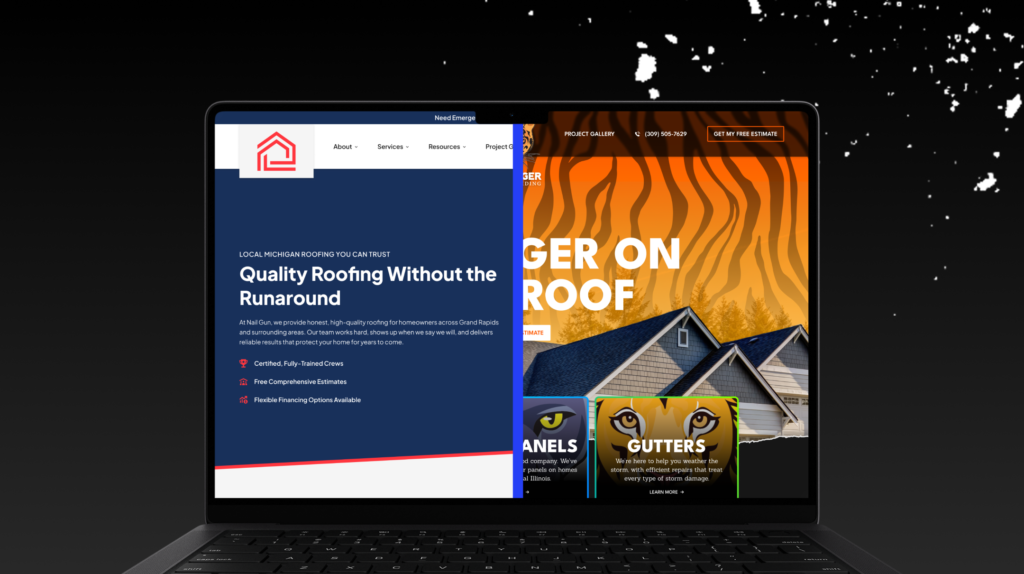
For companies scaling fast, custom websites stop being optional. Instead, they become a competitive advantage. But customization without clarity doesn’t create leverage, as it only creates drag. This is what you need to keep in mind when creating a website in 2026.
What Contractors Must Provide
Websites don’t slow down because of agencies. They slow down because inputs arrive late… or not at all. If you want to keep timelines tight, contractors should prepare:
- High-quality logo files
- Brand colors or preferences
- Photos of the team, trucks, and real jobs
- Domain and hosting access
- Google Business Profile login
- CRM or call tracking access
- Clear customer insights (who you want more of)
In 2026, authenticity matters. Real photos outperform stock images. Clear messaging outperforms clever copy. Most delays come from:
- Waiting on photos
- Missing logins
- Multiple decision-makers
- Late-stage rebranding discussions
When Your Business Is Ready to Go Custom
Custom websites make sense when your business complexity increases. Clear indicators include:
- Multiple service areas or locations
- Aggressive market expansion
- Advanced SEO strategies
- High-paid media spend
- CRM automation needs
- Private equity or acquisition preparation
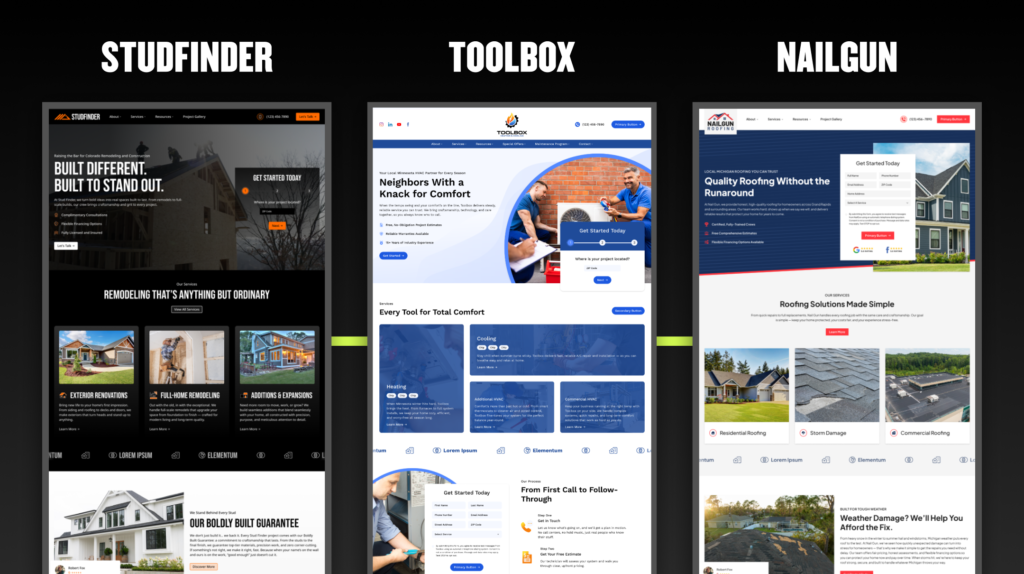
When you reach this stage, your website is no longer marketing; it’s operations support. Check out some of the best home service websites that have earned millions of dollars in revenue for company owners.
The Right Website Matches Your Growth Stage
In 2026, the best contractor websites share one trait, i.e., they support growth instead of slowing it down. That’s the core difference when it comes to standard vs custom websites.
- Standard sites excel when speed, clarity, and ROI matter most.
- Custom sites shine when scale, complexity, and differentiation become critical.
The right choice isn’t about trends; instead, it’s about timing. When your website aligns with your growth stage, marketing works harder, leads convert faster, and your business gains momentum instead of friction. Contact Hook Agency to rebuild your web presence!