Most HVAC SEO advice sounds the same.
“Create content.”
“Build backlinks.”
“Be patient.”
Meanwhile, you are watching competitors with worse installs, worse trucks, and worse reviews show up above you on Google.
That is not an SEO mystery.
It is a strategy gap.
The truth is, most SEO for HVAC contractors fail because they are built for generic businesses, not local service companies that live and die by Maps visibility, service areas, and high-intent searches.
Google does not reward effort. It rewards clarity. Clarity about who you serve, where you serve, and why you deserve the click when someone’s AC stops working at 9 pm.
This guide breaks down the SEO strategies HVAC contractors actually need to win locally. Not theory. Not trends. The specific moves that turn search visibility into booked jobs and steady inbound leads.
What is HVAC SEO?
HVAC SEO makes an HVAC company’s website more visible on Google and other search engines. It helps to attract more local customers and stand out from competitors.
When a homeowner searches for something like “air conditioning repair,” Google decides which companies feel trustworthy enough to show first.
If your site earns one of those top spots, you are not just getting traffic. You are getting belief before the click.
That is where keyword strategy meets local SEO for home service businesses. You are not trying to reach everyone. You are showing up for the people in your service area who are actively looking for help and ready to book.
Higher rankings attract higher intent. These are not casual visitors. They are homeowners with a problem who trust the companies Google places at the top of the results.
In local search, visibility and credibility go hand in hand. When you rank well, trust comes baked in.
✔️ Pros of SEO:
- Increased visibility on search
- Targeted reach to potential customers
- Higher chances of converting leads into customers
❌ Neglecting SEO:
- Reduced online presence
- Missed opportunities to attract new customers
- Risk of losing business to competitors with stronger SEO strategies
A strong SEO strategy helps to solidify your business’s position as an authority in the HVAC industry. By consistently producing content and optimizing it for relevant keywords, you demonstrate expertise and knowledge.
SEO boosts brand awareness which creates customer trust and loyalty. When users repeatedly encounter your website at the top of search results for HVAC-related searches, they are more likely to view your business as a go-to resource for their heating, ventilation, and air conditioning needs.
Search engine optimization helps you stand out online, get more leads, and create a strong brand. By improving your SEO, you can set your business up for long term success and growth in the HVAC market.
10 Must-Know SEO Strategies for Boosting Your HVAC Business Online
Boost your business online with these must-know HVAC SEO strategies. From optimizing your website for local searches to what creating valuable content actually means, we will equip you with all of the tools needed to stand out online.
Dive into our top strategies and watch your HVAC company soar above the competition. Discover how to improve your online visibility and attract more customers

1. Keyword Research and Analysis
Understanding search intent in keyword research aligns content with what users are looking for. Identifying long-tail keywords can enhance visibility as they cater to specific queries. Moreover, competitor analysis aids in discovering keywords driving traffic to competitors’ sites.

- Search volume: Prioritize keywords with higher search volumes for increased visibility.
- Keyword difficulty: Balancing between high and low difficulty keywords ensures achievable rankings.
- Local keywords: Including location-specific terms like cities or regions can boost local SEO efforts.
- Seasonal keywords: Adapting content to seasonal trends can attract relevant traffic during peak times.
2. Local Search Engine Optimization (Where HVAC Leads Are Actually Won)
Most HVAC companies think Local SEO is about “ranking higher.”
It is not.
It is about whether Google trusts you enough to put your business in front of a homeowner who needs service now. That trust is what drives HVAC near me leads, and it is built in very specific ways.
When someone searches locally, Google is not comparing websites. It is comparing signals. Proximity, credibility, and consistency decide who shows up in Maps and who disappears below the fold.
The companies that win locally almost always have the same fundamentals locked in:
- A Google Business Profile that is built correctly, not just active
- Reviews coming in steadily, not in short bursts
- Business information that matches everywhere, down to formatting
- A website that clearly tells Google where the company actually operates
This is why some HVAC companies rank almost immediately while others stay stuck for months. It is rarely about how long they have been “doing SEO.” It is about whether their signals line up.
Your Google Business Profile is the biggest lever, but most businesses pull it the wrong way. Posting every week does not fix category mistakes. Adding photos does not help if services are listed incorrectly. Activity does not replace structure.
What actually moves the needle:
- Correct primary and secondary categories
- Services listed cleanly, not stuffed into descriptions
- Photos that show real trucks, real techs, and real jobs
- Reviews that mention services and locations naturally
Your website either reinforces those signals or works against them. Slow load times, vague service areas, and copy that never mentions where you operate all create friction. Google reads that as uncertainty.
Strong local sites usually do three things well:
- They use basic schema so Google does not have to guess
- They load fast on mobile
- They separate service pages from location pages clearly
3. Google Business Profile (Where Local Trust Is Decided)
Most HVAC calls start before a homeowner ever clicks a website.
They search.
They see the Map Pack.
They choose who feels safest.
That decision is driven almost entirely by your Google Business Profile.
In 2026, local search is not just about blue links anymore. Google’s AI Overviews pull heavily from Map Pack data, reviews, service descriptions, and website schema. If your profile is weak or inconsistent, you are invisible twice.
A properly built Google Business Profile does three things at once:
- Puts you in the Map Pack
- Builds trust before the click
- Feeds AI-driven answers with accurate signals
What an Optimized GBP Actually Looks Like
Optimization is not constant posting. It is structure, clarity, and proof.
Your profile should have:
- The correct primary category based on your core revenue service
- Secondary categories that support, not dilute, relevance
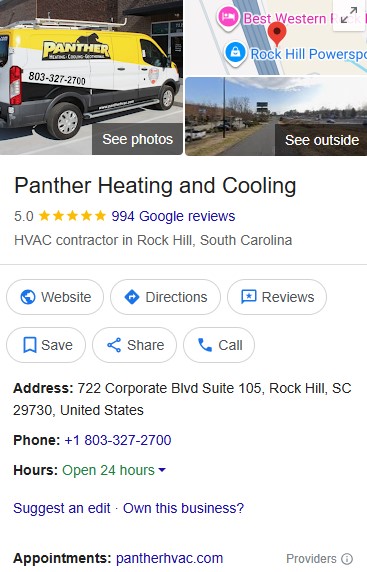
- Services listed cleanly instead of buried in descriptions
- Real photos of trucks, techs, and jobs
- Reviews that are steady, recent, and specific

If Google has to guess what you do or where you operate, it will not rank you.
The GBP Checklist Contractors Should Use
Before chasing anything else, your Google Business Profile should pass this check:
- Business name matches your website exactly
- Address and service areas are accurate
- Hours are current and reflect real availability
- Services match what customers actually search for
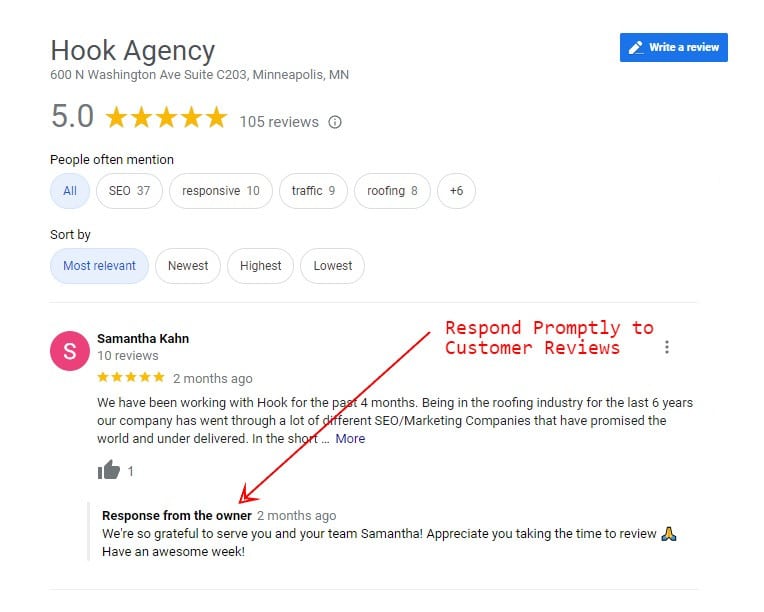
- Reviews are responded to consistently
- Photos are updated quarterly
Most ranking issues start here.
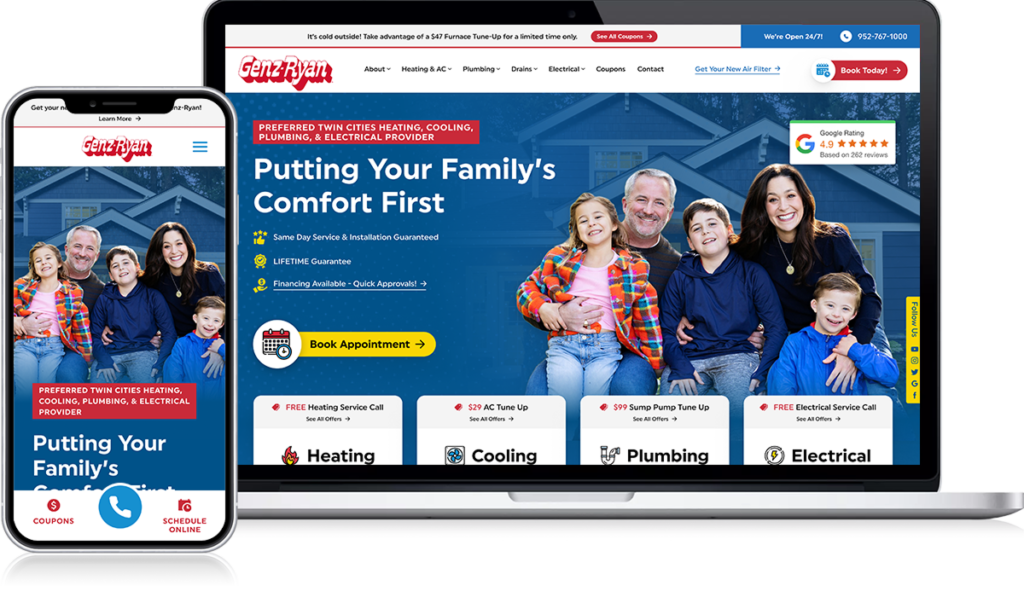
4. Mobile-Friendly Website Design
When your website is optimized for mobile devices it not only is good for your search engine rankings but it also enhances the user experience. Studies show that 57% of internet users say they won’t recommend a business with a poorly designed mobile site.
By focusing on mobile responsiveness, you cater to the growing number of users accessing websites via smartphones and tablets. Google prioritizes mobile-friendly websites in search results, making it essential for HVAC companies to adapt their online presence accordingly.
Incorporating responsive design elements like fast loading times, easy navigation, and clear call-to-action buttons can significantly impact your SEO performance. A seamless mobile experience translates to higher engagement and conversion rates, ultimately driving more leads for your HVAC business.
5. Website Speed Optimization
A fast-loading site not only keeps visitors engaged but also improves search engine rankings. Studies show that 47% of consumers expect a web page to load in 2 seconds or less. Slow-loading websites can lead to high bounce rates, impacting conversion rates negatively.
Key Benefits:
- Improved user experience
- Higher search engine rankings
- Increased conversion rates
Quick Wins to Optimize Website Speed:
- Minimize image sizes
- Enable browser caching
- Use a content delivery network (CDN)

Did You Know?
- Google considers page speed as a ranking factor, influencing where your site appears in search results.
- A one-second delay in page load time can result in a 7% reduction in conversions.
6. High-Quality Content Creation
“Create more content” is some of the worst advice HVAC companies still hear.
In 2026, Google does not reward volume. It rewards usefulness. Especially for home service businesses where trust, clarity, and local relevance matter more than clever writing.
High-quality content works when it sounds like it came from someone who understands the work, the customers, and the real questions homeowners ask before they call. That human layer is exactly what separates useful content from filler, even as AI-generated pages flood search results.
What strong HVAC content actually does:
- Answers buyer-intent questions homeowners are already searching
- Shows real expertise, not surface-level explanations
- Supports service pages and local visibility instead of competing with them
This is why blog ideas that get more leads are rarely broad topics. The content that converts focuses on pricing questions, service comparisons, timelines, maintenance decisions, and local considerations that help homeowners feel confident picking up the phone.

Good content also changes behavior on your site. Visitors stay longer, click deeper, and send better engagement signals to Google. That matters more than publishing frequency.
When done right, content builds credibility before the call ever happens. It positions your HVAC company as the safe choice, not just another option. And in crowded markets, that trust is what turns search traffic into booked jobs.
7. Voice Search Optimization
With the rising popularity of voice assistants like Google Assistant, Siri and Alexa, optimizing for voice searches can significantly boost your website’s local traffic and engagement.
- Natural Language Processing (NLP): Voice search relies heavily on NLP, understanding user intent in conversational language.
- Long-Tail Keywords: Incorporating long-tail keywords that mimic natural speech patterns can improve your chances of appearing in voice search results.
- Local SEO Focus: Emphasize location-based keywords to capture local voice searches especially for HVAC repair services in your area.

8. Backlink Building Strategy
Building high-quality backlinks is essential for your HVAC website’s SEO performance. Here are key points to consider:
- Relevance: Focus on acquiring backlinks from websites related to the HVAC industry to increase credibility.
- Authority: Seek backlinks from authoritative sites with high domain authority to improve your site’s trustworthiness.
- Diversity: Aim for a diverse backlink profile by obtaining links from various sources like blogs, directories, and industry publications.
- Anchor Text: Use relevant keywords in anchor text for backlinks to create SEO value.
- Guest Posting: Collaborate with industry influencers or other HVAC websites for guest posting opportunities to earn quality backlinks.

9. Social Media Engagement
Social media like Facebook, Instagram, LinkedIn, and Twitter offer a unique opportunity for HVAC companies to engage with their audience. By leveraging these platforms, HVAC businesses can increase brand visibility and connect with potential customers on a more personal level.
Key Social Activities:
- Direct Communication: Engage directly with customers through comments, messages, and posts.
- Visual Content: Share visually appealing images and videos of completed projects or before-and-after transformations.
- Customer Testimonials: Showcase positive feedback from satisfied clients to build trust and credibility.
Insights:
- According to a survey by Sprout Social, 77% of consumers are more likely to buy from brands they follow on social media.
- HVAC companies that actively engage on social media tend to generate more leads and increase customer retention rates.
When you share valuable content on platforms like Facebook, Twitter, and LinkedIn, you’re increasing the chances of people clicking on your website link and spending more time there.
Here is the part most HVAC companies miss.
Google pays attention to what happens after the click. When people spend time on your site, explore pages, and engage with your content, it sends a clear signal that what you are offering is actually helpful. That engagement supports stronger rankings and better local visibility.
Social media plays into this more than most contractors realize.
Platforms like Instagram are no longer just branding tools. With Instagram SEO, your posts, captions, and profiles can surface in search, drive qualified traffic, and reinforce trust before someone ever visits your website.
This is not about chasing trends or posting memes. It is about showing real work, real people, and real proof. When social content drives the right visitors to your site, engagement improves and search engines notice.
10. Online Reviews Management
Effective online reviews management is a game-changer for HVAC businesses. Here’s why:
- Build Trust: Positive reviews establish credibility and trust with potential customers.
- Enhance SEO: Higher review ratings can boost search engine rankings, increasing online visibility.
- Customer Insights: Reviews provide valuable feedback for improving services and customer experience.
Encouraging satisfied customers to leave reviews can significantly impact your business’s online reputation. Maintaining a consistent brand voice and addressing negative feedback constructively can turn a dissatisfied customer into a loyal advocate.
Remember, online reviews are often the first impression potential customers have of your HVAC business!
SEO Techniques HVAC Contractors Should Stop Using in 2026
Most HVAC SEO problems are not caused by doing nothing.
They are caused by doing the wrong things for too long.
A lot of tactics that once “worked” now slow you down, confuse Google, or quietly cap your local visibility. Here are the biggest ones still hurting HVAC companies today.
Chasing rankings instead of calls.
Ranking for broad keywords looks good in reports, but if those rankings do not turn into phone calls, they are useless. We still see contractors ranking for terms that attract homeowners outside their service area or people who are not ready to book.
Publishing content just to stay active.
Mass-produced blogs and thin articles no longer help. In 2026, low-value content can actually dilute trust signals. If a page does not support a service, a location, or a real buyer question, it is probably holding you back.
Over-optimizing Google Business Profiles.
Posting constantly, adding random photos, or stuffing services into descriptions does not improve Maps rankings. In some cases, it creates noise that makes your profile less clear. Accuracy and structure matter more than activity.
Buying links or stacking directories.
Backlinks still matter, but low-quality links do not. Paid links from irrelevant sites and outdated directory submissions rarely move rankings anymore. Real local authority beats artificial link volume every time.
Ignoring engagement and site experience.
Slow load times, cluttered layouts, and confusing navigation hurt more than most contractors realize. If users bounce quickly, Google reads that as a quality problem, no matter how “optimized” the page looks.
Duplicating pages across cities.
Copying the same service page and swapping city names is one of the fastest ways to stall Local SEO. Google can spot it instantly. Location pages need real differentiation or they do nothing.
Switching strategies too fast.
Local SEO compounds. Constantly changing agencies, platforms, or tactics resets momentum. Most HVAC companies that struggle are not doing SEO too long. They are stopping too early.

Find a Good HVAC SEO Company
Finding a good HVAC SEO company is less about promises and more about proof. Every agency says they can rank you. Very few can explain how those rankings turn into booked jobs for HVAC companies specifically.
Experience & Track Record
Look for companies with a proven history of success in improving online visibility for HVAC businesses.
Ask for case studies or examples of past work to ensure they have the expertise needed to drive results for your business. A company like Hook Agency with experience in the HVAC industry will understand the specific challenges and opportunities that come with this niche.
Key Questions to Ask
To make sure you select the right SEO agency, ask questions during your selection process. Inquire about their strategies for improving search engine rankings and driving organic traffic to your website.
Check if they prioritize quality content creation and ask for live examples. Content plays a significant role in attracting and engaging potential customers searching for HVAC services online.
- Do they have experience working with HVAC businesses?
- How do they plan to optimize your website for local search?
- What metrics do they use to measure SEO success?
Does Your HVAC Company Need a Powerful Online Marketing Team?
Do all of this internally or outsource it to an HVAC SEO team?
Here are a few considerations before deciding:
- Are you trying to grow your business – or just maintain?
- Are you under 1M and could learn to do some of this yourself?
- Are you over 10M and have multiple marketing people internally, and could you now hire an SEO specialist internally?
- Would it be more efficient for something that requires deep expertise (like SEO) to just do this piece of your marketing plan through an experienced agency?
- How much would 12-20 more high-quality inbound leads mean in revenue to your company a month?

Hook Agency Is a Google Specialized Team That Actually Cares About Contractors
We’re not trying to serve medical, lawyers, and HVAC companies – we only serve contractors and home services businesses, because that allows us to better focus.
- All of our processes are built around contractors.
- All of our connections around link-building are built for contractors.
- All of our writers are focused on contractors, and writing for home-owners (and property managers in the case of commercial work.)
We’re here for you – if you’re ready to take your HVAC Search Engine Optimization efforts to the next level. Our HVAC SEO is right for you, if you’re growing and could use a partner that’s fully specialized (while getting all of the benefits of our ‘economies of scale’ – allowing us get the result of an 80k salary in a 50k price tag with an average of 4-5 people touching your account monthly.)
Send us a message now to schedule an intro call!
Frequently Asked Questions About SEO
What is On-Page SEO?
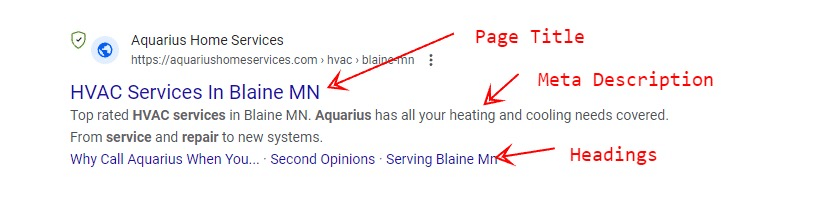
On-page SEO is everything you control on your website. Your pages, content, internal links, images, and metadata. It is how you tell Google exactly what you do, where you work, and who you serve.
Strong on-page SEO removes confusion. Services are clear. Locations are obvious. Pages load fast and make sense on mobile. That clarity is critical if you want to grow your HVAC company through organic search instead of relying only on ads.
What is Off-Page SEO?
Off-page SEO is how the rest of the internet confirms that your business is legitimate.
That includes your Google Business Profile, reviews, citations, and backlinks. Google looks for consistency first. Your name, address, and phone number should match everywhere. Then it looks for trust signals like real reviews and credible websites linking to you.
This is where a good HVAC marketing consultant focuses less on volume and more on quality and relevance.
What is Local SEO?
Local SEO is how you show up for city-based searches and in Google Maps results.
It covers location pages, service-area signals, local schema, reviews, and Google Business Profile health. Local SEO is what drives “near me” searches and turns visibility into phone calls from homeowners in your service area.
Without strong local SEO, even a well-built site struggles to convert traffic into leads.
What are the 3 most important components of HVAC SEO?
Content, links, and technical foundations.
Content answers homeowner questions and supports services and locations.
Links build trust and authority.
Technical SEO ensures your site is fast, crawlable, and easy for Google to understand.
When all three work together, rankings become more stable and leads become more consistent.
What is the best platform for SEO?
For most contractors, WordPress remains the strongest option.
It is flexible, SEO-friendly, and built for content and local optimization. That is why we use WordPress for contractor websites. It gives teams control without locking them into restrictive systems and works well with modern SEO tools and plugins.
The platform matters, but strategy matters more.