
Ask any contractor where their best leads come from. The honest answer is almost never Google Ads. It is a neighbor who mentioned their name. A referral that came in two years after a job. A homeowner who saw the truck in their neighborhood and already knew who to call.
That kind of marketing cannot be bought. But it can be built. And the contractors dominating their local markets in 2026 have a deliberate system for doing it, not just a hope that it happens organically.
The numbers back this up. Nextdoor’s 2026 neighbor research found that 90% of their users plan to support more local businesses this year, up 26% year over year. And 35% of Americans trust a neighbor’s contractor recommendation more than online reviews (25%) or social media (14%). People want to hire businesses they recognize.
Building a community building home service business strategy comes down to four layers:
- Showing up where homeowners already talk to each other
- Being visibly present in the neighborhoods you serve
- Building a referral system that runs on its own
- Staying in touch after the job so one customer becomes a long-term advocate
None of this is complicated. Almost no contractor is doing all four.
Why Community Is the Most Durable Marketing Asset a Contractor Can Build
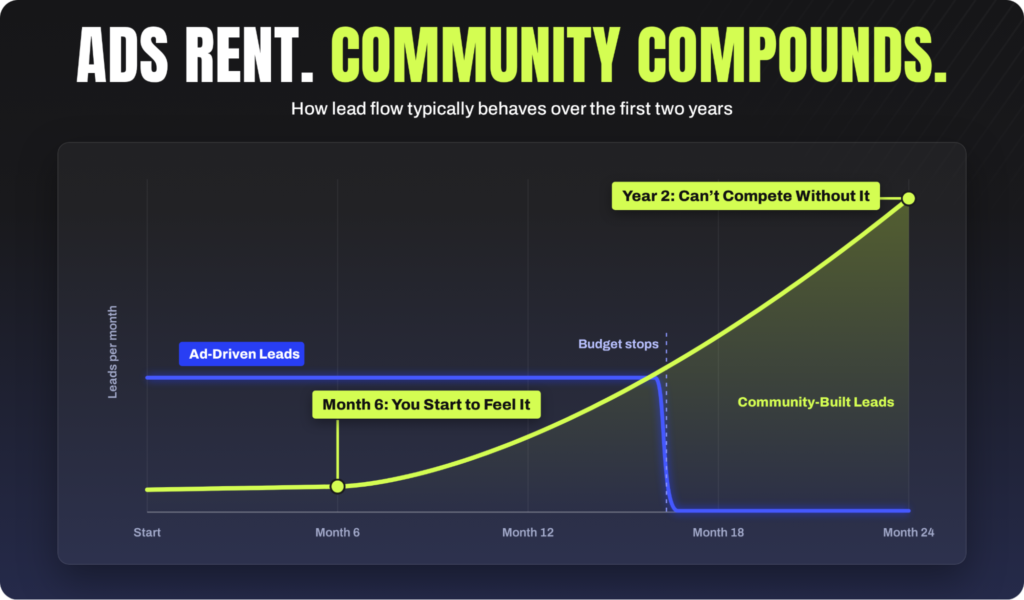
Ads stop the moment the budget stops. Community presence compounds over time and does not have a cost-per-click.
The businesses with the most predictable lead flow are not the ones with the highest ad spend. They are the ones whose name comes up first every time a neighbor asks for a recommendation.
What the Data Actually Shows
These are not soft metrics:
- 35% of Americans trust neighbor recommendations over online reviews or social media when choosing a local contractor (Nextdoor/Harris Poll, April 2026).
- 46% of homeowners plan to spend more on home maintenance in 2026, according to Nextdoor’s What Neighbors Want report.
- 79% of Nextdoor users want to strengthen relationships with neighbors, up 22% year over year (Nextdoor, 2026). The platforms where those conversations happen are growing in relevance.
- 84% of Nextdoor users participated in a charitable activity in 2026, and local community organizations are the top cause they want to support (Nextdoor, 2026). Contractors who show up in that fabric are tapping into something real.
Community vs Advertising: The Long Game
Paid digital marketing is not going anywhere. But a community presence built over two or three years produces leads from a different place: a referral that arrives from a neighbor conversation, a youth sports banner in front of the same families for three seasons, a business partner who sends referrals every month without any follow-up from you.
The cost per lead from community-built business is typically a fraction of paid advertising. The tradeoff is patience and consistency rather than a credit card and a campaign. Contractors who start building this today will not feel it for six months. In year two, they cannot imagine competing without it.
Layer 1: Show Up Where Homeowners Already Talk to Each Other
Before homeowners search Google, many of them ask their neighbors. The platforms where those conversations happen are the first layer of local community marketing contractor strategy, and most contractors are treating them wrong.
Facebook Community Groups
Not your Facebook business page. Not your paid ads. The actual local community groups: “[Town Name] Neighbors,” “[City] Homeowners,” “[Subdivision] Community.” Groups homeowners have been in for years and actually trust.
According to Pew Research’s 2026 social media data, 40% of U.S. adults regularly get local news and information from Facebook, up from 36% in 2020. The audience is there.
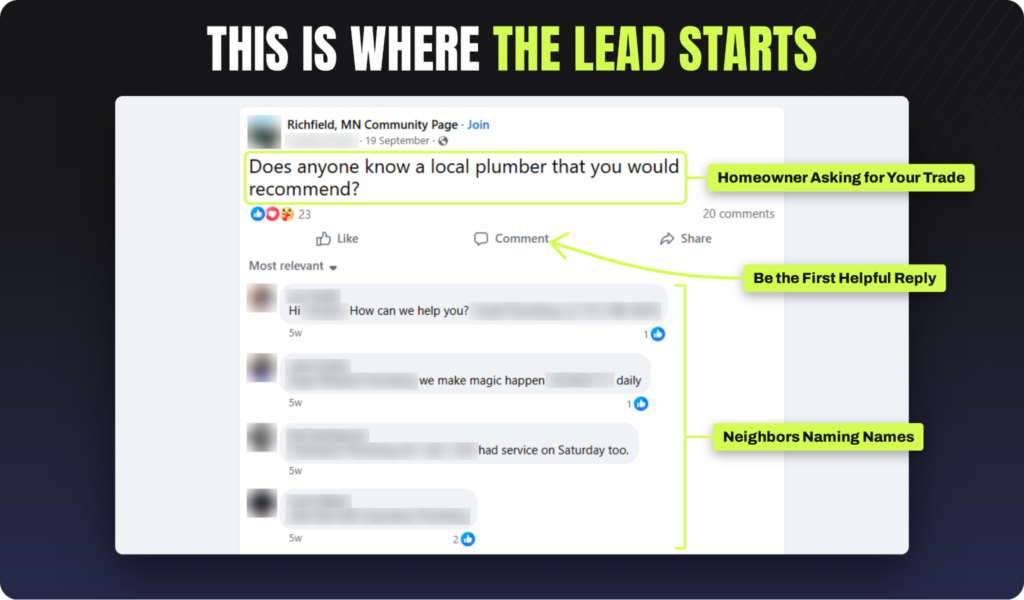
The contractors who generate real Facebook groups contractor leads are the ones already known as helpful participants before they ever need to promote anything. The rule is simple:
- Set aside 15 minutes daily to check 3 to 5 local groups
- When someone asks for a recommendation in your trade, respond directly and fast
- When a homeowner posts a question you can answer, answer it
- Do not post promotional content until you are a recognized presence
For the broader social strategy, the home services social media strategy guide covers how each platform fits together.
Nextdoor
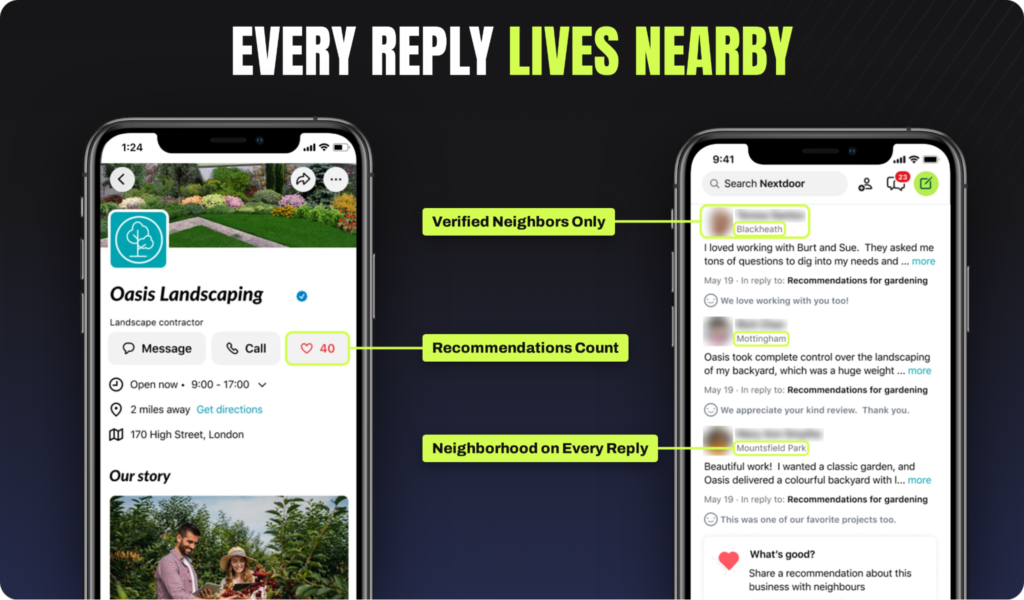
Nextdoor operates differently, and that difference matters. Every post is tied to a specific neighborhood. When a homeowner in your service area asks who to call for a furnace issue, every reply comes from someone who actually lives nearby.
With more than 110 million verified neighbors and 45% of its users now regularly getting local information from the platform (up from 33% in 2025, per Pew Research 2026), the audience actively using Nextdoor for local decisions is growing fast.
A complete Nextdoor Business profile, consistent community engagement, and homeowners organically recommending you in neighborhood threads gives you a lead source competitors cannot buy their way into. The Nextdoor advertising for contractors guide covers the platform mechanics in detail.
For platform-specific tactics, the Nextdoor advertising for contractors guide covers the platform mechanics in detail.
How to Participate Without Getting Flagged as Spam
The most common mistake: joining a community group and immediately posting services. The group flags it, removes the post, sometimes bans the account.
Be a resource before you are an advertiser. Groups are communities, not marketing channels. The contractors who build lasting presence there are the ones the group already recognizes as helpful by the time they ever mention their business.
Layer 2: Be Visibly Present in the Neighborhood
Online presence builds recognition. In-person neighborhood presence makes that recognition feel real. This is about home service business local presence that people can actually see.
Local Sponsorships
A branded banner at a youth soccer game costs a few hundred dollars and sits in front of the same families every weekend for an entire season. Those families are homeowners. They will eventually need exactly what you do.
And according to Nextdoor’s What Neighbors Want 2026 report, local community organizations are the number one cause their users want to support. When your business name is attached to that kind of community effort, you are connecting to something homeowners already care about.
There is also a practical SEO benefit most contractors miss. Sponsoring local events often results in a link from the event website or local news coverage. Those links are geographically relevant and valued by Google’s local algorithm, quietly supporting your rankings at the same time.
Community Events and Speaking Opportunities
Home shows, remodeling expos, neighborhood association meetings. Most homeowners attending these events are already in the planning mindset. Meeting a contractor in person at an event is a different experience than clicking an ad.
Speaking goes further. A 20-minute session at a local library on “how to know when your HVAC system needs replacing” costs nothing but preparation time. The authority it builds is the kind no amount of paid advertising replicates.
Yard Signs and Vehicle Branding as Community Signals
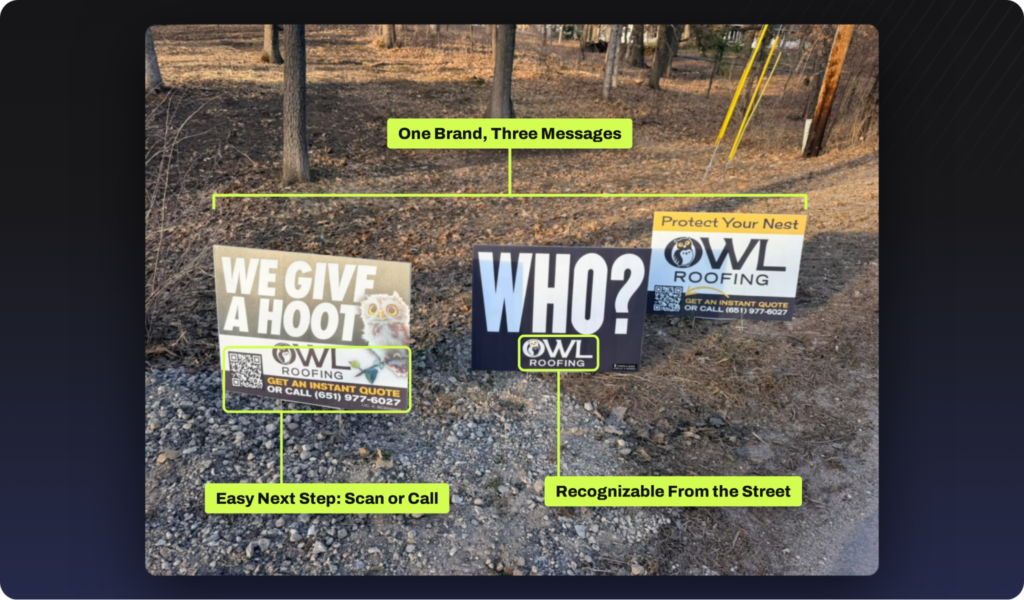
A branded truck at a job site is not just advertising. It is a belonging signal. It tells the neighborhood: this business works here, on this street, not just in this city. The contractor whose truck is recognized on the streets they serve is the contractor whose name gets mentioned when a neighbor asks.
Having your ways to make your branding iconic figured out before you scale matters for exactly this reason. A memorable brand on a truck and a yard sign at a completed job is one of the lowest cost-per-impression marketing tools available.
Layer 3: Build a Referral System, Not Just a Referral Hope
Most contractors get referrals occasionally. The ones with strong community presence get them systematically, because they have built a structure instead of leaving it to chance.
What a Referral Program Actually Looks Like
It does not need to be complex. A solid referral program home service structure has three elements:
- A clear ask at job completion. Not a hint. An actual ask. “If you know anyone who could use our services, we would love the referral.” Most homeowners who had a great experience are happy to refer. They just never get asked.
- A follow-up touchpoint 30 to 60 days later. A quick message to check in. This is when many referrals actually happen, because by then the homeowner has had time to tell their neighbors about the work.
- Recognition when a referral converts. A handwritten thank-you note, a small gift card, a discount on the next job. People refer more when they know it was noticed.
Referral marketing reduces customer acquisition costs by 13% on average, and referred customers have higher lifetime value because they arrive with trust already established. That same trust mindset is what makes a well-built financing page for contractors convert better too. Remove friction wherever people hesitate.
Local Business Partnerships
The most consistent referral channel most contractors are not using is other local businesses. A plumber and a water damage restoration company serve the same homeowners in different moments. An HVAC contractor and a home inspector see the same houses at different stages. A roofer and a gutter company are called for related work constantly.
These relationships exist whether you formalize them or not. Formalizing them turns occasional overlap into a consistent referral exchange: each other’s cards at the front desk, a partner name when a customer asks for a related service, a quarterly check-in to share what is working.
Cross-Referral With Complementary Trades
A local partnerships contractor strategy built on three or four strong complementary trade relationships can produce more consistent leads than many paid campaigns, because every referral arrives with an endorsement from someone the homeowner already hired and trusted.
Choose your referral partners carefully. A bad referral reflects on your reputation in the same community you are trying to build.
Layer 4: Stay in Touch After the Job Is Done
The relationship with a homeowner does not end at the invoice. This is the layer most contractors skip entirely, and it is the one that separates businesses with loyal repeat customers from businesses constantly hunting for new ones.
Email as a Community Tool
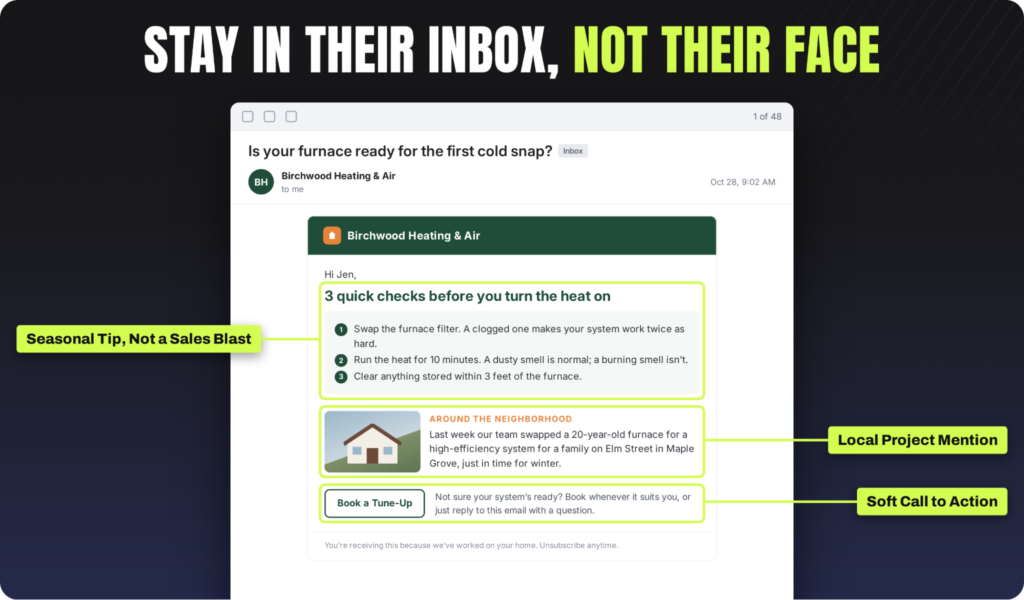
A simple email to your customer list every one to two months is not a marketing blast. It is a reminder that you exist, that you care about their home, and that you are available when something comes up. A seasonal maintenance tip. A note about a recent project in the neighborhood. A heads-up about an event you are sponsoring.
Email marketing delivers approximately $40 for every $1 spent for home service businesses. But the real value is simpler: it keeps your name in front of people who already liked working with you, at the exact moment they might be thinking about home maintenance or about to answer a neighbor who asks for a recommendation.
Reactivation and Seasonal Check-ins
An annual check-in to past customers is both a customer service touchpoint and a lead generation mechanism. “We completed your roof replacement last spring and wanted to make sure everything is holding up well. Available for any gutter maintenance before winter.”
That message is not intrusive. It is helpful. And it arrives from a business the homeowner already trusted.
The SEO Bonus: Community Involvement Builds Local Authority
Every community presence activity in this article also produces a secondary benefit in local search rankings. This is the secondary benefit, not the primary one. You build community because it produces real relationships and real referrals. The SEO gain compounds on top.
Local Backlinks From Sponsorships and Events
Sponsor a youth sports team and the team website often links back to yours. Present at a community event and the event listing may link your business. Get covered by local news for a community initiative and that coverage generates a trusted local backlink.
These links are relevant, geographically specific, and trusted by Google’s local algorithm. They are impossible to replicate through traditional link-building because they come from real community participation. The guide on online reviews for contractors explains how review signals connect to ranking performance as well.
GBP Activity and Review Signals
Community involvement drives review volume. A homeowner who met you at a community event, whose kids play on a team you sponsor, or who got a helpful response in a neighborhood Facebook group is far more likely to leave a detailed review after the job.
That review volume and recency feeds directly into Google Business Profile rankings and local pack performance. The home service business local presence you build offline shows up in your search performance online. The two reinforce each other in ways that paid advertising alone never achieves.
FAQ
What does community building mean for a home service business?
It means showing up in the places homeowners already are: neighborhood Facebook groups, Nextdoor, local sponsorships, community events. And it means building systems around referrals and post-job follow-up so the people who already trust you become the ones sending you new business.
Does community involvement actually generate leads for contractors?
Yes. Thirty-five percent of Americans trust neighbor recommendations more than online reviews when choosing a local contractor, according to Nextdoor’s April 2026 Harris Poll. Community-built leads also convert at higher rates because they arrive with existing trust rather than cold skepticism.
How do contractors use Nextdoor to build local presence?
Claim a complete business profile, monitor neighborhood recommendation threads, and engage as a helpful community member rather than an advertiser. Forty-five percent of Nextdoor users now regularly get local information from the platform, up from 33% in 2025 (Pew Research, 2026). The audience using it to make local decisions is growing.
What is the most cost-effective community marketing tactic for a contractor?
Facebook community group participation and a systematic referral program require time rather than budget, making them the highest-ROI starting points. Youth sports sponsorships cover an entire season of exposure for a few hundred dollars. All three compound over time.
How do local sponsorships help a contractor’s SEO?
Sponsorships often earn links from event websites and local news coverage. Those links are geographically relevant and trusted by Google’s local algorithm, which signals that the business is a recognized local authority and supports both GBP and organic rankings.
How should a contractor structure a referral program?
Three elements: a clear ask at job completion, a follow-up message 30 to 60 days later, and recognition when a referral converts. Keep it simple. The program that gets run consistently outperforms the elaborate one that never launches.
The Contractors Who Win Locally Built It Deliberately
The most recognizable home service businesses in any local market got there through systems, not luck. Community presence, referral programs, and local partnerships compound over years and produce leads that no ad budget can replicate, because they come from real relationships in real neighborhoods.
This is what contractor community strategy 2026 actually looks like: not a social media trick or a one-time sponsorship, but a full system that works across digital platforms, physical neighborhoods, and the relationships you have already built but are not fully using.
For home service businesses that want a marketing strategy that builds this kind of durable local authority, Hook Agency works specifically with contractors across HVAC, roofing, plumbing, and other trades. The home services marketing strategy guide lays out the full picture of where community fits within a broader growth approach.