
We’ve built marketing programs for plumbing companies across the country. I’ve seen what works, and I’ve seen what looks good on a report but doesn’t actually book jobs.
Here’s what I keep coming back to: the plumbing businesses that grow fastest in their markets are almost never the ones with the most sophisticated marketing. They’re the ones that nailed the basics first, got found when someone nearby needed a plumber, had the reviews to back it up, and answered the phone when it rang. Everything else is amplification of that.
This guide is the system we actually use with clients. In order, so you know what to do first when time and budget are limited, with real guidance on what each piece costs and how to measure whether it’s working.
Why Plumbing Marketing Works Differently
Most marketing advice is written for businesses with long sales cycles, national reach, and customers who browse before they buy. Plumbing is almost none of those things.
When a homeowner has a burst pipe or a water heater failing, they are not comparing brands. They are looking at their phone, tapping the first result with decent reviews and a phone number they can click. The decision happens in seconds. That changes everything about how you should approach marketing.
A few things that make plumbing different:
- Your market is tight. Usually 30 to 50 miles. You don’t need to win the internet. You need to win your zip codes.
- Demand is often urgent. Speed and immediate visibility beat slow brand-building in most plumbing scenarios.
- The buyer journey is short. A homeowner with a burst pipe is not nurturing a relationship with your brand. They’re calling whoever shows up first with good reviews.
- AI has changed discovery. According to the 2026 AI Search Behavior Study, 37% of consumers now start searches in ChatGPT, Gemini, or Copilot rather than Google. If your business has no reviews, no content, and no consistent online presence, you will not appear in those answers.
The implication most owners miss: marketing generates the call. What happens after the phone rings decides the revenue. A plumber who gets leads but calls back four hours later is paying for marketing twice.
The Plumbing Marketing System: 4 Tiers, In Order
The reason scattered marketing doesn’t work is not that the tactics are wrong. It’s that they’re unordered. Running Google Ads before fixing a slow website. Posting on social before you have 20 Google reviews. Buying directory leads before you have call tracking. Order matters more than tactic selection when budget is limited. Here’s the home services marketing strategy we use with every client:
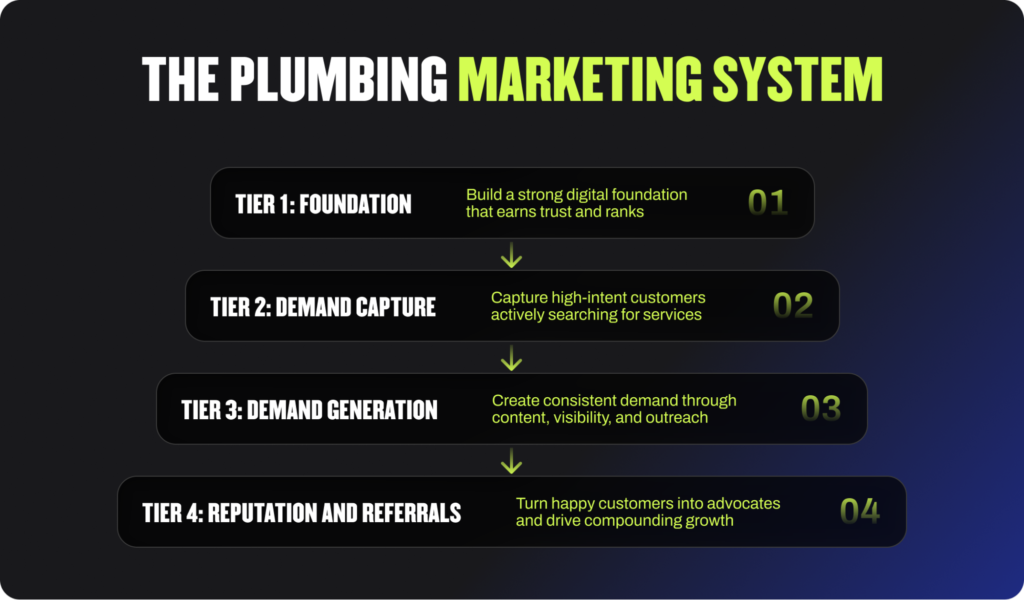
One rule above all others: don’t skip tiers. Paid ads sending traffic to a weak website or an empty Google profile waste money. Every time.

Tier 1: The Foundation Every Plumber Needs First
These three things cost little and everything else depends on them. This is what I tell every plumbing company we start working with: before we touch ads, get the foundation right.
Optimize Your Google Business Profile
Your GBP is the single highest-return free asset you have. It shows up in the map pack. It’s what AI tools pull from when someone asks Gemini for a plumber nearby. It’s what the homeowner reads before they dial. Optimizing your Google Business Profile properly means:
- Name, address, and phone number that match everywhere online exactly
- Primary category set to Plumber with relevant secondary services added
- Service area defined correctly
- Hours kept current, updated for holidays
- Real photos of your team, trucks, and actual completed work
- Regular posts and offers so the profile looks active
A complete profile ranks higher. An incomplete one hands that position to whoever did the work.
Build a Fast, Mobile-First Website
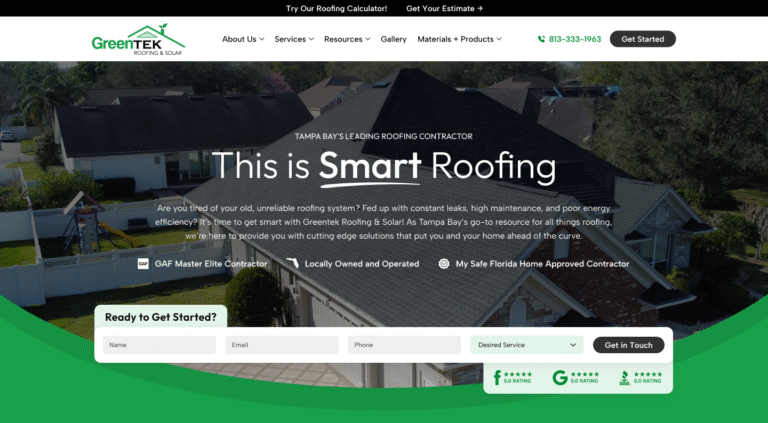
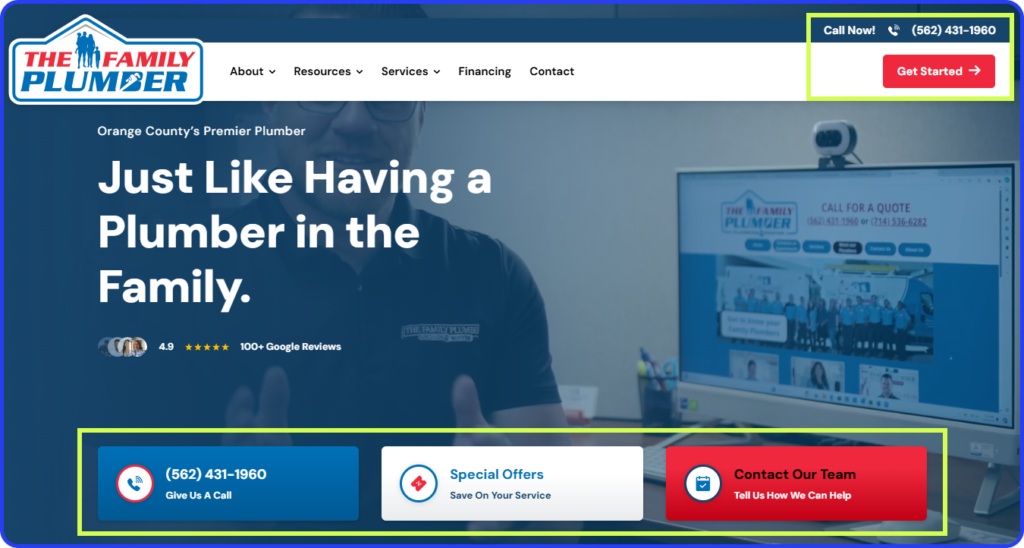
Most plumbing searches happen on phones. Your site needs to load in under three seconds, display a clickable phone number above the fold, and have forms that actually submit on mobile. The plumbing website design detail most people miss: the call to action wording matters. ‘Request Service’ consistently outperforms ‘Contact Us.’ Your website is where your GBP, your ads, and your reviews all send people. If it converts poorly, you’re paying to lose people at the finish line.
Build a Review Generation System
Reviews drive local ranking and homeowner trust simultaneously. Most consumers won’t call a plumber with under a four-star average. Getting more reviews for your business comes down to one simple mechanic: ask every satisfied customer right after the job, send a text with a direct Google review link, and make leaving a review effortless. Respond to every review. Every single one.
I talked with Ryan Fitzgerald on our podcast. He runs the plumbing department at Simply Heating, Air, and Plumbing in Las Vegas and took them from about $400K in plumbing revenue to $5.4M in a single year. When I asked what drove that, he talked about systems and culture. But the thing that stuck with me was simpler. He said his goal with every customer was that they’d call him for the rest of their life, whether he earned their business that day or a year later. That mentality is what generates reviews on its own.

Tier 2: Demand Capture, Getting In Front of Ready Buyers
Once the foundation holds, paid channels put you in front of homeowners who are actively searching right now. This is where you turn the credibility you’ve built into calls.
Google Local Services Ads
LSAs sit above everything else in search results, above PPC ads, above organic results. They carry the Google Guaranteed badge and charge per lead, not per click. Unqualified leads can be disputed for a refund. Local Services Ads vs Google Ads is a real decision worth making deliberately. For most plumbers, LSAs are the highest-return first paid channel because the intent of someone clicking them is about as high as it gets.
Pay-Per-Click Search Ads
PPC works for plumbers, but the math has to work. Here’s the framework: take your average revenue per job, multiply by your gross margin, that’s your gross profit per job. Decide what you’re willing to spend to acquire one customer. Divide by your lead-to-sale conversion rate and you get your maximum viable cost per lead. If a job pays $600 in gross profit and you’re willing to spend 20% to acquire it, your max cost per lead at a 40% close rate is $48. Run PPC for plumbers only when that number is achievable in your market.
Capture the Lead, Not Just the Call
This is the step most competitors leave out completely. Ads and listings only generate the contact. What happens next decides whether you made money or wasted it.
The things that kill paid leads after they’re generated:
- Missed calls with no callback system
- Web form submissions landing in a generic inbox nobody monitors
- Callbacks that happen hours later instead of minutes
Set up call tracking by campaign source. Monitor form submissions daily. Build a response protocol your team actually follows. A $100 lead that gets a callback in four hours is often a lost job in the plumbing trade. The homeowner called three other plumbers while you were busy.
Tier 3: Demand Generation, The Long Game
Once capture is profitable, invest in channels that build visibility over time and lower your cost per lead as they compound. These take longer to start but cost the least per lead once they’re running.
Local SEO and Service Area Pages
Google ranks pages, not whole websites. A plumber serving eight neighborhoods needs a dedicated page for each one, with real location-specific content, not just the city name swapped into a template. Local SEO for plumbers is built around this: accurate map listings, location keywords in real content, internal links between service pages, and backlinks that signal local authority. It takes six to twelve months to fully build. When it works, it becomes your lowest cost per lead channel.
Content and Blogging
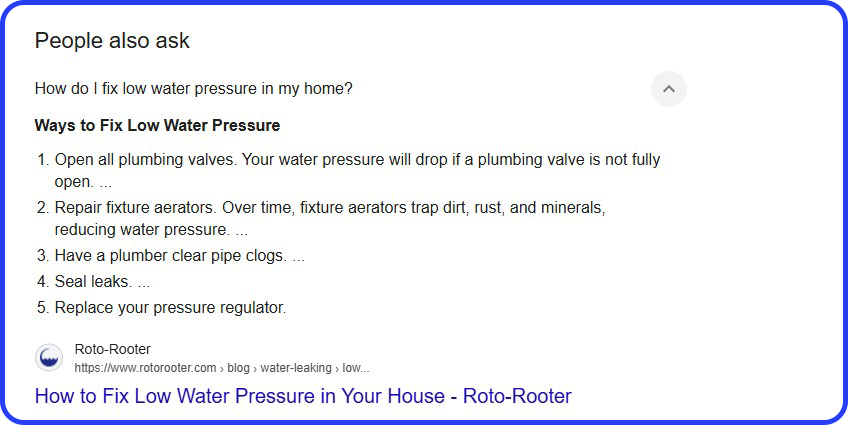
Homeowners search the problem before they search for a plumber. ‘Why is my water pressure low.’ ‘Toilet keeps running.’ ‘Water heater making noise.’ A blog answering those questions captures that traffic and builds topical authority.
Use the People Also Ask section in Google for topic ideas. Link each post back to the relevant service page. This is how a plumbing company earns search visibility before a homeowner even knows they need to pick up the phone.
Video and Social Content
You don’t need a production crew. You need a phone and job sites. I talked with Leon Garrett on our podcast. Leon runs Kenco Plumbing and built a real social following by filming actual work, not polished marketing content. The thing he said that stuck with me: views aren’t vanity metrics when they turn into real relationships, brand partnerships, and doors that open outside your local market.
A video of a tricky drain repair earns more trust than any ad you could run because it shows real work. The Hootsuite 2026 Social Trends Report makes something clear that matters here: platforms are now search engines and research tools, not just social feeds. Google is actively indexing Instagram content and short-form video from other platforms. What you post on social doesn’t just live on social anymore.

The Known For Framework
The plumbing companies that pull away from competitors long-term aren’t the ones running the most ads. They’re the ones that decided what they want to be known for and showed up with that message everywhere.
Pick three things you want every homeowner in your market to associate with your business. Same-day availability. Honest upfront pricing. Family-owned for 15 years. Then those three things go on your website, in your GBP description, in how your techs introduce themselves, in your review requests, in your social content.
AI can help you produce that content faster. HubSpot’s 2026 State of Marketing Report found that 61% of marketers now believe AI is causing the biggest disruption to marketing in 20 years, and the brands cutting through the noise aren’t the ones producing the most AI content. They’re the ones with a clear, specific point of view that no tool can generate for them. The positioning has to be yours. AI just helps you get it out faster.
Tier 4: Reputation and Referrals
This tier runs continuously alongside the others. It costs the least and is the most overlooked because owners assume word of mouth just happens. It doesn’t. It needs a system behind it.
A few things that actually move this tier:
- Structured referral program. A small thank-you incentive prompts customers who already like you to send more people. It formalizes something that was happening informally.
- Professional partnerships. Contractors, remodelers, property managers, real estate agents. Their clients need plumbers. A mutual referral relationship requires almost no ongoing effort once it exists.
- Community presence. Sponsoring local events, showing up in neighborhood Facebook groups, branded yard signs in tight service areas. These are the things that make a homeowner say ‘our plumber’ instead of ‘a plumber.’
- Second-mile service. Small extras that turn a job into a story. Following up a week later to make sure everything is working. Leaving the work area cleaner than you found it. These are what get talked about.
I talked with Alan O’Neill on our podcast. He went from a plumbing apprenticeship in Dublin to building Abacus Plumbing into a $100M+ home service operation in Houston. When I asked what success actually meant to him after multiple exits, this is what he said:
“What truly turns me on the most is to take a young man or woman that’s been written off by high school counselors and see them come into our business and learn an apprenticeship and be making six figures a couple years down the road.” That kind of reputation, built over decades of treating people right, is not something any paid campaign replicates. It compounds on its own.
How plumbers get more leads at real scale almost always traces back to a reputation like that.

How Much Should a Plumbing Company Spend on Marketing?
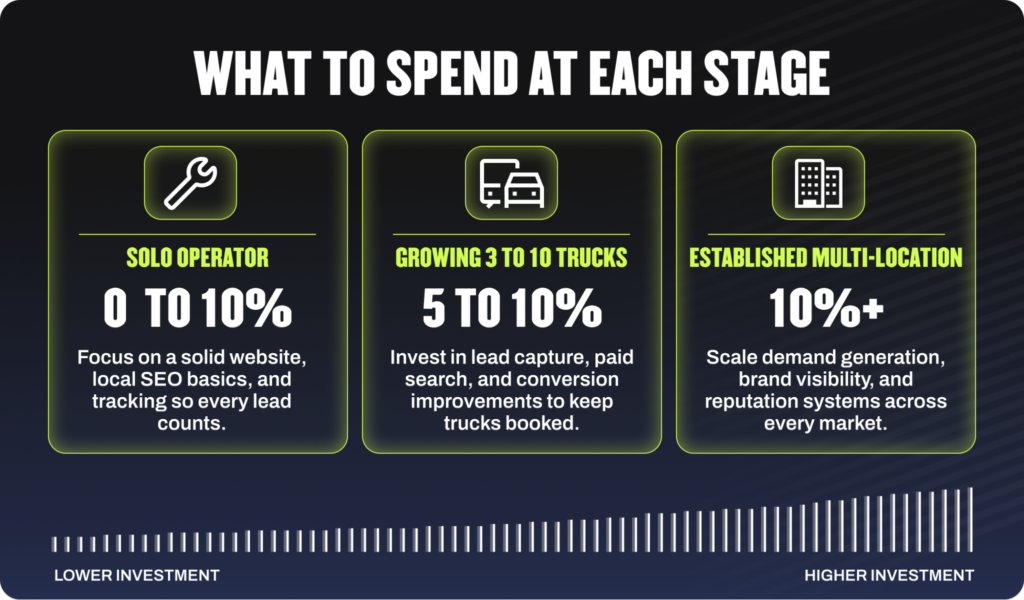
Industry practice is roughly 10 percent of revenue for growth, around 5 percent to hold steady without growing. But the percentage matters less than where you put it at each stage. See our breakdown of plumbing marketing budget guidance for more detail on the numbers by market.
Here is how it breaks down by business stage:
- Solo or new operator: Budget is mostly time, not cash. Focus entirely on Tier 1. GBP, website basics, and a review habit cost next to nothing and build the foundation everything else depends on.
- Growing, 3 to 10 trucks: You have room for paid channels. Layer Tier 2 on top of a solid Tier 1. LSAs first, then PPC once you understand your cost per lead in your market.
- Established, multi-location: All four tiers running simultaneously. SEO and content investment on top of active paid campaigns and a mature reputation system.
One rule that applies at every stage: spend where you can measure return. Shift budget toward what books jobs. Cut what just looks busy.
How to Measure What Is Actually Working
Most plumbers cannot tell you which campaign brought their last booked job. That single gap explains most wasted marketing spend. You can’t improve what you can’t see and you can’t cut what you’re not tracking.
The metrics that actually matter:
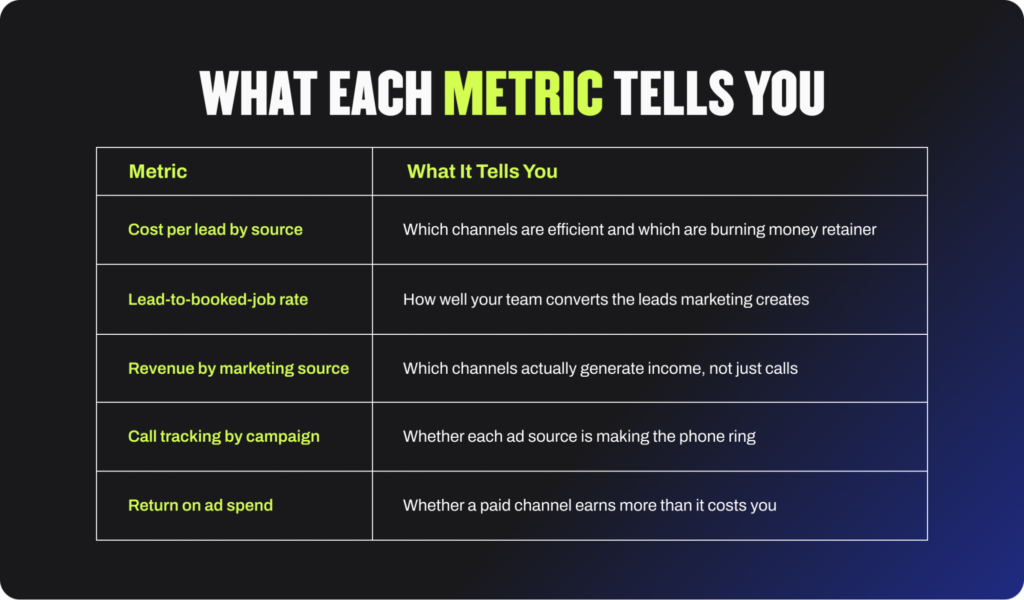
Build a simple marketing scorecard. Tie every new customer to a source. Then increase spend on what books jobs and cut the rest. That’s the whole game.
Common Plumbing Marketing Mistakes That Waste Money
This is the section most agencies skip because it requires honesty. Here’s what we actually see burning budget consistently:
- Running ads with no call tracking. You cannot tell what’s working. You’re optimizing blind.
- Ignoring web form submissions. Paid leads die in generic inboxes or spam folders every single day. Someone has to own that inbox.
- Buying directory leads without measuring conversion. Not all leads convert. You need to know which sources book jobs, not just which ones send contacts.
- Sending ad traffic to a slow or weak website. A bad website is a tax on every other dollar you spend on marketing. Fix it before you run anything.
- Thin keyword-stuffed content. Google ignores it. Homeowners bounce from it. Content that ranks actually answers real questions in real depth.
- One-channel dependency. A price spike in your ad market, an algorithm change, a competitor outbidding you on LSAs. Any of these can sink a business with all its leads coming from one source.
- Assuming word of mouth is automatic. It isn’t. Build the referral system or you’re leaving your most credible lead source entirely to chance.
The honest summary: most wasted plumbing marketing budget is not spent on bad channels. It’s spent on good channels with no tracking and no follow-up.
How Hook Agency Approaches Plumbing Marketing
I’ve spent years watching home service businesses get burned by agencies that treated them like any other client. Same playbook, same templates, same reporting deck with traffic numbers that had no connection to booked jobs.
That’s exactly what Hook Agency is built to not be.
We work exclusively with home service companies. HVAC, plumbing, roofing, electrical. We know what a plumbing market looks like in Minneapolis versus Phoenix. We know what LSA lead costs look like in different trades. We know how the map pack moves when you fix a GBP and when it doesn’t. That knowledge comes from years of doing this work specifically, not from reading the same blog posts everyone else reads.
The thing I’m most proud of at Hook Agency is that we track cost per booked job, not just traffic. Our clients know exactly which channel is filling their schedule and exactly what it’s costing them to acquire each customer. That’s the whole game.
What to Actually Look for in a Plumbing Marketing Partner
Whether you work with us or someone else, here’s what I’d look for:
- They track leads and report cost per lead, not just sessions and impressions
- They can show you long-term client results, not just a screenshot from month one
- Their own Google reviews come from real business owners you can look up
- They don’t promise top rankings in 30 days. Anyone who does is either cutting corners or doesn’t understand how local SEO actually works
- They’ll tell you honestly when a channel isn’t working instead of spinning the numbers to protect the contract
Frequently Asked Questions
How do I market my plumbing company?
Start with the foundation: a complete Google Business Profile, a fast mobile-friendly website, and a steady stream of reviews. Then add Local Services Ads and PPC to capture ready buyers, layer in local SEO and content for long-term visibility, and track every lead back to its source from the beginning.
How much should a plumbing company spend on marketing?
Around 10 percent of revenue for growth, around 5 percent to maintain without growing. New operators should focus their limited budget on the free foundation first. Established companies can run all four tiers simultaneously.
What is the best way to advertise a plumbing business?
Google Local Services Ads are often the highest-return first paid channel because they sit at the very top of search results, carry the Google Guaranteed badge, and charge per lead rather than per click. Pair them with a complete Google Business Profile and consistent reviews.
How do plumbers get more leads?
By being visible when homeowners search, through a strong Google Business Profile, Local Services Ads, local SEO, and reviews, and then by responding to every call and form fast so generated leads actually convert. Visibility gets you the contact. Speed and professionalism get you the job.
Do lead generation services work for plumbers?
Sometimes. Results vary significantly by market and service type. Test one or two, track conversion to booked jobs closely, and only scale what proves profitable. The lead price means nothing without knowing the close rate and the job value behind it.
How long does plumbing SEO take to work?
Local SEO usually takes several months to show meaningful ranking movement. Google Business Profile optimization produces results faster. Content and authority building compounds over 6 to 12 months. It starts slow and becomes the lowest cost per lead channel once it’s running.
Is word of mouth enough to grow a plumbing business?
No. Word of mouth is valuable but unpredictable without a system. A structured referral program and consistent online reviews turn informal recommendations into something trackable and scalable. Word of mouth at real scale needs a deliberate system behind it.
Build the System, Then Let It Compound
Plumbing marketing in 2026 is not about doing everything at once. It’s about doing the right things in the right order. Build the foundation before you run ads. Track every lead before you scale any channel. Use the AI tools that save you time on execution, and spend that time on the things that actually build a business: your reputation, your relationships, and your presence in the communities you serve.
That’s the approach we’ve built at Hook Agency over a decade of working specifically with plumbing companies, roofers, HVAC businesses, and electricians across the country.
If you want help building that system for your business, schedule a call with our team. We’ll walk you through exactly what we’d build for your market. No generic proposals.