
You boosted a post.
You spent a few grand.
You got some likes… maybe a couple messages.
But did you actually book jobs?
That’s the real question behind plumbing Facebook ads.
Every plumber hears the same pitch. “Facebook ads are cheap.” “You can target homeowners.” “Everyone’s on Facebook.” And technically, that last part is true. In fact, 78% of U.S. consumers discover services via Facebook ads.
Discovery, though, is not the same as buying. When someone’s basement is flooding, they are not scrolling. They are searching. Fast. Usually on Google.
So are plumbing Facebook ads a smart growth channel… or just a distraction from higher intent lead sources like Google Ads and LSAs?
Why Plumbing Facebook Ads Often Feel Like a Money Pit
Let’s clear something up. Facebook is not evil. It’s not a scam. And it absolutely works for some businesses.
In fact, Facebook campaigns yield 5.3x ROAS, outperforming Instagram at 4.8x and TikTok at 3.6x. So if the platform works… why do so many plumbers feel like they’re lighting money on fire?
Because intent matters more than platform.
1. Low Buyer Intent Compared to Search
Plumbing emergencies do not start on Facebook. They start on Google.
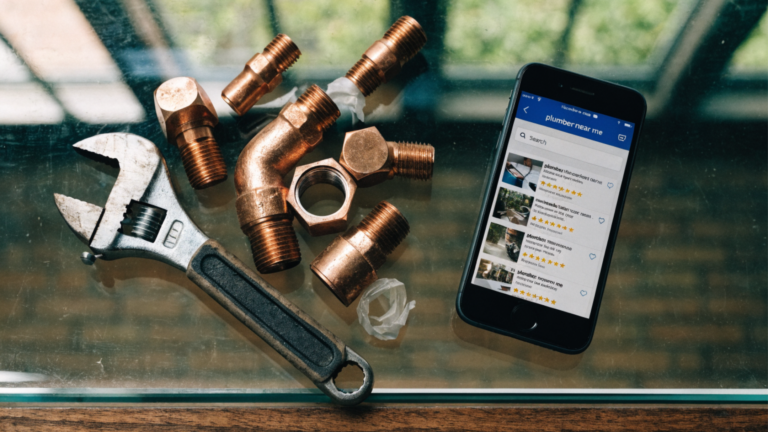
When a pipe bursts or a water heater fails, no homeowner thinks, “Let me scroll for inspiration.” They type plumber near me and call whoever looks trustworthy.
That’s intent marketing.
Facebook is interruption marketing. You are showing an ad to someone who did not wake up thinking about plumbing. They are watching videos. Looking at family photos. Browsing.
You are interrupting. That is fundamentally different than showing up when someone is actively searching to capture plumber near me leads.
Search captures demand.
Facebook has to create it.
That does not mean it cannot work. It just means the bar is higher.
2. Weak Offers Kill Performance
Here is what we see constantly. Plumbing ad copy that says:
“Call us today!”
“10% off plumbing services!”
“Your trusted local plumber!”
That is not an offer. That is a placeholder. If you are interrupting someone’s scroll, you need something specific and compelling enough to stop them.
Offers that actually move the needle look like:
- Free water heater inspection this month only
- $79 drain cleaning special for first time customers
- Same day booking incentive with limited slots
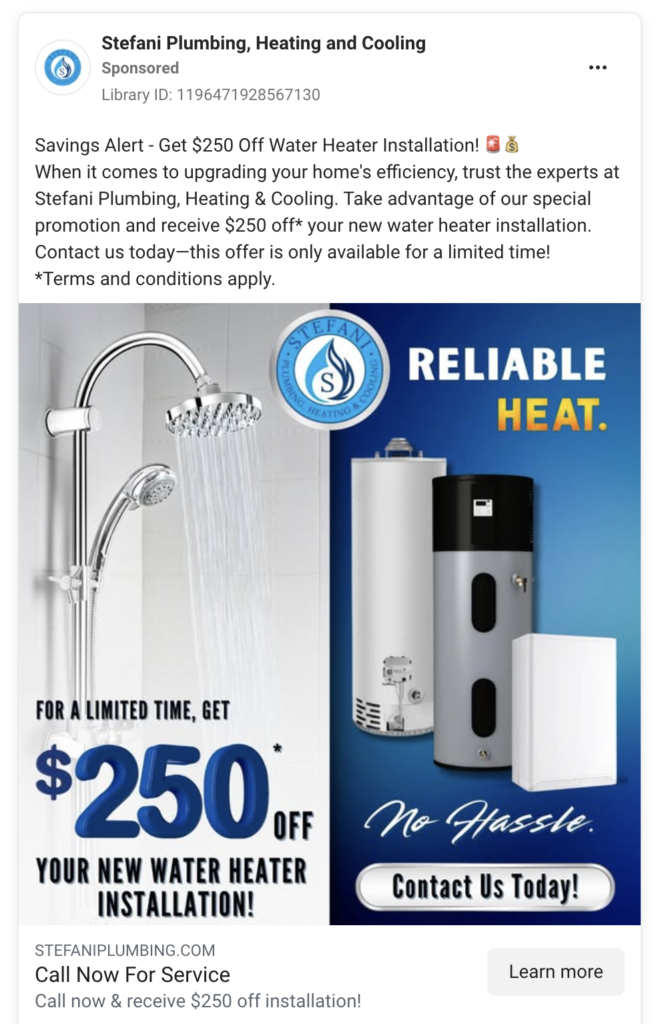
Specific beats generic every time. When we run campaigns for plumbing companies, the ads that win are rarely brand awareness plays. They are concrete, timely, and clear.
3. Poor Targeting and Creative
This is where most budgets quietly bleed.
We routinely audit plumbing Facebook campaigns and see:
- Broad targeting with no geographic layering
- No homeowner filters
- No retargeting of website visitors
- Generic stock photos of tools
- No local team faces
- No urgency in the copy
The result? Low quality leads and weak engagement.
Facebook is powerful when you narrow it properly. For example:
Target homeowners within a tight service radius.
Layer in retargeting for people who visited your pricing page.
Run separate creatives for water heaters versus drain cleaning.
Without structure, it turns into spray-and-pray advertising.
4. No Follow-Up System
This is the silent killer. Even when Facebook ads generate leads, response time determines ROI. We have seen plumbers take hours to call back a Facebook lead. By then, the homeowner has already searched Google and hired someone else.
Facebook leads require tighter follow-up than search leads.
You need:
- Fast callbacks within minutes
- SMS automation
- A structured booking pipeline
- Clear scripts for office staff
Without that system, even a good campaign underperforms. Search leads are hot and inbound. Facebook leads are curious and interrupt-driven.
They require nurturing.
Where Facebook Stops Wasting Money and Starts Making It
Now let’s flip the script. Facebook is not useless for plumbers. It just does not behave like search.
If you treat it like Google, you lose.
If you use it strategically, it can quietly become one of your most profitable support channels.
Here’s where we’ve actually seen it work.
1. High Ticket Maintenance and Replacement Campaigns Win
Facebook struggles with emergencies. It performs far better with planned, higher-margin services.
Think:
- Water heater replacements
- Whole home repipes
- Sewer line replacements
- Tankless upgrades
These are not panic decisions. They are consideration decisions.

Homeowners might not be searching yet, but they are open to upgrading. That is where interruption marketing shines.
We’ve run campaigns promoting limited time water heater replacement incentives that outperformed expectations because the offer was tied to value, not urgency. A clear message like “Upgrade to a high efficiency tankless system before winter” converts far better than “Call us for plumbing service.”
This is where the best Facebook Ads for plumbers are focused. Not on emergency calls. On big ticket jobs with margin to support paid traffic.
It also helps that Facebook’s cost structure is predictable. The global median CPC averaged about $1.11 over a 13 month window, fluctuating between $1.05 and $1.15 for most of the year, peaking at $1.32 in November and then dropping to $0.85 by January 2026.
Compared to plumber PPC on Google, where clicks can run significantly higher in competitive markets, that cost difference can be leveraged for demand generation.
2. Retargeting Is Where Facebook Quietly Dominates
This is the part most plumbers overlook. Someone visits your website. They check out your water heater page. They leave.
On Google, they are gone.
On Facebook, you can follow up.
Retargeting campaigns consistently outperform cold traffic because the homeowner already knows who you are. Now you reinforce the message with:
- A testimonial
- A limited time offer
- A financing reminder
- A before-and-after project
We have seen retargeting campaigns cut cost per lead dramatically because you are not convincing strangers. You are nudging warm prospects.
3. Brand Support in Competitive Markets
In hyper-competitive cities, Facebook rarely acts as the first touch. It acts as reinforcement.
A homeowner might search Google first. Click a few websites. Not book. Later that evening, they see your ad again in their feed. Same brand. Same offer. Real local team members. Five star reviews highlighted.
Trust builds.
Facebook works best as the second or third touch point in the journey. It supports search campaigns rather than replacing them. When paired correctly with Google Ads and LSAs, it strengthens recall and improves overall conversion rates across channels.
Three Platforms. Three Very Different Types of Plumbing Leads.
If you’re deciding where to put your budget, this is the part that actually matters.
Facebook, Google Ads, and LSAs are not competing tools. They play completely different roles in how homeowners find and hire plumbers. The mistake is expecting them to behave the same way.
Let’s break it down clearly.
Google Ads
Google Ads is built for urgency.
When someone types “emergency plumber near me” at night with water leaking through drywall, they are not browsing. They are hiring. That is pure intent. That is where plumber PPC thrives.

You are stepping into a moment where demand already exists. That is why Google Ads delivers:
- High intent traffic
- Immediate demand capture
- Strong close rates on urgent jobs
- Competitive but predictable scaling
The tradeoff is cost. In competitive markets, clicks are expensive. But the person searching already knows they need help. You are competing for position, not trying to create desire.
If emergency service work drives your revenue, Google Ads is often your foundation.
Local Service Ads
Now layer in LSAs.
Local Service Ads sit above traditional search ads and emphasize trust. Reviews, verification badges, and the Google Screened label reduce friction instantly. You pay per lead rather than per click.
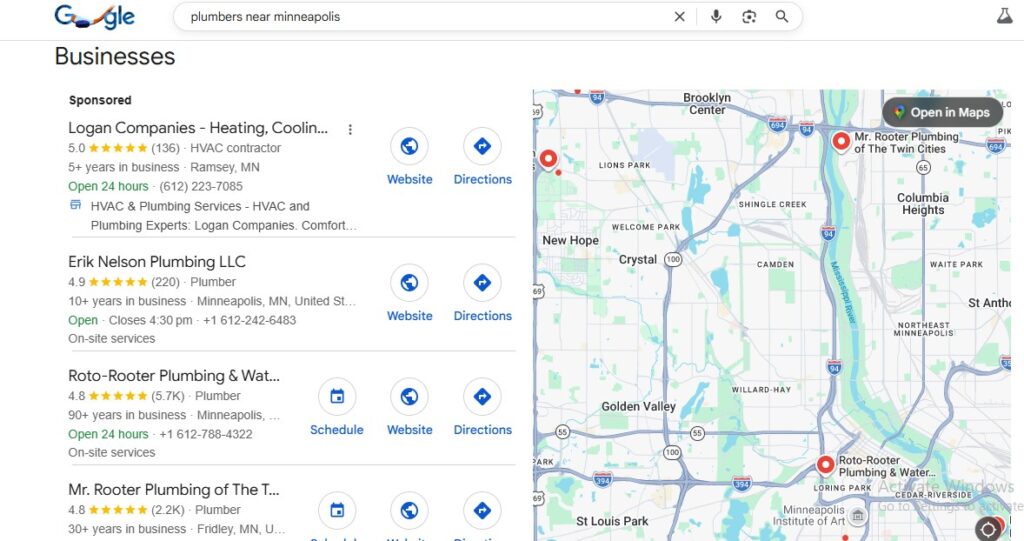
For emergency plumbing, that trust layer matters.
Here’s where the conversation around Google Ads vs LSAs for home services becomes practical. LSAs often convert faster on urgent calls because they remove skepticism. Google Ads provides more keyword control and strategic scaling.
In many markets, the strongest emergency strategy is not choosing one. It is using both:
- LSAs for trust and visibility at the top
- Google Ads for keyword control and deeper coverage
Together, they dominate emergency intent.
Facebook Ads
Facebook works differently.
No one opens Facebook because a pipe burst.
Facebook is interruption-based. You are putting an offer in front of someone who was not actively searching. That is why it struggles with emergencies but can perform well for planned, higher-margin jobs.

Consider the contrast.
Emergency pipe burst
That homeowner goes to Google or LSAs immediately.
Planned water heater replacement
That homeowner might click on a limited-time upgrade offer while scrolling.
Facebook performs best when focused on:
- Water heater replacements
- Repipes
- Sewer line upgrades
- Maintenance plan promotions
The cost per click is often lower than plumber PPC, but the intent is lower too. That means your funnel must be stronger. Your offer must be specific. Your follow-up must be tight.
Use the Right Tool for the Right Job
Plumbing Facebook ads are not automatically a waste. They just are not built for emergencies.
If you rely on urgent calls, Google Ads and LSAs will usually win. If you are promoting high-margin installs or want to stay visible in competitive markets, Facebook can support that strategy.
The mistake is expecting one platform to do everything.
If you want clarity on where your budget should go, book a call with Hook Agency and let’s pressure test your paid media strategy before you spend another dollar.