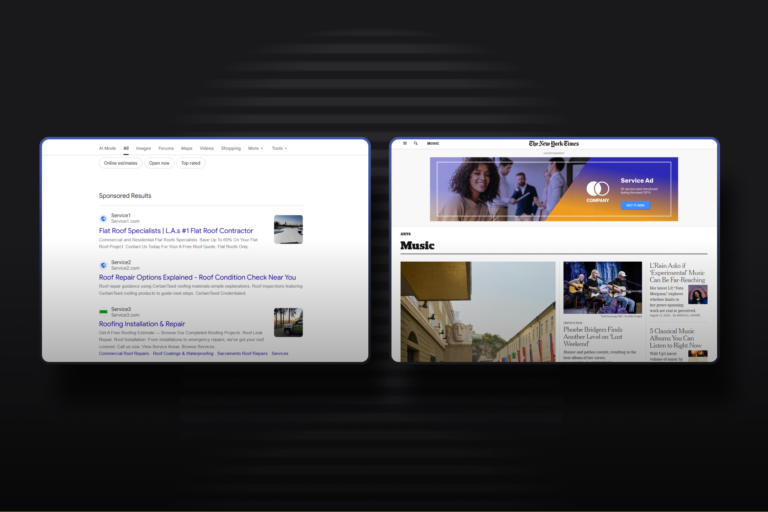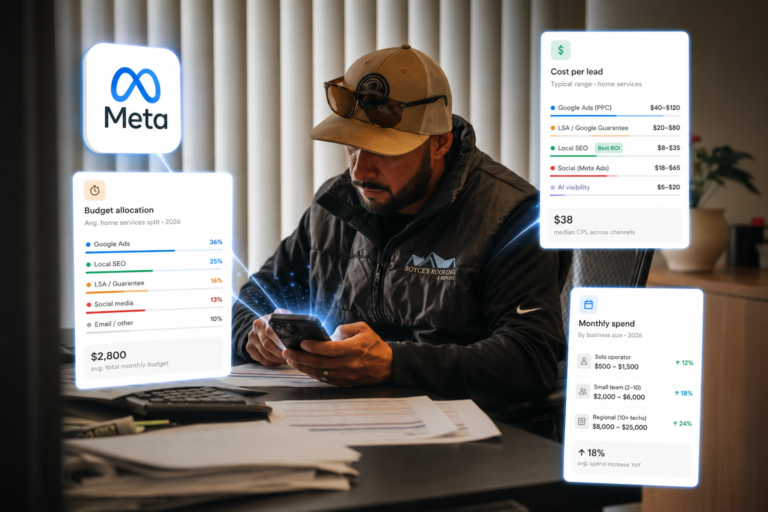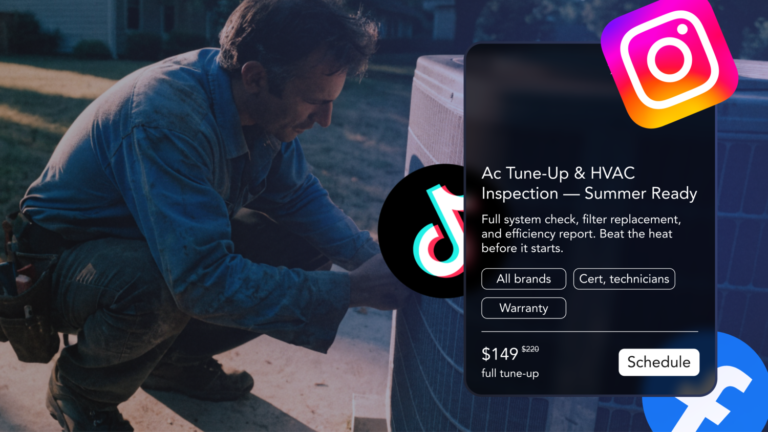

Paid ads shouldn’t feel random.
But for most home service businesses, they do.
One month the phone rings.
Next month it doesn’t.
Same spend. Different outcome.
If you’ve tried paid ads, you’ve probably dealt with bad leads, rising costs, or money that disappears without real jobs to show for it. That frustration usually comes from one mistake. Picking the wrong channel and hoping budget fixes it.
The reality is simple. Google Ads and Local Service Ads work in very different ways. They attract different types of customers and fail for different reasons. When the wrong one is used, results fall apart fast.
That’s why understanding Google Ads vs local service ads home services matters before you spend another dollar. More budget won’t solve a strategy problem.
This guide breaks down what actually works, what doesn’t, and how to choose the channel that fits your business instead of fighting it.
Two Ad Platforms. Two Very Different Jobs.
On the surface, Google Ads and Local Service Ads look similar.
They both show up when someone searches for a contractor.
They both cost money.
They both promise leads.
That’s where the similarity ends.
If you don’t understand how each one actually works, it’s easy to pick the wrong tool and blame the platform when results fall flat.
Let’s clear this up in plain English.
How Google Ads Actually Work
Google Ads are pay-per-click. You pay every time someone clicks your ad, whether they book a job or bounce in five seconds.
What you get in return is control.
You choose:
- Exactly which services you want to advertise
- Which keywords trigger your ads
- Where you show by city, zip code, or radius
- What the ad says
- Where the click goes like a service page, a landing page, or a booking flow
That control is powerful. It also means Google Ads need real strategy. When they’re built right, they filter intent and scale. When they’re rushed, they burn budget fast.
In home services, search ads average about a 4.80% click-through rate, and that number climbs to 6.25% for contractors and 5.54% for pest control. The intent is there. The setup decides whether you capture it or waste it.
How Local Service Ads Actually Work
Local Service Ads are pay-per-lead. You don’t pay for clicks. You pay when someone calls or messages through the ad.
They show up above everything else at the very top of the search results. That placement is the main reason they work so well.
On average, Local Service Ads capture 13.8% of all clicks, outperforming lower PPC positions simply because they sit in prime real estate. Even more telling, LSA position one gets more than double the clicks of positions two or three.
The tradeoff is simplicity.
With LSAs, Google controls:
- Which searches you appear for
- How your ad is shown
- How leads are routed
- When you show and when you don’t
You win on visibility and trust. You give up precision.
Where Each One Shows Up in Search
This is where user behavior shifts.
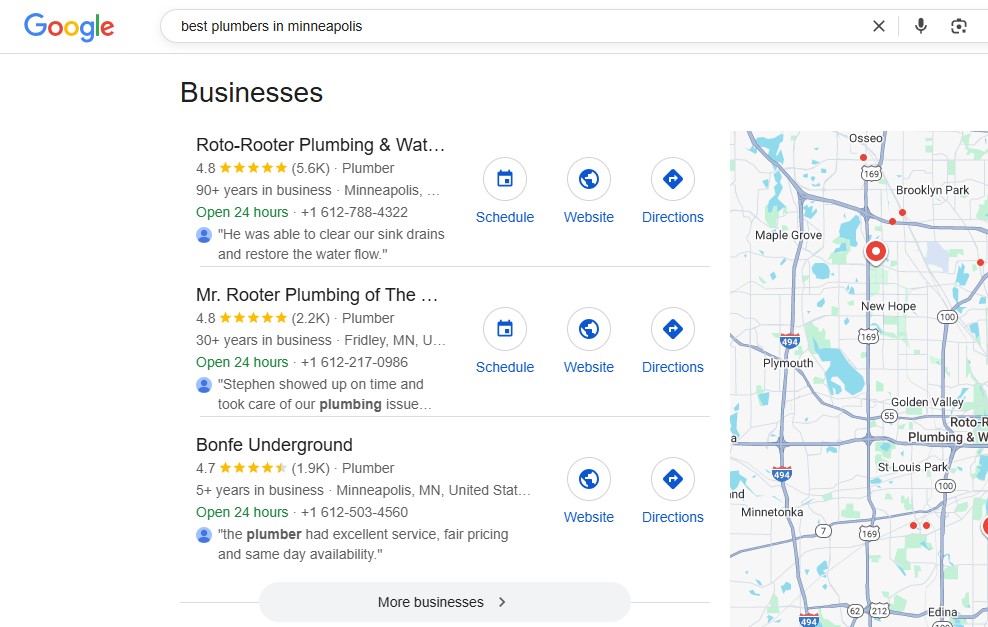
- Local Service Ads appear first, with your reviews, phone number, and Google badge front and center.
- Google Ads show underneath LSAs, blended into the regular search results.
That top placement is why LSAs often drive volume quickly. Google Ads rely more on messaging, targeting, and follow-through.
Control vs Simplicity, Straight Up
Here’s the real difference most contractors feel but don’t articulate.
- Google Ads reward strategy, testing, and optimization.
- Local Service Ads reward strong reviews and consistency.
One is a scalpel.
The other is a magnet.
Neither is better by default. They’re just built for different jobs.
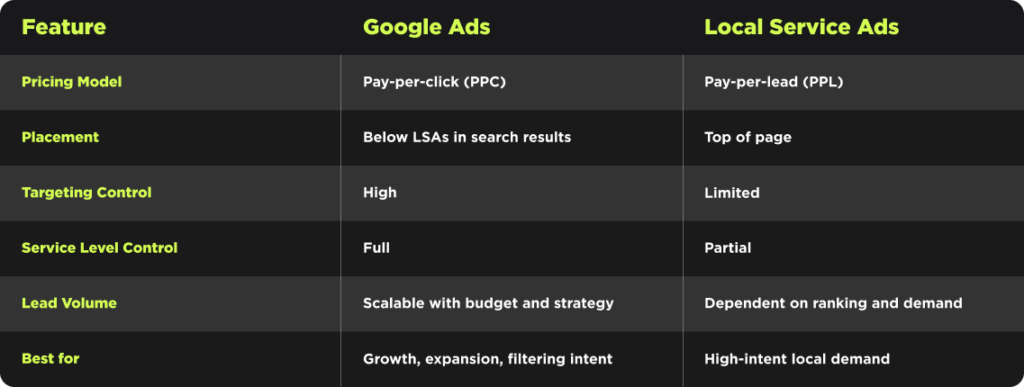
Once you understand this difference, the rest of the decisions get easier. The problem isn’t choosing wrong once. It’s running the wrong platform long enough to convince yourself paid ads don’t work.
When Local Service Ads Actually Work (and Where They Quietly Break)
Local Service Ads look like the obvious answer when you’re tired of babysitting ads.
They promise calls.
They sit at the very top of Google.
They feel safer than clicks.
For the right contractor, they work. For the wrong setup, they create a false sense of security that quietly caps growth.
Here’s where LSAs truly earn their keep.
Emergency-Driven, High-Intent Services
LSAs are strongest when the customer already decided to call someone. They are not shopping. They are solving a problem right now.
This is why LSAs perform best for:
- HVAC repair during extreme heat or cold
- Plumbing emergencies
- Electrical outages
- Lockouts
- Active infestations
In these moments, homeowners are not comparing offers. They want the fastest credible option. LSAs win because they remove friction.
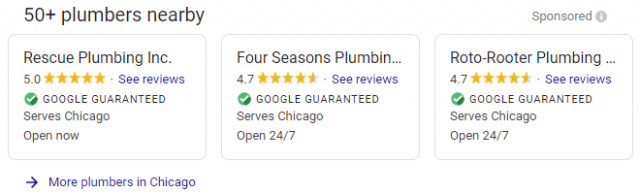
If a big portion of your revenue comes from same-day or next-day work, LSAs can fill calendars quickly.
Businesses With Tight Service Areas and Stable Crews
LSAs favor operational stability.
They work best when:
- Your service area is well-defined
- You are not constantly changing coverage
- Your crews can handle steady inbound volume
- You are not overextending techs to chase marginal jobs
If you’re already struggling with dispatch efficiency or missed calls, LSAs amplify the problem. You cannot throttle lead flow with precision. When demand spikes, it spikes.
Review Volume Is the Real Gatekeeper
LSAs are not neutral.
They reward businesses that already have:
- Strong Google review volume
- Consistent review velocity
- Solid responsiveness to calls
This is where many $1M–$3M contractors hit a ceiling. You may be great at the work, but without review depth, visibility stays limited. Budget alone does not solve that.
LSAs quietly favor established brands. That’s not a flaw. It’s the system.
Predictable Demand Markets Win Long-Term
LSAs perform best in markets where demand doesn’t swing wildly.
If your market relies on predictable homeowner behavior, LSAs can deliver reliable call flow. If your demand is seasonal, campaign-based, or tied to expansion goals, LSAs lack the agility to keep up.
They are reactive, not proactive.
The Tradeoff Owners Feel But Rarely Name
LSAs trade lead control for lead comfort.
You get:
- Prime placement
- Trust signals
- Less setup friction
You lose:
- Control over service mix
- Control over search intent
- Control over volume pacing
This is why LSAs are often loved early and questioned later. They feel easy. Until you want to grow intentionally.
LSAs are not set it and forget it. They still require monitoring, dispute management, call handling discipline, and operational alignment. And they do not work for everyone, despite what Google implies.
When Google Ads Become the Growth Lever Owners Actually Need
Google Ads are rarely the first choice for tired owners. They feel complex. They feel risky. They feel expensive.
But for contractors focused on control, margin, and long-term scale, this is where Google Ads pull ahead.
Precision at the Service Level
Google Ads allow you to stop advertising your entire company and start advertising specific jobs.
That means you can:
- Push high-margin installs harder than repairs
- Separate residential from commercial
- Control which services get budget and which don’t
- Align ad spend with crew availability
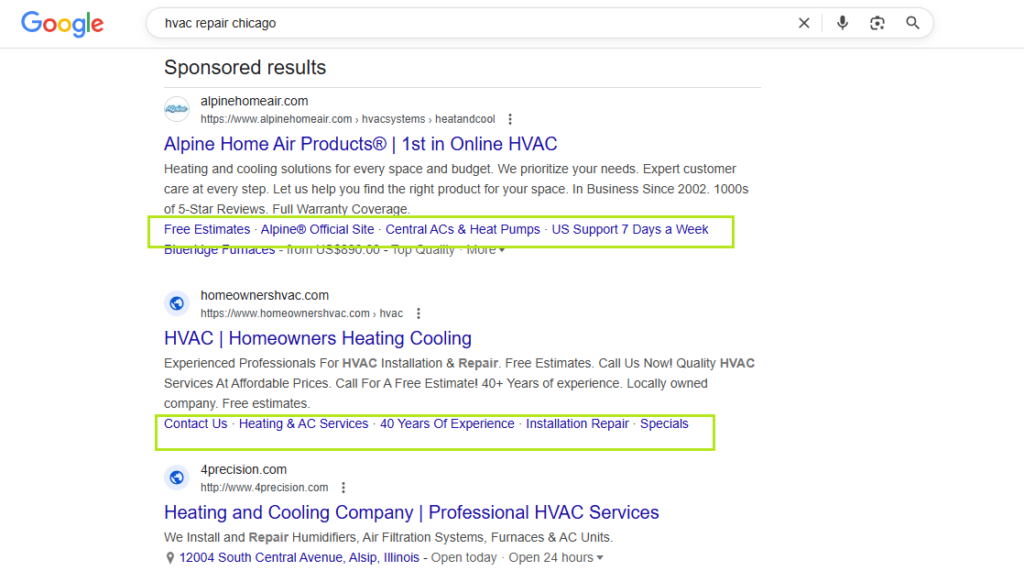
For owners managing multiple service lines, this level of control is not a luxury. It’s protection.
Geographic Control That Supports Expansion
Google Ads are built for businesses that are growing, not just operating.
You can:
- Defend your core market aggressively
- Test new service areas without risking the whole budget
- Increase visibility where close rates are highest
- Pull back instantly if performance drops
This matters for multi-location businesses and contractors entering competitive metros. LSAs cannot match this flexibility.
Brand Protection Most Owners Ignore Too Long
If you are not bidding on your own brand name, you are leaving revenue exposed.
Competitors can and do show up on branded searches. Google Ads allow you to:
- Control the message
- Capture ready-to-book demand
- Prevent leakage at the final decision stage
This is not flashy marketing. It is defensive strategy that protects booked jobs.
Campaigns That Match Business Cycles
Google Ads can be shaped around real operational needs.
They are ideal for:
- Seasonal pushes
- Hiring-driven growth
- New service rollouts
- Revenue targets that cannot wait on organic lift
Unlike LSAs, Google Ads respond immediately. That responsiveness matters when payroll, trucks, and crews are on the line.
Intent Filtering That Improves Over Time
Google Ads reward discipline.
With proper management, you continuously refine:
- Search terms
- Negative keywords
- Ad messaging
- Landing pages
- Conversion tracking tied to booked jobs
Over time, lead quality improves. Cost stabilizes. Predictability increases. This is where the platform starts working for the business, not against it.
Why Strategy Is Non-Negotiable
Google Ads punish shortcuts.
Without active management, they drift. Costs climb. Quality drops. That’s why so many owners swear they “don’t work.”
When managed with intent, Google Ads become a scalable engine. They give you leverage. They let you decide where growth comes from instead of reacting to whatever Google sends.
This is the real difference owners feel when comparing LSAs vs. Google Ads. One captures demand that already exists. The other helps you shape, protect, and scale it on your terms.
And knowing which one your business actually needs right now is the difference between buying leads and building momentum.
What Disciplined Google Ads Look Like at Scale
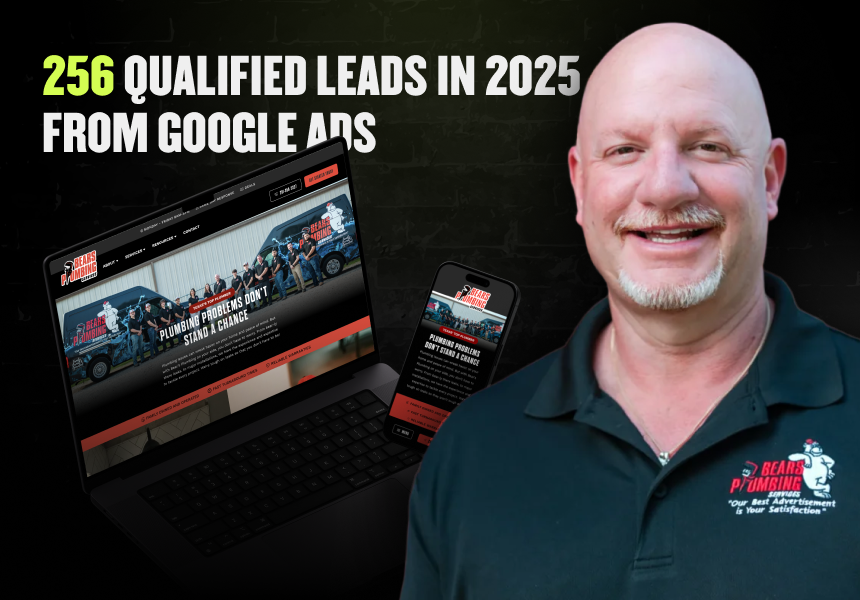
A plumbing company we work with, Bear’s Plumbing, shows what happens when Google Ads are managed for control instead of clicks.
Their goal wasn’t cheap leads. It was project-ready demand at scale, homeowners actively looking to book real plumbing work, including high-intent services like water heater replacement. To get there, the focus stayed on intent filtering, seasonality, and protecting spend as volume increased.
Campaigns were structured tightly, optimized continuously, and paced deliberately.
The result:
- 256 marketing-qualified leads generated in 2025
- $226 average cost per project-ready lead
- $124 average cost per conversion
- $6,345 monthly budget managed without volatility
No spikes. No chaos. Just a system built to scale demand without sacrificing margin.
View the full Bear’s Plumbing Google Ads case study →
Cost Per Lead Expectations: Why the Number Rarely Tells the Truth
Cost per lead is usually the first metric contractors look at. It’s also the easiest one to misunderstand.
On the surface, CPL feels objective. Lower looks better. Higher feels risky. But in home services, CPL without context is one of the fastest ways to make the wrong call about your ads.
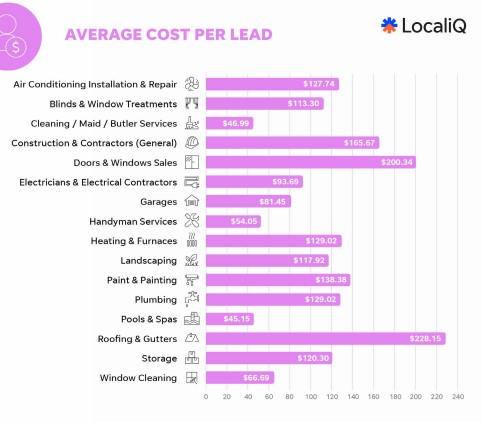
What CPL Really Looks Like in Home Services
Across the industry, Google Ads average around $90.92 per lead. That number climbs quickly for urgent services. Emergency plumbing, for example, often sees $15 to $30 per click, which naturally pushes lead costs higher.
Looking at the broader picture:
- Average CPL for B2C home services lands around $144
- B2B home services trend closer to $181
Those figures are actually lower than many other sectors. The difference is that home services are extremely sensitive to waste. A small drop in lead quality can erase profitability fast.
Why CPL Varies So Much, Even in the Same Market
Two contractors can advertise in the same city and see completely different CPLs. That’s normal.
CPL is shaped by:
- Which services you promote
- Emergency versus non-urgent intent
- How tight or broad your targeting is
- Market competition at that moment
- Seasonality and weather
- How quickly leads are answered and qualified
This is why chasing someone else’s “good” CPL number usually backfires. You’re not running their operation.
Cheap Leads Often Cost More in the Long Run
Lower CPL feels like efficiency. It often isn’t.
Cheaper leads usually come from broader targeting and looser intent. They bring more price shoppers, wrong-service calls, and people who were never ready to book. Over time, this is how broken home service lead quality creeps in. Phones stay busy, but booked jobs don’t move.
A higher-cost lead that closes is almost always cheaper than a low-cost lead that wastes time.
Why LSAs Can Look Efficient and Still Underperform
On paper, LSA marketing looks clean. You pay per lead, not per click, and your business appears at the very top of search results.
That works well when operations are tight and demand is steady. But LSAs don’t account for call handling, service mismatch, or follow-up gaps. If leads aren’t answered or qualified properly, the real cost shows up later in lost time and missed revenue, even if CPL looks fine.
Why Google Ads Often Cost More and Perform Better
Google Ads tend to show higher CPLs upfront because they expose the cost of intent more directly.
With the right structure, Google Ads allow you to:
- Focus on high-value services
- Filter searches before the click
- Control where and when you appear
- Pre-qualify prospects through messaging and landing pages
You may pay more per lead, but you usually waste less effort per lead. For installs, replacements, and growth campaigns, that difference matters.
Why CPL Alone Is the Wrong Scoreboard
Comparing CPL between platforms without context leads to bad decisions.
LSAs capture existing demand.
Google Ads shape and filter demand.
Demand gen ads operate earlier in the buying journey and should not be judged by CPL at all.
Different roles. Different expectations.

What to Track Instead of Fixating on CPL
CPL is a signal, not the goal.
What actually matters is what happens after the lead comes in:
- Booked calls
- Show rates
- Close rates
- Revenue per job
- Cost per booked job
- Cost per acquired customer
When you track outcomes instead of just lead cost, paid media stops feeling unpredictable. The numbers start to align with reality, and decisions become clearer and calmer.
“Bad Leads” Aren’t Random. They’re a Signal.
Every contractor reaches this moment.
The ads are live. The phone rings. But the jobs don’t follow.
So the default conclusion becomes simple.
The leads are bad.
In reality, bad leads are almost never random. They are a signal that something in the system is misaligned.
Most quality issues start with mismatched intent. Ads pull in people who are still researching, comparing prices, or trying to understand a problem. Your business, meanwhile, is built to book work now. When intent and expectation don’t line up, every call feels like friction instead of opportunity.
A few common patterns show up again and again:
- Searches that signal curiosity, not urgency
- Customers shopping for prices when you sell expertise
- Service requests your team doesn’t really want to run
Targeting usually makes this worse. Broad keywords, wide service areas, and generic messaging invite everyone instead of the right people. Volume increases. Quality drops. On paper, the campaign looks active. In practice, it feels noisy.
Then the click happens, and the next weak point takes over.
Weak landing pages don’t guide or filter. They leave visitors unsure of what happens next. That uncertainty turns into vague phone calls and low commitment. This is why home service websites that convert focus on clarity, not creativity. They set expectations before the call ever comes in.

From there, most businesses treat every lead the same.
Emergency calls, low-margin jobs, and high-value installs all land in the same queue. Nothing is prioritized. No filters exist. The team reacts instead of qualifying. That chaos turns decent demand into wasted effort fast.
Follow-up is the final leak.
Missed calls. Delayed callbacks. No clear ownership. A homeowner who was ready to book at 10:00 is gone by 10:30. By the time someone reaches them, the lead gets written off as “bad,” even though the problem was speed, not intent.
Ads Don’t Work Alone. They Work in a System.
Paid ads often take the blame when results feel off. High costs. Low trust. Inconsistent conversions.
Most of the time, the problem isn’t the ads themselves. It’s that they’re being forced to carry the entire load.
Capturing Demand vs. Creating It
Paid ads don’t create demand. They step in at the moment someone is ready to act.
SEO does the slow, compounding work. It builds visibility, authority, and familiarity over time. By the time a homeowner searches today, there’s a good chance your brand has already been seen somewhere else. Ads simply intercept that decision moment.
This is why ads convert better when SEO is strong. A business that shows up organically, in maps, and in paid placements feels established. That perceived legitimacy reduces hesitation and increases conversion rates.
This is also where PPC and LSAs work together. LSAs dominate the top of the page for trust-driven, high-intent searches. Google Ads support that presence by capturing more specific queries, protecting your brand, and filtering intent. Used together, they expand coverage without cannibalizing each other.
What Happens After the Click Is What Matters Most
Social proof doesn’t stop at the ad.
Reviews, consistent branding, photos, and recognizable messaging all carry into the decision. When someone clicks and already trusts the business, they hesitate less. That trust directly affects performance and can even influence Google Ads cost for contractors by improving engagement and conversion signals.
Then the website takes over.
Ads bring attention. Websites close the loop. A strong site sets expectations, explains services clearly, and guides the right customers forward. A weak one turns paid clicks into confused calls and low-quality leads.
This is why paid media has to be evaluated as part of a system. Ads, SEO, social proof, and the website all reinforce each other. When one piece is weak, everything feels more expensive than it should.

Google Ads, LSAs, or Both? Answer These Questions First.
If paid ads have felt confusing or disappointing, it’s usually because the wrong channel was chosen at the wrong time.
Not because you did anything “wrong.”
Because the business and the platform weren’t aligned.
That misalignment is exactly why benchmarks matter before decisions. Numbers without context cause overreaction. Context turns them into clarity.
The infographic below gives you a quick reality check on typical home services ad benchmarks across Google Ads and Local Service Ads. Not as a promise. As a reference point.
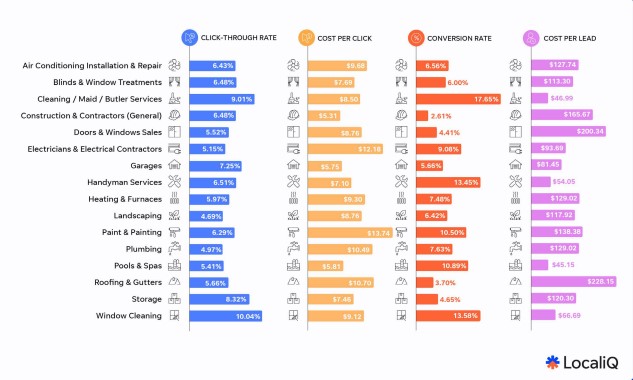
Use it to ground your answers as you go through the questions. If your performance feels far outside these ranges, it’s often a sign the channel, setup, or timing isn’t aligned with your business yet.
1. What Stage Is Your Business Actually In?
Be honest.
- Are you still trying to stabilize lead flow month to month?
- Or are you trying to control where growth comes from?
If your priority is consistency and predictability, LSAs often fit better early. They capture demand that already exists and require less upfront strategy.
If your priority is intentional growth, service mix control, or expansion, Google Ads become hard to avoid. They give you levers instead of surprises.
If you’re past survival mode and into optimization mode, the answer usually isn’t either or. It’s both, used differently.
2. How Much Volatility Can You Tolerate?
Every ad channel has a learning curve.
Ask yourself:
- Can you handle a few weeks of testing and adjustment?
- Or do you need leads coming in immediately to keep crews busy?
LSAs tend to smooth volatility because Google throttles volume for you. Google Ads expose volatility early but reward patience with control.
If short-term swings cause stress, LSAs may feel safer. If you can absorb testing, Google Ads open more doors.
3. How Competitive Is Your Market?
Look at your search results.
- Are LSAs dominated by companies with hundreds of reviews?
- Are you struggling to rank organically?
- Do competitors show up on your brand name?
In crowded markets, LSAs can become a visibility ceiling. Google Ads offer more ways to compete through messaging, service focus, and geography.
In quieter markets, LSAs can punch above their weight with less effort.
4. Can Your Team Handle Volume Without Leaking Revenue?
This is the question most owners skip.
- Are calls answered quickly?
- Are leads qualified consistently?
- Is follow-up tight?
LSAs can flood your phone. If your internal process isn’t tight, that volume turns into waste.
Google Ads allow more filtering before the call, but only if they’re built correctly.
If your sales process is loose, LSAs will expose it. If it’s disciplined, Google Ads will amplify it.
5. What Does “Growth” Mean Right Now?
Growth isn’t just more leads.
Ask yourself:
- Do you want more emergency calls?
- More installs and replacements?
- Expansion into new areas?
- Stronger brand protection?
LSAs are great at capturing urgent demand. Google Ads are better at shaping demand around specific services and long-term goals.
If you don’t define growth clearly, any platform will feel disappointing.
6. Do You Want Simplicity or Control?
This is the tradeoff no one escapes.
LSAs offer simplicity and visibility.
Google Ads offer control and scalability.
If you want low friction and fewer knobs, LSAs make sense. If you want levers you can pull as the business changes, Google Ads earn their keep.
The Paid Media Mistakes That Quietly Kill Results
Most paid media failures in home services don’t come from bad platforms. They come from repeatable mistakes that show up across businesses, markets, and budgets.
Here are the ones that cause the most damage:
- Running ads without real conversion tracking
Clicks and calls get reported, but booked jobs don’t. Without revenue tied back to ads, optimization turns into guessing.
- Chasing volume instead of quality
More leads feel productive, until calendars stay light and teams burn time on low-intent calls.
- Ignoring negative keywords
Irrelevant searches slip in quietly and drain budget on people who were never going to book.
- Letting LSAs run unmanaged
Rankings, responsiveness, and service matching still matter. Treating LSAs as “set it and forget it” leaks money over time.
- Switching strategies too quickly
Campaigns get changed before patterns emerge, which resets learning and hides what was actually working.
- Judging success too early
Decisions are made on short-term noise instead of complete data, leading to emotional pivots instead of strategic ones.
None of these mistakes are dramatic on their own. That’s what makes them dangerous.
They don’t break campaigns overnight.
They slowly convince owners that paid ads don’t work.
What Paid Media Success Actually Looks Like (It’s Not What Most People Expect)
A successful paid strategy is rarely flashy.
There’s no overnight spike.
No magic setting.
No dashboard that suddenly fixes everything.
What works in home services looks more like a system than a stunt.
It starts with a setup phase, not instant results. This is where targeting is defined, tracking is put in place, and campaigns are built around real services and real business goals. Leads may come in, but the focus here is accuracy, not scale.
Then comes the optimization phase, where performance actually improves. Search terms are reviewed. Waste gets cut. Messaging gets refined. Budgets shift toward what’s converting. This is where consistency is built, not on day one.
Testing never stops. Ads, keywords, locations, and landing pages are constantly refined based on real behavior, not guesses. The goal isn’t volume. It’s predictability.
Tracking goes deeper than clicks and leads. Successful strategies track:
- Calls
- Forms
- Booked jobs
- Revenue tied back to campaigns
That’s the difference between reporting activity and measuring impact.
Just as important is communication. There’s a clear reporting cadence. Performance is reviewed regularly. Decisions are made with context, not emotion. When things shift, there’s a reason and a plan.
And despite what the hype suggests, tools don’t make this work. Process does. Platforms change. The future of LSAs and Google Ads will evolve. The fundamentals don’t.
Is Paid Media Actually Worth It or Is It a Distraction?
This question usually shows up after frustration.
The ads ran. The spend went out. The results felt unclear.
So the real question becomes simple. Is paid media helping, or is it just adding noise?
Paid ads work best when they amplify a business that already runs well. If you know which services make money, your team answers calls quickly, and follow-up is consistent, ads create momentum. They don’t fix the business. They multiply what’s already there.
Where paid media backfires is when it’s treated like a shortcut.
- Leads aren’t followed up
- Close rates swing unpredictably
- Crews are already stretched thin
In those situations, more traffic doesn’t solve the problem. It exposes it.
Budget reality matters more than most owners admit. Paid media isn’t a quick test or a one-week experiment. It needs enough runway to learn, adjust, and stabilize. If every dollar has to turn into profit immediately, ads will feel stressful even when they’re working.
Timing matters too.
If you’re still unsure what services you want to push or who your best customer really is, ads will feel noisy. Paid media rewards clarity and punishes indecision.
There’s a clear shift when businesses are ready. You know what a good lead looks like. Your calendar can handle more work. Growth becomes intentional instead of reactive.
Don’t Miss the Moment When Customers Are Ready to Call
Paid media isn’t about chasing attention.
It’s about being there when the decision is already happening.
When Google Ads and Local Service Ads are set up with intention, they stop feeling unpredictable. They stop draining budget. They start doing what they’re supposed to do: connecting ready-to-book customers with a business that’s prepared to win the job.
If you want clarity on whether Google Ads, LSAs, or both actually make sense for your business, Hook Agency can help.
Book a paid media strategy call with Hook Agency and get a clear, practical plan built around your goals, your market, and how your business really operates.
Because when demand shows up, you don’t want to guess.