You’ve been investing in SEO. You’ve heard it’s “a long game.” You’ve waited. But here’s the real question: how to tell if home services SEO is working?
If you’re a contractor or home service provider pouring time and money into search engine optimization, you deserve real results, not vague reports, fluffy rankings, or buzzwords.
This post cuts through the noise. We’re not just talking traffic and impressions, we’re talking leads, calls, and booked jobs. You’ll learn how to track what really matters, how to hold your SEO partner accountable, and how to spot red flags before they drain your budget.
Let’s break it down: simple, clear, and straight to what moves the needle.
1. Are the Phones Ringing More Than Usual?
One of the clearest signs your home services SEO is working is simple: more phone calls from potential customers.
But here’s the catch: website clicks don’t automatically mean you’re closing more jobs. Traffic is only valuable if it leads to real conversations and conversions.
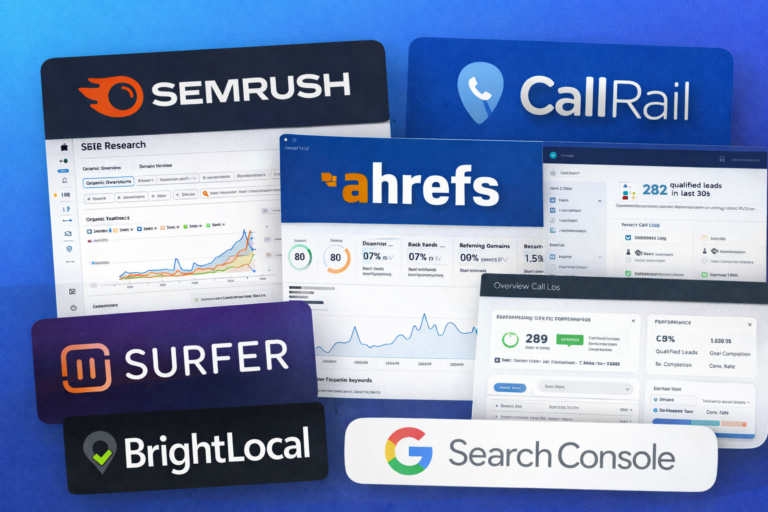
That’s where call tracking comes in. Tools like CallRail or Google Tag Manager can help you trace exactly where your leads are coming from. They assign dynamic phone numbers to different traffic sources, so you can pinpoint which calls are driven by organic SEO versus paid search or referrals.
But don’t stop there. You’ll want to know which service or location pages are triggering those calls. Is it your emergency HVAC repair page? Your main electrical services page? These insights help you fine-tune your SEO strategy to double down on high-performing content.
Also, don’t underestimate the power of local intent. In fact, 88% of consumers who perform a local search on their smartphone visit or call a business within a day. That means if your SEO is dialed in, people are reaching out fast.

2. Winning at “City + Service” Searches
If you’re pouring time and money into SEO, you want to make sure you’re not just ranking but ranking for the right things. That’s where “[City] + [Service]” keywords come in.
These are the gold-standard search terms that bring in ready-to-buy local traffic, like:
- “Minneapolis roof repair”
- “Austin drain cleaning”
- “Denver furnace installation”
They show strong intent—someone is actively looking for your exact service in your exact area.
Why “National Rankings” Can Be Misleading
It’s tempting to get excited about ranking for broad terms like “roofing tips” or “best HVAC brands.” But these don’t always lead to paying customers, especially if the traffic is national or purely informational.
Instead, double down on local keywords that match your actual service areas and offerings. These tend to convert more often and are easier to dominate than national-level keywords.
Use tools like:
- Ahrefs or SEMrush – to track keyword rankings by location
- Google Search Console – to monitor real impressions and clicks from local search queries
- Local Falcon or BrightLocal – to visualize how you rank in specific zip codes
3. Is Your Organic Traffic Growing or Just Treading Water?
One of the most telling signs of whether your SEO is working is a steady climb in organic traffic.
Tracking monthly changes gives you a clearer view of whether your site is gaining momentum or stuck in place. Look at the Organic Traffic segment specifically, and don’t forget to:
- Filter for local traffic only by setting up geographic filters in GA4
- Exclude branded searches if possible to measure true discovery
- Compare traffic to the same time last year to account for seasonality
Check which pages are bringing in visitors. Are they hitting your core service pages and local landing pages, or just blog posts? If your traffic is growing but not leading to calls, it might be time to optimize conversion paths or review content intent.
Some services naturally trend during certain times of the year. Landscaping, HVAC repair, and roofing often follow the seasons. So it’s important to compare month-over-month and year-over-year to understand if a boost is due to your SEO strategy or just spring weather.
When you combine local filtering with page-level analysis, you get a sharper picture of what’s really working. And if you’re wondering where Google Maps fits in the bigger picture, consider whether investing in Google Maps SEO is worth the money for your business, especially when local visibility is the goal.
4. What’s Your Google Business Profile Really Saying?
Your Google Business Profile (GBP) is often the first thing potential customers see, sometimes even before your website. So if you’re not checking your GBP Insights, you’re missing out on key local SEO signals.
Start With the Basics
Dive into your GBP dashboard and review:
- Profile views – Are more people finding you in local searches?
- Call volume – Are those views turning into phone calls?
- Map direction requests – Are people actually heading to your location?
These numbers tell you how often your listing is converting visibility into real-world action.
To stay competitive, make sure you’ve optimized everything—your photos, service categories, business description, and even the Q&A section. Need help keeping your listing fresh and secure? Here’s how to add a user to your Google Business Profile so your SEO team or agency can help manage it.
For a deep dive into GMB strategy, watch this quick video:

5. The Leads Are Coming In, But Are They Any Good?
Traffic is up, phones are ringing, form submissions are happening, great! But here’s the real question: Are those leads actually worth your time?
Not all leads are created equal. It’s one thing to get 50 calls a month. It’s another thing if 40 of them are from people asking about services you don’t offer or just price shopping without any intent to hire.
Build a Feedback Loop
To truly gauge SEO success, you need qualitative feedback, not just volume metrics. That’s where feedback loops come in. Train your front office or sales team to:
- Log every call – What was the caller asking about?
- Tag lead quality – Was it a serious inquiry or a tire-kicker?
- Record service type requested – Are they asking for the services you’re actively promoting?
Even a simple spreadsheet or CRM note can reveal powerful trends.
6. Are You Showing Up in the “Local 3-Pack”?
The Local 3-Pack is prime digital real estate. When someone searches for a plumber, roofer, or HVAC pro in their area, Google often shows three map listings right at the top, above even the organic results.
Why It Matters
These top three map results aren’t chosen randomly. Google uses a mix of:
- Distance – How close your business is to the searcher
- Relevance – How well your GBP matches the search
- Prominence – Things like review count, star rating, and backlinks
Even if your website is doing well organically, Map Pack visibility is a separate, but equally critical, battleground.
How to Improve Your Map Pack Presence
- Keep your Google Business Profile updated (with categories, service areas, and hours)
- Encourage more 5-star reviews, especially those that mention specific services and cities
- Post regularly on your GBP and add new photos often
- Build local backlinks and citations to increase your business’s online prominence

7. Don’t Just Track, Take Action
Tracking SEO metrics is great, but what you do with that data is what really moves the needle. Too many home service businesses stop at reporting. If you want results, you need to translate insights into strategy.
- Refine underperforming content by identifying which pages are getting impressions but not clicks
- Improve your calls-to-action (CTAs) based on user behavior, where do they drop off?
- Double down on keywords that are converting by expanding content around those terms
Ready to Rank, Ring, and Revenue?
At the end of the day, SEO is about people finding your business and deciding to trust you. If your local SEO efforts aren’t turning into phone calls, quote requests, or boots-on-the-ground jobs, it’s time to look deeper.
Remember, traffic is just the beginning. What really matters is showing up when it counts, building credibility instantly, and guiding the right people to say yes to your services.
Need help making that happen?
Schedule a call with Hook Agency to get real SEO that brings in leads, not just rankings.
Let’s make your website work as hard as you do.