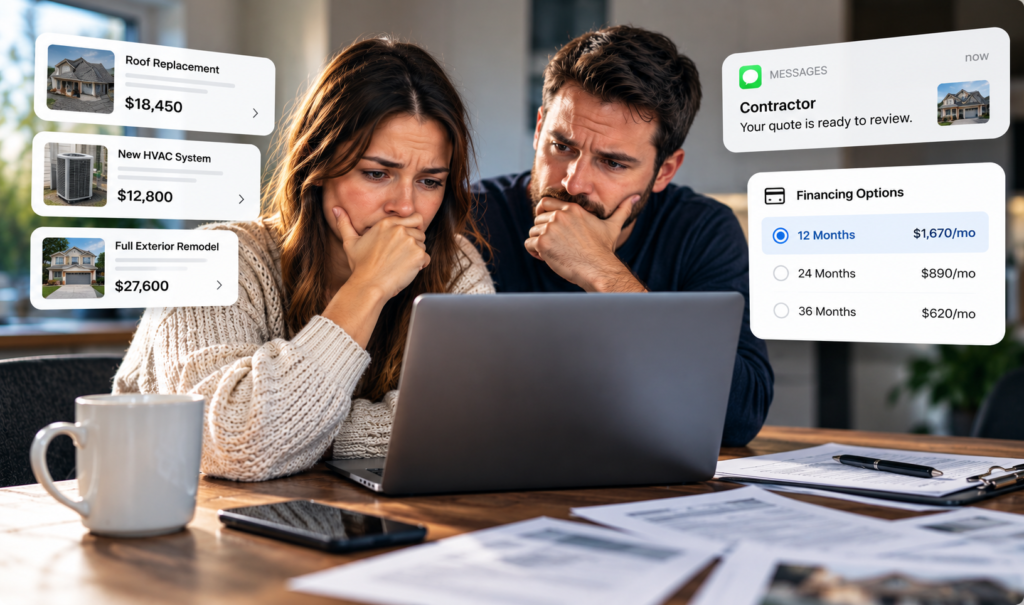

There is a gap showing up in contractor pipelines right now that nobody wants to name out loud. Estimates are going out. Follow-up calls are happening. The homeowner says they are interested. And then nothing. Not a hard no. Not a reschedule. Just silence, or a vague “we are still thinking about it” that stretches from two weeks into two months.
I see this pattern across dozens of home service companies Hook Agency works with. The leads are coming in. The jobs are getting quoted. But somewhere in the middle of that process, deals are dying. And the culprit is not bad marketing.
The real driver is homeowner buying hesitation, and in 2026 it has a specific shape. The contractors who understand that shape are closing. The ones who do not are busy generating estimates that go nowhere.
Here is what the data shows:
- 77% of homeowners are delaying or scaling back projects because of rising costs
- 30% plan to spend less on home improvement over the next 12 months, the first negative reading in five consecutive quarters
- 27% have already received a quote for a project they have not started
- 66% still plan a major home investment within five years, the highest level Angi has ever recorded
That last number is the whole story. The intent is there. The money problem is real but not fatal. What kills deals is how contractors respond to hesitation when it shows up.
The Numbers Make It Clear: This Is Not in Your Head
When contractors tell me their closing rate has dropped, the first instinct is to blame the economy in a vague way. But the data is more specific than that, and understanding the specifics is what tells you where to intervene.
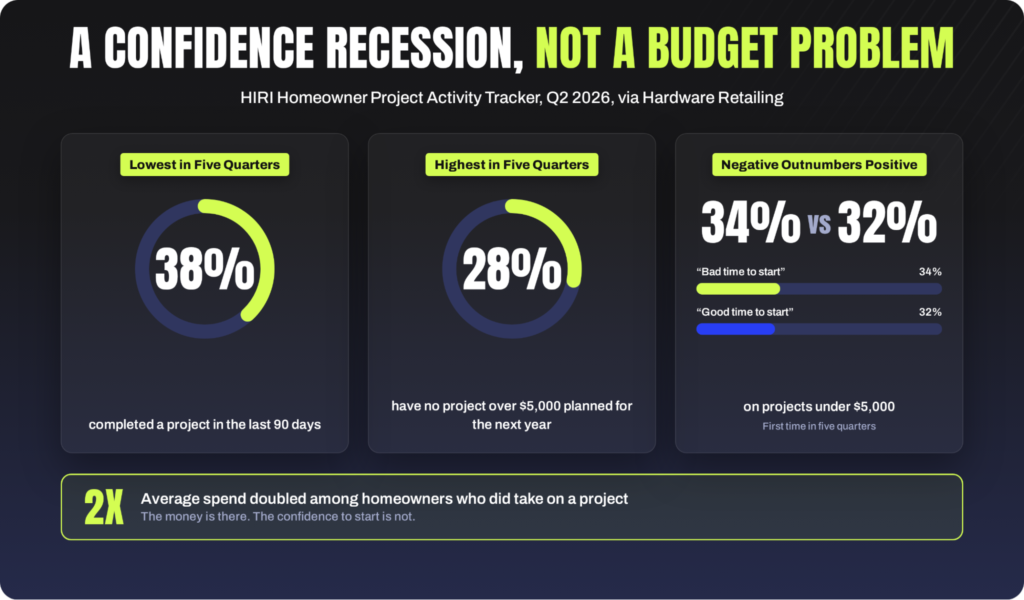
According to Hardware Retailing’s HIRI 2026 data, 38% of homeowners completed a project in the last 90 days, the lowest in five quarters. 28% have no project over $5,000 planned at all, the highest share in the same period. And 34% said it is a bad time to start even a sub-$5,000 project, the first quarter where negative sentiment outnumbered positive in five straight quarters.
That is a confidence recession, not just a budget problem. Two things are happening at the same time and they pull in opposite directions.
The Scale-Down Effect
It is not just stalling. When homeowners do move forward, they trim. 73% of contractors report their customers at least sometimes ask for a scaled-down version of the originally quoted project. That is the homeowner trying to stay in the game without committing to the full scope.
On top of that, 43% of homeowners have already exceeded their original budget on a past project. So they come into the next conversation already bracing for sticker shock, already prepared to ask if you can do it cheaper, already skeptical of the final invoice.
The Paradox Underneath It All
Here is the part that should actually give you confidence: despite all of this hesitation, 56% of homeowners plan to begin or continue a project within the next three months. And more than 1 in 4 are actively accelerating projects ahead of expected price increases.
The market is not gone. It is paused. The homeowners in your pipeline are mostly still buyers. They just need a reason to decide now instead of later.
The Three Real Reasons Homeowners Are Stalling
When contractors diagnose homeowner hesitation, they almost always call it a price problem. Sometimes it is. Most of the time, price is just the surface the actual issue is attached to. Underneath that surface, there are three distinct forces working against the close, and each one requires a different response.
Macro Pressure: Rates, Tariffs, and the Lock-In Effect
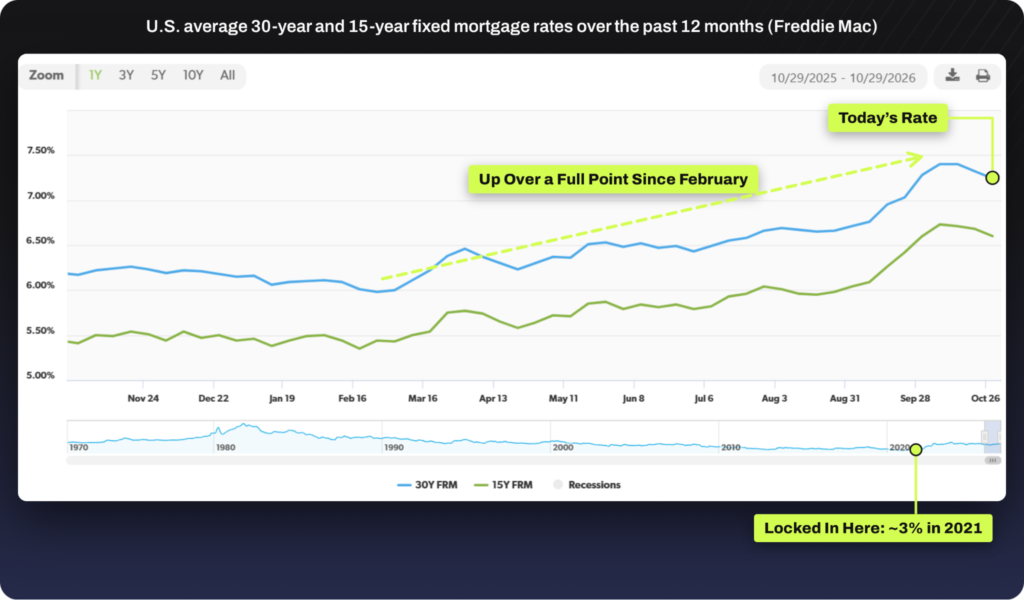
Elevated mortgage rates have frozen the housing market. Homeowners who refinanced at 3% have no interest in selling and buying again at today’s rates. So they stay put. That should be good news for contractors, and in theory it is: 72% of homeowners plan to stay in their current home long-term, and 69% live in homes over 20 years old. The need is there.
But staying put does not automatically mean spending. Add tariff-driven material cost increases, general economic uncertainty, and a homeowner who stretched their budget during the 2021 to 2023 renovation boom, and you get someone who is motivated but not moving. The barrier is financial uncertainty, not lack of intent. Remove the uncertainty and deals close.
Psychological Freeze: Confusion Triggers Delay
When people do not know what to do, they do nothing. When a homeowner gets an estimate for $18,000 with no frame of reference for whether that is reasonable, no clarity on payment options, no sense of what happens next, they default to “let me think about it.” That is not an objection. It is a pause while they try to reduce the uncertainty on their own.
Contractors who reduce confusion at the estimate stage, by walking through scope, process, and payment options clearly, see shorter sales cycles. Not because they are selling harder. Because they are making the decision feel manageable.
The Trust Gap
In a hesitant market, homeowners get extra scrutiny-prone. They are not just wondering if they can afford it. They are wondering if you are the right contractor, if the price is fair, if they will end up with the same bad outcome they heard about from a neighbor.
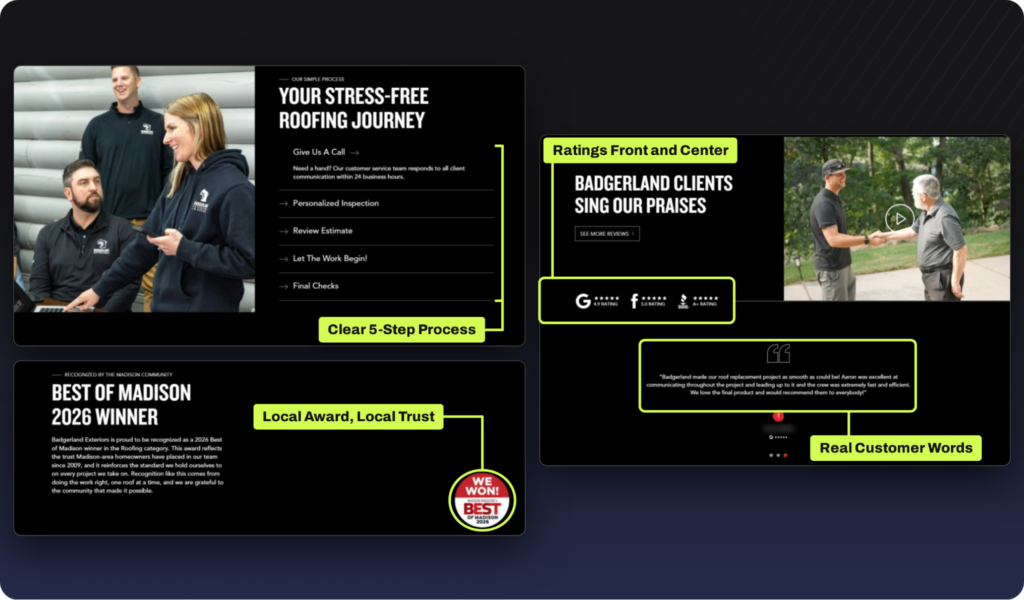
68% of homeowners get additional quotes when pricing is higher than expected. That multi-quote behavior lengthens your sales cycle and introduces competitors into a conversation you thought you were winning. The solution is not to price lower. It is to show up with enough credibility, through strong reviews and consistent branding, that the homeowner does not feel the need to validate your number elsewhere.
Where the Decision Dies (And When)
Understanding homeowner hesitation in the abstract is one thing. Knowing the exact moment in the process where it is happening is what lets you actually fix it. Most of the time it falls into one of three windows.
Before the First Call
Some hesitation happens before the homeowner ever picks up the phone. They found you, looked at your website, looked at your reviews, looked at your social presence, and went somewhere else. The hesitation was pre-verbal.
A solid home services marketing strategy addresses this directly. If your site has thin or outdated reviews, no sense of your process or your past work, and nothing that signals professional trust, you are losing homeowners before the conversation starts. 41% of homeowners have delayed a repair that ended up costing more money later. Many of them already know inaction is expensive. What they need is a contractor they trust enough to move forward with.
After the Estimate
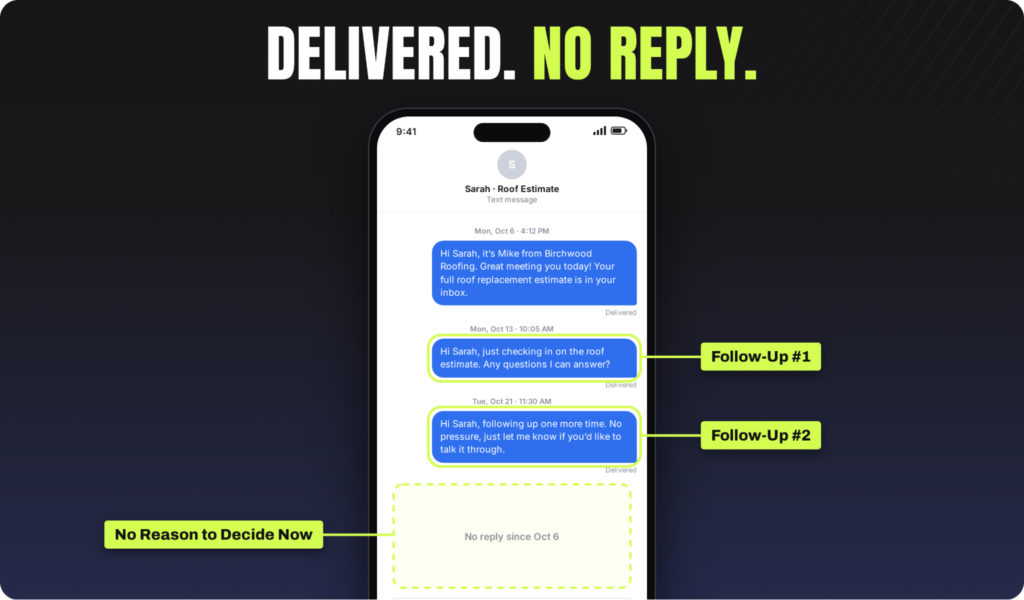
This is where I see the biggest drop-off. The estimate is delivered. The homeowner seemed engaged. Then the follow-up texts go unanswered.
What is actually happening is not a change of mind. It is a decision that feels too big to make quickly, and the contractor has given the homeowner no structural reason to decide now instead of in three months. Urgency does not need to be manufactured. Showing the real cost of delay, framed honestly and without pressure, is legitimate urgency. “If you wait until spring, material costs will likely be higher and I cannot guarantee the same crew availability” is not a scare tactic. It is information.
The “Let Me Think About It” Trap
“Let me think about it” is the most expensive phrase in home services. Most contractors do one of two things when they hear it: agree and leave, or ask why and get a vague answer that leads nowhere.
The better move: normalize the hesitation while removing the underlying obstacle. “Of course, what would make this feel more manageable for you?” That question changes the dynamic. Instead of waiting for them to come back, you are co-solving. And more often than not, what makes it manageable is knowing they do not have to pay it all upfront.
What the Cost of Waiting Actually Is (And How to Show It)
Most contractors avoid the cost-of-delay conversation because it feels like pressure. It does not have to be. Used correctly, it is just honest information that helps the homeowner make a decision that is already in their best interest.
41% of homeowners have delayed a repair that ended up costing more money later. A roof quoted at $12,000 in March does not stay a $12,000 problem. A slow leak that goes unaddressed becomes $12,000 for the roof plus $8,000 in water damage. The homeowner who is still thinking about it in October is often looking at a much larger bill by January.
The contractor’s job is not to scare the homeowner. It is to give them real information. The cost of inaction is a fact, not a sales pitch. Present it that way.
The framing that works is future-focused and collaborative. Instead of “you need to decide soon,” try: “We are quoting this at today’s prices. I cannot hold that number past a certain point. What would help you feel comfortable moving forward?” That respects the homeowner’s intelligence, acknowledges the real market context, and invites them into a problem-solving conversation rather than putting pressure on a decision.
What Contractors Can Do Right Now
The contractors winning in this environment are not doing anything exotic. They are doing three specific things consistently, and each one addresses a different layer of the hesitation problem.
Make the Financing Conversation a Trust Signal
62% of homeowners say they are more likely to move forward when financing or payment plan options are offered. That number alone should change how contractors approach the estimate conversation.
The word “financing” carries baggage. Contractors worry it makes them seem desperate or like they are taking advantage of someone. That framing is backwards. Offering financing is not a signal that the homeowner cannot pay. It is a signal that you run a professional business with its infrastructure sorted out. Hook Agency founder Tim Brown recorded a conversation with financing sales trainer Jeff Cronin specifically on this:
A few of the principles from that conversation that I keep coming back to:
- Never say “afford.” Use “manageable” instead. “Can you manage $280 a month?” is a completely different conversation than implying someone cannot cover your price.
- Offer financing proactively on anything over $1,000. If you wait for them to ask, you have already lost a percentage of deals that could have closed.
- Every five-digit price gets a three-digit monthly payment next to it. $15,400 becomes “$15,400 or about $290 a month.” One is a decision, one is a commitment.
- Present options one at a time, top-down. The middle option closes 70% of the time statistically. Do not spread all three on the table at once.
- The $300/month threshold matters. Above that, objections increase sharply. Structure the presentation to keep the monthly figure below it when you can.
Reduce Confusion at the Estimate Stage
Every element of the estimate that feels unclear creates hesitation. Walk the homeowner through scope in plain language. Name what is included. Tell them what happens after they sign: who shows up, when, what the process looks like.
59% of homeowners said cheaper materials would make them more likely to act. That is a data point that says homeowners are actively looking for ways to make the decision feel manageable. Offering a tiered scope, a phase one and phase two, or material alternatives at different price points gives the homeowner agency and keeps them in the conversation.
Stay Visible During the Delay
When a homeowner goes quiet after an estimate, most contractors interpret it as a no. It often is not. The homeowner is still in the market. Whoever stays visible without being annoying is who they call when they finally decide.
This is where your home services social media strategy earns its keep. Showing recent projects, before-and-afters in your service area, useful content for homeowners thinking about the kind of work you do, all of this keeps you present during the consideration phase. Nextdoor advertising for contractors gives you a channel to stay visible in local conversations without waiting for referrals to happen organically.
Frequently Asked Questions
Why are homeowners hesitating on home improvement projects in 2026 when intent is still high?
Intent and action are two different things. 66% of homeowners plan a major investment within five years, but 77% are currently delaying because of rising costs. The hesitation is not a lack of desire. It is a combination of financial uncertainty and the psychological weight of a large decision in an unstable economy. Homeowners who are moving forward tend to be the ones who have been given clear cost information, real payment options, and a contractor they trust.
What is the most common reason a quote goes cold after the estimate?
The most common reason is not price, even when the homeowner says it is. It is the absence of a clear next step and a missing conversation about payment flexibility. 68% of homeowners who feel the price is higher than expected go get additional quotes. Contractors who walk through payment options at the estimate appointment, before the homeowner asks, see better close rates and shorter decision timelines.
Should I offer financing for smaller jobs?
Yes, for anything over $1,000. Offering financing proactively frames you as a professional operation and removes a potential obstacle before it becomes a reason to delay. 62% of homeowners say they are more likely to proceed when payment plan options are offered. The option positions itself as standard business practice, not a reaction to a hesitant buyer.
How do I stay top of mind when a homeowner is still deciding?
Consistency over frequency. A follow-up email or text at a natural interval with something useful, an active social presence in your local market, and visibility on platforms like Nextdoor. The homeowner who got your estimate is often still in the market. They are waiting for the moment when the timing, the budget, and the confidence align. Be the contractor they remember when that moment arrives.
What role does branding play in overcoming homeowner hesitation?
A larger role than most contractors realize. In a hesitant market, homeowners apply more scrutiny to every decision. A contractor with strong recent reviews, consistent brand presence, and a professional website crosses the trust threshold faster than one relying entirely on word of mouth. Making your branding iconic and recognizable is a conversion tool in an environment where the homeowner needs every reason to feel confident saying yes.