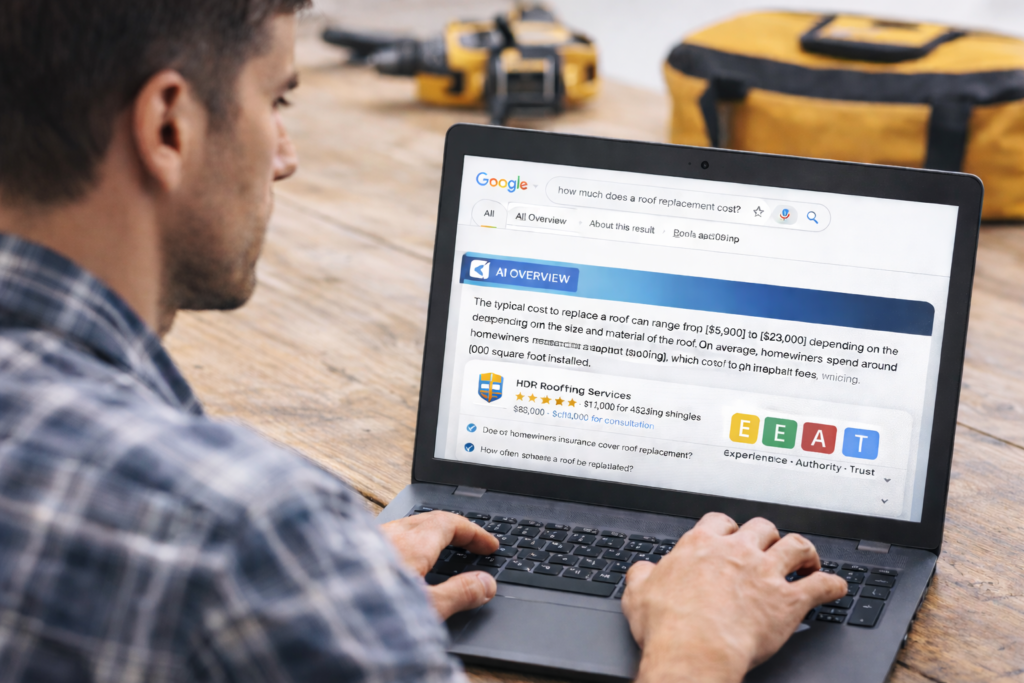

Search does not feel the same anymore.
Because it is not.
AI answers show up before rankings. Summaries decide who gets seen. And in many cases, the user never even reaches your website.
That shift has turned E-E-A-T in AI search from a background concept into the main filter. AI engines are no longer just matching keywords. They are deciding which brands they trust enough to speak on their behalf.
That is why some businesses appear everywhere in AI overviews while others with similar content disappear completely. It is not about who publishes more. It is about who looks credible, consistent, and experienced across the web.
This guide breaks down how brand authority and E-E-A-T actually show up in AI driven search results, what signals matter in 2026, and how home service brands can build trust faster without chasing outdated SEO tactics.
If AI is choosing the answer, your brand needs to be the one it recognizes.
Why AI Search Now Ranks Brands Before Pages
AI search changed what earns visibility. It no longer asks which page is best. It asks which brand is safe to trust.
From Pages to Brands
Traditional SEO could reward a single strong page. AI search does not work that way. It pulls answers from patterns across the web and favors brands that show up consistently in the same context.
If your brand feels isolated or one-dimensional, AI hesitates to surface it.
Why AI Summaries Favor Familiar Names
AI overviews are cautious by design. They favor recognizable operators because repeated brand presence lowers risk.
Authority now travels across your site, reviews, content, and external mentions. When those signals align, AI treats the brand as credible enough to reference.
This is the core of answer engine optimization for home service businesses.
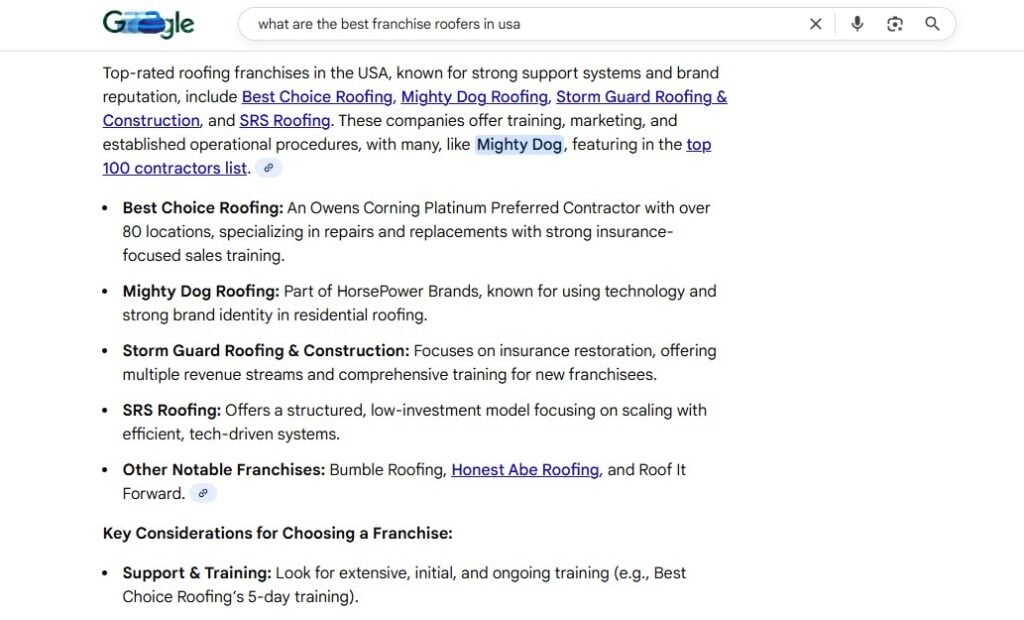
How E-E-A-T Gets Evaluated in Practice
AI evaluates behavior, not definitions.
- Repeated brand mentions matter more than keywords
- Consistency matters more than content volume
There is also a human layer. Search quality raters are trained to judge whether content demonstrates strong E-E-A-T. Their feedback helps search engines confirm whether algorithm changes are producing better results, which directly influences how AI systems learn what trustworthy content looks like.
When your brand sends the same signal everywhere, AI gains confidence. When it does not, visibility drops.

What Signals Actually Matter for E-E-A-T in 2026 And What No Longer Does
AI is changing search, but SEO still wins. Just not the version most people are still practicing.
The biggest shift is this. AI search engines are no longer trying to reward effort. They are trying to avoid risk. That is why E-E-A-T has moved from a guideline to the primary filter for visibility.
Google’s Search Quality Rater Guidelines make this clear. In the latest updates through 2025 and 2026, E-E-A-T is positioned as the main lens for evaluating content quality. Pages lacking clear experience, author credibility, or supporting evidence are increasingly scored Low or Lowest, especially in YMYL categories like home services.
Those guidelines expanded significantly, adding AI Overview examples and tightening definitions around trust and expertise. That matters because rater feedback helps train the systems that decide which brands AI feels safe summarizing and which ones get ignored.
The Signals That Actually Matter Now
Real-world experience signals
AI looks for proof that the advice comes from someone who has done the work. Not just written about it. Job examples, photos, explanations grounded in real situations all reinforce experience in a way generic content never can.

Brand depth, not content volume
Publishing more pages does not build authority. Covering a topic thoroughly does. Brands that go deep in their core services send clearer signals than brands chasing every keyword they can find. This is where AEO vs SEO becomes practical, not theoretical. SEO still matters, but answer engines reward depth and clarity over scale.

Reputation signals outside your website
AI does not trust websites that only vouch for themselves. Reviews, citations, consistent brand mentions, and external validation reinforce credibility far more than on page claims alone.
Visual proof and first hand evidence
Images, screenshots, real examples, and process breakdowns matter more than polished copy. They show effort, context, and authenticity. AI systems learn to favor this kind of content because raters consistently mark it as higher quality.
Structured expertise instead of generic blog posts
Clear service pages, well defined topic hubs, and content that answers real questions outperform broad blogs written to hit word counts. Structure makes it easier for AI to understand who you are and what you are qualified to answer.
What No Longer Moves the Needle And Why It Fails
Some tactics are not just ineffective now. They actively work against trust.
- Chasing word count without adding value
- Publishing for volume instead of clarity
- Obsessing over keyword density
- Scaling AI generated filler content
- Adding thin author bios with no real credentials
AI systems have been trained, in part through rater feedback, to discount this kind of content. It looks manufactured. It lacks accountability. It feels interchangeable.
That is exactly what AI search is trying to avoid surfacing.
This is why tracking AI search rankings matters going forward. Not just where pages rank, but whether your brand appears in AI overviews, summaries, and citations. Visibility now reflects trust, not just optimization.
How Home Service Brands Can Build E-E-A-T Faster
E-E-A-T does not grow from publishing more content. It grows from making real experience visible.
Most home service brands already have proof of expertise. Completed jobs. Customer feedback. Hard earned lessons from the field. The brands that win in AI search are the ones that surface that proof clearly and consistently.
The fastest ways to do that are simple.
- Turn real jobs into authority assets.
Job photos, short explanations of what was done, and why certain decisions were made all reinforce experience. This kind of detail signals real-world knowledge, which matters more than polished writing. It also increases the chances of appearing in AI overviews in local SEO, where practical experience gets prioritized.
- Use service pages as trust hubs.
Service pages should not just sell. They should explain. A strong service page shows how the service works, what problems it solves, and what results look like. When reviews, examples, and FAQs live together, AI can quickly understand what you do and why you are qualified to do it.

- Leverage reviews and case proof.
Reviews are authority signals. Detailed reviews tied to specific services reinforce trust. Case proof goes further by showing outcomes and decision-making, which helps separate real expertise from generic claims.
- Align content to real customer questions.
The fastest path to authority is answering what homeowners actually ask. Pricing concerns, timelines, risks, and comparisons carry more weight than broad educational content. This mirrors how AI selects answers and increases the likelihood of being referenced.
E-E-A-T Is Not A Checklist, It Is A Signal Stack.
AI search is not rewarding who publishes the most.
It is rewarding who looks credible everywhere AI looks.
That is why brand authority and E-E-A-T now decide visibility long before rankings do. Pages still matter. SEO still matters. But they only work when they support a brand that shows real experience, clear expertise, and consistent proof.
From our firsthand experience adapting SEO strategies for AI search, the brands that win are not chasing tactics. They are stacking signals. Real jobs. Clear service pages. Reviews that mean something. Content that answers real questions.
If your brand does not send a clear trust signal, AI will choose someone else to answer for you.
If you want to know whether your business is positioned to show up in AI search results or quietly get skipped, do not guess. Book a call to assess whether your brand authority and E-E-A-T signals are strong enough to win visibility in AI driven search.