
The short answer
The median electrician makes $63,190 a year ($30.38 an hour). The bottom 10% earn under $42,640 and the top 10% earn over $108,510 (BLS, May 2025).
- Government electricians earn the most at the median: $79,820
- Electrical contractors pay a median of $61,570
- Plumbers ($63,800) and HVAC techs ($61,010) earn about the same
- Jobs projected to grow 9% from 2025 to 2035
The median electrician in the U.S. makes $63,190 a year, or $30.38 an hour, according to the Bureau of Labor Statistics. The top 10% clear $108,510. Here’s how the pay breaks down, what moves it, and what that means if you’re the one signing the checks.
How much do electricians make?
- Median pay: $63,190 a year, $30.38 an hour (May 2025). Source: BLS
- Bottom 10%: less than $42,640. Source: BLS
- Top 10%: more than $108,510. Source: BLS
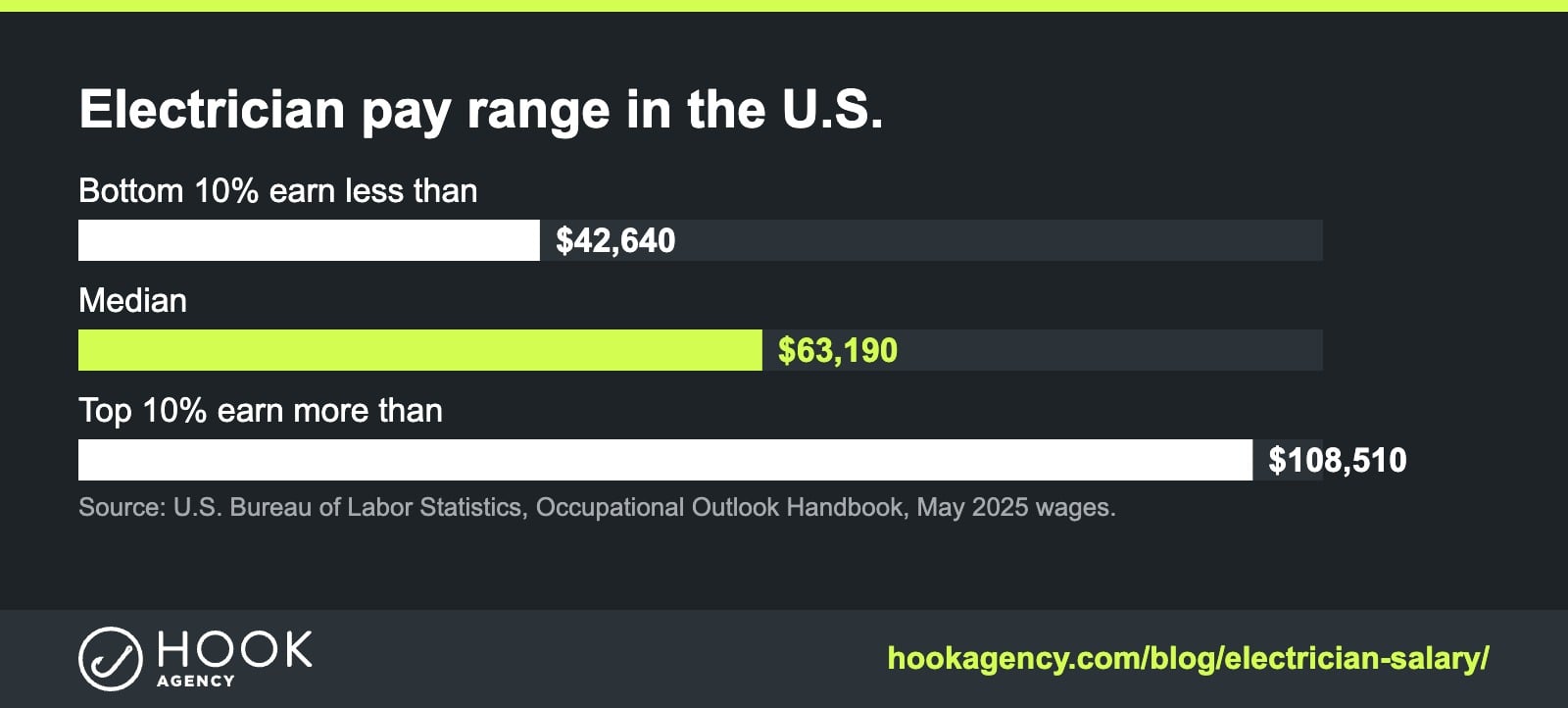
That spread is huge, and most of it comes down to license level, location, specialty and who the electrician works for.
Electrician salary by industry
Where an electrician works matters. Government and manufacturing jobs pay more at the median than electrical contracting.
- Government: $79,820. Source: BLS
- Manufacturing: $74,550. Source: BLS
- Electrical contractors and other wiring installation contractors: $61,570. Source: BLS
- Employment services: $57,760. Source: BLS
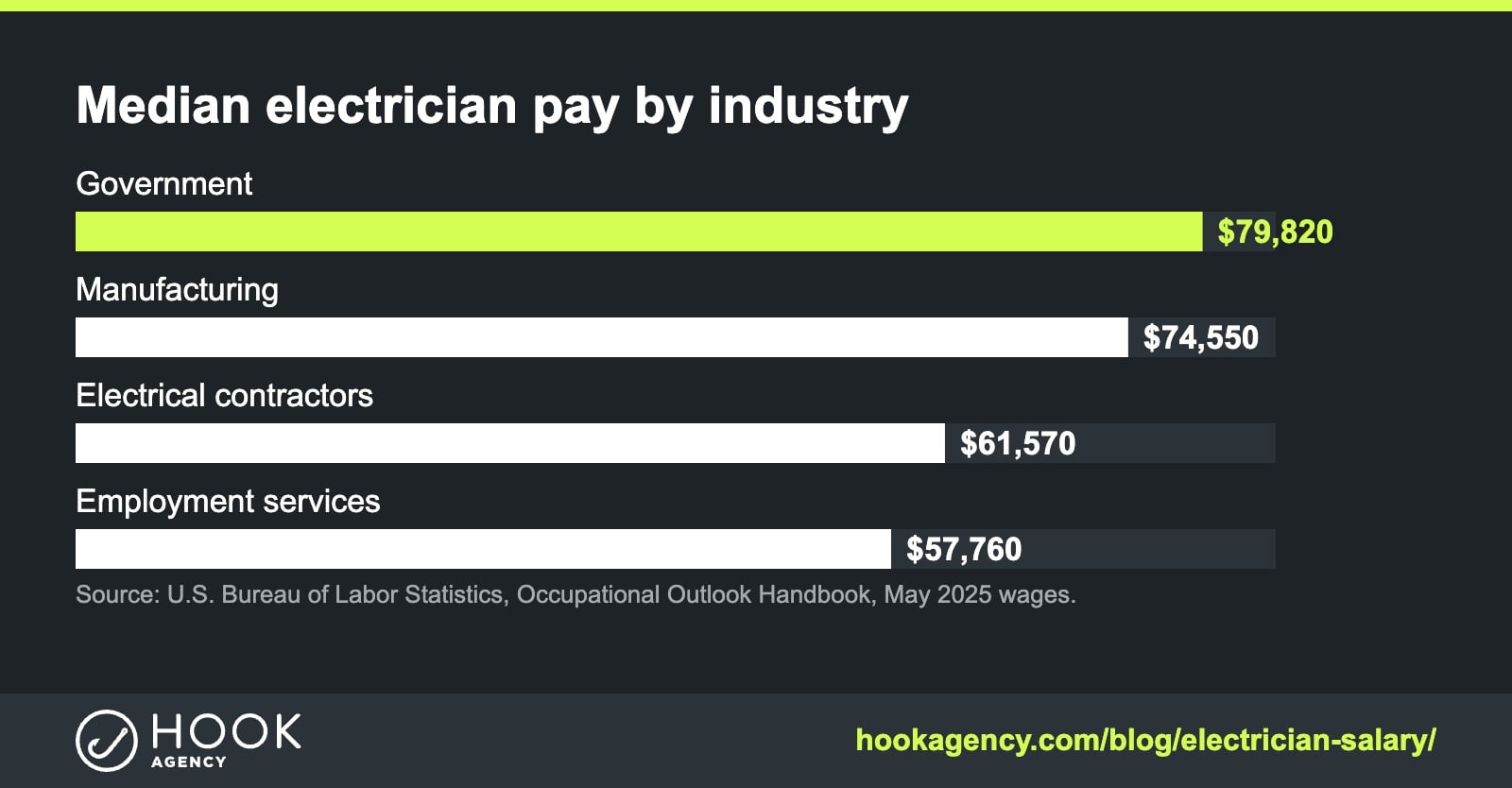
If you run an electrical contracting company, that’s your competition for talent: steady government and plant jobs that pay more at the median.
Electricians vs. plumbers vs. HVAC techs
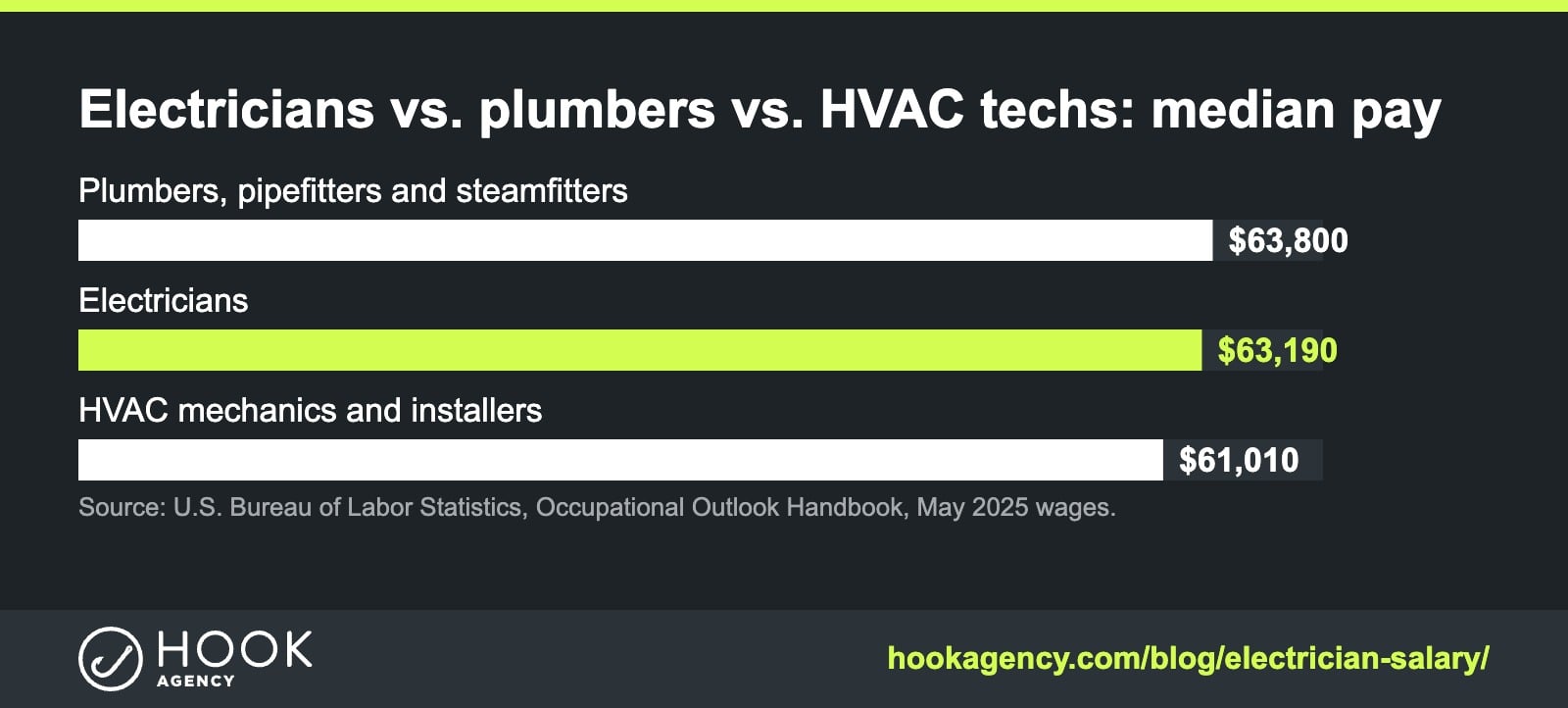
The three big trades pay about the same at the median. Plumbers, pipefitters and steamfitters: $63,800 (BLS). Electricians: $63,190. HVAC mechanics and installers: $61,010 (BLS).
- Leads from Google, Maps and AI search
- Nobody else is buying the same lead
- You own your website and ad accounts
“Hook Agency has been an incredible partner for our digital marketing growth.”
Kristin Sullivan, Bob’s ACFocused on the map? See Google Maps SEO
Apprentice vs. journeyman vs. master electrician pay
BLS doesn’t break pay out by license level, but the pattern in the trade is consistent: apprentices start at a fraction of journeyman pay and get raises as they log hours and pass tests. Apprenticeships typically run 4 to 5 years with about 2,000 hours of paid on-the-job training per year. Journeymen earn more, and master electricians, who can pull permits and run jobs, earn the most. Owners and specialists in high-demand work like commercial, industrial and service often land in that top 10%.
Is the electrician job market growing?
- Electrician jobs are projected to grow 9% from 2025 to 2035, much faster than average. Source: BLS
- About 72,700 openings are projected each year, mostly to replace workers who retire or change careers. Source: BLS
- There were about 821,000 electrician jobs in 2025. Source: BLS
What this means if you own an electrical company
Good electricians have options. If your pay is at or below the median and your shop is chaos, they’ll walk to a plant or a government job. The companies that keep their best people pay at or above market, keep their schedules full, and give techs a path to lead and master roles.
A full schedule is a marketing problem. When your phone rings steadily, you can afford to pay top-tier wages, and your techs aren’t sitting around waiting for work. That’s where we come in. See our guide to digital marketing for electricians and how to get more electrical contractor leads.
Frequently Asked Questions
How much do electricians make an hour?
The median is $30.38 an hour, according to the Bureau of Labor Statistics (May 2025).
How much do electricians make a year?
The median is $63,190. The top 10% make more than $108,510 and the bottom 10% make less than $42,640.
Do electricians make more than plumbers?
About the same. BLS puts the median at $63,190 for electricians and $63,800 for plumbers, pipefitters and steamfitters.
Is electrician a good career?
The outlook is strong. BLS projects 9% job growth from 2025 to 2035 and about 72,700 openings a year.