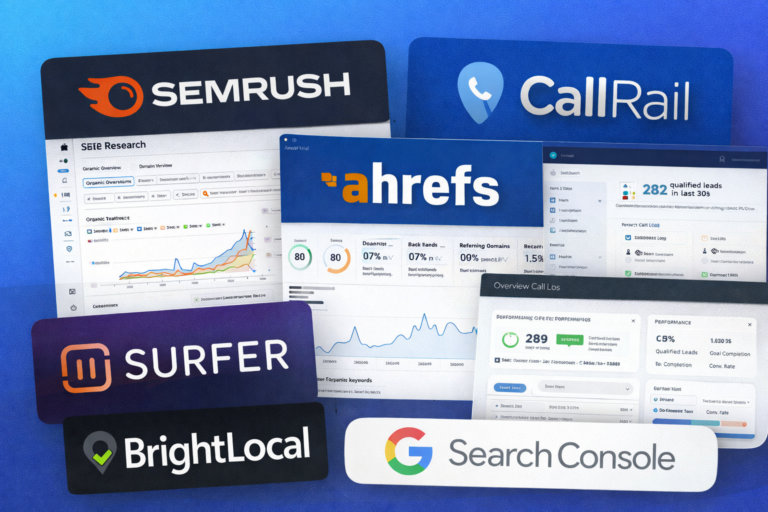

You got your monthly SEO report. Impressions are up 34%. The agency gained 47 new keyword rankings. Domain Authority moved from 28 to 31. Every chart trends upward. And somewhere in the back of your mind you are thinking: I have no idea if any of this is good.
That feeling is not a knowledge gap. It is a reporting problem.
We spend a lot of time in conversations with contractors who are getting reports that look impressive but cannot answer the one question that matters: are we getting more calls? Here is what I see most often:
- Reports that lead with impressions and domain authority instead of calls and leads
- No call tracking, so there is literally no way to know if organic search is producing phone calls
- Rankings for keywords homeowners do not actually search with buying intent
- A total absence of AI citation data, which is increasingly where homeowners find contractors in 2026
Here is the full breakdown.
The Core Problem With Most Contractor SEO Reports
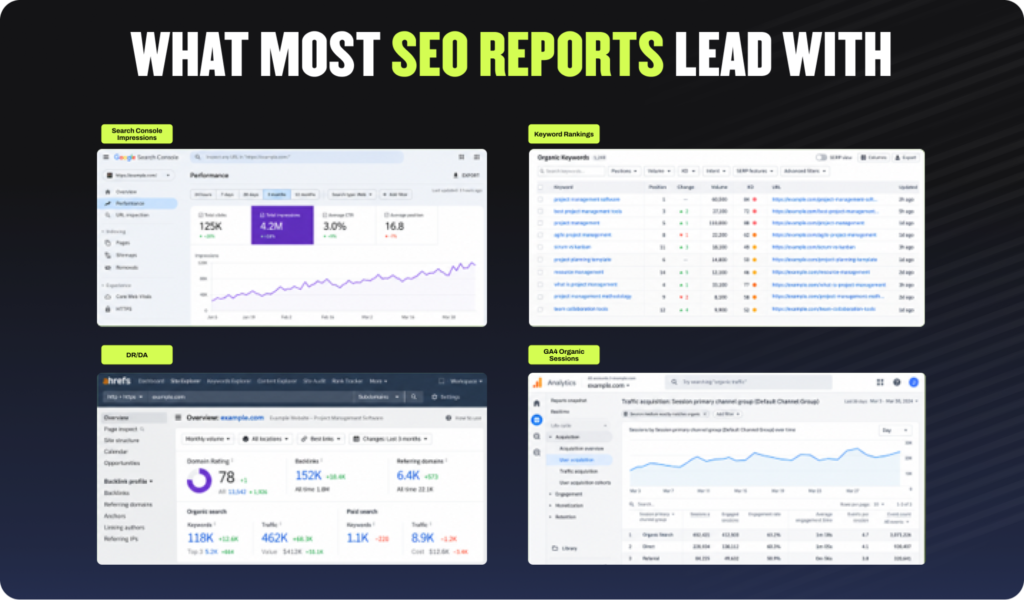
Most contractor SEO reports measure activity rather than outcomes. Activity that does not produce phone calls does not produce revenue. The problem is not that agencies are necessarily being deceptive. It is that the default reporting stack in most SEO platforms is built around metrics that are easy to visualize, not metrics that reflect business results.
What a Typical Report Shows
- Impressions from Google Search Console
- Total keyword rankings from a rank tracker
- Domain Authority or Domain Rating from Ahrefs or Moz
- Organic sessions from Google Analytics
- A keyword table with hundreds of rows, most of which the contractor has never heard of
What It Fails to Show
- How many phone calls came from organic search
- Which service pages produced those calls
- What the cost per lead from SEO was versus paid search
- How many of those leads turned into booked jobs
- Whether the site is appearing in AI Overviews, which is now a separate traffic source that standard reports miss entirely
If a report leads with keyword rankings but cannot tell you how many produced a phone call, the reporting is measuring the wrong thing. That is not a small detail. It is the whole game for a home services marketing strategy built to produce booked jobs.
The Metrics That Actually Connect to Calls and Jobs
Six metrics connect SEO activity to business outcomes for a home service contractor. These are worth tracking weekly or at minimum monthly.
Inbound Call Volume by Source
Calls attributed to organic search each month, separated from calls from Google Ads, LSAs, GBP, and direct traffic. Without call tracking, this number does not exist in most reports. When it does, it is the single most important metric in the entire report. Phone calls convert to booked jobs at a rate that web forms cannot match. And here is what slow response times cost leads makes clear: attribution data only matters if the call is answered.
Cost Per Lead by Channel
Total SEO spend divided by the number of qualified leads attributed to organic search. A qualified lead is a homeowner in the service area requesting a service the business offers. Compare this against paid search and LSAs to evaluate whether SEO is worth the investment at its current stage.
Cost Per Booked Job
Total marketing spend from a channel divided by jobs actually booked from that channel. At SEO maturity around 12 months, well-built local programs produce leads at $25 to $45 each, compared to the $90.92 average paid CPL. Cost per booked job is what converts a good CPL into a definitive ROI number.
Organic Traffic to Service Pages
Not total organic sessions. Specifically, sessions landing on service pages and city pages rather than blog posts or the homepage. A contractor whose organic traffic is growing but landing mostly on blog posts is building an audience, not a call pipeline. For SEO for roofing companies, sessions to the Kirkland roofing page matter. Sessions to a blog post about roof maintenance history do not.
Non-Branded Clicks
Clicks from queries that do not include the company name. Branded clicks measure awareness. Non-branded click growth means new homeowners who did not already know the business found it through a search like “HVAC repair near me.” That is what SEO for home service businesses is supposed to produce.
GBP Call Clicks and Profile Actions
From GBP insights: the number of times a homeowner clicked the phone number, the number of website clicks, and direction requests. These are direct engagement metrics from the map pack that connect to leads without requiring call tracking. Month-over-month call click trends show whether GBP activity is moving.
The Metrics Most Reports Lead With (And What They Actually Mean)
Most metrics in a standard SEO report are useful for diagnosing problems, not measuring success. Here is what each one actually tells you.
Impressions
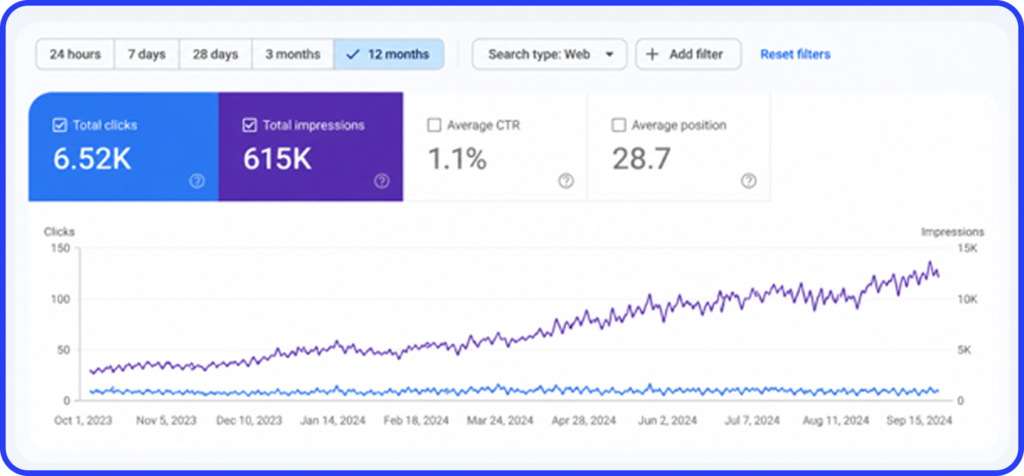
How many times a link appeared in search results, regardless of clicks. Per Google Search Console’s own documentation, impressions in AI Overviews now follow the same counting rules as standard results, meaning a site can accumulate AI impressions without receiving a single click. Rising impressions with flat clicks is a symptom, not a success.
Keyword Rankings
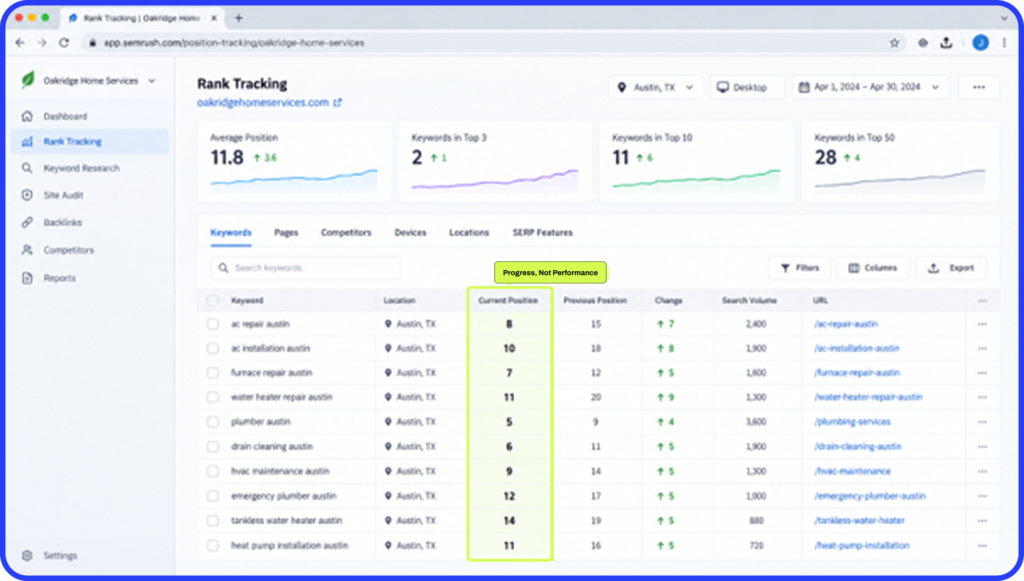
A keyword moving from position 15 to position 8 is real progress but not necessarily a call driver, since most clicks go to positions one through three. Rankings matter when they are for keywords with buying intent and when paired with click data. A table of 400 keyword rankings with no click data attached is not a performance metric.
Domain Authority
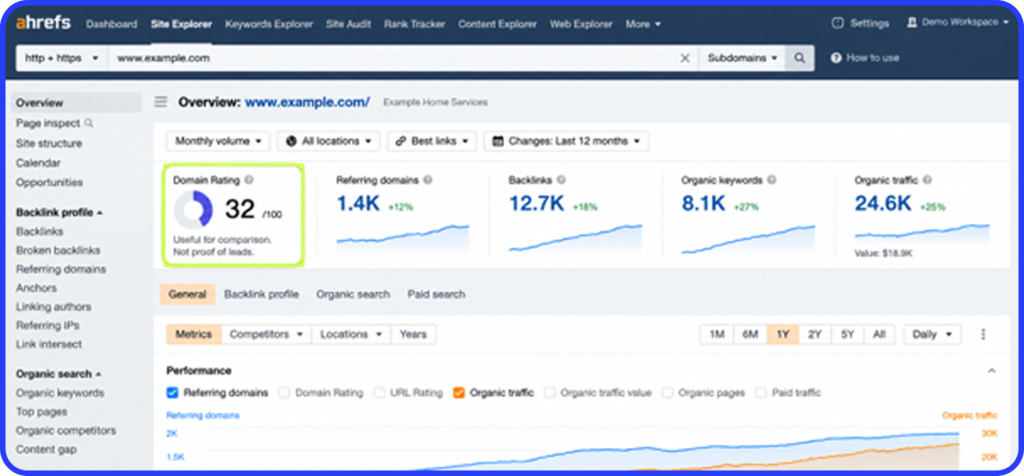
Domain Authority from Moz and Domain Rating from Ahrefs are scores invented by SEO tool companies. They are not Google ranking factors. Google has confirmed this directly. A rising score does not mean more customers. It can be a rough proxy for comparing link profiles against competitors. It should never be presented as proof that SEO is working.
Total Keywords Ranked
A site can rank for 1,240 keywords and generate zero qualified leads if those keywords have no volume, no buying intent, or rank too low for clicks. The relevant question is not how many keywords rank, but whether the keywords that matter are moving toward the top three positions with click growth to match.
Organic Sessions
Total organic visits. Useful as a trend but incomplete without knowing where those sessions land. A contractor whose sessions grow but land on the blog rather than service pages is generating traffic without generating calls. Sessions as the headline metric is misleading.
The Metric Almost Every Report Is Missing in 2026: AI Visibility
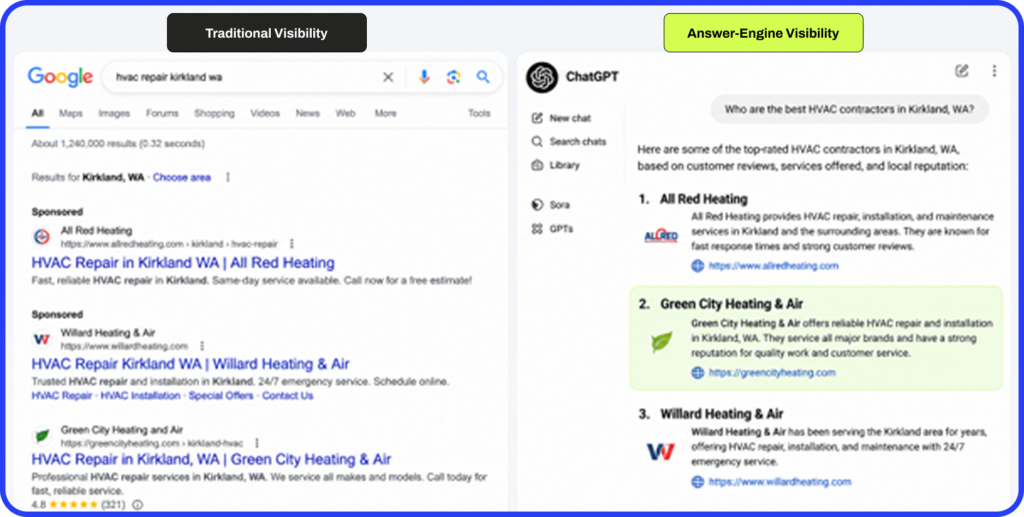
SEO and answer engine optimization are converging. When a homeowner types “best HVAC company near me,” an AI Overview may appear before any standard search results. If your site is cited in that answer, it drives traffic. If it is not, you are invisible regardless of your keyword rankings.
Standard monthly reports do not track this. Most rank trackers do not track this. But it is already affecting call volume for contractors in competitive markets. What to watch:
- AI Overview appearances in Search Console: performance data now includes AI Overview impressions and clicks as a result type, per Google’s Search Console documentation.
- Featured snippet ownership: content that earns featured snippets tends to appear in AI answers. The overlap is significant.
- Structured data coverage: LocalBusiness schema, ServiceSchema, and FAQPage schema all improve eligibility for AI-generated results.
If your agency’s monthly report has no column for AI Overview impressions or answer engine visibility, that is worth raising.
Call Tracking: The Layer Most Contractor Reports Are Missing
Call tracking is the single most important tool a home service contractor can add to their reporting, and most contractors do not have it. Without it, the most important question in the report, are we getting more calls from organic search, cannot be answered.
What Call Tracking Is
Call tracking assigns a unique phone number to each marketing channel so every inbound call is attributed to its source. When a homeowner calls the number shown to organic search visitors, that call is logged as an organic lead. When they call the number on the GBP, it is logged as a GBP lead. The contractor sees exactly which channels are producing calls and in what volume. CallRail is the standard platform for most home service contractors.
What It Shows That Nothing Else Does
Without a tracked number attributed to organic traffic, there is no way to know how many sessions turned into a call. Contractors who use call tracking and call coaching hit a 90% booking rate on inbound calls. Contractors without it average 42%. That gap is not a marketing problem. It is a systems problem that call tracking exposes. Understanding what a missed call is worth puts a dollar figure on that 48-point gap.
How to Set It Up
Create tracking numbers for each major channel through CallRail or WhatConverts. Install the dynamic number insertion script so the phone number displayed swaps based on the visitor’s source. Add a static tracking number to the GBP listing. Connect to the CRM to create a closed-loop attribution path from source to booked job to revenue. The setup takes two to three hours.
How to Read a Monthly SEO Report in Five Minutes
A monthly SEO report should be readable in five minutes if the agency is reporting on the right things. Here is the sequence.
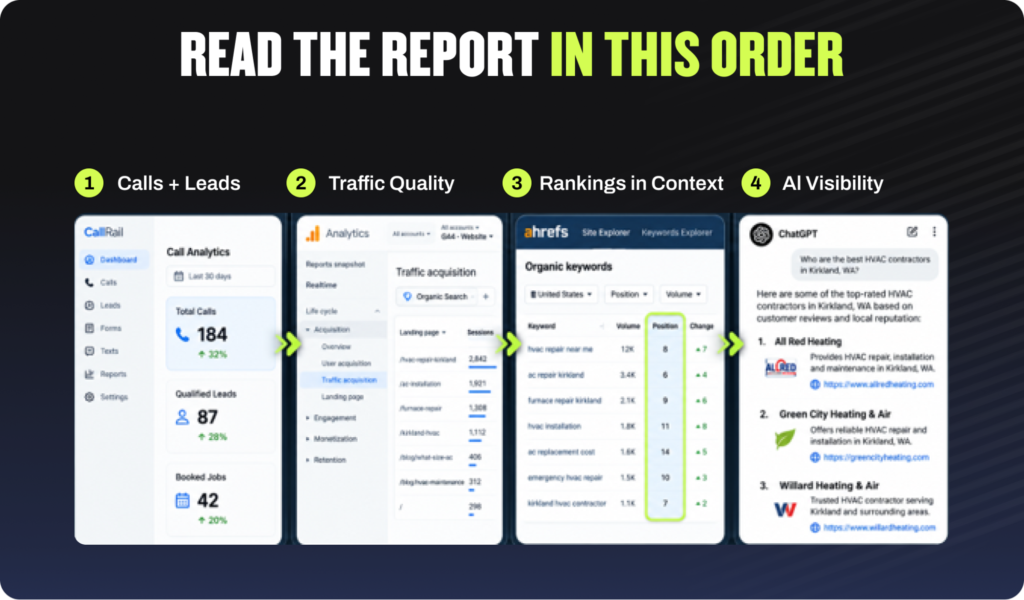
Start With Calls and Leads
Open at the conversion section first. How many inbound calls came from organic search this month versus last month? How many form submissions from organic traffic? If the report does not have this section, that is the most important thing to fix before reviewing anything else in the report.
Then Check Traffic Quality
How many sessions landed on service pages and city pages versus blog content? Are non-branded clicks growing month over month? Traffic quality tells you whether the organic visitors arriving are buyers or browsers.
Then Check Rankings in Context
Are the service-city combinations that matter moving toward positions one through three? Are ranking improvements accompanied by click growth in Search Console? A ranking gain without click growth means either low volume or a title and meta that are not compelling enough to earn the click. Also check whether AI Overview appearances are in the report. Per Google’s Search Console documentation, AI Overview data now appears under result type filters. If the agency is not segmenting this, ask why.
The Question to Ask If Numbers Look Good But Calls Are Flat
Three likely causes: traffic is landing on pages that do not convert, rankings are for low-intent keywords, or calls are happening but going untracked. The fix requires diagnosing which of the three applies before changing anything about the SEO strategy.
What to Ask Your Agency Before Signing
Our founder, Tim put together a video on exactly this. Watch it before your next agency evaluation.
Tim’s framework starts with timelines. As he puts it: “The real answer is actually a realistic timeline for results that kind of showcases the work that is going to be needed to get there.” A guarantee of leads in 30 days is a red flag. On qualifying leads, he is direct: “A lead is not only a form submission. It’s not only a phone call. It’s somebody who needs your service and is in your service area.” Know that definition before signing anything.
Four reporting-specific questions to ask:
- What conversion metrics appear in the monthly report? If the answer is rankings and impressions rather than calls and leads, the report measures the agency’s activity, not the contractor’s outcomes.
- How will you attribute calls to organic search specifically? No call tracking means this question cannot be answered.
- What is your definition of a qualified lead? Vague answers here produce frustrating monthly conversations.
- Can I see a sample report from a current contractor client? The format reveals everything.
For the broader evaluation, see how to choose a digital marketing agency and three things to consider when choosing a marketing agency.
FAQs
What SEO metrics matter most for a home service contractor?
Inbound call volume attributed to organic search, cost per lead, cost per booked job, organic traffic to service pages, and non-branded click growth. Impressions, domain authority, and raw sessions are context, not success metrics.
What is a vanity metric in SEO?
Any number that can go up without changing a single business decision. In contractor reports, that is usually total keywords ranked, raw impressions, domain authority, and organic sessions without conversion data attached.
Does domain authority matter for contractor SEO?
No. Domain Authority from Moz and Domain Rating from Ahrefs are scores invented by SEO tool companies. Google has confirmed it does not use them as ranking factors. It can be a rough competitor comparison tool. Nothing more.
What is call tracking and why does it matter?
Call tracking assigns a unique phone number to each marketing channel so every inbound call is attributed to its source. Without it, you cannot know how many calls came from organic search. CallRail is the standard platform for most home service contractors.
Why are my keyword rankings going up but calls are flat?
Three causes: rankings are for low-intent keywords, gains have not reached the top three positions where clicks happen, or calls are going untracked. Cross-reference click growth with ranking movement in Search Console to diagnose which applies.
How long should SEO take to produce results?
Competitive service-city keywords typically take four to seven months. Most contractors see initial GBP improvements within 30 to 90 days. At 12 months, well-built programs produce leads at $25 to $45 each versus $90 or more for paid search.
What is the difference between branded and non-branded clicks?
Branded clicks come from queries that include the company name. Non-branded clicks come from “plumber near me” or “HVAC repair Kirkland.” Non-branded click growth is what SEO is supposed to produce. Per BrightLocal’s Local Consumer Review Survey, 97% of consumers read reviews for local businesses before contacting them. Getting found first is the prerequisite to that trust being built.