
Two techs. Same company. Same training. Same pricing.
One finishes four calls before 3 PM. The other is still digging through bins looking for a capacitor.
That is not a talent gap.
That is a systems gap.
Your HVAC van setup and organization is not just about shelves and storage. It is an operational decision that affects speed, training, mistakes, and ultimately profit per truck.
If every van in your fleet is laid out differently, you are making growth harder than it needs to be. New hires take longer to ramp up. Parts get forgotten. Supply house runs eat up your afternoon. Small inefficiencies stack up fast.
Well-run HVAC companies do not leave van layout to personal preference. They standardize it.
Because when every truck runs the same system, your team moves faster, cleaner, and more consistently.
Why a Standardized HVAC Van Setup Improves Team Performance
The best HVAC companies in the U.S. do not treat van layout like a personal preference. They treat it like a system. Once you have multiple trucks on the road, variation creates friction. Friction slows jobs, complicates training, and hides mistakes.
Here is what standardization actually does.
- Faster Job Completion
When every van is set up the same, techs are not hunting for parts or guessing where tools are stored. Less searching means fewer supply house runs and more completed calls per day.
That directly impacts revenue per truck.
- Better Training for New Technicians
If layouts vary, new hires waste time learning trucks instead of learning skills. When every van follows the same blueprint, expectations are clear and ramp up is faster.
Systems reduce chaos. That is leadership, not micromanagement. If you are serious about scaling, this is the kind of operational thinking covered in guide to leadership for home service business owners.
- Fewer Mistakes and Callbacks
Organized inventory reduces forgotten parts. Standard checklists create visual accountability. You are not relying on memory. Operational discipline beats “just be careful” every time.
- Clear Accountability Across the Fleet
When all vans follow the same layout, inspections are easier. Restocking is simpler. Performance gaps are obvious. Standardization makes problems visible. And visible problems get fixed.
Core Zones Every Efficient HVAC Service Van Should Have
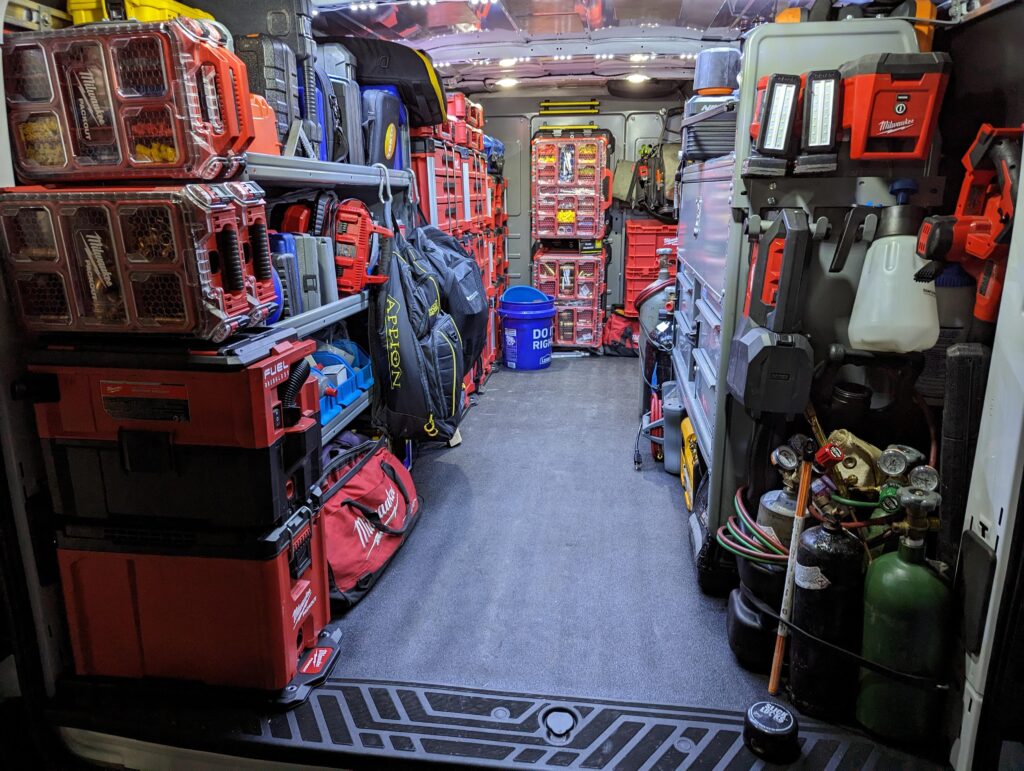
Open the back of your van. If it feels random, it probably is. An efficient HVAC van is not just “organized.” It is zoned with intention. Every shelf, drawer, and bin supports speed, clarity, and consistency. The goal is simple: reduce movement, reduce thinking, reduce mistakes.
Here are the five zones every high-performing HVAC truck should have.
1. Fast-Moving Parts Zone
This is your money zone.
Capacitors.
Contactors.
Common fittings.
Relays.
Fuses.
Wire nuts.
These are the parts you grab on routine service calls. They should live closest to the rear doors, at waist to chest height, clearly labeled, and separated by category.
If a tech has to climb into the van or dig through mixed bins to find a capacitor, your layout is costing you time on every call.
The best teams track usage and restock weekly. This zone should feel tight and intentional, not overloaded “just in case.” Whether you focus more on commercial vs residential HVAC, your fast-moving inventory should reflect your most common job types.
2. Tool Zone
Tools deserve structure.
Dedicated shelving or drawer systems for hand tools. Mounted brackets for drills and impact drivers. A secure charging station that does not rely on tangled extension cords.
When tools float around the van, jobs slow down. Items get left behind. Equipment gets damaged.
Clear labeling and fixed locations eliminate that chaos. If another tech steps into the truck, they should know exactly where gauges, meters, and recovery machines live without asking.
3. Installation Materials Zone
Service parts and install materials should not compete for space.
Line sets, ductwork components, mounting hardware, and larger materials need their own area, ideally separated from your service inventory.
This keeps install days organized and prevents service parts from getting buried under bulky equipment. If you are planning to grow or even start an HVAC company, separating these zones early prevents clutter from compounding as volume increases.

4. Paperwork & Digital Station
Operations flow matters.
Your tablet or field service device should have a fixed mount. Permits, invoices, and checklists should have a consistent home. Charging cables should be secured, not tossed in a drawer.
This zone supports the final step of every job: documentation and payment. A smooth close reinforces professionalism. The outside of your truck, including your HVAC van wraps, builds brand presence. The inside should reflect the same level of organization.
5. Safety & Clean-Up Zone
Safety should be visible and intentional.
PPE, gloves, safety glasses, drop cloths, trash containers, and a fully stocked first aid kit need a defined, easy-to-access location.
Dedicated PPE storage reduces retrieval delays during hazards. Slips, trips, and falls account for 25% of all workplace injuries across industries, and 16% come from ground-level incidents that are common in cluttered environments like disorganized vans.
When safety gear is buried, it does not get used consistently. When clean-up supplies are hard to reach, professionalism slips.
Common HVAC Van Organization Mistakes That Kill Efficiency
You do not lose efficiency all at once. You lose it in small, tolerated habits. Here are the mistakes we see over and over with growing HVAC teams.
Every Tech Sets Up Their Own Way
At first, this feels empowering. You trust your team. You let them organize their trucks how they like.
But once you have multiple vans on the road, that flexibility turns into inconsistency. A lead tech cannot jump into another truck without friction. New hires get confused. Managers cannot inspect against a standard because there is no standard.
What feels like freedom actually kills scalability.
Overstocking “Just in Case”
This one is common. Techs start loading extra parts to avoid supply house runs. Over time, the van turns into a rolling warehouse. Shelves get crowded. Fast-moving parts get buried. Weight increases. Fuel efficiency drops. Organization breaks down.
Carrying smart inventory is strategic. Carrying everything is expensive.
No Inventory Tracking System
No restock checklist.
No weekly inspection.
No assigned ownership.
That is not flexibility. That is chaos disguised as freedom. Without a system, parts slowly disappear, tools get misplaced, and no one is fully responsible. The result is missed items, delayed jobs, and avoidable callbacks.
Ignoring Van Layout During Hiring and Training
If van setup is not part of onboarding, it will never be consistent. New hires should be trained on layout expectations from day one. They should understand where things go, how to restock, and what “ready for the day” looks like.
If van organization is not taught, inspected, and reinforced, it becomes optional.
Your Vans Are Either Costing You Money or Making You Money
Your HVAC van setup and organization is not a detail. It is a decision.
Disorganized trucks cost time. Standardized trucks create speed, accountability, and higher revenue per vehicle. The difference shows up in job count, training time, and fewer callbacks.
Growth without systems creates chaos. Growth with systems creates margin.
If you are serious about scaling your HVAC team the right way, let’s talk. Book a call with Hook Agency and we will walk through the leadership and operational systems that help HVAC companies grow efficiently without losing control.