If you’ve been in the trade long enough, you’ve probably wrestled with this question: should I focus on residential work, or take on bigger commercial jobs?
It’s the classic commercial vs residential HVAC debate.
Homeowners bring you steady calls and quick turnarounds. Businesses offer larger contracts, but usually with higher stakes. Both have their pros. Both have their pain points.
The truth?
Each side comes with its own wins and headaches. If you’re an HVAC contractor weighing the commercial vs residential HVAC question, you need to know what really sets them apart, before you double down on one path or spread yourself across both.
Commercial vs Residential HVAC: The Real Divide
Commercial and residential HVAC may share the same three letters, but the day-to-day work feels like two different worlds. Let’s break it down.
Systems
Commercial systems are massive. Think rooftop units, chillers, and advanced automation. They’re engineered to control temperatures for entire office buildings or retail centers.
Residential systems are smaller, simpler, and typically quicker to install or repair. A technician can usually get in, fix the problem, and move on to the next call in the same day.
👉 Commercial = more scale, more tech.
👉 Residential = faster turnover, easier systems.
Clients
- Commercial: You often deal with one property manager or facilities director. Nail that relationship and you could unlock work for multiple sites.
- Residential: You might work with a hundred different homeowners in a year, each with unique needs and urgency levels. It’s more fragmented, but also steady in demand.
Jobs
Commercial contracts usually involve high-dollar projects that last weeks or even months. These jobs are larger commitments and often require bigger crews.
Residential work is more about quick service calls or seasonal installations. The tickets may be smaller, but the volume adds up fast.
| Factor | Commercial HVAC | Residential HVAC |
| System Size | Large, complex, tech-heavy | Small, straightforward |
| Clients | One property manager | Many homeowners |
| Job Type | High-dollar contracts | Fast-turn service calls |
| Timeframe | Weeks or months | Hours or days |
| Pay Style | Fewer, bigger checks | Many, smaller checks |
Money Talk
Regardless of where you land, HVAC pays well. As of August 20, 2025, the average hourly rate for HVAC contractors in the United States is $28.26 an hour according to ZipRecruiter.
So the real choice? Decide whether you want to chase big, long-term deals or thrive on high-volume, quick-turn work.
Why Contractors Go Commercial
If you ask around in the HVAC world, many techs will tell you the same thing: once you get a taste of commercial work, it is hard to go back. The projects are bigger, the challenges more complex, and the paychecks usually match the effort. Let’s break down why so many contractors make the leap.
Big Jobs, Big Rewards
Commercial contracts mean fewer clients but bigger payouts. Instead of juggling dozens of individual homeowners, one signed deal with a property manager or building owner can keep your crew busy for months. That stability and scale make commercial work appealing for those chasing higher revenue without the grind of constant small-ticket calls.
Maintenance Goldmine
Commercial HVAC isn’t just about installation. Long-term service agreements are where the money really flows. Building managers want systems that run smoothly year-round, which means recurring contracts for preventative maintenance and emergency response. That kind of steady income stream can take a business from surviving to thriving.

Tech-Lover’s Playground
If your crew loves problem-solving and diving into complex systems, commercial HVAC is like Disneyland. Chillers, cooling towers, large-scale rooftop units, and advanced automation controls keep the work challenging and rewarding. This is where techs sharpen their skills and level up their expertise.
Real Talk from the Field
It’s not just theory. HVAC pros online often highlight why commercial wins out.
One tech summed it up perfectly:
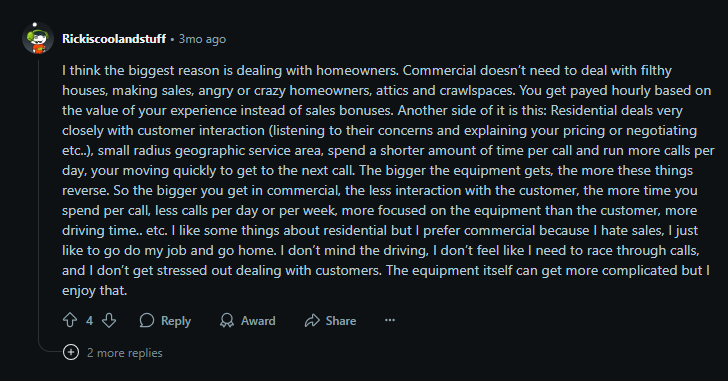
Another chimed in with his own perspective:

When real contractors back up the benefits, it is clear why commercial HVAC holds so much appeal.
And if you are serious about scaling your business in that direction, investing in the right mentorship is crucial. Here’s a solid resource on some of the best HVAC coaching groups that can help you grow.
Why Residential Still Wins for Many
Commercial might look shiny, but residential still has a magnetic pull for a lot of contractors. Why? It’s fast, flexible, and packed with opportunities to build a name that lasts. Let’s break it down.
Fast Work, Fast Pay
Residential HVAC is all about volume. Quick service calls stack up, especially in the summer when every AC unit in town seems to fail at once. That means more jobs per day and paychecks that don’t drag behind.
One contractor shared how they left commercial after eight years:
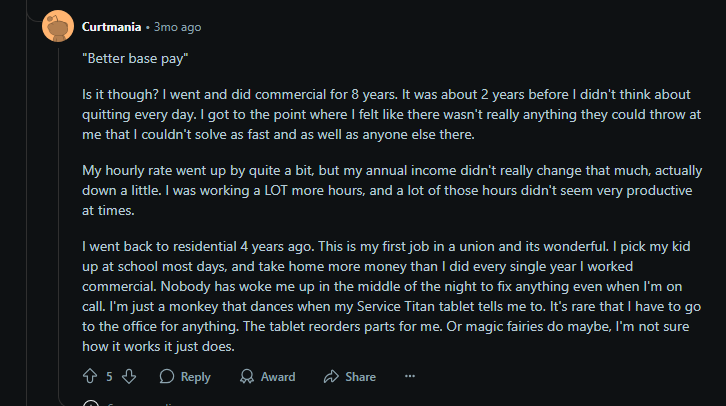
Sometimes, speed and stability win over scale.
Brand Power = Growth Power
Unlike commercial, where contracts often go to the lowest bidder, residential is reputation-driven. Every 5-star review and word-of-mouth referral fuels a pipeline of calls. If you treat customers right, they become your best marketing team.
And follow-up is key. Knowing how to re-engage customers can mean the difference between a one-time repair and a lifelong client. That’s why many contractors use strategies like the ones in these HVAC follow-up ideas to keep the phone ringing.
Another pro chimed in:

Residential allows contractors to build trust, not just transactions.
Flexibility and Variety
Residential jobs mean you’re not stuck in one massive project for months. Instead, you can bounce between installs, service calls, and seasonal maintenance. This variety keeps the work interesting and lets techs shape schedules that fit their lifestyle.
For many HVAC pros, that mix of freedom, brand-building, and honest work is why residential still feels like home.
Business Tactics: Marketing vs Networking
In HVAC, landing jobs depends on where you play. Residential and commercial are like two different games, one thrives online, the other in relationships and trust.
Residential = Play the Google Reviews Game
Your reputation is everything here. Homeowners don’t spend weeks researching; they check Google, read reviews, and call the tech with the best stars.
Keys to winning in residential:
- Stellar customer service on every call
- Prompt follow-ups to secure repeat work
- Leaving every homeowner impressed
A solid string of five-star reviews can create steady growth, neighborhood by neighborhood.
Commercial = Relationships and Referrals Rule
Commercial work isn’t about clicks or stars. It’s about who you know. Facility managers, property owners, and business developers stick with contractors they trust. Once you earn that trust, you get recurring contracts for years.
Focus areas for commercial success:
- Building and nurturing professional networks
- Leveraging referrals for bigger contracts
- Maintaining strong, long-term partnerships
Curious how the pros handle marketing in 2025? Check out this video:

So… Which Lane Should You Drive In?
Some stick to one. Others juggle both. Either way, it’s not just about the work you do, it’s about who you are, your crew, and the business you want to build.
Commercial brings the big contracts, the technical challenges, the steady cash flow. Residential delivers fast wins, glowing reviews, and a flow of referrals that keeps the phone ringing.
The real trick? Know your strengths. Play to them. Build a business that works for you, not the other way around.
Want to attract the right HVAC leads and grow smarter, not harder? Schedule a call with Hook Agency today and start connecting with clients who value what you bring to the table.