
The short answer
Every HVAC tech needs hand tools, electrical meters and refrigerant tools: a multimeter, clamp meter, digital manifold gauges, vacuum pump with a micron gauge, refrigerant scale and recovery machine, plus a manometer and combustion analyzer for heating work.
- Start with hand tools and a multimeter
- Gauges, vacuum pump and micron gauge for refrigerant
- Manometer and combustion analyzer for heat
- EPA 608 certification for refrigerants
Originally published February 26, 2021. Updated November 5, 2026.
If you are into building, renovations or are a handyman, you will find that your garage and workshop might need to have the best HVAC tools in order to do your work efficiently. If you think that tools and gadgets are only found in the most expensive shops, think again. The truth is, there are lots of discount stores, discount Web sites and retail stores where you can find quality tools that are not only inexpensive but also functional and stylish. And, even if you cannot afford to buy brand new HVAC tools, you should know that there are plenty of discount tools that can be obtained through online sources at a fraction of the cost of new models.
The Top 15 Best HVAC Tools Under $30
Full List of HVAC Tools
- Utility knife.
- Service wrench.
- Inspection mirror.
- Sheet metal shears
- Tube and pipe cutters
- Cordless drill set
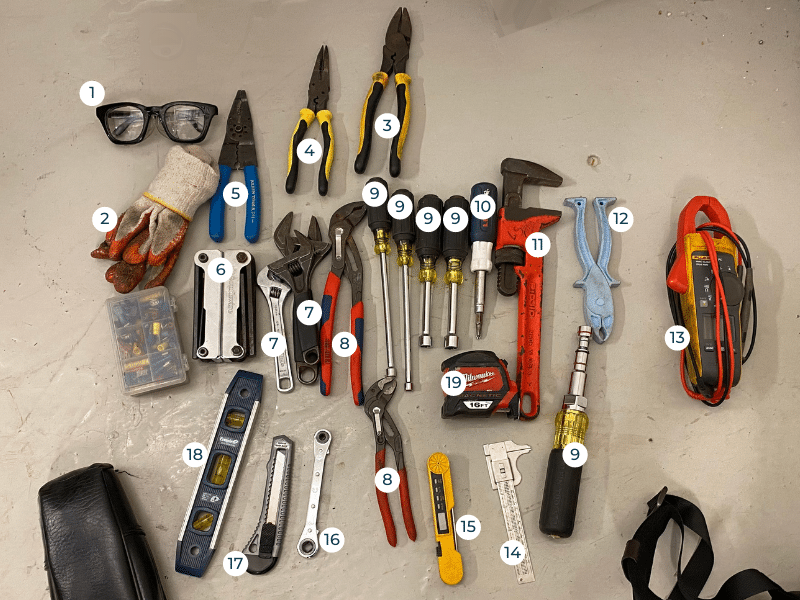
- Combo (3) linesman or (4) needle nose pliers with wire strippers & crimpers.
- (10) 11-in-one screwdriver
- (9) Long neck nut driver set.
- (11) Pipe wrenches.
- (7) Adjustable wrenches
- (8) Channel locks
- (14) Pipe caliper
- Thermostat/tech screwdriver
- (6) Allen wrench set
- (12) Fuse puller
- (18) Level
- Hammer
- Handheld thermometer
- Multimeter
- Digital refrigerant gauges
- Filter puller
- HVAC tool bag
- Black markers
- (1) Safety glasses
- (2) Gloves
- (19) Tape measure with magnetic tip
- Rechargeable flashlight (USB)
HVAC tools by category
The list above covers the basics in any tech’s bag. Here’s how a full HVAC kit breaks down by the work it does, from hand tools to refrigerant and combustion testing.
HVAC tool checklist
Grouped the way most techs stock a van.
Hand tools
- Multi-bit screwdriver and nut drivers
- Adjustable and pipe wrenches
- Pliers, wire strippers and crimpers
- Sheet metal shears and snips
- Tubing cutter and deburring tool
- Coil fin comb
Electrical
- Multimeter
- Clamp meter
- Non-contact voltage tester
- Capacitor tester or meter with capacitance
Refrigerant
- Digital manifold gauges
- Vacuum pump and micron gauge
- Refrigerant scale
- Recovery machine and tank
- Leak detector
- Nitrogen tank and regulator
- Flaring and swaging tools
Airflow and combustion
- Thermometers and psychrometer
- Manometer for static and gas pressure
- Combustion analyzer
- Carbon monoxide detector
Safety
- Safety glasses and gloves
- Hearing protection
- Respirator for attics and crawl spaces
- Fire extinguisher for brazing
Specialty HVAC tools, explained
These are the tools that separate a handyman from an HVAC tech. Each one answers a specific question about how the system is running.
What specialty HVAC tools do
The tool and the question it answers.
Swipe sideways to see every column →
| Tool | What it tells you or does |
|---|---|
| Digital manifold gauges | Refrigerant pressures and temperatures, plus superheat and subcooling |
| Micron gauge | How deep a vacuum you’ve pulled, so you know the system is dry and tight |
| Vacuum pump | Removes air and moisture before charging a system |
| Refrigerant scale | Weighs refrigerant in or out for an accurate charge |
| Recovery machine | Removes refrigerant from a system so it isn’t vented |
| Clamp meter | Amp draw on motors and compressors without cutting wires |
| Manometer | Static pressure in ducts and gas pressure at the furnace |
| Combustion analyzer | How safely and efficiently a furnace burns, including carbon monoxide |
A maintenance call, tool by tool
What a tech reaches for on a typical AC tune-up.
- 1Safety checkVoltage tester before touching anything electrical.
- 2ElectricalMultimeter and clamp meter on capacitors, contactor and motors.
- 3AirflowFilter check, coil inspection and static pressure with a manometer.
- 4RefrigerantGauges for pressures, superheat and subcooling.
- 5Wrap-upClean the condenser coil, straighten fins and report findings.
- Leads from Google, Maps and AI search
- Nobody else is buying the same lead
- You own your website and ad accounts
“Hook Agency has been an incredible partner for our digital marketing growth.”
Kristin Sullivan, Bob’s ACFocused on the map? See Google Maps SEO
Size matters less than fit. A tech who runs mostly residential split systems needs a lighter, more mobile kit than one who services rooftop units on commercial buildings. Start with the core list, then add specialty tools as your call mix tells you what you are missing. If you keep borrowing the same tool from a coworker, that is your signal to buy it.
Keep a simple inventory sheet in the truck. Check it weekly, restock consumables like fuses, wire nuts and refrigerant O-rings, and calibrate gauges and meters on the schedule the manufacturer recommends.
What size of tools do you need?
When shopping for the best hvac tools, there are several things that you need to keep in mind. First, consider the size. How much room do you have in your garage or workshop? Do you plan on putting it in a room with heating and air conditioning? If so, you need to make sure that you buy the largest size possible. In addition, you will want to take note of how often you plan to use the toolset so that you will know what size is best for you.
What Features do you need? Based on the types of jobs
The next thing that you need to decide on are the features of the hvac tools. Are you going to be using them once and then discarding them or are you planning to use them on a regular basis? If you are planning on using them on a regular basis, you will definitely want to purchase a set that has many features. This includes a thermostat, humidity sensor, timer, and fan if necessary. However, if you are only going to be using it a few times each year, you may choose one with less features and just be content with it.
Consider The Materials
Another thing that you will want to think about is the material that the head tools are made of. There are several different types of materials that you can purchase. You can get them in metal, wood, plastic, or ceramic. Your decision should depend on what type of maintenance and upkeep you plan on doing to your HVAC system. Wood hvac tools are the most popular because they are aesthetically pleasing, but the tools made of other materials are much more durable.
Consider Your Budget
The third and final thing that you will want to think about is your budget. Different types of HVAC tools are available for different prices. If you plan on doing a lot of maintenance, or if you are going to install a large unit, you may want to spend a little bit more money and get a set of tools that are durable but also affordable. However, if you only plan on doing simple maintenance and have a smaller budget, you may be able to get by with a less expensive set of tools. It all depends on your situation and your personal preferences.
Ensure you purchase sturdy tools if you’ll be using them often
After thinking about all of these things, it should be easier for you to get an HVAC tools that you will be happy with for many years. You will be able to find a set that will fit into your budget and also make you feel good about what you’re doing. Think about the things that you need to do in the home and work out the best HVAC tools that you can. Make sure that the one you get can help you get the job done without having to figure out complex ways of doing it. Also make sure that you get one that matches your taste.
Remember that when you are looking for the best HVAC tools, you will want to make sure that you think about your needs as well as the size of your budget. There are many different types of HVAC tools that you will find available, so take your time and think about what your options are going to be. You will soon find the perfect one to make your life easier and your equipment more effective. It will make the entire experience much easier on you.
Frequently Asked Questions
What tools does an HVAC technician need?
Hand tools, a multimeter and clamp meter, digital gauges, a vacuum pump and micron gauge, a refrigerant scale, a recovery machine, a manometer and a combustion analyzer.
Do I need a license to buy refrigerant?
In the U.S., you generally need EPA Section 608 certification to buy and handle most refrigerants.
What is a micron gauge used for?
It measures how deep a vacuum you’ve pulled on a system, so you know moisture and air are out before charging.
Should I buy cheap HVAC tools to start?
Buy quality on the tools you use daily, like meters and gauges. Save on items you rarely use until the work justifies better ones.