
Thinking about how to become an HVAC journeyman? Good. Because this is where the real opportunity starts.
You’re not just punching a clock. You’re learning skills that make you indispensable. You’re building a career that pays and according to Indeed, the average base salary of an HVAC technician in the US is $29.59 per hour. That’s cash in your pocket while mastering a trade that will always be in demand.
Apprentice, career changer, or just starting out. This is the roadmap to move fast, get certified, and level up from helper to journeyman without getting stuck in the grunt work forever.
What a Journeyman HVAC License Really Means
A journeyman HVAC license is more than a piece of paper. It is your official stamp that says you can take a job from start to finish without anyone looking over your shoulder.
You can:
- Step onto a jobsite and get to work immediately
- Troubleshoot and solve complex issues on your own
- Install, repair, and service systems with confidence
- Represent your company as the lead tech on a call
Once you have that license, you stop being “the helper.” You become the person who makes the call and runs the call. Bigger projects start coming your way. You can ask for higher pay because you are now the one delivering the full value.
It also means more security. Licensed pros are the last to be cut when times get tough. Contractors know that losing a journeyman hurts the business, so they do what they can to keep you on.
Think of it like moving from a learner’s permit to a full driver’s license. Before, you could drive but only with someone in the passenger seat. Now you can hit the road alone, go where you want, and take on bigger challenges. In HVAC, that means more freedom, more opportunities, and a clear path toward running your own business if you want to.
If you want a taste of the bigger world you are stepping into, watch this interview with Thomas Pears.

The Typical Path to Journeyman Status
There’s no magic shortcut to becoming a journeyman HVAC tech. The process takes time, effort, and a steady climb through the ranks. But once you know the steps, the journey feels a lot more doable.
Step One: Tech School or Vocational Training
You can jump straight into an apprenticeship, but starting with a structured training program gives you an edge.
Why it helps:
- You get a foundation in HVAC theory, system design, and safety codes before you ever touch a customer’s system
- You learn with instructors who have years in the field
- You practice on training rigs that mimic real-world scenarios
Programs usually run six months to two years depending on whether you’re going for a certificate or an associate degree. Many schools have partnerships with local contractors, which means you could walk out of graduation with a job lined up.
Step Two: Apprenticeship
This is where you get your hands dirty. Apprenticeships typically last two to five years. During that time:
- You work under a licensed journeyman or master tech
- You’re troubleshooting real systems, installing equipment, and running maintenance calls
- You’re getting paid, not a fortune, but enough to start building your career while avoiding massive student debt
The apprenticeship stage is also when you start building your professional network. A strong mentor can fast-track your skills and connect you with better opportunities. If you want help finding communities that support your growth, here’s a solid resource on the best HVAC coaching groups.
Step Three: On-the-Job Hours
States want proof you’ve put in the work. Most require 4,000 to 8,000 hours of documented HVAC experience before you can even apply for the journeyman exam.
That’s roughly two to four years of full-time work.
Keep a detailed log of your hours, tasks, and supervisors. Missing paperwork can delay your license, even if you’ve already put in the time.
Know Your State’s Rules (They’re All Different)
Here’s the tricky part: there’s no single national standard for becoming a journeyman HVAC tech. Every state sets its own rules, and in some cases, even individual cities or counties have unique requirements.
What that means for you:
If you start your career in one state and move to another, you might have to meet extra requirements before you can work there.
Why the Rules Vary
Licensing is handled at the state or local level, and each one decides what education, training, and testing they require. Some states have formal licensing boards with strict processes. Others have minimal oversight or no licensing at all for certain HVAC work.
The Common Elements You’ll See
Even though the details shift, most states require some combination of:
- Education: Either tech school, a recognized apprenticeship, or both
- Experience Hours: Usually between 4,000 and 8,000 documented work hours
- Exam: A written and/or practical test covering HVAC theory, safety codes, and hands-on skills
💡 Pro Tip:
Check your state’s HVAC licensing board before you start so you don’t waste time. The sooner you know the exact requirements, the sooner you can plan your path without surprises.
How to Crush the Journeyman Exam
You’ve put in the hours. Now it’s time to prove you’ve got what it takes. The journeyman exam is the final step before you can work independently, and in most US states, it’s a mix of written and hands-on testing.
What to Expect
Most states split the exam into two parts:
Written portion:
- HVAC theory
- Electrical fundamentals
- System sizing and load calculations
- Safety codes and regulations (often from the International Mechanical Code or IMC)
Practical portion:
- Diagnosing system issues
- Performing installations to code
- Demonstrating safe work practices
Some states may also include business or law sections if the license allows you to run your own jobs.

Study Smart, Not Just Hard
If you want to walk in confident, prep like the pros do:
- Review your code books — The IMC and state-specific regulations are your roadmap. Mark important sections for quick reference.
- Take practice tests — They help you spot weak areas before the real thing.
- Shadow seasoned techs — Watching an experienced journeyman solve problems in the field is worth hours of textbook study.
- Get a coach — The right mentor can guide your study strategy and keep you accountable. This list of the best HVAC business coaches is a great place to start.
Stay Encouraged
Passing rates are higher than you might think when you prepare with a plan. The test isn’t designed to trick you, it’s designed to confirm you can do the work safely and correctly. You’ve already built the skills on the job. The exam is just your chance to prove it.
The Payoff? Higher Pay, More Opportunities
Getting your journeyman license isn’t just about bragging rights. It’s about unlocking a whole new level of income, freedom, and stability in your HVAC career.
Bigger Paychecks
Licensed journeymen consistently earn more than unlicensed techs. While pay varies by state, experience, and company size, it’s not unusual to see a 10 to 25 percent bump after getting licensed. That can mean thousands of extra dollars in your pocket each year, money you’ve earned by proving you can run jobs on your own.
More Career Control
A journeyman card opens doors that simply stay closed to apprentices.
You get:
- More control over your schedule — Some companies give journeymen priority on job assignments
- Access to specialized work — Commercial systems, advanced diagnostics, and high-efficiency installations
- A launchpad for your own business — In many states, journeyman status is the stepping stone to a master license, which lets you operate independently
Long-Term Job Security
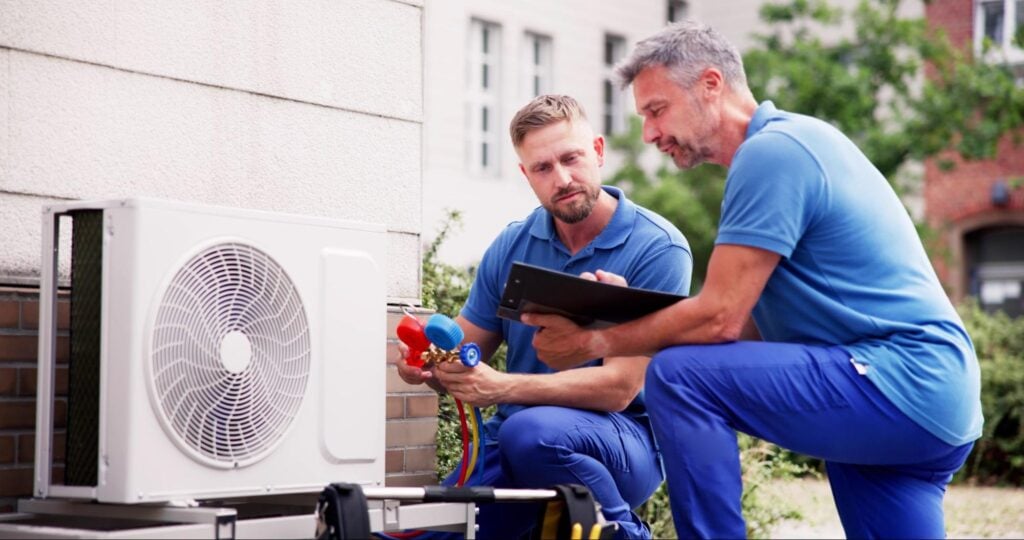
This industry isn’t slowing down. The U.S. Bureau of Labor Statistics projects an additional 40,100 HVAC jobs by 2033, showing that skilled journeymen will stay in demand for years to come. Contractors need people who can get the job done right, and licensed pros are always at the top of that list.
Your Future Is Waiting. Go Grab It!
It all starts simple.
A class.
A few tools.
Some long days learning the ropes.
Then one day you realize… you’re the one running the job. You call the shots. You set the schedule. You decide how far this career takes you.
The sooner you start, the sooner you can build the life you want. The money. The freedom. The respect.
Don’t wait for the perfect moment. Make it.
Explore the Hook Agency blog and see where your next step could lead.