Originally published June 17, 2021. Updated November 5, 2026.
Home improvement spending hit a plateau in 2026. Homeowners are still spending over half a trillion dollars a year, but growth is slowing, materials cost more, and repair work is carrying more of the load than big remodels.
Here are the home improvement industry trends for 2026, each linked to its source, plus what they mean for remodelers and home service companies.
The short answer
US homeowners spent $517 billion on improvements and repairs over the four quarters ending Q2 2026, and Harvard’s Joint Center for Housing Studies projects growth slowing to just 0.5% by mid 2027. Materials prices were up 9.6% year over year in May 2026 (ABC), and maintenance and repair is the largest slice of home services at about 38% (Mordor Intelligence).
- Residential construction spending fell 2.5% in 2025
- Average roof replacement claim up 33% vs the 2021 to 2024 average
- 97% of homeowners read reviews before hiring
Updated November 2026. New numbers up top. Older stats live in the historical section below, unchanged, so existing links and citations still work.
2026 home improvement industry trends: the key numbers
Spending
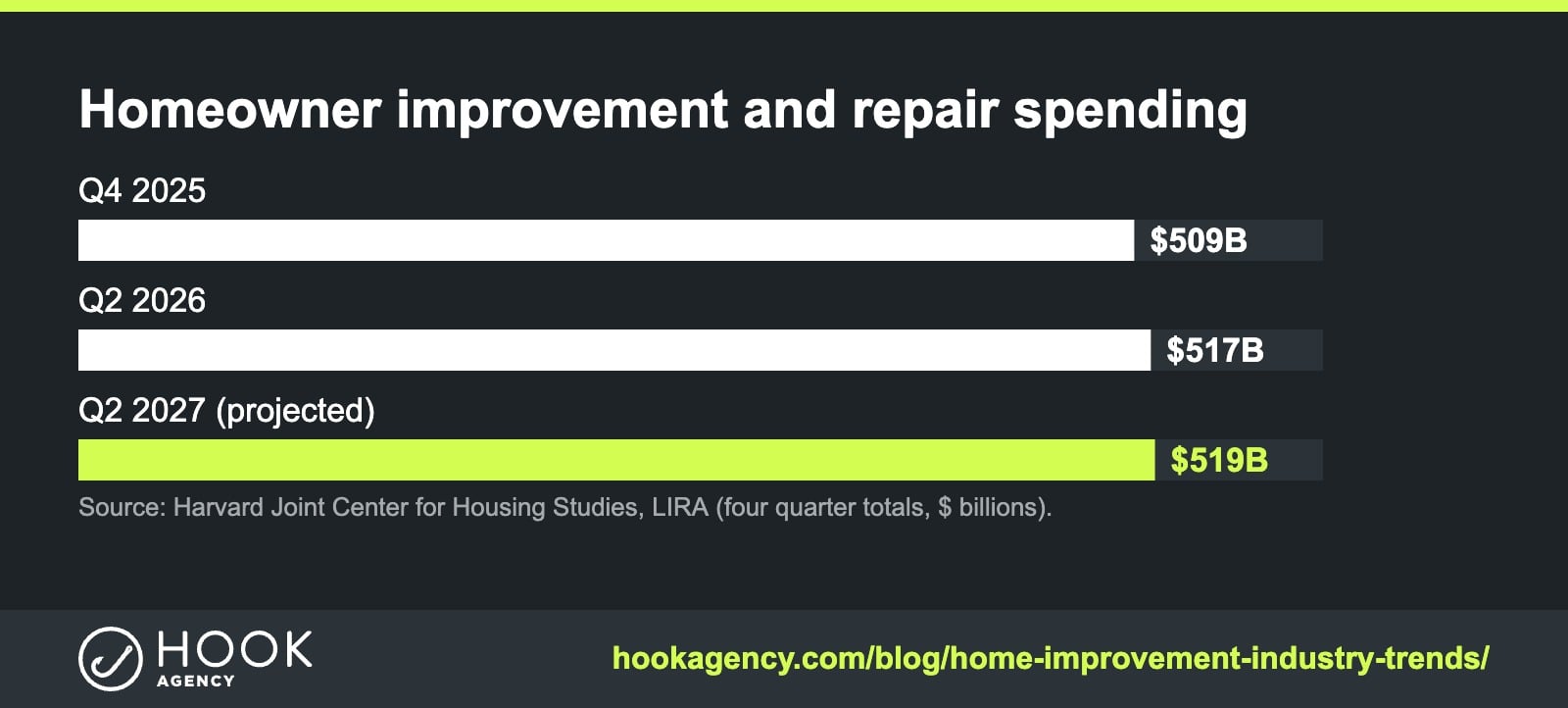
- $517 billion was spent on homeowner improvements and repairs over the four quarters ending Q2 2026, projected to reach $519 billion by Q2 2027. (Harvard JCHS LIRA, 2026)
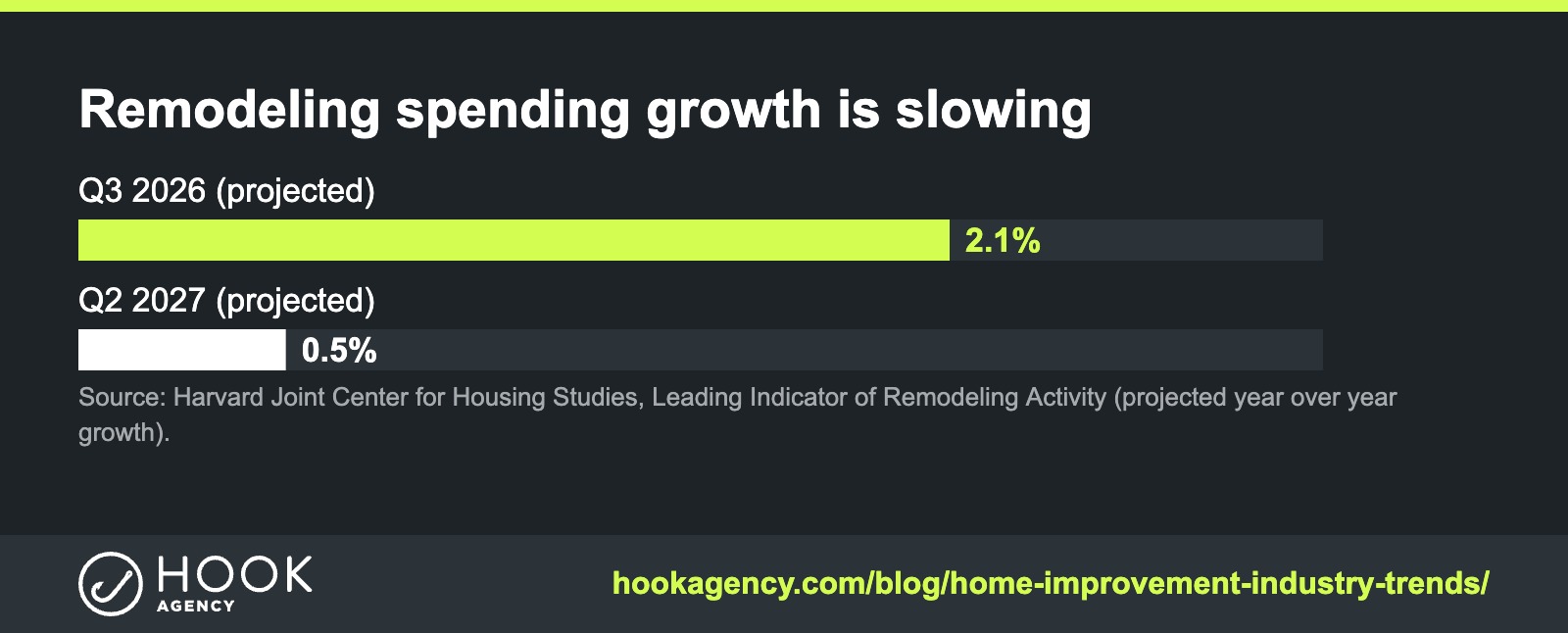
- 0.5% is the projected year over year growth in remodeling spending by Q2 2027, down from 2.1% in Q3 2026. (Harvard JCHS, 2026)
- $509 billion was the four quarter total at the end of 2025. (Harvard JCHS, Apr 2026)
- $917.4 billion was spent on all residential construction in 2025, down 2.5%. (US Census Bureau)
Costs and the type of work
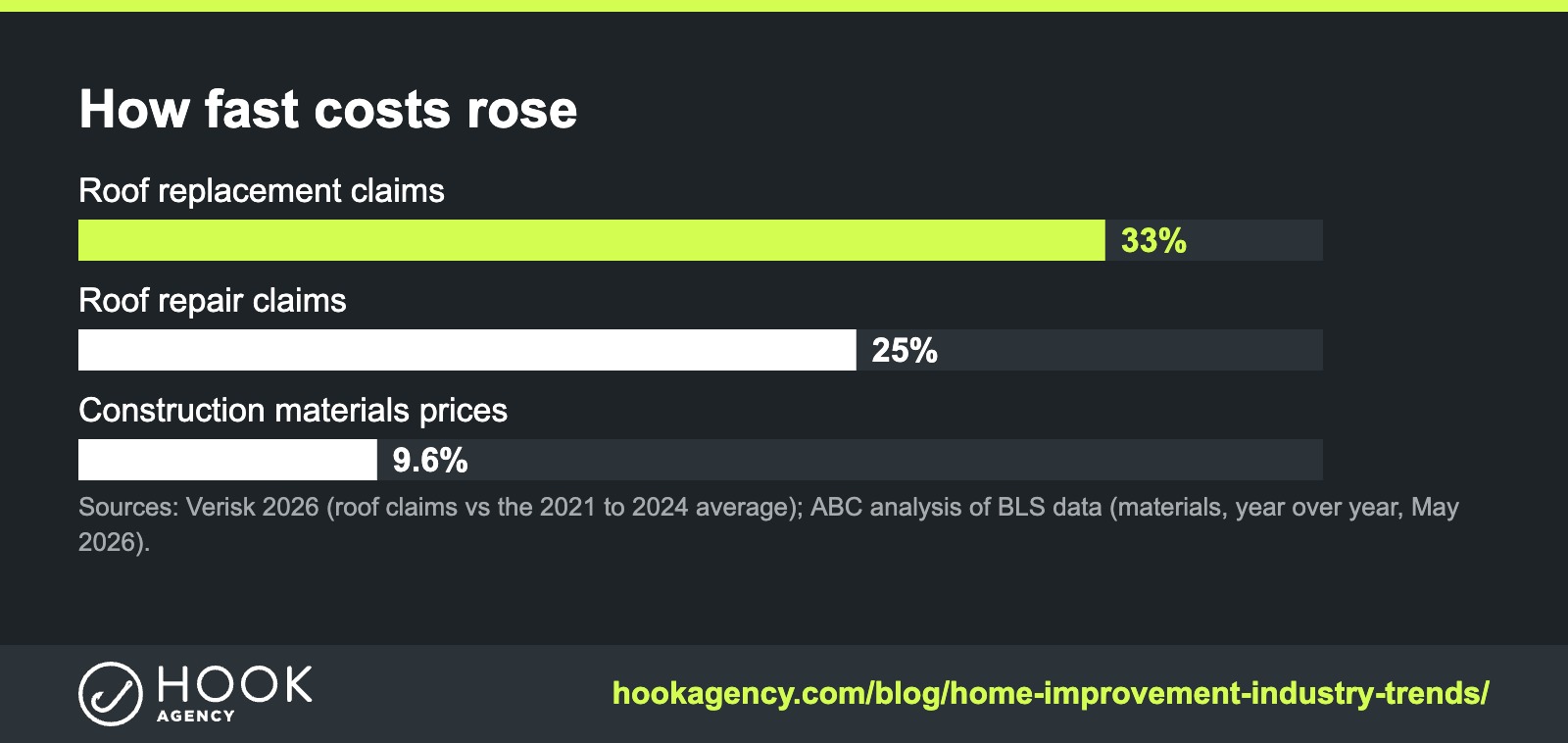
- 9.6% was the year over year rise in construction materials prices in May 2026. (ABC analysis of BLS data)
- 37.8% of the home services market is maintenance and repair, the largest segment. Installation and smart home work is growing fastest. (Mordor Intelligence, 2026)
- $17,631 was the average residential roof replacement claim in 2025, about 33% above the 2021 to 2024 average. (Verisk, 2026)
- 97% of consumers read reviews before choosing a local business, and 31% only hire businesses rated 4.5 stars or higher. (BrightLocal LCRS, 2026)
What this means for remodelers and home service companies
- Plan for a flat year. Spending is holding, not growing. You grow by taking share, which means search visibility, reviews and fast follow up.
- Lean into repair and replacement. It is the biggest and steadiest slice. Big discretionary remodels are the first to slow.
- Price for real costs. Materials jumped almost 10% in a year. Re-check your estimates.
- Leads from Google, Maps and AI search
- Nobody else is buying the same lead
- You own your website and ad accounts
“Hook Agency has been an incredible partner for our digital marketing growth.”
Kristin Sullivan, Bob’s ACFocused on the map? See Google Maps SEO
Historical home improvement industry trends (original edition)
Below is the earlier version of this page, unchanged, because other sites link to these numbers. Check source dates before citing.
Exciting things are happening in the home improvement industry.
Contractors, decorators, handymen, and other home improvement professionals are seeing demand for their services surge like no other time in the past decade. And the bonanza shows no signs of slowing.
Thanks to the ongoing housing bubble in the U.S., which somehow just keeps getting bigger, real estate values have soared to unprecedented levels, motivating more people to renovate rather than move.
In other words, things are looking good.
Just how good, you ask? Let’s break down some key industry stats from the past few years and see where things are in 2022 and beyond.
Age Demographics are Approaching a Tipping Point
At the moment, baby boomers still have a clear lead in terms of home improvement spending (and have led this category for more than 20 years). However, that may change in the not-so-distant future, as more and more people age 55 and up reach their natural conclusions or become unable to continue living at home.
As this shift progresses, Millennials, who increased their homeownership rate 7.9% between 2017 and 2020 (from 40% to 47.9%), are expected to gain significantly more representation in the housing market. In fact, if growth proceeds at the same rate of roughly 2-4% annually, some 56-64% of Millennials could own homes by 2025.
Naturally, many of the dwellings they’ll be moving into will be older homes previously belonging to members of past generations, homes that will sooner or later need age-related repairs and design updates.
The Reviving Economy is Driving Home Improvement
Despite all the chaos and unpredictability of 2020, the outlook for the national economy is sunny. The GDP is rebounding, employment is on the rise, and overall levels of wealth are still trending upwards. These numbers will likely only improve in 2022 as the country continues to rebuild.
Not only that, skyrocketing real estate values have but have produced swells in home equity as a fortuitous side effect.
One consequence of this growth is that more people finally have enough money to pull the trigger on home improvement projects they’ve been planning for years. It’s no surprise, then, that the combined revenue of home improvement stores nationwide shot up to around $400 billion in 2020.
Demand is up Across the Board
It isn’t just general contractors who are benefitting from the energizing combination of less available housing and more disposable income, business is booming for everybody.
Here are just a few sectors of the home improvement industry that are currently flourishing:
- Kitchen and bathroom remodeling
- Flooring
- Painting
- Interior decorating
- Roofing
- Landscaping
- Electrical and HVAC
- Outdoor lighting
- Home inspection
- Property management
As you can see, new business opportunities, as well as the potential for commercial success, are virtually limitless.
More Homeowners Are Getting “Smart”
Another notable area of growth is the uptick in smart home features.
Research indicates that investments in smart technology have increased 20% every year since 2016. The same research suggests that approximately half of all home renovations now include some form of smart tech upgrade.
Of those upgrades, the most popular are enhanced security measures, climate control systems, lighting fixtures, and entertainment add-ons. User data collected in 2020 revealed that there are over 33 million households with smart thermostats in the U.S. alone.
As such, savvy contractors are finding ways to incorporate newfound demand for smart technology into their existing business models, with considerable increases in their total number of annual contracts being the reward.
Demand is Likely to Keep Right on Growing
Factors like scarcity and rising interest rates, along with the boost in cost-recouping confidence that the previous conditions tend to inspire, have caused new home purchases to stall out and led an ever-greater percentage of homeowners to spend their money on renovations and remodeling projects instead.
A recent study published by the Harvard Joint Center for Housing Studies predicted that annual home improvement spending will continue to climb 2% or more per year for the foreseeable future. By that estimate, total industry revenue is on track to reach $269 billion by 2025.
If you’ve been thinking about getting into the home improvement industry, there’s never been a better time than the present.
Get a Google-specialized team working on your behalf, schedule an intro call today!
How to cite this page
Hook Agency, “Home Improvement Industry Trends (2026),” hookagency.com/blog/home-improvement-industry-trends/, updated November 2026. For any single number, please cite the original source linked next to it.
Frequently Asked Questions
How big is the home improvement industry in 2026?
US homeowners spent about $517 billion on improvements and repairs over the four quarters ending Q2 2026 (Harvard JCHS).
Is home improvement spending growing?
Barely. Harvard projects growth slowing to 0.5% by the second quarter of 2027.
What home improvement work is most in demand?
Maintenance and repair is the largest segment of home services, at about 38% of the market (Mordor Intelligence, 2026).