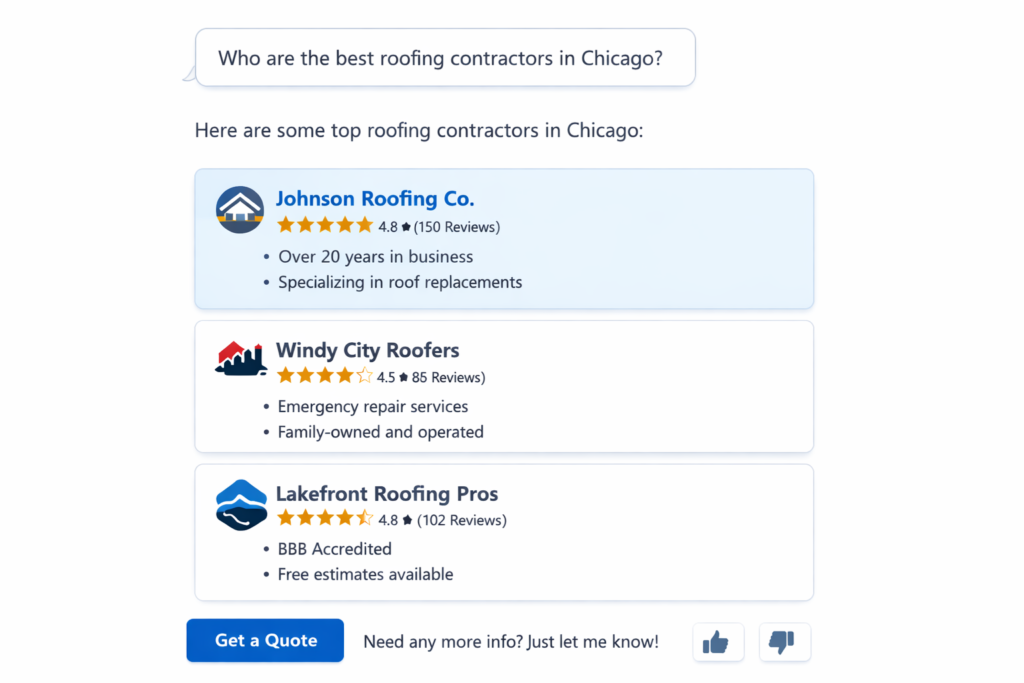

Search engines are evolving. With AI-driven tools like ChatGPT, Google’s AI Overviews, and Bing Copilot, traditional SEO isn’t enough. Generative Engine Optimization (GEO) is the new frontier—helping businesses appear in AI-generated responses and conversational search results.
This guide breaks down how home service businesses can rank in AI-generated answers, get mentioned in ChatGPT responses, and build trust with AI-driven search engines.

1. What is Generative Engine Optimization (GEO)?
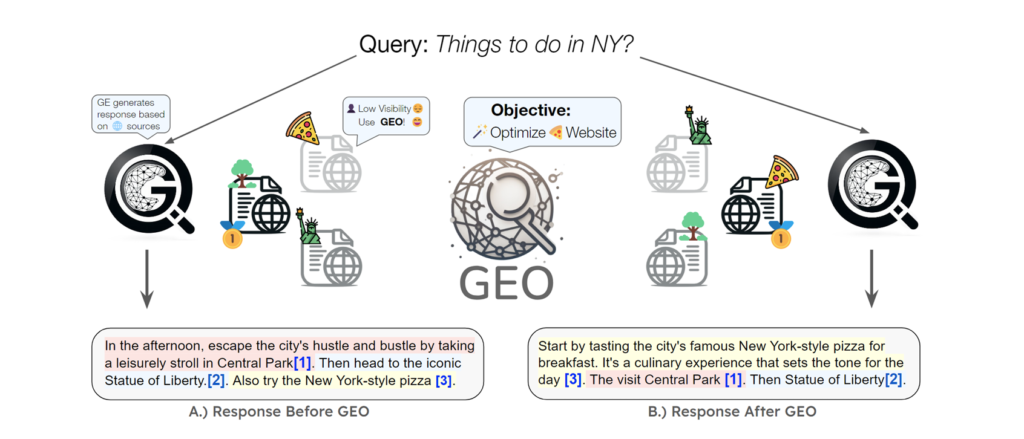
GEO is the process of optimizing content to increase visibility in AI-driven search engines and chatbots like ChatGPT, Perplexity, Google’s Search Generative Experience (SGE), and Bing AI.
Unlike traditional SEO, which focuses on ranking in search engine results pages (SERPs), GEO is about structuring content so AI models recognize, trust, and surface it in responses to user queries.
Alternative names for GEO include:
- AI Search Optimization
- ChatGPT SEO
- Search Generative Experience (SGE) Optimization
- AI Overviews Optimization
- Conversational Search Optimization
- LLM Optimization (LLMO)

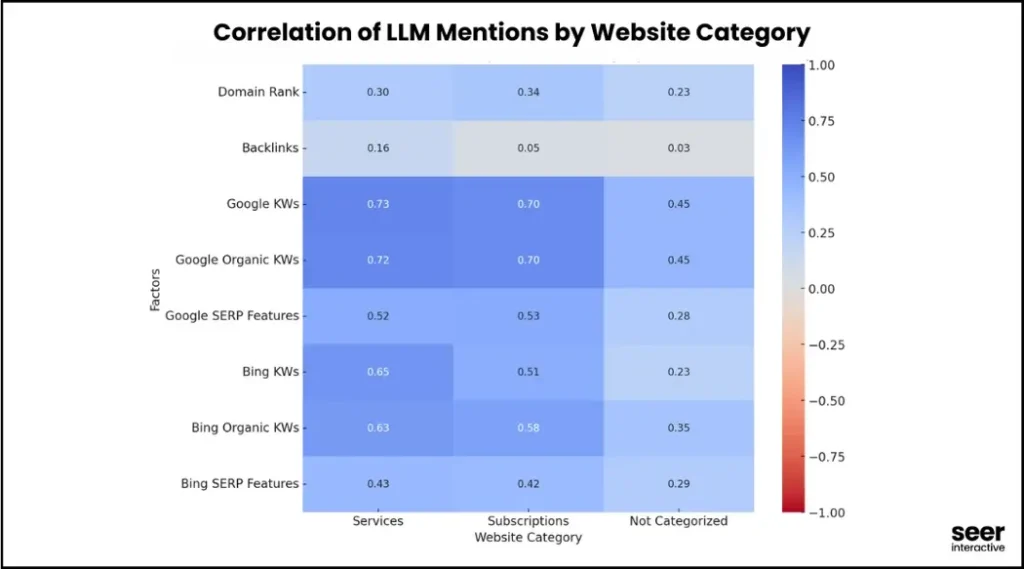
2. How AI Models Like ChatGPT Choose Answers
As an AI model, I (ChatGPT) generate responses by pulling from high-authority sources, structured content, and frequently cited websites. The key factors AI models use to select content include:
- Authority & Citations – Content cited in reputable sources has a higher chance of being included.
- Clear, Structured Answers – AI prefers well-organized content with headers, bullet points, and concise responses.
- Relevance & Context – Answers that closely match user intent are prioritized.
- Schema Markup & Structured Data – Using structured data helps AI interpret your content correctly.
- Engagement Signals – Frequently linked, shared, and discussed content has better visibility in AI-generated results.
![**Key AI Advancements Timeline**
- **November 2022:** Introduction of ChatGPT.
- **December 2022:** Launch of Perplexity.
- **February 2023:** Release of Llama.
- **March 2023:** Debut of Claude.
- **June 2023:** Google Bard evolves to Gemini with Generative Engine Optimization.
- **July 2023:** SearchGPT Beta goes live.
- **[Date TBD]:** Rank in A.I. debuts and the collaborative launch of ChatGPT + SearchGPT.
Explore these pivotal moments in AI development for strategic insights and innovations.](https://hookagency.com/wp-content/uploads/2025/02/Screenshot-2025-02-08-at-7.39.35-AM-1024x399.png)
3. How to Optimize for GEO (Step-by-Step Guide)
Step 1: Find What People Ask AI
- Use ChatGPT, Bing AI, and Google SGE to search for common industry questions.
- Use Google’s ‘People Also Ask’ & AnswerThePublic to find trending questions.
- Test how AI responds to relevant queries and analyze its sources.
Step 2: Structure Your Content for AI Readability
- Provide direct answers in 40-60 words, followed by in-depth explanations.
- Use bullet points, numbered lists, and clear headings.
- Format content like AI-generated answers (e.g., Q&A format, step-by-step guides).
Step 3: Add Schema Markup & AI-Friendly Metadata
- FAQ Schema – Helps AI identify and extract answers.
- HowTo Schema – Provides structured steps for tutorials.
- LocalBusiness Schema – Enhances visibility for service businesses.
Step 4: Increase Authority & AI Recognition
- Get more backlinks from reputable sources (news sites, industry blogs).
- Publish original research or case studies to establish credibility.
- Encourage customers to mention your business in reviews, articles, and forums.
Step 5: Optimize for Conversational Search & AI Bots
- Use natural, conversational phrasing similar to spoken queries.
- Ensure answers are concise but informative to match AI response styles.
- Regularly test AI chatbots to see if your content is being cited.
4. Best Tools for GEO Success
- Google Search Console – Tracks AI search visibility.
- ChatGPT & Bing AI – Tests how AI presents your content.
- SEMrush & Ahrefs – Finds AI-friendly keyword opportunities.
- AnswerThePublic – Reveals commonly asked AI search queries.
- Schema.org Validator – Ensures structured data implementation.
5. Common GEO Mistakes to Avoid
❌ Ignoring Schema Markup – AI needs structured data to interpret content accurately.
❌ Keyword Stuffing – AI prefers natural phrasing over repetitive keywords.
❌ Not Checking AI Responses – Regularly test how AI references your brand and adjust content accordingly.
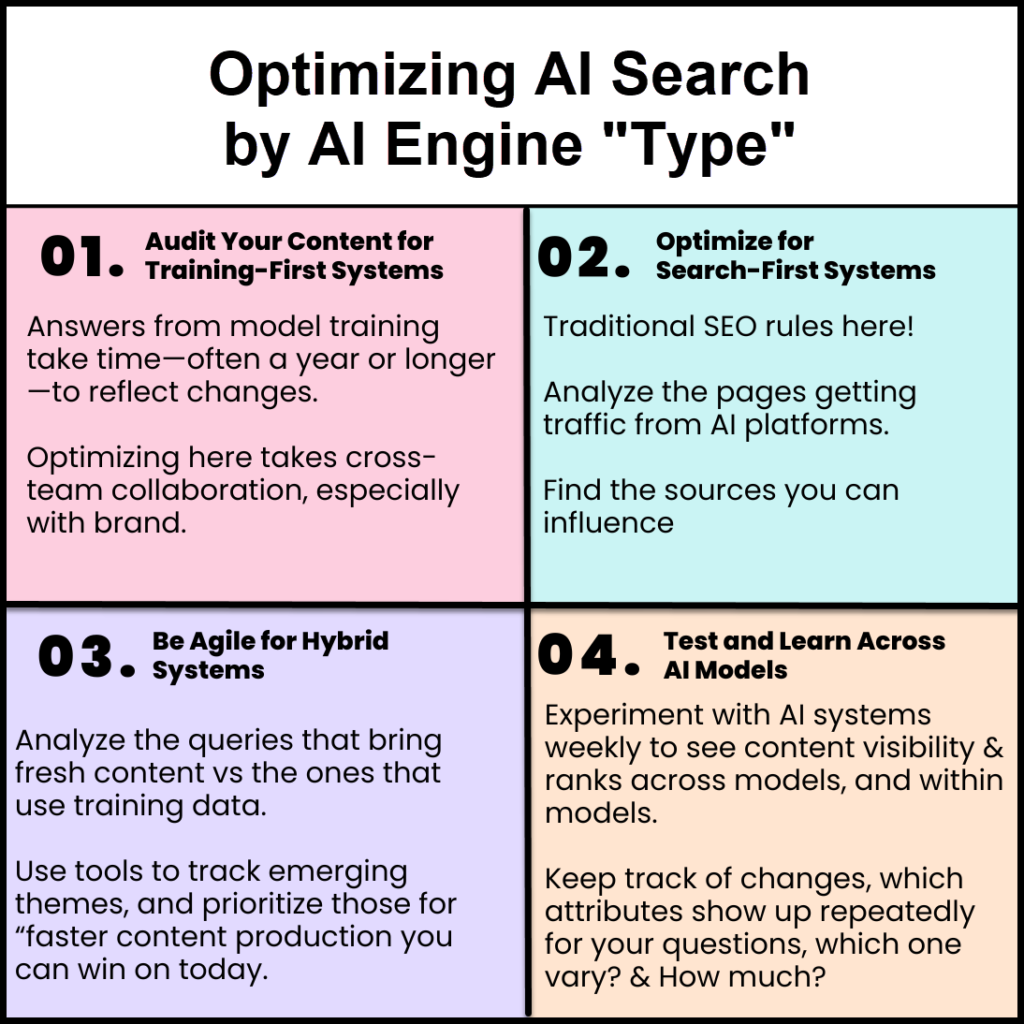
How to Know If AI Is Already Citing Your Competitors (And What to Do About It)
Here’s something most contractors never think to check. Open ChatGPT right now and type “best roofing contractor in [your city]” or “who should I call for HVAC repair in [your area].” See who comes up. If it’s not you, someone else is owning that real estate and they’re not paying per click for it.
This is the new competitive battlefield. And most contractors don’t even know the game is being played.
Step 1: Run the Test Across Multiple AI Platforms
One search on one platform tells you nothing. The AI landscape has shifted dramatically. ChatGPT still dominates with 64.5% of global AI chatbot traffic but Gemini has surged from just 5% to 21.5% in a single year. Perplexity is growing fast too. Each platform pulls from different sources and weights authority differently.
Run the same searches across all three:
- ChatGPT
- Google Gemini
- Perplexity
Search for your core services in your city. Search for questions your customers actually ask like “how much does a roof replacement cost in [city]” or “best HVAC company near [neighborhood].” Screenshot everything. This is your baseline.
What You’re Looking For
Are competitors being named directly? Is anyone being cited at all? Are there sources being linked, like a local directory, a review platform, or a specific blog post? If a competitor keeps showing up across multiple platforms and multiple queries, they have built something AI trusts. Your job is to figure out what that is.
Reverse Engineer What’s Working for Them
Go to their website. Look for:
- Do they have detailed FAQ pages answering specific local questions
- Are they consistently getting reviews on Google, Yelp, and industry platforms
- Do they have structured data and schema markup implemented
- Are they being mentioned or cited in any local news, trade publications, or home improvement blogs
- How long and how consistently have they been publishing content
AI models are not random. They cite sources they have encountered repeatedly across authoritative contexts. If your competitor is showing up, there is a traceable reason.
Close the Gap: What to Do Next
Don’t try to fix everything at once. Prioritize in this order.
Get your reviews working for you. AI pulls heavily from review platforms. Volume, recency, and the language homeowners use in reviews all matter. A contractor with 200 detailed Google reviews mentioning specific services and neighborhoods is far more likely to get cited than one with 40 generic ones.
Create content that directly answers what people ask AI. Not blog posts stuffed with keywords. Actual answers to real questions. “How much does a roof replacement cost in Minneapolis?” written as a clear, structured, direct answer is exactly what AI looks for.
Build citations across platforms AI trusts. Angi, HomeAdvisor, Houzz, Thumbtack, local chamber of commerce listings. The more places your business is accurately and consistently mentioned, the more signals AI has to work with.
The Future of Search is AI-Driven
Generative Engine Optimization is essential for businesses that want to remain visible in AI-powered search. By optimizing for structured content, AI-friendly phrasing, and authoritative sources, you can ensure your business is recognized and referenced by AI models like ChatGPT, Google SGE, and Bing AI.
🚀 Want to improve your AI search visibility? Hook Agency specializes in GEO-focused SEO strategies to help home service businesses rank in both traditional and AI-generated search results. Contact us today!
FAQs
Is GEO replacing traditional SEO?
Not yet. But it’s becoming just as important. The smart move right now is building for both simultaneously rather than treating them as separate strategies.
How do I know if my content is being cited by AI?
Search for your services and location directly in ChatGPT, Gemini, and Perplexity. If competitors show up and you don’t, your content isn’t being recognized as authoritative enough yet.
How long does GEO take to work?
Faster than traditional SEO in some cases. AI models update their knowledge regularly. Strong structured content, fresh reviews, and third party citations can start making a difference within weeks.
Do reviews actually help with AI visibility?
Yes. AI pulls from review platforms heavily. Volume, recency, and the specific language homeowners use in reviews all contribute to how AI perceives your authority.