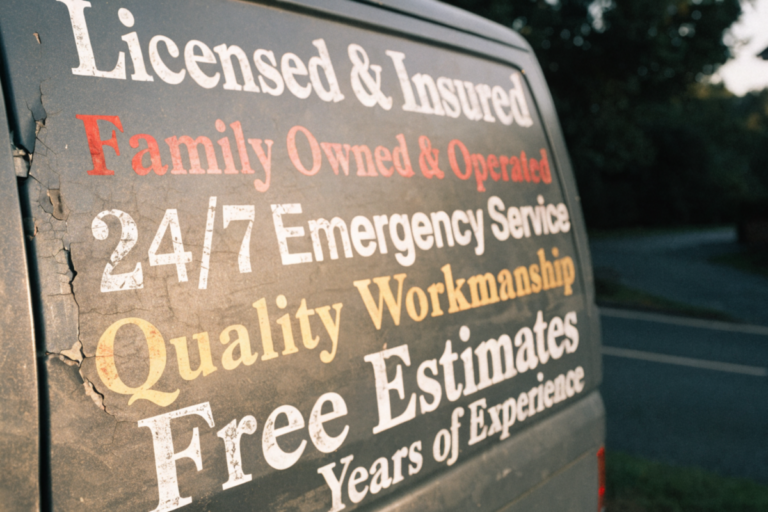

A homeowner found two HVAC companies on Google. Both had good reviews. Both offered free estimates. She called one and not the other.
The only difference was what she read on the About page. One had a real photo of the owner, a license number, and a line about the family being local for 18 years. The other said “We are committed to excellence in all we do.” She moved on.
What homeowners are doing when they land on your About page:
- Running a background check before they invite a stranger into their home
- Looking for a real human being, not a corporate voice
- Confirming the business is local and legitimate
- Deciding whether to call or keep searching
Your About page is the page homeowners visit right before they decide to call you or keep scrolling, and most contractor About pages are written to impress other contractors, not to convince a homeowner to pick up the phone.
The Page Most Contractors Ignore Is One Homeowners Always Check
The About page is one of the most visited pages on a contractor website and one of the least optimized, which is why most contractors lose potential customers there without ever knowing it happened.
The behavior pattern is consistent. A homeowner finds a contractor through search or a referral, lands on the homepage, scans the service list, and clicks About before they do anything else. Not for entertainment. They are looking for a company they feel safe trusting before they pick up the phone.
That judgment is formed directly from what they find on that page. How homeowners actually choose contractors maps out the full decision sequence. The About page is one of the most important stops in it.
If the page is thin, generic, or reads like a mission statement from a corporate training manual, the homeowner closes the tab and calls someone else. No feedback. No second chance.
What Homeowners Are Actually Looking For When They Land on Your About Page
Homeowners are not looking for your company history. They are running a background check.
HVAC and home service work requires entry into someone’s home. The trust threshold is higher than almost any other local buying decision. The About page is where that safety check happens.
Every element on it should answer one question: can I trust these people in my home?
They Want to Know Who Is Coming to Their Home
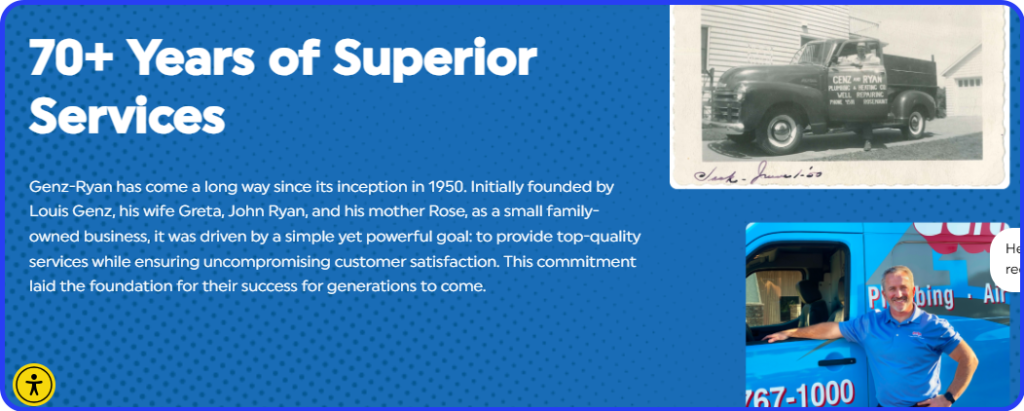
A real name and a real face, not a logo. A photo of the owner or crew at an actual job site carries more weight than a polished studio headshot, and far more than no photo at all.
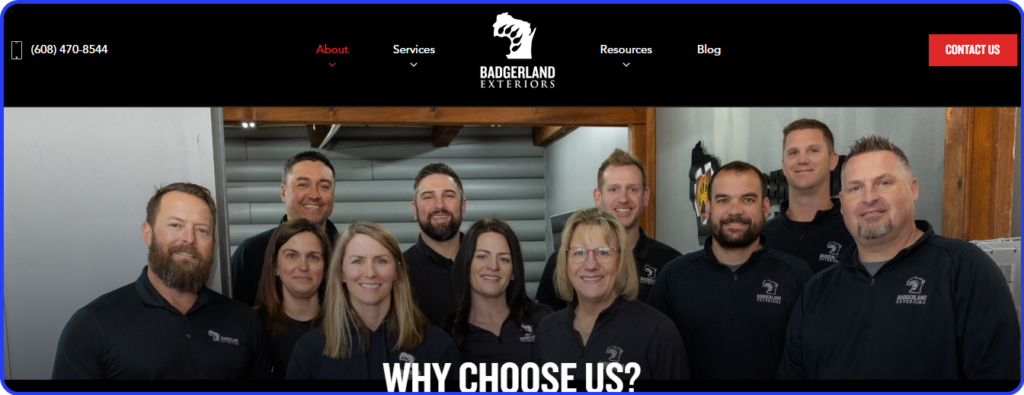
The homeowner wants to picture the person who will knock on their door. This is also why stock photos backfire so badly on contractor websites. Why stock photos are costing contractors jobs covers this in detail, but the short version: homeowners can identify generic stock photos and they signal inauthenticity at exactly the moment trust is being formed.
And if AI-generated images are anywhere near the question, the data is unambiguous. Getty Images’ “Building Trust in the Age of AI” report, based on a survey of over 30,000 adults across 25 countries, found that almost 90% of consumers want to know whether an image was created using AI, and 98% say authentic images and videos are pivotal to establishing trust. The About page is not the place to cut corners on photography.
They Want Proof the Business Is Real and Legitimate
Contractor license numbers, insurance status, and trade certifications reduce the homeowner’s perceived risk of hiring. Most contractor websites bury these in footers.
Less than 15% of website visitors scroll to the footer, according to Baymard Institute usability research, which means most homeowners never see credentials that could have closed the job. Credentials belong near the top of the About page, not at the bottom of the site.
For HVAC contractors, NATE certification belongs here. For roofers, manufacturer certifications like GAF Master Elite or Owens Corning Preferred Contractor. For plumbers, the Master Plumber designation. These are the specific credentials homeowners researching carefully actually recognize and value.
They Want to Feel Something Human
A sentence about why the owner started the business. A reference to the city they serve. One honest line about the team.
This does not need to be a grand origin story. One honest sentence from a real person carries more weight than three polished paragraphs that could belong to any company in any city.
What Most Contractor About Pages Get Wrong
The most common mistake: writing an About page that tells the contractor’s story instead of answering the homeowner’s question.
The homeowner does not arrive curious about the business. They arrive skeptical. The About page has to convert that skepticism into enough confidence to pick up the phone.
Opening With Company History No One Asked For
A homeowner with a broken AC does not care when the company was founded. They need to know what the company does, where it operates, and how fast it can respond. Founded in 1987 buried in the middle of a paragraph is fine. Leading with it is a conversion killer.
The founding year tells the homeowner how old the company is. The About page should tell them why that matters to their situation right now.
Writing in a Voice That Could Belong to Anyone
“Committed to excellence.” “Dedicated to quality.” “Your satisfaction is our priority.”
These phrases appear on thousands of contractor websites. They carry no weight because they are not specific. A specific claim, “we answer the phone 24 hours a day, seven days a week, including holidays,” is a commitment a homeowner can test. A vague claim is just noise that confirms nothing.
Hiding Credentials Where Nobody Looks
Research from HVAC Webmasters shows that plumbing and HVAC websites displaying license numbers, certifications, and professional affiliations above the fold achieve significantly higher conversion rates than those that bury credentials in footers or below long paragraphs of background copy.
The credential needs to be in front of the homeowner at the moment they are deciding. If it sits below two paragraphs of founder story, most homeowners will never reach it.
Forgetting That the Page Has a Job to Do
Many About pages end without a next step. No phone number. No form link. Just company values and a paragraph about the team. The homeowner who read everything is now stuck with nowhere to go.
What a High-Converting About Page Actually Includes
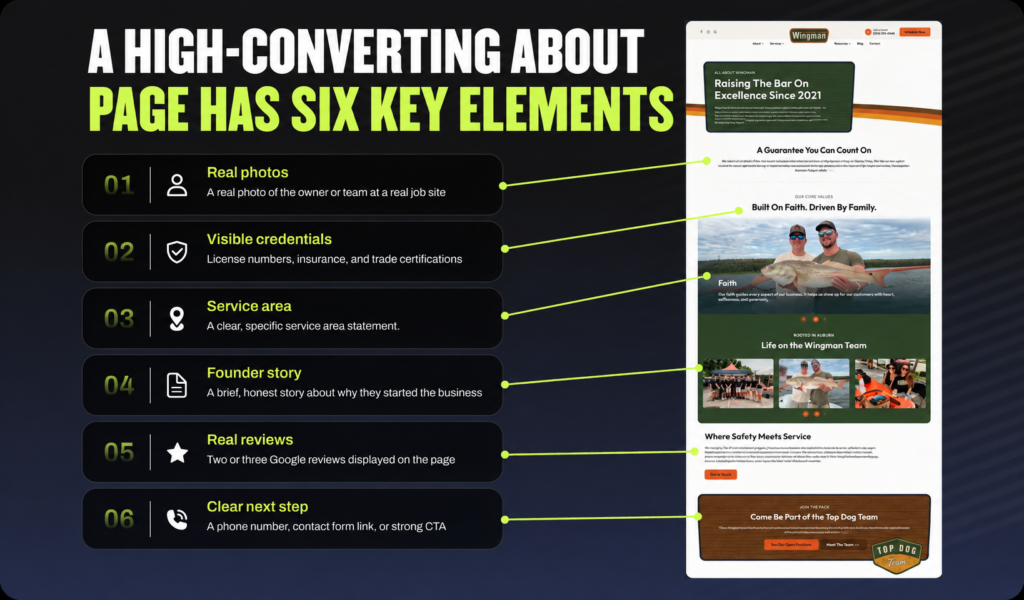
A contractor About page that converts has six things on it. Most contractors have maybe two.
In order of what homeowners look for first:
1. A Real Photo of the Owner or Team
This does not need to be a professional shoot. A clear phone photo of the crew in uniforms at a finished job site is enough and often more convincing than a studio headshot. Real photos of real people at real jobs signal authenticity in a way stock images never will.
One contractor that gets this right is Wingman Heating and Cooling in Auburn, Alabama. Their About page uses real team photos throughout, and they include a section called “Where Safety Meets Service” that directly names the thing homeowners are actually anxious about: letting a stranger into their home. It does not try to sound national. It reads like a real local business talking to a real local homeowner. That specificity is doing more trust work than any polished copywriting ever could.

2. Credentials Displayed Early and Clearly
License number, insurance status, and trade certifications near the top of the page, not buried in the footer. Early and visible. The specific credential depends on the trade:
- GAF Master Elite or Owens Corning Preferred Contractor for roofing
- NATE certification and manufacturer dealer status for HVAC
- Master Plumber designation for plumbing
If the homeowner has to scroll to the bottom of the site to find the license number, most of them never will. Less than 15% of website visitors make it to the footer. Put the credential where the decision is being made.
Spartan Home Services in Northern California is a strong reference point here. Their About page has the GAF President’s Club badge, their CSLB license number, a BBB A+ rating, and a third-generation family contractor framing all visible within the first scroll. By the time a homeowner reaches the founder story, they have already done the safety check. That sequencing is not accidental.
3. A Plain-Language Service Area Statement
“We serve homeowners across King County” is better than “serving the greater metropolitan area.” Specificity builds local credibility and supports local SEO entity signals. A homeowner should be able to confirm within the first few seconds that the business actually serves their neighborhood.
4. A Brief and Honest Founder Story
One or two sentences about why the owner started the business, what they care about most, and why they are still doing it. Not a corporate origin narrative. A real person writing to another real person.
“I started this company because I was tired of watching homeowners get burned by contractors who cared more about the next job than the current one” is more convincing than “we founded our company on the principles of integrity and excellence in 2009.”
5. Real Reviews Pulled Directly Onto the Page
Two or three specific Google reviews displayed directly on the page, not one click away on a separate tab. Social proof needs to be in front of the homeowner at the exact moment they are deciding.
According to BrightLocal’s Local Consumer Review Survey 2026, 89% of consumers expect a business to respond to its reviews and 80% are more likely to use a business that responds to all of them. Reviews on the About page paired with visible owner responses add a second trust layer at no extra cost. The full guide to online reviews for contractors covers how to pull this into the rest of the site.
6. A Clear Next Step at the Bottom
The About page is not the end of the visit. It should close with a phone number, a contact form link, or a short CTA. The homeowner has done their background check. Give them the door.
“Ready to schedule a service call? Call us at [number] or fill out the form below” is enough. End on action, not on company values.
Frequently Asked Questions
Does an About page actually affect whether homeowners call a contractor?
Yes. It is one of the most visited pages on a contractor website, and homeowners use it to decide whether the business feels trustworthy before they call. A generic or thin About page is often where a potential call is lost without the contractor ever knowing it happened.
What should be on a contractor’s About Us page?
A real photo of the owner or team at an actual job site, license and insurance information displayed near the top, a plain-language explanation of the service area, a brief honest founder story, two or three specific customer reviews, and a clear next step such as a phone number or contact link.
Should a contractor put their license number on the About page?
Yes, and it should appear near the top, not buried in the footer. Research shows that displaying credentials above the fold increases conversion rates for plumbing and HVAC websites. Less than 15% of website visitors scroll to the footer, which means most homeowners never see license information that could have confirmed the business is legitimate.
What makes the About page different for home service businesses compared to other industries?
A homeowner is deciding whether to let a stranger into their house. That is a higher trust threshold than most buying decisions. Every element on the About page should answer one question: can I trust these people in my home?
Your About Page Is Probably Costing You Calls
Most contractors have a working website and a broken About page. Fixing it costs nothing except the time to rewrite it.
The homeowner who clicked About was already interested. A generic page turns that into a closed tab. A specific, human, credential-visible page turns it into a phone call.
For contractors who want a full website assessment covering how every page performs for trust and conversion, that is the work we do at Hook Agency. See what home services web design looks like when it is built to convert homeowners. And for the broader system the website fits inside, the home services marketing strategy guide covers where the About page connects to everything else.