The short answer
A good marketing ROI for a home service company is about 5:1, or $5 back for every $1 spent. 1:1 is break-even. 10:1 is excellent but rare.
- ROI = (gross profit from marketing – marketing cost) ÷ marketing cost
- Use gross profit, not revenue, or you will overrate every channel
- Over 5:1 on a channel? Spend more there
- Track every call and form back to its source
Originally published February 4, 2025. Updated November 5, 2026.
Return on investment (ROI) is a key metric in marketing, but what counts as a “good” ROI?
- Most contractors guess at ROI. Don’t be one of them.
- At least get your basic ROI for all of your marketing total.
- Then figure out what your return is on individual marketing methods.
This article will help you do that, but will also explain what good ROI is and when to double down, along with a bunch of graphs and statistics for the topic.
This guide explains what a good ROI looks like, how to measure it, and why accurate tracking can improve marketing performance. Plus, we’ll highlight several third-party validation tools to help with digital marketing attribution and ROI tracking.

How to Calculate ROI for Marketing
The basic formula for ROI in marketing is:
ROI = ((Gross Profit Generated – Marketing Cost) / Marketing Cost) x 100%
Gross Profit = Revenue from marketing-driven sales – Cost to provide the service.
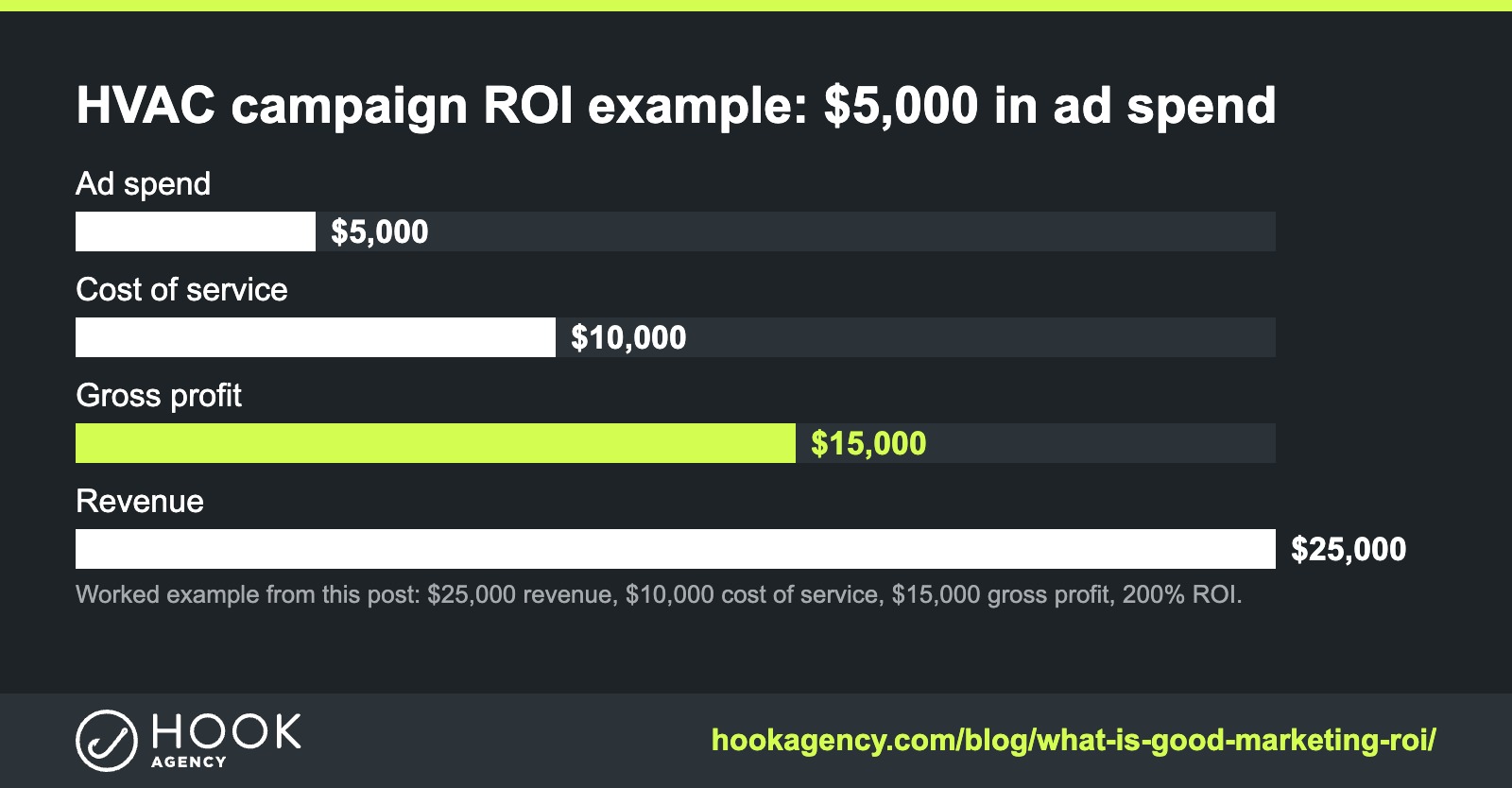
For example, if an HVAC company spends $5,000 on a digital ad campaign and generates $25,000 in revenue from leads acquired, with a service cost of $10,000:
Gross Profit = $25,000 – $10,000 = $15,000
ROI = (($15,000 – $5,000) / $5,000) x 100% = 200%
This means for every dollar spent, the company made back $2 in profit.
What Is a Good ROI in HVAC, Roofing, and Plumbing?
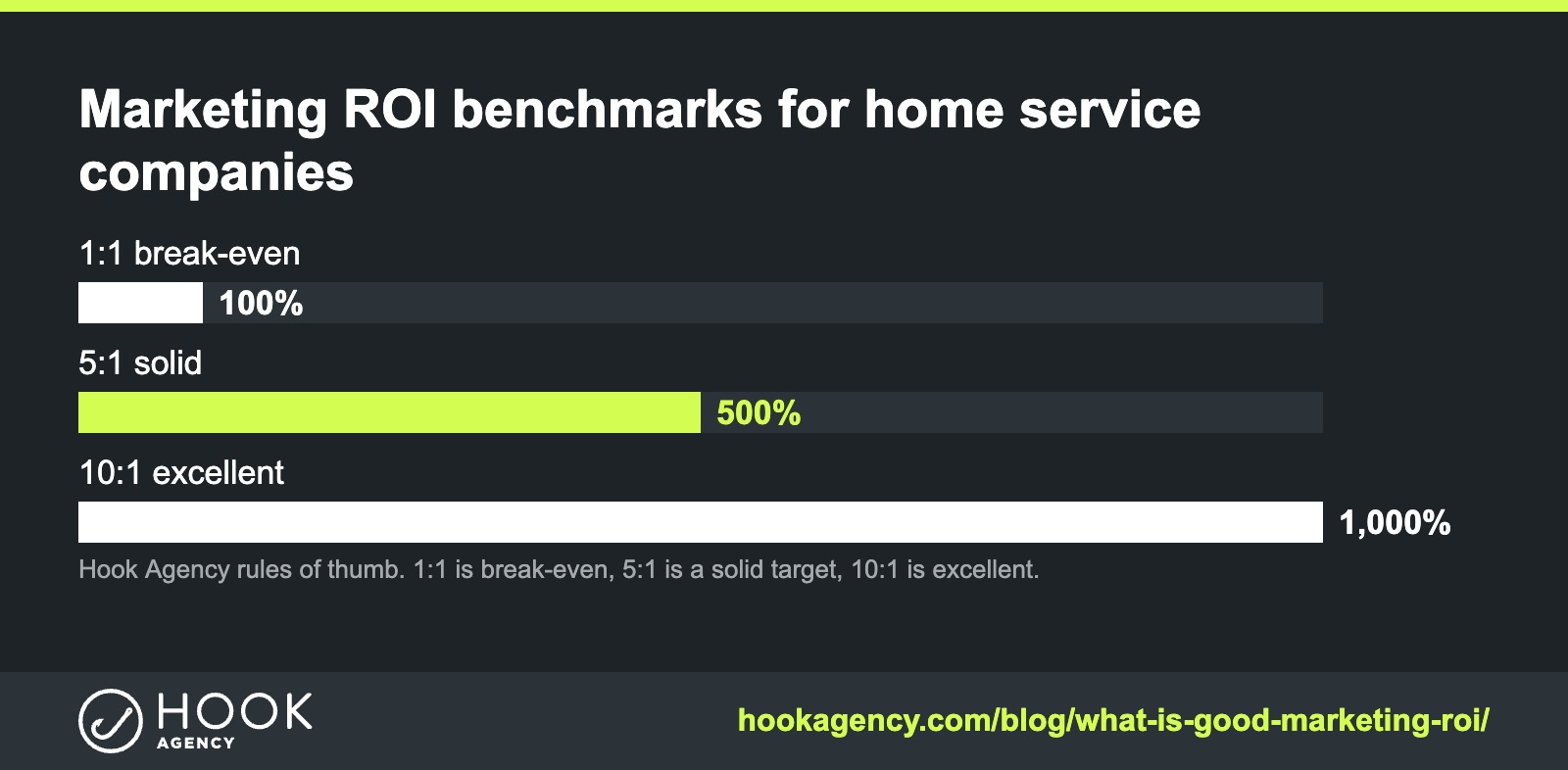
Our rules of thumb:
- 5:1 ROI (500%) is a solid target for most home services.
- 10:1 ROI (1,000%) is considered excellent but rare.
- 1:1 ROI (100%) means breaking even. Anything below that is a loss.
That said, ROI expectations vary by business goals. If a campaign focuses on long-term brand awareness, the immediate ROI may be lower but still valuable.

What should you do if your ROI is over 5:1?
Spend more!
Especially if your Google ads, Local Service Ads, or SEO efforts are ramping up into that 6 or 7x territory.
Don’t just count your chips.
Double down.
Now is not the time to be shy. If your ROI is high, push in to that particular marketing method.

Industry-Specific ROI Benchmarks
In our experience, home service companies with strong local SEO get better long-term ROI than companies that live on paid clicks alone, because rankings keep producing calls after the spend stops.
Call tracking is the fastest way to see which channels produce booked jobs, not just leads.

How to Measure Marketing ROI Effectively
1. Track Every Lead Source
- Use call tracking and CRM tools to link leads to marketing channels.
- Google Analytics and UTM parameters can track website conversions.
2. Calculate Customer Lifetime Value (CLV)
- A plumbing company that gains a customer through an ad might see repeat business over time. The first job might generate a 200% ROI, but CLV increases that significantly.
3. Implement Multi-Touch Attribution
- Many home service businesses run ads, SEO, and email campaigns simultaneously. Instead of crediting one source, businesses should use multi-touch attribution models to track the entire customer journey.

- Leads from Google, Maps and AI search
- Nobody else is buying the same lead
- You own your website and ad accounts
“Hook Agency has been an incredible partner for our digital marketing growth.”
Kristin Sullivan, Bob’s ACFocused on the map? See Google Maps SEO
Third-Party Tools for ROI Validation and Attribution
Marketing attribution is crucial for proving ROI. The following tools help track and validate digital marketing performance:
- CallRail: Tracks phone calls from marketing campaigns and assigns them to the correct lead source.
- Google Analytics: Measures website traffic, lead conversions, and multi-touch attribution.
- Searchlight Digital: Helps HVAC, roofing, and plumbing companies attribute ROI across multiple marketing channels, offering deeper insight into customer behavior.
- HubSpot Marketing Hub: Offers detailed campaign tracking and automated reporting to monitor ROI over time.
- WhatConverts: Tracks calls, chats, and form submissions to attribute revenue to specific campaigns.
Using these tools ensures marketing efforts align with revenue generation, not just clicks and impressions.

Why Multi-Channel ROI Tracking Matters
Marketing today spans multiple channels: Google Ads, SEO, email, and social media. A roofing customer might see an ad, check reviews on Google, and visit your website before calling. If you only measure last-click ROI, you might overlook key marketing channels that played a role in the sale.

How long does marketing last? (Marketing ROI Statistics)
Doing SEO – your R.O.I. lasts long after your investment.
Doing PPC – still there is some but not as much lingering effects of that marketing after ads are done.
- SEO Longevity: expect 3 to 6 months before a new SEO push shows real movement. Good content can keep driving traffic for years with light updates.
- Google Ads Impact: leads show up right away, and they stop the day you pause the budget.
- Facebook Ads Over Time: ad fatigue sets in fast, so refresh your creative regularly.
- Content Marketing Lifespan: HubSpot reports that compounding blog posts generate 38% of total blog traffic, meaning older content can continue to drive results for years, whereas social media posts have a lifespan of only a few hours to a few days.
- Paid vs. Organic Longevity: PPC gives instant visibility but stops when the campaign ends. Top-ranking organic pages can keep producing traffic for years.
These insights highlight the trade-offs between short-term impact (PPC and social ads) and long-term growth (SEO and content marketing).
Frequently Asked Questions
What is a good ROI for marketing?
About 5:1 for most home service companies. Break-even is 1:1, and 10:1 is excellent but rare.
Should I use revenue or profit to calculate marketing ROI?
Gross profit. Revenue makes every channel look better than it is because it ignores the cost to do the job.
How long does it take to see ROI from SEO?
Expect 3 to 6 months before a new SEO push shows real movement. The upside is that rankings keep producing calls after you stop paying for them.
What should I do if a channel is returning more than 5:1?
Put more money into it until the return starts to drop. That is the clearest signal you will get.
The Bottom Line: Define Your Own ‘Good’ ROI
While a 5:1 ROI is often cited as a strong benchmark, the best marketing ROI depends on business goals, industry, and campaign strategy. By combining SEO, PPC, and call tracking with data-driven attribution models, HVAC, roofing, and plumbing companies can maximize every dollar spent.
If you need a custom digital marketing strategy that relentlessly pursues results, Hook Agency specializes in SEO, PPC, and web design for home service businesses. We focus on transparent, measurable, and high-performing marketing, because you deserve more than just vanity metrics.
🚀 Ready to improve your marketing ROI? Contact Hook Agency today.