
The short answer
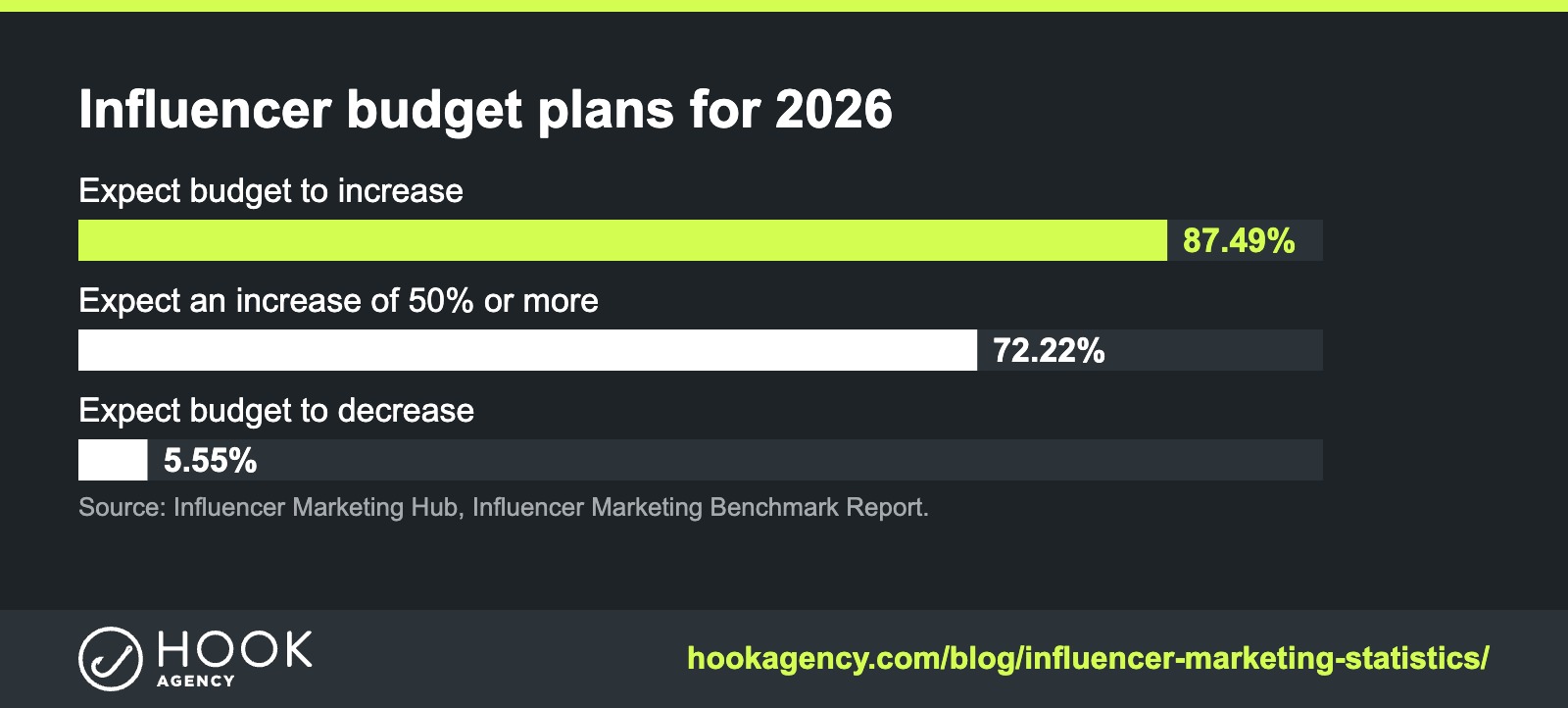
87.49% of brands expect their influencer budget to grow in 2026, and 72.22% expect it to grow by 50% or more (Influencer Marketing Hub).
- TikTok is the most-planned influencer platform for 2026 at 31%
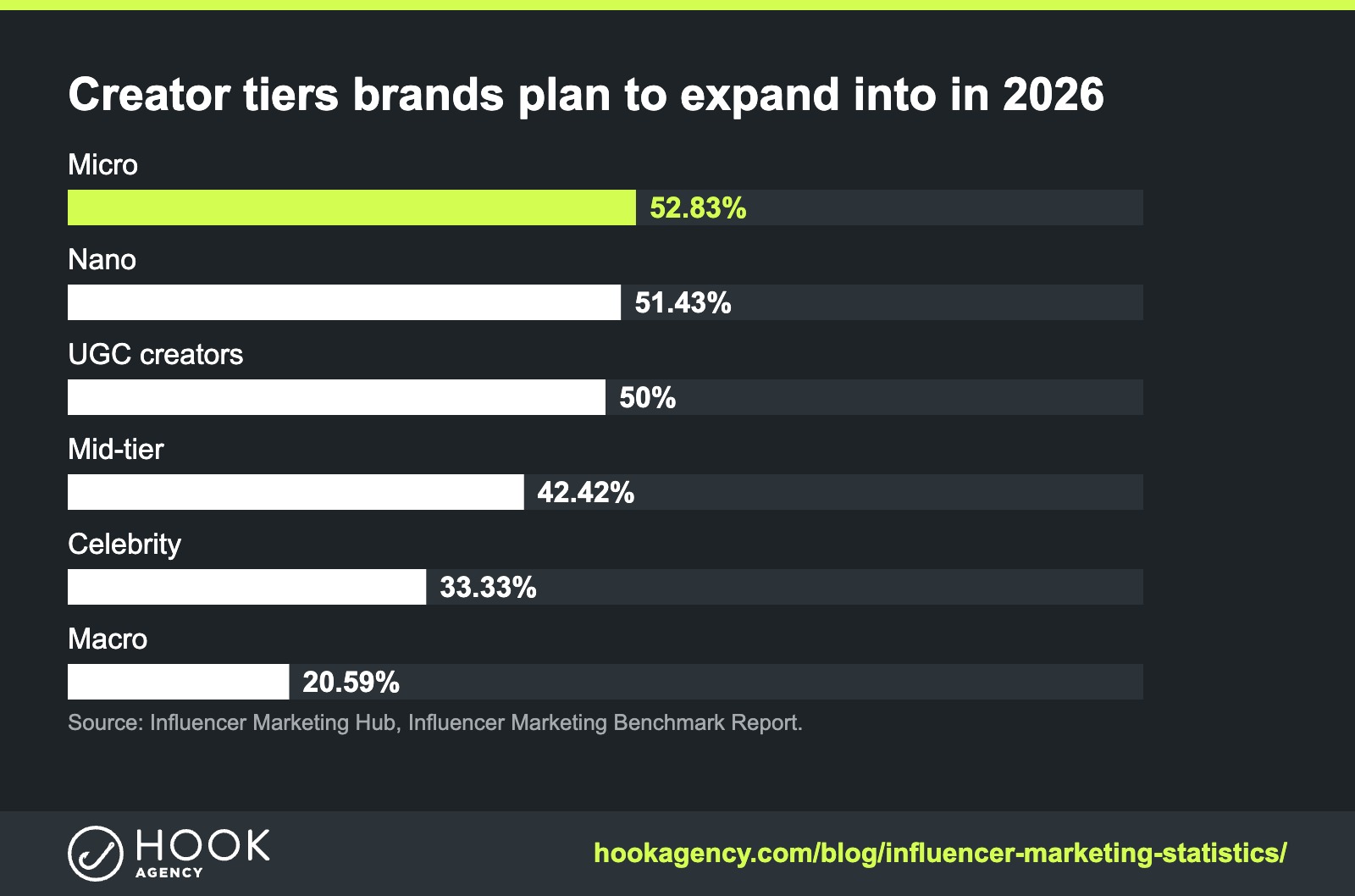
- Micro (52.83%) and nano (51.43%) creators lead expansion plans
- Only 5.55% expect to cut influencer budgets
- For contractors: local creators and happy customers beat celebrities
Originally published July 9, 2023. Updated November 5, 2026.
Everyone hates the word ‘influencers.’
Why? Because the people that use it the most – likely don’t deserve the title.
However:
- Influencer marketing continues to prove itself as a potent tool for brands seeking to enhance their reach and authenticity.
- As traditional marketing strategies are steadily losing ground to the power of social media influencers, it’s essential for businesses to stay ahead of the curve and fully understand the significant impact of this marketing trend.

Influencer marketing statistics for 2026
- 87.49% of brands surveyed expect their influencer budget to increase in 2026, and 72.22% expect it to grow by 50% or more. Source: Influencer Marketing Hub
- Only 5.55% expect their influencer budget to shrink. Source: Influencer Marketing Hub
- TikTok is the most-planned platform for 2026 influencer campaigns, cited by 31% of respondents. Source: Influencer Marketing Hub
- Micro-influencers lead brands’ 2026 expansion plans at 52.83%, followed by nano at 51.43% and UGC creators at 50.00%. Source: Influencer Marketing Hub
- 62% of adult TikTok users say they use the app for product reviews or recommendations. Source: Pew Research Center
- Leads from Google, Maps and AI search
- Nobody else is buying the same lead
- You own your website and ad accounts
“Hook Agency has been an incredible partner for our digital marketing growth.”
Kristin Sullivan, Bob’s ACFocused on the map? See Google Maps SEO
What this means for home service companies
Skip the celebrities. The local version of influencer marketing works: a neighborhood creator, a local real estate agent, or your happiest customer showing the finished job. Small audiences, high trust, low cost. That lines up with where brands are heading too, toward micro and nano creators.
See it in action: HVAC influencers, plumbing influencers and the coolest roofers on Instagram.
Historical influencer marketing statistics (2024 version)
These are from an earlier version of this post. We kept them for context. Many were published without source links, so treat them as directional and lean on the sourced 2026 numbers above.
35 Influencer Marketing Statistics for 2024
- As of 2024, the influencer marketing industry is projected to reach a worth of $15 billion, up from $8 billion in 2019.
- Nearly 90% of marketers believe that the return on investment from influencer marketing is comparable to or better than other marketing channels.
- 80% of marketers find influencer marketing effective.
- The average earned media value per $1 spent on influencer marketing is $5.78.
- Over 60% of teenagers trust influencers more than traditional celebrities.
- Instagram remains the top platform for influencer marketing, with over 1 billion active users.
- 89% of marketers use engagement metrics (likes, comments, shares) to measure the success of influencer marketing campaigns.
- 70% of millennial consumers are influenced by the recommendations of their peers in buying decisions.
- 71% of marketers believe that influencer partnerships are beneficial for generating branded content.

- About 63% of consumers trust influencer messages more than brand advertisements.
- Over 50% of women have made purchases due to influencer posts.
- 40% of consumers report that they’ve purchased a product online after seeing it used by an influencer.
- The use of influencers for marketing campaigns among B2B companies increased by 31% in 2024.
- The fashion and beauty industry is the most popular for influencer marketing, accounting for over 35% of total campaigns.
- Around 67% of marketing and communications professionals engage with influencers for content promotion.

- Micro-influencers, those with 1,000 to 100,000 followers, are the most commonly used tier of influencers.
- 95% of consumers are likely to follow a brand if the influencer they follow shares a brand post.
- 90% of Instagram users follow at least one business.
- In 2024, marketers spent 65% more on Instagram influencer marketing than in 2021.
- Video content is the most popular content type used in influencer marketing, with a usage rate of 89%.
- Brands get an average return of $6.50 for every $1 spent on influencers.
- Gen Z is twice as likely to make a purchase based on an influencer recommendation compared to millennials.

- About 70% of businesses consider the quality of customers and traffic from influencer marketing as better than other sources.
- TikTok influencers with over 2.5 million followers charge an average of $600 per post.
- More than 55% of fashion and beauty companies have used influencer marketing.
- 83% of people say Instagram has helped them discover new products or services.
- The influencer marketing spend on YouTube increased by 40% in 2024.

- 74% of influencers prefer long-term collaborations with brands over one-time partnerships.
- 52% of marketers plan to increase their influencer marketing budget in the next year.
- 77% of consumers are more likely to buy new products when they learn about them from friends or family.
- Over 60% of marketers believe that influencer marketing helps boost customer loyalty and build long-lasting relationships.
- Around 78% of marketers use branded or hashtag mentions to track influencer marketing results.
- 64% of influencers believe that Instagram will continue to be the most important platform for their work in the next year.
- The use of Instagram Stories in influencer marketing increased by 60% in 2024.
- Influencer marketing campaigns focused on branding or engagements generate 8x more ROI than those focused on direct sales.


Influencer marketing in 2024
These 35 statistics reveal the undeniable power of influencer marketing in the digital era. As it continues to expand and evolve, the role of influencers in shaping consumer behavior is more prominent than ever. Brands need to embrace this changing landscape and capitalize on the immense potential of influencer marketing.
Remember, successful influencer marketing is not just about numbers but about building meaningful, authentic relationships that benefit brands, influencers, and consumers alike. By doing so, businesses can harness the power of influencer marketing and leverage it to drive growth and success in 2024 and beyond.
Frequently Asked Questions
Is influencer marketing growing?
Yes. In Influencer Marketing Hub’s latest benchmark, 87.49% of brands expect their influencer budget to increase in 2026.
What type of influencer is best for a small business?
Micro and nano creators. They are cheaper, more trusted locally, and they are where most brands plan to expand.
Can a home service company use influencer marketing?
Yes, at a local level. A neighborhood creator, a real estate agent or a happy customer showing the finished job works better than a big name.