
Local SEO for contractors is starting to feel like a street fight, especially when you are competing against national franchises with giant budgets and an army of location pages.
Independent contractors are asking one question:
How do we stand out when the big brands keep crowding the map pack?
And franchises? They are wondering the opposite:
How do we rank every location without Google treating us like a duplicate factory?
Both sides are battling the same problem: visibility. One brand. One service area. One shot at showing up before the homeowner scrolls.
The truth is, franchise SEO and local SEO do not play by the same rules… but the companies that understand both can outrank anyone, even the ones with deeper pockets. Let’s break down the real differences, the hidden opportunities, and the moves that make your business rise to the top.
How Google Decides Who You Are Before It Decides Where You Rank
Before Google ranks you, it puts you in a box.
And once you understand the box you’re in, the entire SEO strategy starts to make sense. This is the real difference between SEO and local SEO: Google isn’t just crawling your site, it’s defining your business model, your footprint, and how trustworthy your signals look compared to everyone else in your market.
A recent industry insight shows that 83% of 2025 SEO efforts focus on verified growth, with 40% of budgets shifting toward local SEO for franchises because they simply need more localized credibility than independents.
Let’s break down how Google reads each type of contractor.
Single Location Contractors and the Power of Tight Proximity
Google tends to favor single-location contractors because the footprint is clean and easy to understand. Your signals point to one service area, one NAP listing, one Google Business Profile.
This gives independents advantages:
- Clear relevance for nearby searches
- Stronger proximity signals
- Easier local link building
- Less risk of duplicate content or mixed NAP data
Google sees you as the “local expert next door,” which is exactly what most homeowners search for.
But your authority must come from depth, not scale. Google wants to see hyperlocal pages, real photos, local reviews, and consistency across every place your business is listed.
Multi-Location Franchises and the Challenge of Shared Authority
Franchises bring a completely different dynamic. Google sees the brand first, then tries to understand each location individually. That is where the ranking friction begins.
Franchises benefit from:
- High domain authority
- Strong brand trust
- Corporate-level SEO investment
But they struggle with:
- Duplicate content across locations
- NAP inconsistencies
- Weak local signals on franchise pages
- Corporate templates that lack local depth
This is why franchises often get outranked by small contractors who publish real, neighborhood-specific content.
A franchise location must convince Google it’s not just “Brand Name – City.” It needs local signals that stand on their own: localized service descriptions, local backlinks, real reviews tied to that exact branch, and unique photos that prove it exists in the community.
How Google’s Interpretation Changes the SEO Playbook
Once Google identifies your model, the algorithm shifts how it values your ranking signals.
For independents, Google wants:
- Proximity
- Relevance
- Local authority
- Neighborhood-level content
For franchises, Google demands:
- Clean location structure
- Ironclad NAP consistency
- Unique localized pages
- Local reviews at each location
- Signals proving each branch is active in its community
The Map Pack War: What Actually Gets You Into the Top 3
Landing in the map pack is not luck. It is not who has the nicest website. It is a street fight between relevance, proximity, and activity, and Google is watching every move you make. If you want those top three spots, you need the signals Google trusts most, delivered consistently.
Here is what actually moves the needle:
- An airtight Google Business Profile
Filled out completely. Categories dialed in. Service areas defined. Hours accurate. Posts updated. Most contractors treat GBP like a checklist. The ones who win treat it like a second website.

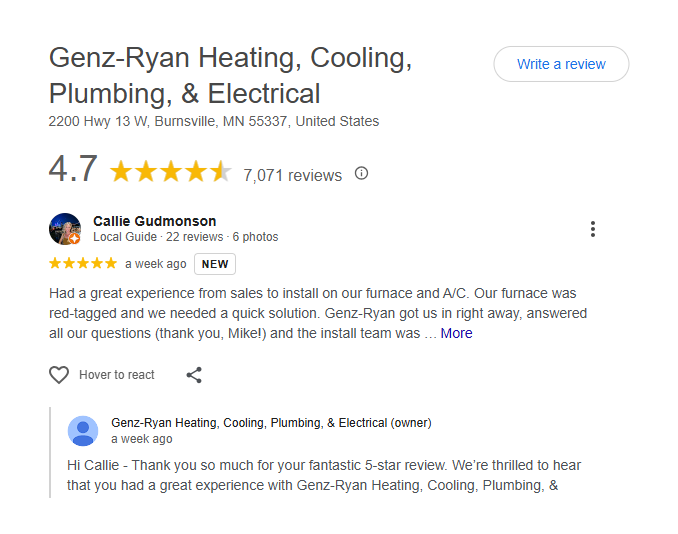
- Fresh reviews that never stop
Stale profiles sink. Google reviews help SEO because they tell Google two things:
- People are choosing you
- People are talking about you
Velocity matters. Recency matters. Authenticity matters even more.
- Local content that proves you’re really working in the area
Google does not want generic “we serve everyone” content.
It wants:
- Neighborhood references
- Jobsite photos
- Local landing pages tied to real projects
- Mentions of nearby landmarks or ZIP codes
- Strong categories, high-quality photos, and a posting cadence
Categories help Google understand what you really do. Photos help homeowners trust you. Posts help Google see activity. Together, they reinforce that you are relevant, present, and worth ranking.

Why Franchise Locations Must Prove They’re Not Copy Paste Clones
Franchise brands look powerful… until Google realizes every location page says the same thing. Corporate templates might look clean, but they don’t rank on their own. Google wants local proof, signals that your specific branch serves a real community, not just a chapter of a national chain.
Conductor’s 2025 State of SEO Report backs this up: 91% of organizations say SEO drives positive performance, and franchises benefit the most when they shift toward scalable, local-first tactics.
In other words, the brand gives you authority, but localization wins you the rankings.
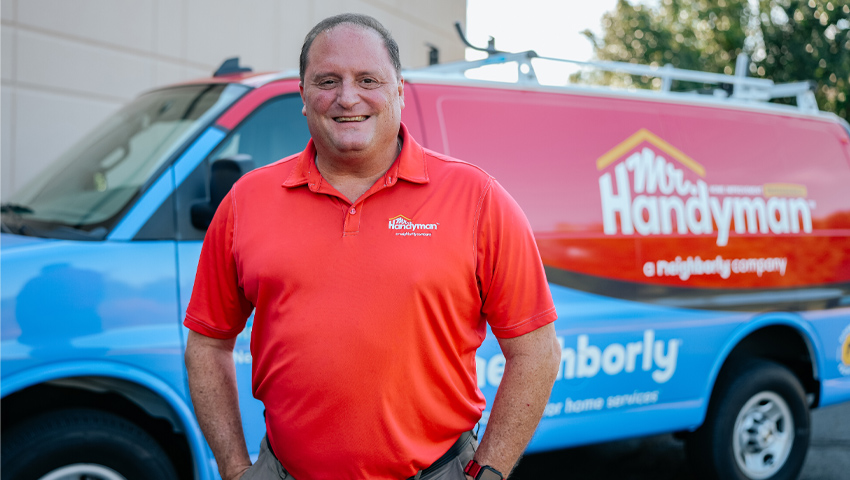
One of the clearest examples is Neighborly, the largest home services franchise network in the U.S., with 5,000+ locations across 30+ brands, including Mr. Rooter Plumbing, Mr. Electric, Molly Maid, and Mr. Handyman.
Even within the same franchise, Mr. Electric’s SEO fundamentals change from city to city.
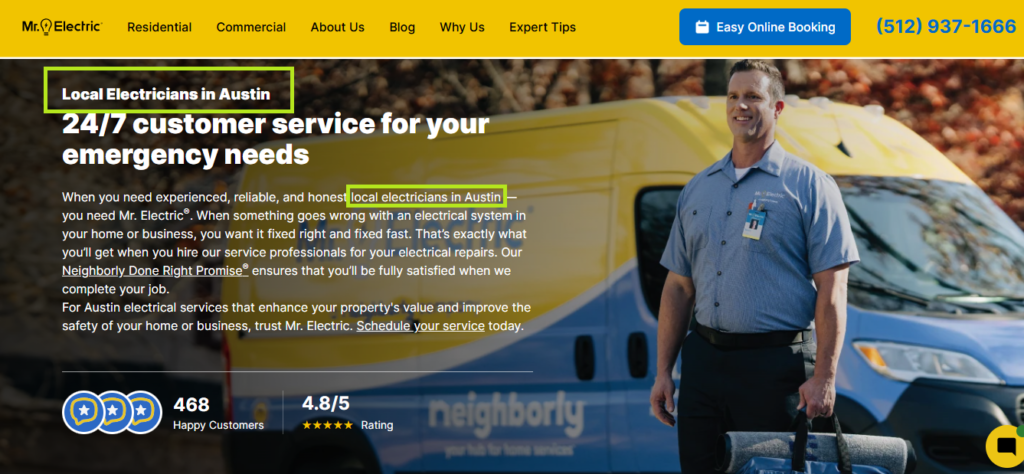
Different service pages, different local keywords, different review signals, different competitors.
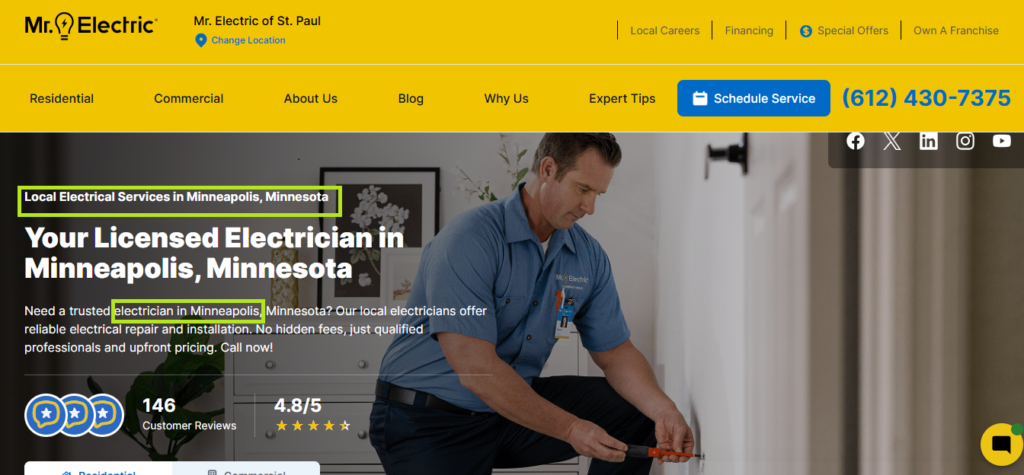
This is the reality for every franchise: Google is looking for location-level signals, not corporate-level content.
Here’s what separates the franchise locations that rank from the ones that disappear:
- Unique, geo-rich location pages that reference actual neighborhoods, job types, climate issues, and local conditions, not cloned corporate paragraphs.
- Localized service descriptions shaped by how your customers talk, what they need, and what issues your city experiences.
- Local backlinks and sponsorships that prove your branch is involved in its community, not floating under the corporate umbrella.
- Branch-specific review strategies that build Google trust for your individual location, not the parent brand.
5. How Independent Contractors Outrank National Brands Without Outspending Them
Big brands may have bigger budgets, but independents have something far more powerful in local SEO, real proximity, real authenticity, and real local proof. AI is changing search, but SEO still matters, and Google still leans heavily toward businesses that look genuinely rooted in the community. That’s where independents win without burning cash.
Here’s what gives small contractors the edge:
- Real jobsite photos Google actually trusts. Not stock images. Not corporate templates. Real roofs, real homes, real streets.
- Location pages tied to actual neighborhoods. Pages built around your ZIP codes, not generic “service area” fluff.
- Hyperlocal links from community partners. Local charities, neighborhood associations, real sponsorships, the stuff franchises struggle to earn at scale.
- Faster updates without corporate handcuffs. You can tweak pages, add photos, publish case studies, and jump on trends instantly.
When done right, these scrappy signals often outrank national authority because Google cares more about local relevance than brand size. Independents are closer to the customer, closer to the jobsite, and closer to the searcher… which means they’re closer to the win.

Local Visibility Goes to the Businesses That Act Local, Not Just Say They Are.
Whether you’re an independent contractor or a franchise owner, the winners in local search are the ones who show Google, and homeowners, that they’re genuinely present in their community. Franchises win by localizing their corporate muscle. Independents win by out-localizing everyone around them. And both win by staying active, relevant, and unmistakably rooted in their service area.
Local SEO isn’t about who spends the most. It’s about who signals the strongest. The companies that treat every location, every page, every photo, and every review like a piece of their local identity will always rise above the noise.
Schedule a call with Hook Agency to build a winning SEO strategy for your local market.